


Sustainability
The short version: Comosum grades every brand we carry on the Sustainability Meter: six categories — Material, Transportation, Manufacturing, Labor, Energy, Durability — each scored 1 to 5 from published evidence, and every product shows its brand's scores. Alongside the Meter we name the third-party certifications a brand holds (FSC, PEFC, GREENGUARD Gold, B Corp, OEKO-TEX Standard 100, ISO 14001, Sustainable Furnishings Council Gold) and its public material disclosures. The methodology is open, the certifications are linked, and brands that don't clear the Meter's rules aren't stocked.
Sustainability in furniture gets talked about often and explained clearly almost never. Manufacturing is a major contributor to waste and emissions, most mass-produced furniture is engineered for fast turnover rather than long use, and millions of pieces end up in landfills every year. The marketing language has gotten greener while the underlying practices have changed less than they should.
At Comosum we believe sustainability starts with clarity, accountability, and longevity. Shopping for sustainable furniture shouldn't require decoding vague claims or sorting through conflicting certifications. We've built the framework, named the certifications, and published the brands so every customer can see exactly what they're paying for.
Our approach in three lines
- Buy fewer things. The most sustainable furniture purchase is the one you don't make. Second-hand is genuinely the best option when it's available.
- Choose well. When you do buy new, the brand, the material, and the certification matter more than the marketing copy.
- Make them last. Durability is the single biggest sustainability lever in furniture. A 25-year sofa is better than five 5-year ones, even if the upholstery is recycled.
How we evaluate — the Comosum Sustainability Meter
Every brand Comosum carries is graded on the Comosum Sustainability Meter, and the same rules apply to every brand. We score the brand, not the single product: most of the evidence we can verify — certificates, factory locations, energy data, warranties — is published per brand, so every product shows its brand's scores.
The six categories:
- Material — what most of the brand's range is made of, and whether that material is certified (FSC, PEFC or GRS), recycled or rapidly renewable
- Transportation — where the piece is made, and how it travels to the US
- Manufacturing — how the brand runs production, and whether it can show it: ISO 14001 or EMAS, B Corp, verified EPDs, or published production figures
- Labor — who makes the product, and what protects them: B Corp, SA8000 or Fair Trade, a disclosed BSCI or SMETA audit, named factories in a country with strong labour law
- Energy — the energy used where the product is made, or, for lighting, the energy the lamp uses in your home
- Durability — four signals: a warranty of five years or more, a spare-parts, repair or buy-back service, a named test standard or contract rating, and a signature design in production for 20 years or more
Each category scores 1 to 5. Proof — a certificate we can look up, a verified EPD, a specific published figure or a juried award — can earn a 5; a brand statement without one caps at 4; adjectives and carbon offsets earn nothing. The six scores add up to a total out of 30, and the grade is their average, out of 5. We carry a brand only when no category scores 1, its grade is at least 3.0 (18 of 30), and no more than two of its six categories score below 3. Brands that miss any of those three rules aren't carried.
Read the full open methodology, with worked examples and what the rubric doesn't measure: The Comosum Sustainability Meter Methodology →
The certifications we actually care about
Certifications are not a substitute for the Meter. FSC, PEFC, B Corp and ISO 14001 feed into it; GREENGUARD Gold and OEKO-TEX Standard 100 test a single product, so we name them on product pages where a brand holds them without changing a Meter score. Below are the seven that consistently signal substance, and links to the dedicated explainer for each.
| Certification | What it measures | Read more |
|---|---|---|
| FSC (Forest Stewardship Council) | Wood chain-of-custody from certified forest to finished piece | FSC explained → |
| PEFC | European-led wood certification, similar to FSC | Covered in FSC explainer → |
| GREENGUARD Gold | Indoor air-quality emissions, tested against schools/healthcare thresholds | GREENGUARD Gold explained → |
| B Corp | Company-level practice across governance, workers, community, environment | B Corp explained → |
| OEKO-TEX Standard 100 | Textile safety — certifies fabrics against harmful substances | OEKO-TEX explained → |
| ISO 14001 | Facility-level environmental-management system | ISO 14001 + SFC explained → |
| SFC Gold Exemplary | Sustainable Furnishings Council's top tier — brand-wide commitment | ISO 14001 + SFC explained → |
For the umbrella overview comparing all seven, including which Comosum brands carry each: Sustainable Furniture Certification Glossary →
The brands leading on sustainability
A short list of brands in our catalog that lead in their categories. Each has a verifiable cert story; click through to see their full range, with the brand's Sustainability Meter scores on every product page.
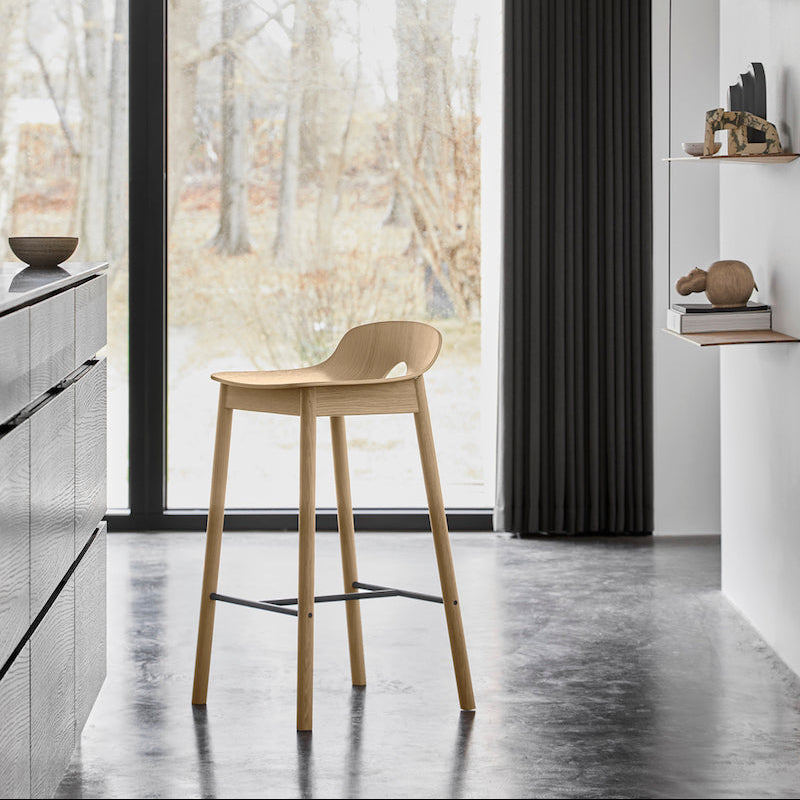
- Mater — Copenhagen design house, founded 2006; its Conscious Chair won the Wallpaper* Smart Space Award 2023 for best sustainable step forward. Patented Matek composite turns industrial waste (coffee shell, mango skin, used fishing nets) into load-bearing furniture. If you only browse one brand from this page, browse this one.
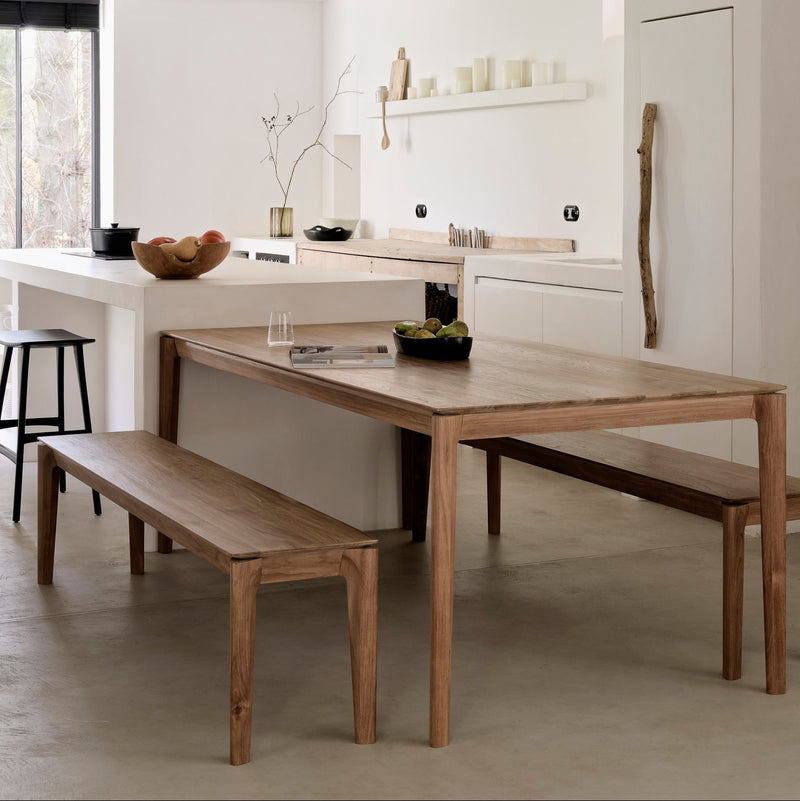
- Ethnicraft — Belgian solid-wood specialist. Oak, teak and mahogany, with FSC-certified teak on select lines — finished in oil or water-based varnish. Rooftop solar at its new headquarters near Antwerp + the Re-Loved program.
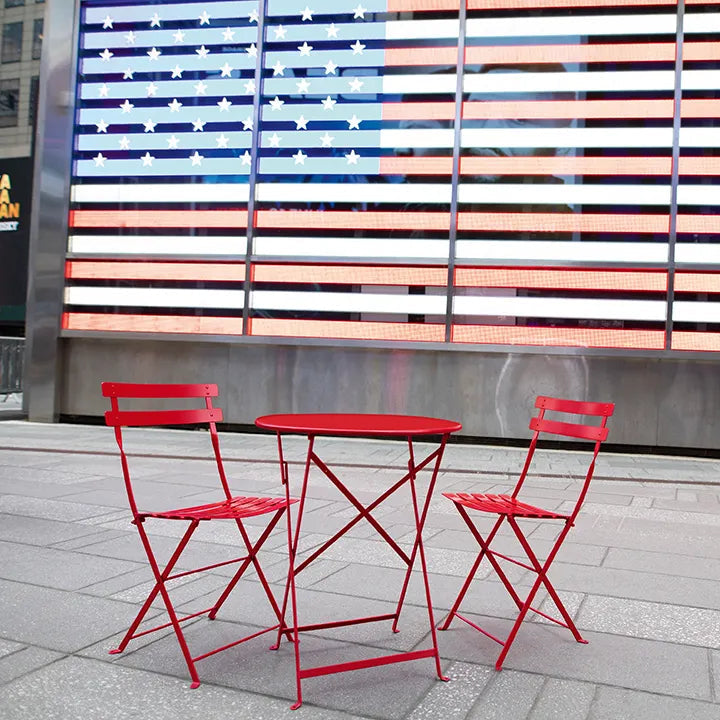
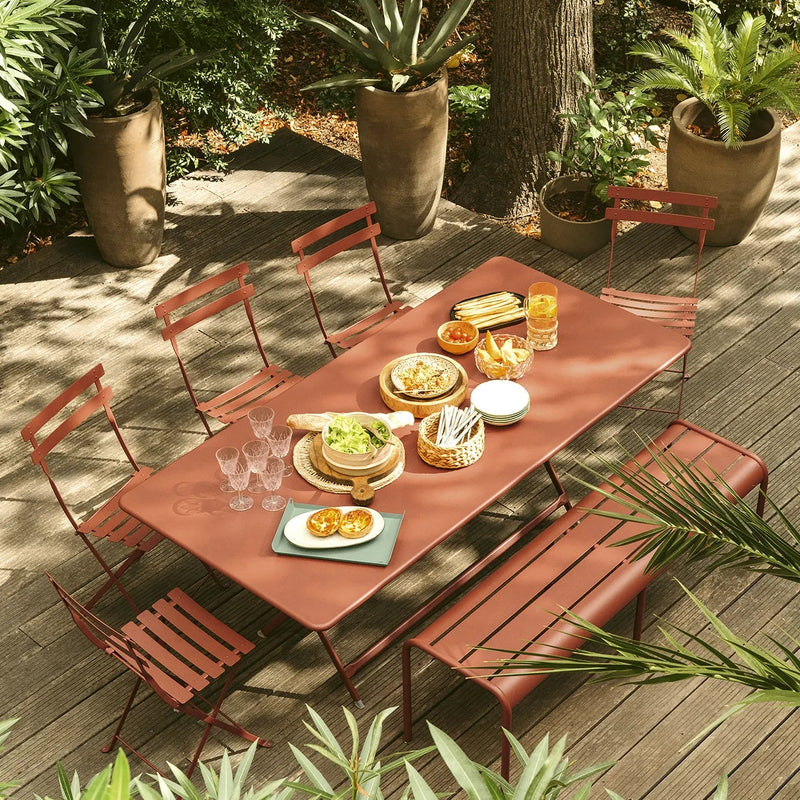
- Fermob — French outdoor maker, founded 1890. ISO 14001 since March 2010. Sustainable Furnishings Council Gold Exemplary since 2017 (one of four manufacturers worldwide).
- Anglepoise — British B Corp lighting house. Lifetime guarantee on every new lamp bought since 2020. Repair, don't replace.
- FDB Møbler — Danish design studio founded 1942. Børge Mogensen's J39 chair has been in continuous production since 1944 — the longest-running sustainable design we carry.
- Tiptoe — Paris design studio, B Corp since October 2022, French société à mission. Manufactured 100% in Europe across 20 partner workshops; final assembly in ESAT sheltered workshops.
See all 28 brand collections, organized by region and material, in our Best European Sustainable Furniture Brands guide →
Sustainability guides — go deeper
We've published five long-form guides for customers who want to research before they buy. Each is built on the same Sustainability Meter framework and links directly back to the brand collections and individual products.
- Best European Sustainable Furniture Brands in the US (2026) — The full directory: sixteen European houses, the certifications behind each, how to match a brand to the room.
- Sustainable Outdoor Furniture from French, Danish, and Spanish Brands — Outdoor-specific: how to choose furniture that survives 20 years of weather, climate-by-climate buying advice.
- Scandinavian Sustainable Design — A US Buyer's Guide — The Danish + Norwegian cluster: FDB Møbler, Mater, WOUD, Kähler, Holmegaard, Lyngby Porcelæn.
- Mid-Century Reissues, Done Sustainably — Why licensed reissues from Heller (Vignelli/Gehry/Bellini) and Anglepoise (1935 original) outperform knock-offs.
- The Comosum Sustainability Meter — Open Methodology — The full six-dimension rubric, scoring thresholds, worked examples, what the meter doesn't measure.
Reforestation — One Tree Planted partnership
Comosum funds the planting of one tree for every $100 spent through our partnership with One Tree Planted, a global reforestation nonprofit operating across more than 80 countries. The trees are planted in regions of high biodiversity value and on community-managed lands.
This initiative is complementary to — not a substitute for — our work on responsible sourcing, durable design, and supply-chain transparency. Carbon offsetting through tree planting can be valuable, but it's not the same as reducing emissions at source. The Meter scores reductions, not offsets.
What we don't claim
A page on sustainability gets credible by being honest about its gaps. Things we don't pretend to measure:
- "Eco-friendly" as a binary. No furniture is perfectly sustainable. Every product on Comosum involves trade-offs — between materials, manufacturing footprint, shipping distance, and durability. We score the trade-offs honestly rather than hiding them behind a label.
- Full lifecycle CO2. A proper life-cycle assessment (LCA) requires audited emissions data across extraction, manufacturing, transport, use phase, and end-of-life. We don't have full LCA data for every brand we carry, and we'd rather report nothing than report a guess.
- What happens after the product leaves us. We recommend repair-first and partner with brands that back it with buy-back or guarantee programs (Ethnicraft's Re-Loved, Anglepoise's lifetime guarantee on new lamps). But we can't enforce repair once a piece is in a customer's home.
- Carbon offsetting as a substitute. Buying credits to claim carbon-neutral status doesn't change a facility's actual emissions. The Meter scores what the manufacturer actually does, not what they purchase to compensate.
Owning these gaps is how we keep the Sustainability Meter credible. A rubric that claims to measure everything ends up measuring nothing.
Frequently asked questions
What does sustainability mean at Comosum?
Sustainability at Comosum is something we score from published evidence, not a label or marketing claim. We grade every brand on the six-category Sustainability Meter before stocking it. The categories are Material, Transportation, Manufacturing, Labor, Energy and Durability, and a brand must clear three rules to be stocked: no category at 1, a grade of at least 3.0 (18 of 30), and no more than two categories below 3.
What is the Comosum Sustainability Meter?
The Sustainability Meter is how we score every brand we carry. Each of its six categories is scored 1 to 5 from published evidence; the total is out of 30, and the grade is the average, out of 5. Every product shows its brand's scores. The full methodology is published openly.
How is the Sustainability Meter different from third-party certifications?
Certifications like FSC, B Corp, and GREENGUARD measure single dimensions — forest sourcing, company-level practice, indoor air quality. The Sustainability Meter counts the ones that measure one of its categories — FSC under Material, B Corp under Labor and Manufacturing, ISO 14001 under Manufacturing — and adds categories no single certificate covers, like Durability and Transportation. GREENGUARD Gold tests a single product's emissions, so we name it where a brand holds it, but it doesn't change a Meter score. Certifications feed the Meter; they don't replace it.
Is buying new furniture ever truly sustainable?
The most sustainable furniture purchase is second-hand. When buying new, sustainability becomes a function of durability, responsible material sourcing, and how long the piece is engineered to last. A 25-year solid-oak dining table from an FSC-certified mill has a smaller per-year footprint than five disposable particleboard tables over the same period.
Why doesn't Comosum use the term "eco-friendly"?
"Eco-friendly" is vague and inconsistent — different brands use it to mean different things, and the term has no enforceable standard. We use specific terms instead: "FSC-certified European oak," "powder-coated steel finished without solvent wet paint," "recycled polypropylene with documented post-consumer content." If the claim can't be verified, it doesn't go on the product page.
Are all products on Comosum equally sustainable?
No. Every brand we carry clears the Meter's three rules, but grades run from 3.0 to 5.0 and scores vary across the six categories. Every product page shows its brand's scores so customers can compare.
Which brand on Comosum is the most sustainable, on materials alone?
On materials alone — Mater. The patented Matek composite turns industrial waste (coffee-shell, mango skin, used fishing nets) into furniture-grade composites with a wood-like finish. No other brand in our catalog ships circular-input furniture at this scale.
How does the One Tree Planted partnership fit in?
We fund the planting of one tree for every $100 spent through One Tree Planted. This supports reforestation but does not replace our focus on durable design and responsible sourcing. Offsetting is complementary to — not a substitute for — reduction at source. The Sustainability Meter scores what brands actually do, not what they offset.
Why are some products noindexed or unavailable on Google?
Products that are out of stock with no confirmed restock are removed from search engine indexation via a seo.hidden metafield. This keeps direct-traffic visitors able to find the page, but doesn't waste search-engine crawl budget on unbuyable products.
Ready to browse? Browse every product, each from a brand that clears the Sustainability Meter →
Want the deeper dive? Start with the methodology, or browse the certification glossary for the cert-by-cert breakdown.

Our Sustainability Rubric

Every brand we carry is graded on the Comosum Sustainability Meter: six categories, each scored 1 to 5 from evidence you can check, and three rules a brand must clear before we stock it. See how we score.

 🔒 Secure checkout
30-Day Returns
Warranty Included
🔒 Secure checkout
30-Day Returns
Warranty Included