





Sustainable furniture has become one of the most confusing categories in home design. Every brand claims it. Every retailer promotes it. And yet, when customers start asking real questions—about materials, labor, durability, or manufacturing—the answers often fall apart.
At Comosum, we built our Sustainability Meter because we didn’t want to repeat vague claims or oversimplify complex supply chains. Our goal is simple: help customers understand how furniture is actually made today, using the most reliable information available—without pretending perfection exists.
This is not a marketing badge. It’s a transparency tool.
Why Sustainability Grading Is Hard (and Why That Matters)
Furniture sustainability is inherently complex. A chair might use responsibly sourced wood but be shipped across the world. A lamp might last decades but be produced in a region with limited energy transparency. A sofa might be made ethically but upholstered in petroleum-based fabric.
Most sustainability claims ignore these trade-offs. We don’t.
Instead of chasing a single “green” label, Comosum evaluates brands holistically—acknowledging strengths, weaknesses, and real-world constraints.
Why Comosum Grades Brands, Not Individual Products
We originally explored product-level (SKU-level) sustainability ratings. In theory, this sounded precise. In practice, it created false accuracy.
Most sustainability decisions—materials, labor standards, factory oversight, energy use—are made at the brand and manufacturing level, not per individual product. Rating every SKU introduced noise, not clarity.
So we made a deliberate shift:
Comosum grades sustainability at the brand level.
This approach is:
-
More honest
-
Easier for customers to understand
-
More defensible under scrutiny
When you see a sustainability score on Comosum, it reflects how the brand operates overall—not a cherry-picked product story.
The Six Pillars of the Comosum Sustainability Meter
Every brand we carry is evaluated across six equally weighted pillars. Each pillar is scored from 1 to 5 using evidence the brand or a third party has published. The six scores add up to a total out of 30, and the brand’s grade is their average, out of 5. The full rules are in our Sustainability Meter methodology.
1. Materials
What most of the brand’s range is made of, and whether that material is certified (FSC, PEFC or GRS), recycled or rapidly renewable, like bamboo, cork or rattan. This pillar focuses strictly on material inputs, not aesthetics.
2. Manufacturing
Manufacturing looks at how the brand runs production, and whether it can show it. ISO 14001 or EMAS, B Corp certification, verified EPDs, or own production with published figures earn a 4. ISO 14001 plus a verified figure, or a 4 plus a juried sustainability award, earns a 5. Publishing where products are made, with no certification, earns a 3.
3. Transportation
This pillar looks at where the piece is made, and how it travels to the US. Made in North America and shipped overland scores 5; made in Europe and shipped by sea scores 4; made in Asia or Oceania and shipped by sea scores 3. An undisclosed origin scores 2, and air freight scores 1.
4. Labor
Labor is one of the most direct pillars: who makes the product, and what protects them. A certified B Corp listed in the B Lab directory, SA8000 or Fair Trade earns a 5. Own or named factories in a country with strong labour law, a disclosed BSCI or SMETA audit, or a published supplier code covering that production earns a 4.
5. Energy
Energy looks at the energy used where the product is made, or, for lighting, the energy the lamp uses in your home. Mostly renewable production energy we can verify, or verified EPDs for most of the range, earns a 5. An energy-intensive process such as glass melting or ceramic firing, with no published data, scores 2.
6. Durability
Durability counts four signals: a published warranty of five years or more, a spare-parts, repair or buy-back service, a named test standard (EN, BIFMA or ANSI) or contract rating, and a signature design in continuous production for 20 years or more. Furniture designed to last decades—and not be replaced quickly—has a significantly lower environmental impact over time.
What the Sustainability Scores Mean (and What They Don’t)
A sustainability score is not a moral judgment. It’s a snapshot based on available data.
-
3.0 / 5: Comosum’s minimum grade, alongside two more rules: no pillar at 1, and no more than two pillars below 3
-
3.5–4.2: Strong, responsible brands with real trade-offs
-
4.5–5.0: Exceptional, industry-leading sustainability
Most good brands land between 3 and 4. That’s normal—and honest.
We do not inflate scores to make brands look better. If a brand scores 3.2, that’s what we publish. If it scores 4.6, we explain why.
A Note on Imperfection (and Why We’re Open About It)
We know our grading system isn’t perfect—and we don’t pretend it is.
Furniture supply chains are not always transparent. Some brands provide detailed audits and certifications. Others provide partial information. When data is incomplete, we score conservatively.
Just as important: we don’t work with every brand that approaches us.
If a brand cannot provide baseline information, refuses transparency, or shows no meaningful effort toward responsible materials, labor, or longevity, we choose not to carry them. We’ve passed on brands in the past for exactly this reason.
Here’s the standard we hold ourselves to: if we can’t confidently defend a sustainability score in a real conversation with a knowledgeable customer, we don’t publish it—and often, we don’t onboard the brand at all.
Sustainability is not static. When brands improve practices, add certifications, or increase transparency, we update our ratings. If you ever want to question or challenge a grade, we welcome that discussion.
Original Design, Anti-Dupes, and Sustainability Longevity
Sustainability isn’t only about materials and factories. It’s also about what kind of products the market rewards.
Comosum does not sell knockoffs or design dupes. We only work with original designers and verified manufacturers.
Why this matters for sustainability:
-
Dupes are typically made faster, cheaper, and with lower accountability
-
Short-term products fail sooner and become landfill
-
Original designs are more likely to be engineered for longevity
Buying fewer, better-made, original pieces is often the most sustainable choice a customer can make.
Longevity is sustainability.
How to Read the Comosum Sustainability Meter
The sustainability graphic shows:
-
The brand’s grade, out of 5, at the top of every product page. Tap “Reviewed for sustainability” to see the six pillar scores and the fact behind each one
-
The full Meter further down the page, with each score next to the fact that earned it and the total out of 30
-
A scale from red (1) to green (5) that fills to the grade, and the month the brand was last reviewed
We don’t hide trade-offs. We surface them.
Frequently Asked Questions
What is the Comosum Sustainability Meter?
A brand-level sustainability grading system covering materials, manufacturing, transportation, labor, energy, and durability.
Why doesn’t Comosum rate every product individually?
Because sustainability decisions are made at the brand and factory level. SKU-level ratings create false precision.
Is overseas manufacturing automatically unsustainable?
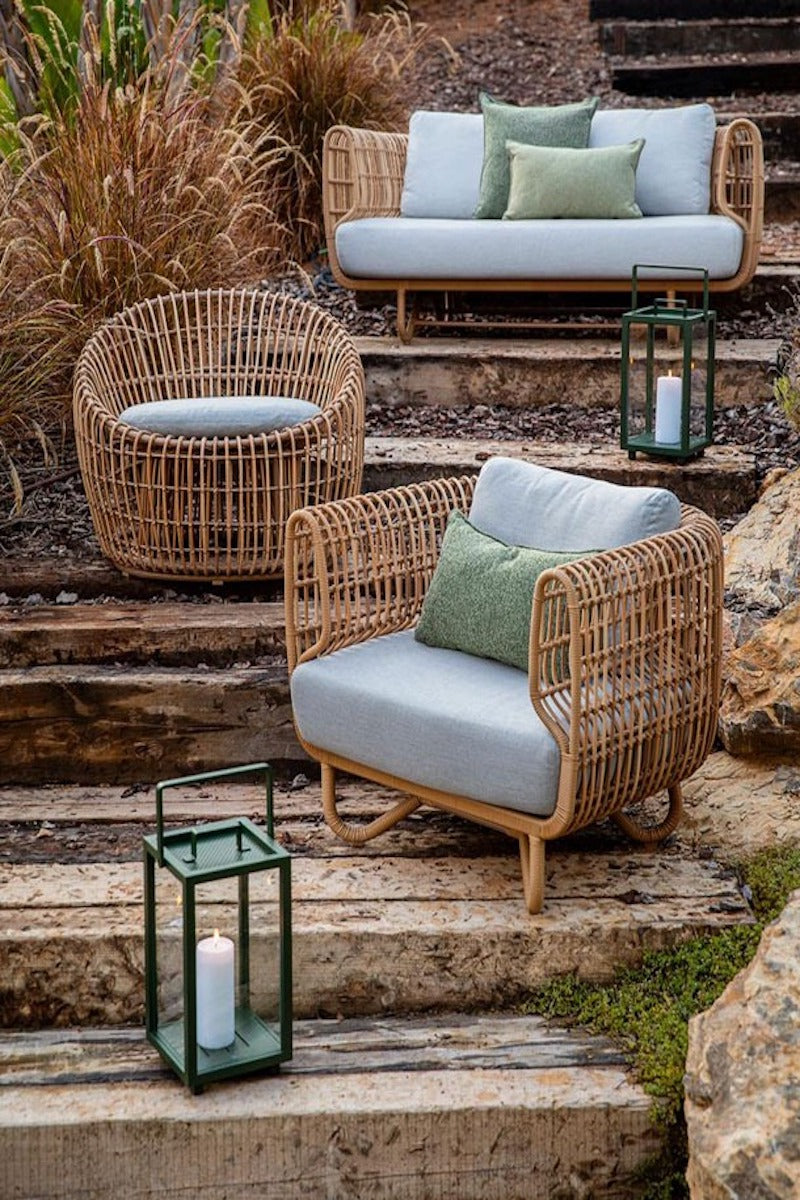
No. Where a piece is made counts under Transportation, but it is one of six pillars, and certification, audits and named factories count wherever production happens. Cane-line makes its furniture in its own facilities in Indonesia and scores 4 on Labor for SMETA-audited production.
What sustainability score does Comosum require?
A grade of at least 3.0, which means 18 of 30 or more. A brand also needs no pillar at 1 and no more than two pillars below 3. Brands that miss any of the three rules are not carried.
Does Comosum sell furniture dupes or replicas?
No. We only carry original designs from verified brands.
Why This Matters for Conscious Furniture Shoppers
If you care about sustainable furniture, ethical manufacturing, and long-lasting design, you deserve clarity—not buzzwords.
Our Sustainability Meter exists to give you that clarity, even when the answers are nuanced.
That’s how we believe sustainable furniture retail should work.


Leave a comment
This site is protected by hCaptcha and the hCaptcha Privacy Policy and Terms of Service apply.