

How do teak, acacia and aluminum compare?
Each material survives outdoors in a different way. Here they are side by side.

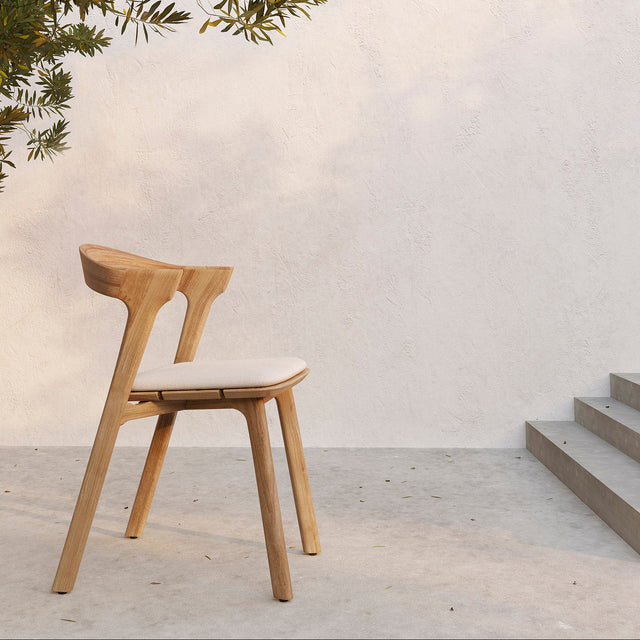
Teak
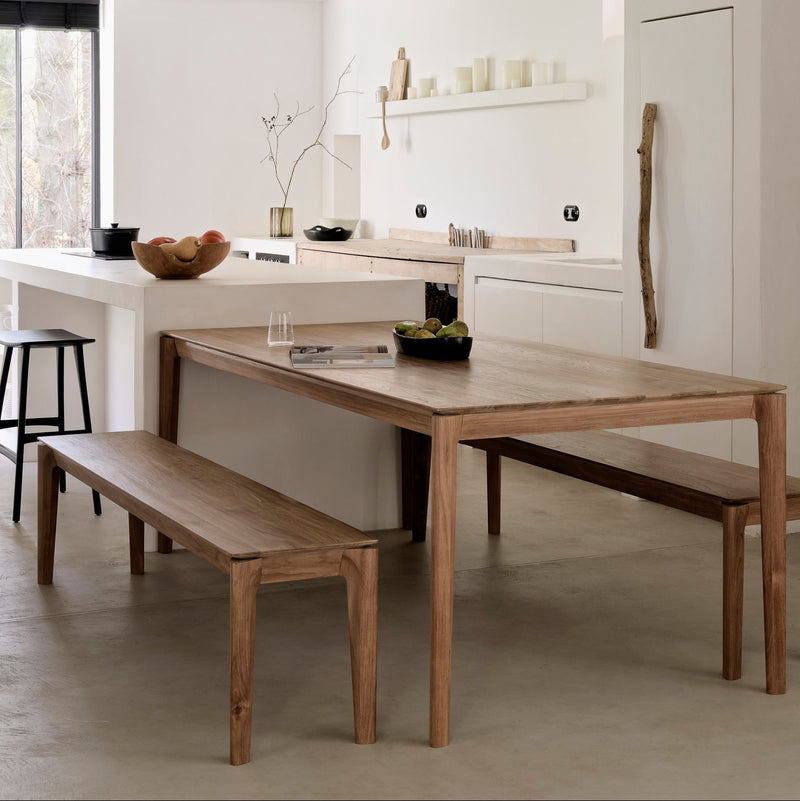
A dense tropical hardwood whose natural oils and silica resist water, insects and rot. Left alone it weathers to silver-grey; oil it to keep the honey colour.

Acacia
Fast-growing and usually harder than teak, but with far less natural oil. Left uncovered, it greys and checks within a few seasons.

Powder-coated metal
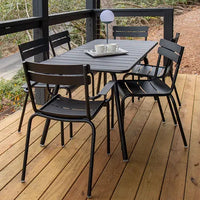
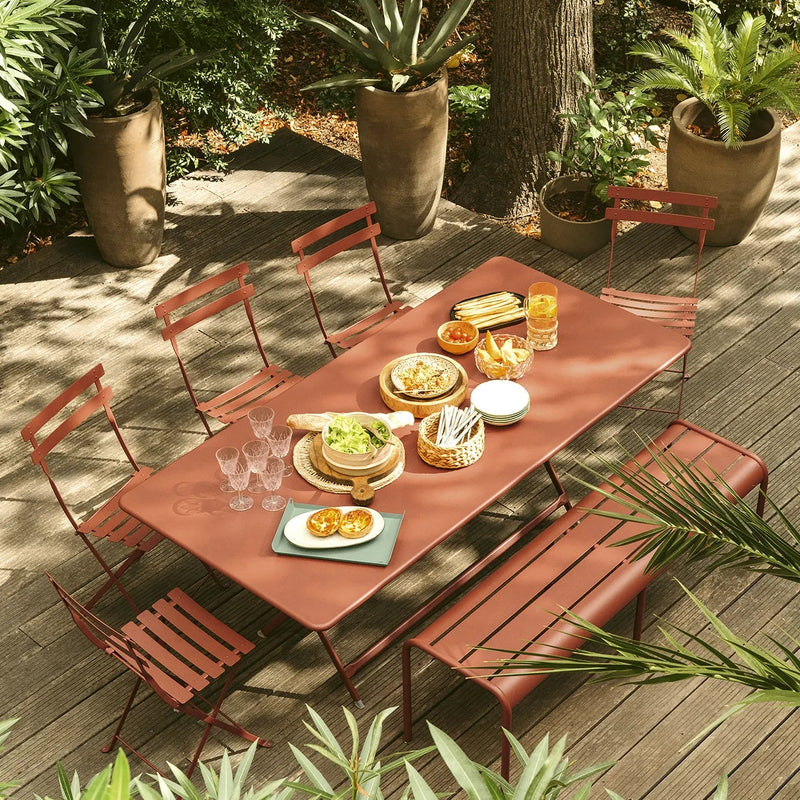
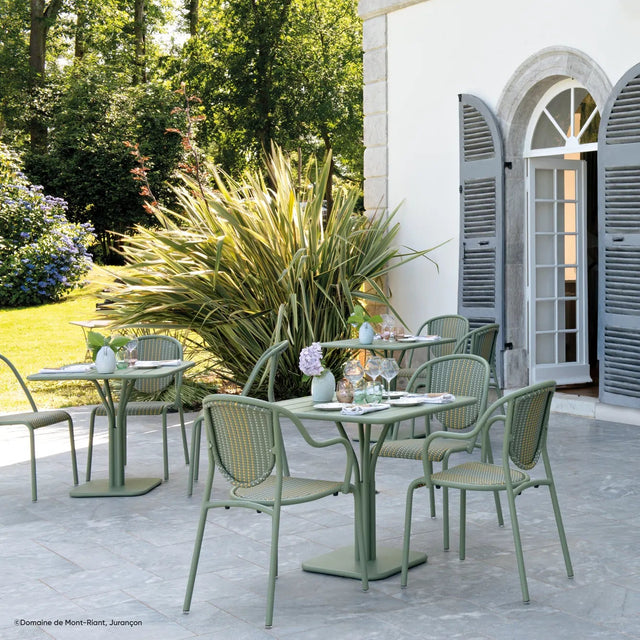
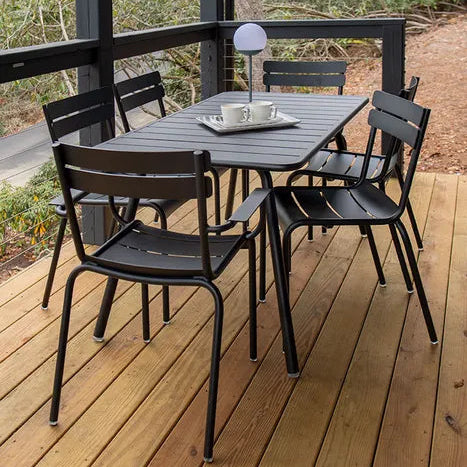
Aluminum doesn’t rust and weighs roughly a third as much as steel. The solvent-free powder coat holds its colour for years.
| Material | Uncovered, outdoors | Upkeep | Watch out for |
|---|---|---|---|
| Teak | Commonly rated for 25 years or more | None needed; oil only to keep the colour | Teak with no documented source |
| Acacia | Typically needs refinishing every 5–10 years | Re-oil each season and keep it covered | Greying and checking in full weather |
| Powder-coated aluminum | The frame won’t rust; colour typically holds 10–15 years or more | Wash with mild soap | Chips in the coating (steel can rust underneath) |
Teak: why does it last outside?
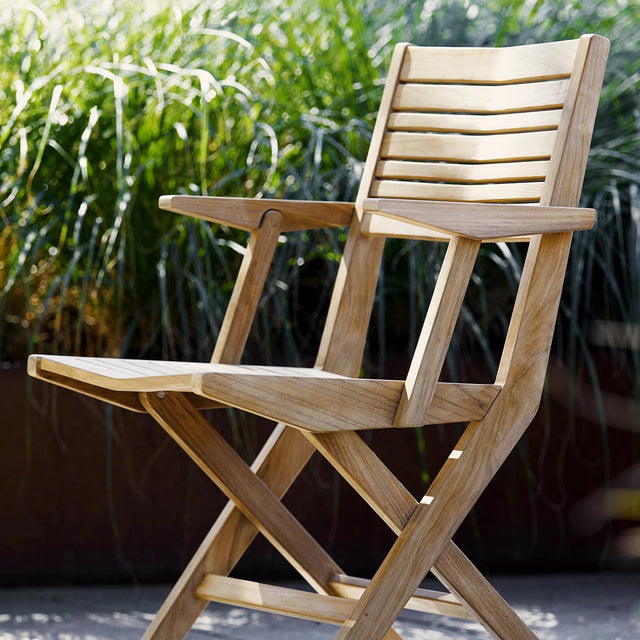
Teak’s durability is chemistry: its natural oils and silica resist water, insects and fungal decay without a sealer. It weathers to an even silver-grey patina if left alone, or keeps its honey-brown tone with teak oil. Sourcing matters as much as species, so look for documented plantation teak. Ethnicraft uses FSC-certified teak on select lines, and Cane-line’s teak is SVLK-verified under Indonesia’s timber legality system.
 Shop the terrace · 3 pieces
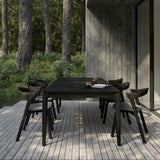
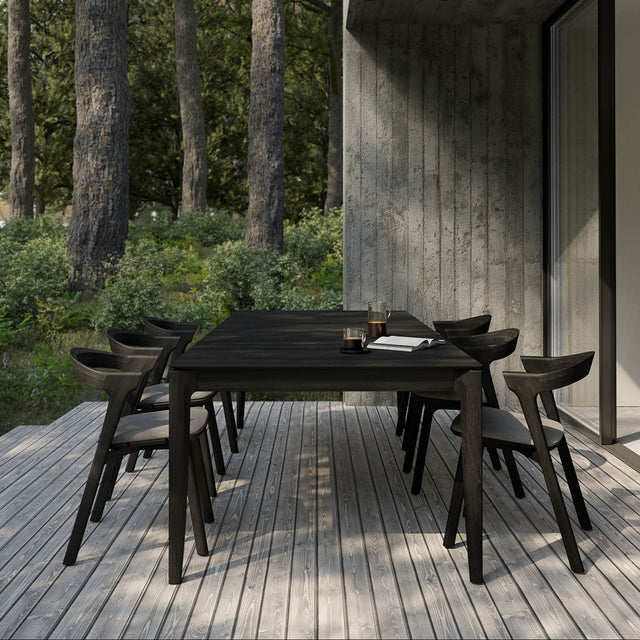
 Ethnicraft · Meter 3.5Bok Outdoor Dining tableSolid teak, natural or black-tinted; made in Indonesia
From $1,449Shop →
Ethnicraft · Meter 3.5Bok Outdoor Dining tableSolid teak, natural or black-tinted; made in Indonesia
From $1,449Shop →
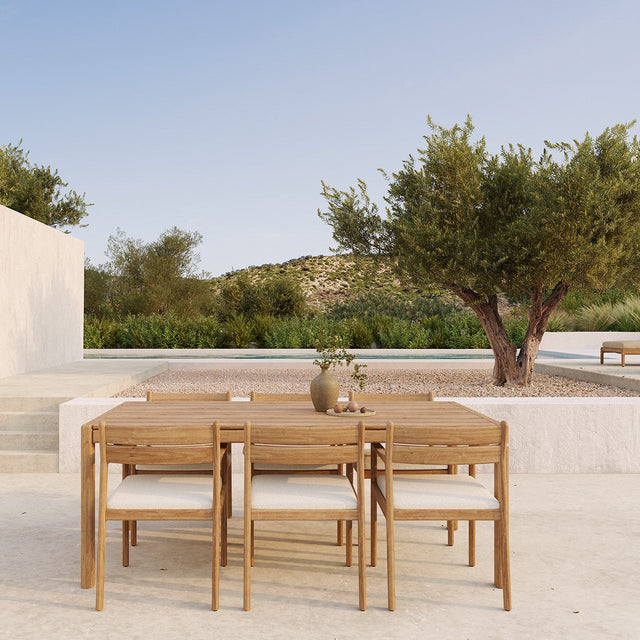
 Ethnicraft · Meter 3.5Jack Outdoor Dining TableSolid teak, shipped untreated to weather silver
From $3,249Shop →
Ethnicraft · Meter 3.5Jack Outdoor Dining TableSolid teak, shipped untreated to weather silver
From $3,249Shop →
 Cane-Line · Meter 3.3Flip Folding Arm ChairTeak folding armchair by Strand+Hvass; stores flat
From $1,180Shop →
Cane-Line · Meter 3.3Flip Folding Arm ChairTeak folding armchair by Strand+Hvass; stores flat
From $1,180Shop →
Shop teak outdoor dining tables → · How to care for teak →
Acacia: is it the same as teak?
No. They are different trees, and they age very differently outdoors. Acacia is usually the harder wood, but it has a fraction of teak’s natural oil and silica, so left uncovered it greys, checks and needs refinishing in 5–10 years where teak goes decades. It grows far faster than teak, which makes it a lighter-impact solid wood for the right spot: a covered porch, a screened room, or anywhere you’re happy to re-oil each season.
How durable is acacia outdoors?
As a timber, acacia is hard and dense. What it lacks is teak’s natural oil, so outside, its life depends on upkeep. Uncovered, expect greying and surface checks within a few seasons and a full refinish every 5–10 years. Under a roof and re-oiled each season, it holds up far longer.

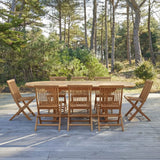
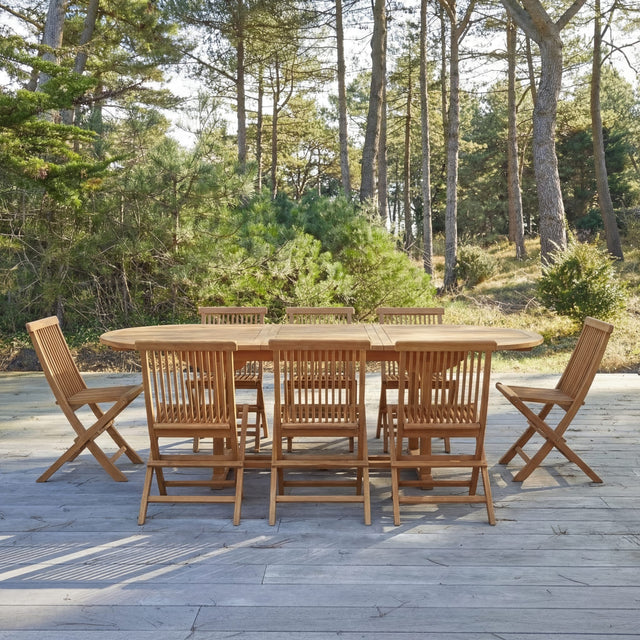
 Tikamoon · Meter 4.0Capri Oval 8-Seat Dining Set in Solid AcaciaPre-oiled solid acacia; extending oval table and eight chairs
$2,199Shop →
Tikamoon · Meter 4.0Capri Oval 8-Seat Dining Set in Solid AcaciaPre-oiled solid acacia; extending oval table and eight chairs
$2,199Shop →
 Tikamoon · Meter 4.0Capri Rectangular 6-Seat Dining Set in Solid AcaciaPre-oiled solid acacia; extending table and six chairs
$2,199Shop →
Tikamoon · Meter 4.0Capri Rectangular 6-Seat Dining Set in Solid AcaciaPre-oiled solid acacia; extending table and six chairs
$2,199Shop →
 Tikamoon · Meter 4.0Capri Folding 4-Chair Dining Set in Solid AcaciaPre-oiled solid acacia; table and chairs all fold for winter
$999Shop →
Tikamoon · Meter 4.0Capri Folding 4-Chair Dining Set in Solid AcaciaPre-oiled solid acacia; table and chairs all fold for winter
$999Shop →
These Capri sets come pre-oiled. Keep them under cover in hard weather and re-oil once or twice a season.
Powder-coated aluminum and steel
The metal approach takes wood out of the equation. Powder coating is a dry, solvent-free finish baked onto the frame, so it releases almost no VOCs, and overspray can be reclaimed. Aluminum doesn’t rust and is roughly a third the weight of steel; steel is heavier and more rigid, which suits folding café chairs. Near salt air, choose aluminum, because steel can rust where the coating chips.

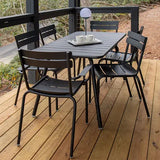
 Fermob · Meter 4.0Fermob Luxembourg 31.5" Square Pedestal TableSlatted aluminum top drains rain; made in France
$1,585Shop →
Fermob · Meter 4.0Fermob Luxembourg 31.5" Square Pedestal TableSlatted aluminum top drains rain; made in France
$1,585Shop →
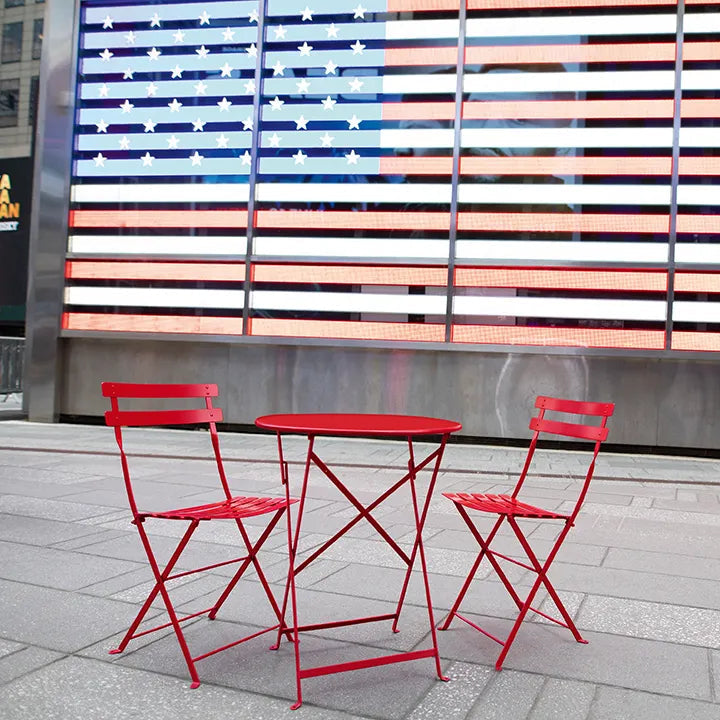
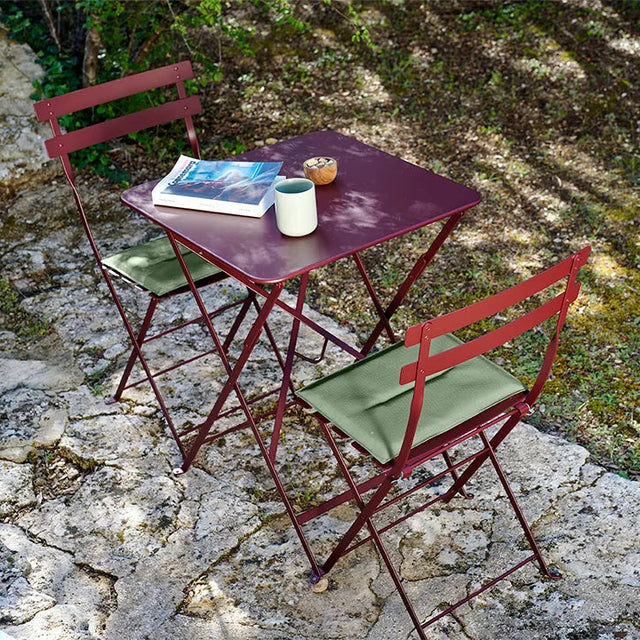
 Fermob · Meter 4.0Fermob Bistro Metal Chair (Set of 2)Folding steel café chair, made in France since 1889
$320Shop →
Fermob · Meter 4.0Fermob Bistro Metal Chair (Set of 2)Folding steel café chair, made in France since 1889
$320Shop →
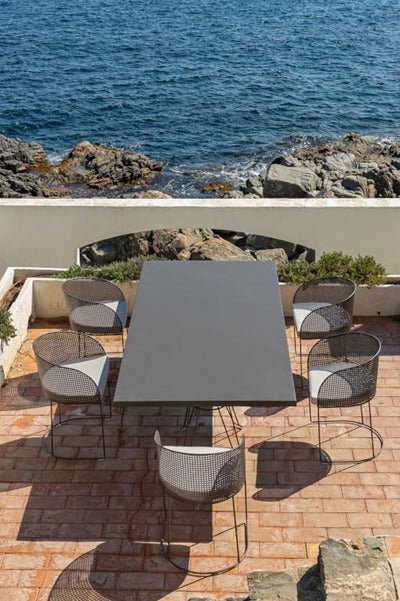
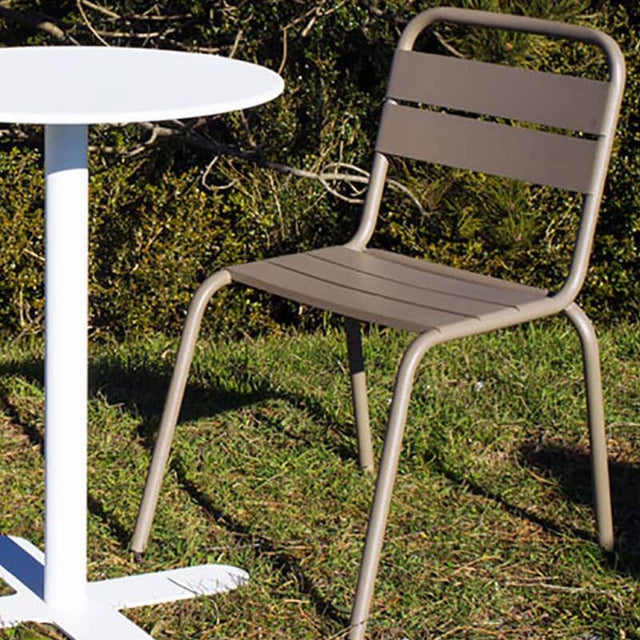
 Isimar · Meter 4.2Barceloneta Side Chair100% recycled aluminum, rated for salty coasts
$324Shop →
Isimar · Meter 4.2Barceloneta Side Chair100% recycled aluminum, rated for salty coasts
$324Shop →
Fermob builds its pieces in its own factories in France, with a cataphoresis anti-corrosion layer under the powder coat. Isimar makes the Barceloneta in Spain from 100% recycled aluminum.
Teak, acacia or aluminum: which is better for outdoor furniture?
Uncovered deck or garden
Teak. It silvers, can be sanded back, and outlives its finish.
Covered porch on a budget
Acacia, re-oiled each season and kept out of the rain.
Rooftop, balcony or coast
Powder-coated aluminum. One person can move it, and it won’t rust.
Over twenty years, teak and aluminum cost about the same. The difference is what you get for the money: a surface that ages, or a colour that stays put. For a brand-level comparison, see our Fermob vs. Cane-line guide.


Behind the chair · Fermob · Est. 1890 · Made in France
A Paris café chair, folding flat since 1889
The Bistro chair has folded flat on Paris café terraces since 1889: seven curved steel slats on a welded frame, simple enough to clear a terrace in minutes. Fermob still builds it in its own factory near Lyon, with a cataphoresis anti-corrosion layer under a UV-resistant powder coat.
- Made in France since 1890
- ISO 14001 environmental certification
- Anti-UV powder coat, no heavy metals or VOCs
grade
Questions people ask
Which outdoor dining table material is best for full sun and rain?
Solid teak for wood, powder-coated aluminum for metal. Teak’s natural oils and silica protect it without a sealer, and aluminum doesn’t rust. Acacia does well only under cover. Avoid bare steel and untreated softwoods in direct weather.
How long does teak outdoor furniture last?
Good plantation teak is commonly rated for 25 years or more outdoors, untreated. It weathers to silver-grey if left alone, or keeps its honey colour with teak oil.
Is acacia good for outdoor furniture?
Yes, under cover. It is a hard, fast-growing wood, but it weathers faster than teak in the open and typically needs refinishing every 5–10 years.
How long does powder-coated aluminum last outdoors?
The aluminum itself doesn’t rust and can last decades. The powder coat typically holds its colour for 10–15 years or more before noticeable fading.
Which outdoor material is best for coastal homes?
Powder-coated aluminum, almost always. Steel can work if the coating stays intact, and teak copes well thanks to its natural oils. Avoid bare steel and low-grade hardwoods near the ocean.
Do I need to oil teak outdoor furniture?
Not for longevity. Oil it only to keep the honey-brown colour; otherwise let it silver. Never use a film-forming sealer, which can trap moisture.
Is powder coating a sustainable finish?
Compared with wet paint, yes. It is applied dry, contains no solvents, releases almost no VOCs and lets overspray be reclaimed.
How long does acacia wood last outside?
It depends on cover and upkeep. Uncovered, acacia greys and checks within a few seasons and typically needs a full refinish every 5–10 years. Under a roof and re-oiled each season, it lasts far longer. Teak, by comparison, is commonly rated for 25 years or more uncovered.