

Best European Sustainable Furniture Brands You Can Buy in the US (2026)
The best European sustainable furniture brands available in the United States in 2026 are FDB Møbler (Denmark), Cane-Line (Denmark), Mater (Denmark), Fermob (France), Ethnicraft (Belgium), and Anglepoise (United Kingdom) — each backed by named certifications, a documented design heritage, and stock held in a US warehouse for domestic delivery. They sit alongside ten more European houses worth knowing: WOUD, Kähler, Holmegaard, Lyngby Porcelæn, Rosendahl, Petite Friture, Tiptoe, Case Furniture, Tala, Isimar, Resol, Heymat, and Varier.
Most “sustainable furniture” lists are catalogs without curation. Many brand pages lean on soft language — “responsibly sourced,” “earth-friendly” — without naming a single certificate, mill, or designer. The result is a market where greenwashing is hard to separate from substance.
Comosum carries sixteen verified European brands under one US-stocked roof and grades each one on the Comosum Sustainability Meter — a rubric that scores every brand from 1 to 5 in six categories (Material, Transportation, Manufacturing, Labor, Energy and Durability), using evidence the brand or a third party has published. This guide walks through all sixteen, the materials they use, the certifications behind their claims, and how to match a brand to the room you are furnishing.
How we evaluated
Three criteria.
First, verifiable sustainability practice. The brand must publish evidence we can check, such as a third-party certification (FSC, PEFC, ISO 14001, B Corp, GREENGUARD or OEKO-TEX) or the country where each product is made, and disclose materials at the SKU level. No “eco-friendly” without a number, a mill, or a chain-of-custody behind it. The full rubric lives in our Sustainability Meter methodology.
Second, design provenance. A named designer with a documented body of work, a museum or institutional collection, or an archive program that proves the brand designs rather than re-skins.
Third, US availability. Every brand below ships from Comosum’s US warehouse with one clearly noted exception: Isimar, which ships direct from Spain. (Resol is manufactured in Spain but stocked in the US warehouse.) US-warehoused brands deliver in standard freight windows with US-side customer service, rather than the six-to-twelve-week lead times that European-stocked furniture typically carries.
We also weighted catalog depth. A brand with two SKUs in stock is not really a brand you can shop.
The sixteen brands, by country
We’ve grouped the brands by country, starting with Denmark — the largest cluster, and the country whose post-war design studios, modernist canon, and porcelain and glass tradition still shape sustainable furniture more than any other.
From Denmark — eight houses
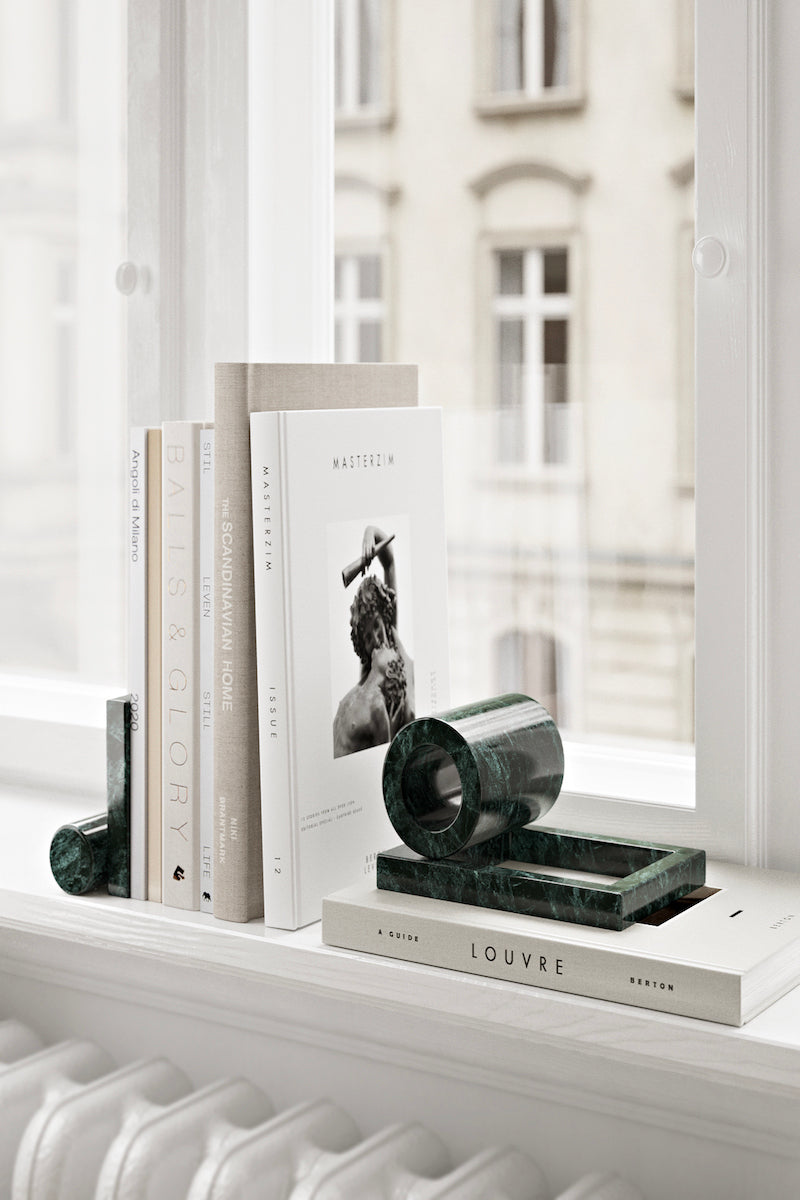
FDB Møbler (founded 1942) began as a design studio led by Børge Mogensen, on the belief that good quality should be accessible to most people. The archive is one of the most important in Scandinavian design. Børge Mogensen’s J39 chair entered production in 1944 and has been continuously manufactured since. Poul M. Volther designed the J46 dining chair. FDB also makes the B98 book boxes, a stackable solid-oak design by Mogens Koch.
The catalog runs to roughly 462 products in active rotation, making FDB Møbler the deepest single brand at Comosum. See more on the J39 and J46 in our mid-century reissues guide.
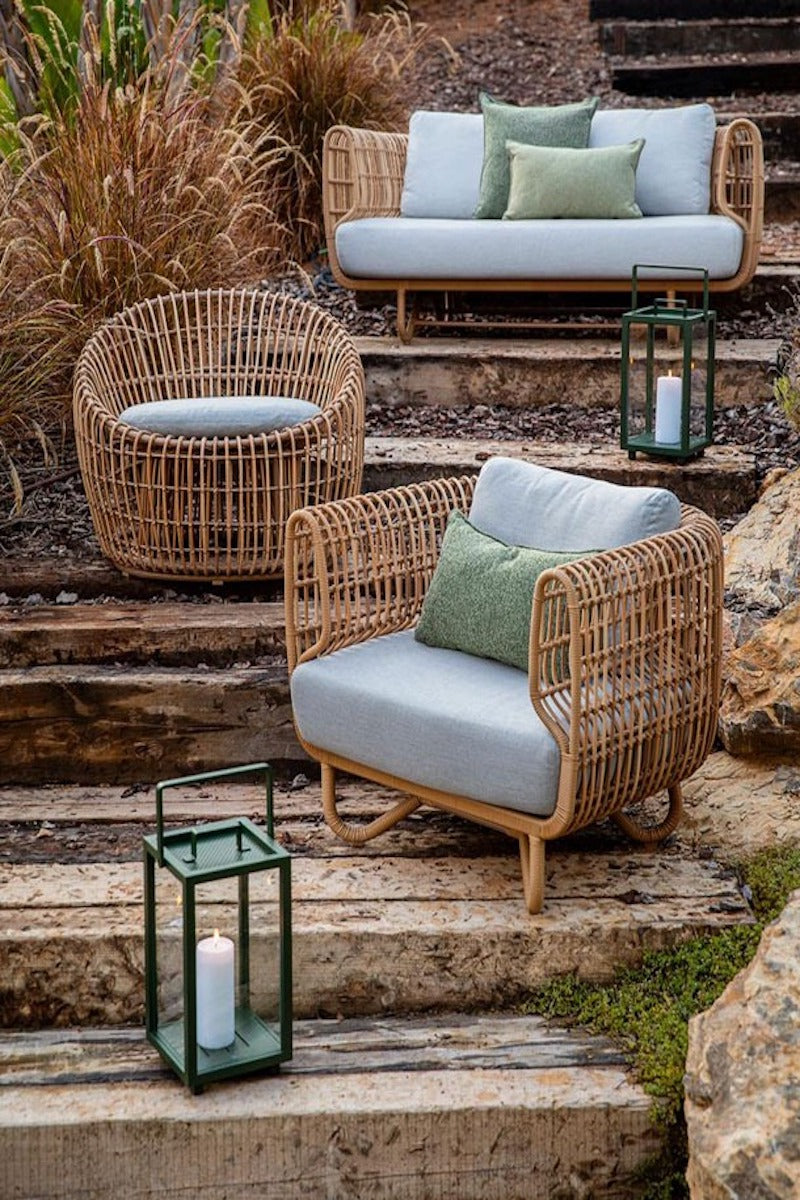
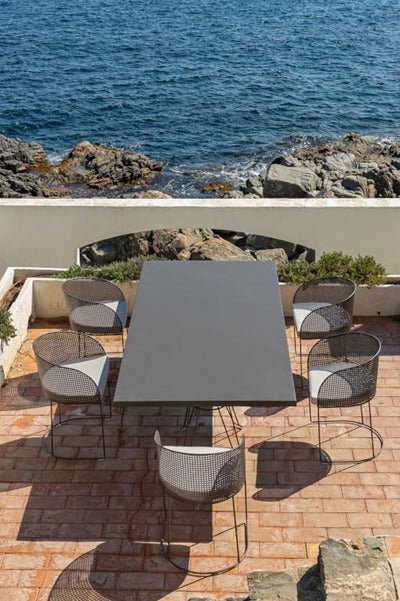
Cane-Line is the Danish counterpoint to Fermob — built specifically for outdoor living with a Scandinavian material palette. The catalog runs about 147 products, and the material story is unusually complete: FSC-certified teak, Cane-line Soft Touch rope (a proprietary recyclable fiber), aluminum frames, and outdoor-grade textiles. The brand states that construction is 100% recyclable across the catalog, which is rare in outdoor furniture where mixed-material composites usually defeat recycling. More in our sustainable outdoor furniture guide.
Why we keep talking about Mater
Mater (founded 2006, Copenhagen) won the Wallpaper* Smart Space Award 2023 for best sustainable step forward with its Conscious Chair, and is the most ambitious circular-materials brand we carry. The story is Matek — a patented composite developed by Mater that turns industrial waste streams (coffee shell, mango skin, used fishing nets, wood fiber) into load-bearing furniture components with a wood-like grain.
Eva Harlou’s Conscious Chair is made entirely from coffee-shell Matek; the Earth Chair uses end-of-life industrial waste; the brand’s collaboration with the Børge Mogensen estate brings several archive pieces into the Matek line. Mater pieces look like solid wood and behave like solid wood, but the raw input is what most factories throw away.
If you only buy from one brand on this list, this is the one we’d nominate.
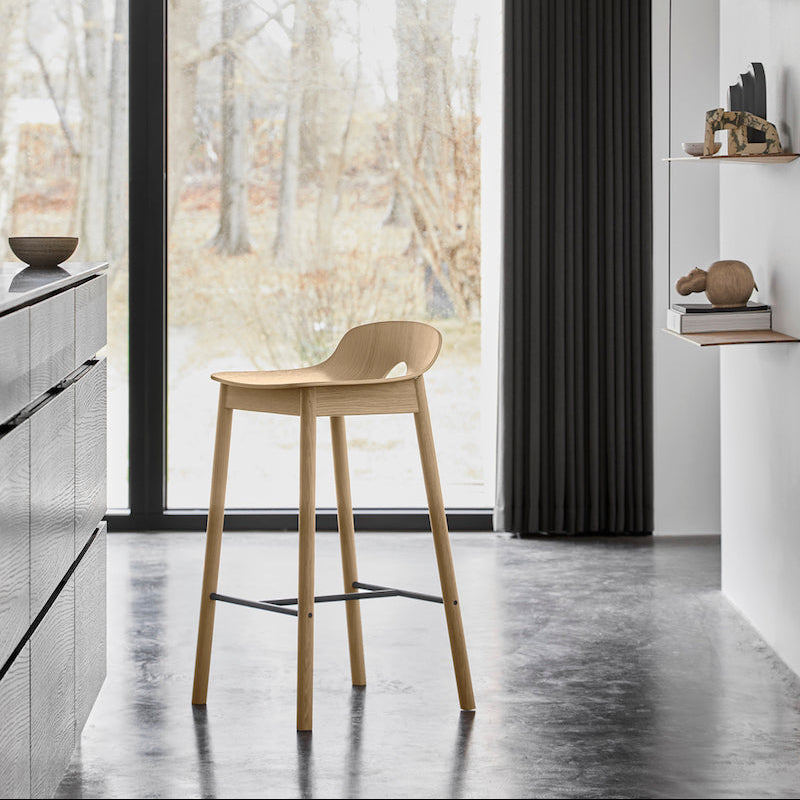
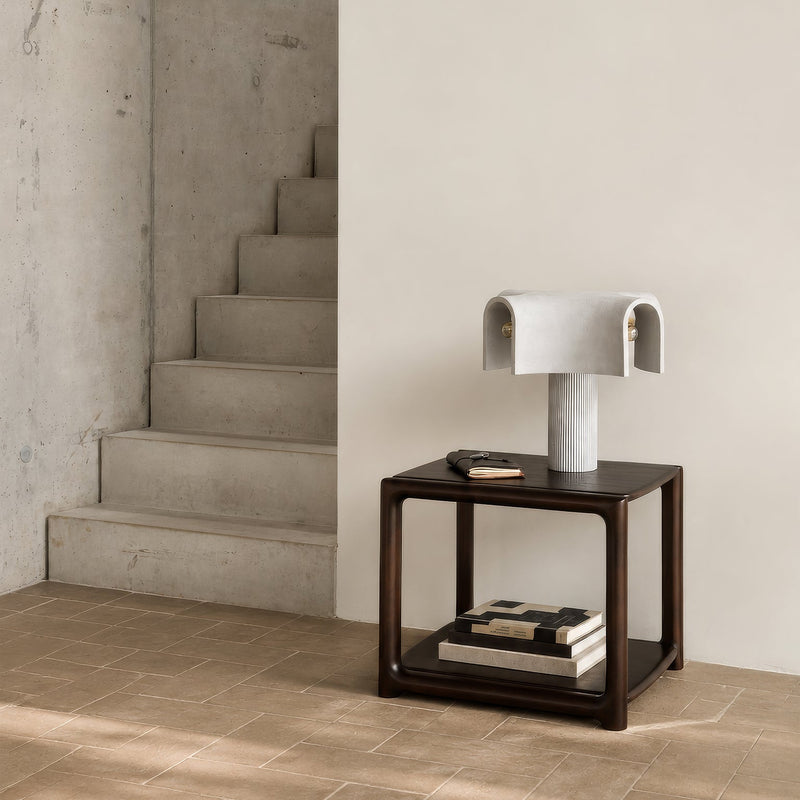
WOUD (founded 2015; headquartered in Horsens, Denmark) brings the new generation of Danish studios to market, with active commissions from Norm Architects and Hans-Christian Bauer. WOUD sits in the lighter, more minimal end of contemporary Danish design and is a strong choice for tables and side furniture.
Kähler (founded 1839) is Denmark’s heritage ceramic house and sits inside Rosendahl Design Group, a B Corp parent. Kähler’s Omaggio vase is the brand’s most recognized contemporary object.
Holmegaard (founded 1825) has been producing mouth-blown glass for two centuries and also sits under the Rosendahl Design Group umbrella. The Provence bowl and Flow drinking glasses are signature pieces.
Lyngby Porcelæn (founded 1936) makes the fluted Lyngby vase that has become a Danish design shorthand — another Rosendahl Design Group brand.
Rosendahl is the Rosendahl Design Group’s own-label tabletop and home line — the parent of Kähler, Holmegaard, and Lyngby Porcelæn — and the B Corp under which all four operate.
For more on what unites this cluster aesthetically — the unpainted wood, the soft curves, the post-war belief in good design for most people — read our Scandinavian sustainable design guide.
From France — three houses
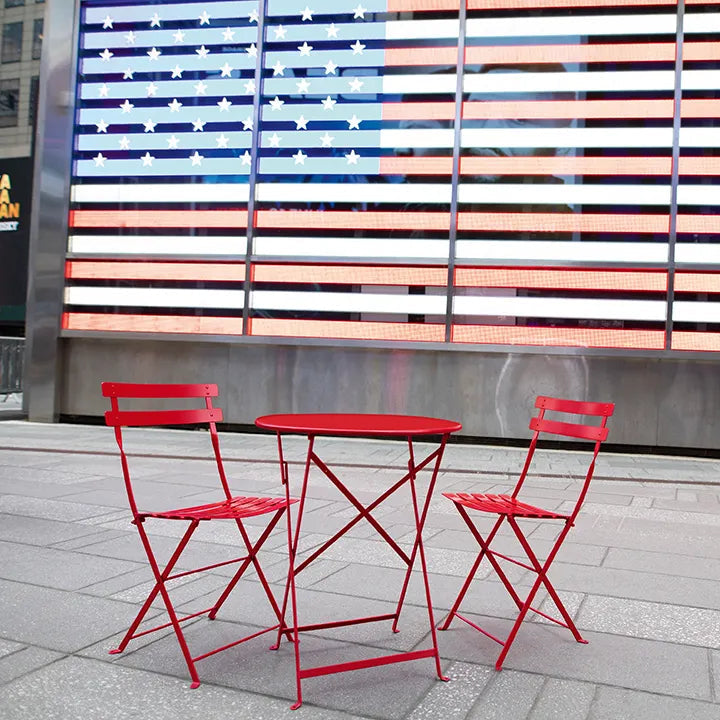
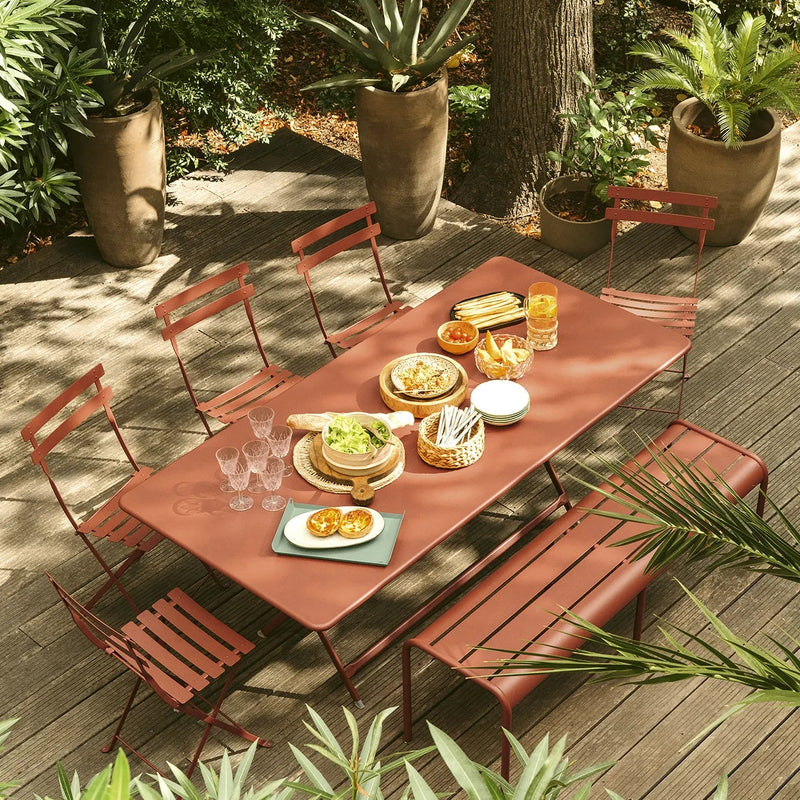
Fermob (founded 1890; the Bistro chair is the 1889 Simplex patent) is the canonical European outdoor brand and holds the strongest paper trail in the category. ISO 14001 environmental management certification has been in place since March 2010, and in 2017 Fermob USA became the fourth manufacturer to earn Sustainable Furnishings Council Gold Exemplary Recognition.
The construction story is straightforward: powder-coated steel finished with the zero-waste solvent-free process the brand has audited under ISO 14001, made across three manufacturing sites — Thoissey, Anneyron, and Mâcon — within an hour of Lyon. The Bistro folding chair — originally produced in 1889 for Parisian café terraces — remains Fermob’s signature object, and the Luxembourg collection, designed by Frédéric Sofia for the Jardin du Luxembourg, is the flagship modern range.
The Fermob powder coat is baked onto each piece at roughly 200°C for around 25 minutes. That bond is why the same Bistro chair sits on a Paris terrace for thirty years and on a Maine deck through three decades of salt and freeze-thaw.
Petite Friture (founded 2009, Paris) is the contemporary French design publisher behind Constance Guisset’s Vertigo pendant — the oversized woven lampshade that has become an Instagram shorthand for modern French interiors. Founder Amélie du Passage built the studio as an editor of young designers, with production split across France, Italy, and Portugal. Vertigo is the headline piece, but the catalog runs deep into seating, side tables, and accessories, all from a roster of named designers rather than house-anonymous SKUs.
Tiptoe (founded 2015, Paris, by Matthieu Bourgeaux) is the youngest French house on this list and the most explicitly mission-driven. Tiptoe has been a Certified B Corp since October 2022 and is registered as a French société à mission — a purpose-driven company structure. Manufacturing is 100% European, across around twenty partners: metalwork in France, Bulgaria, Poland and Lithuania; woodwork in France, Belgium, Croatia and Romania; recycled plastic in Belgium, France, the United Kingdom and the Netherlands. The brand’s signature steel leg system attaches to a tabletop with four screws and converts almost any plank into a desk, dining table, or bench.
Tiptoe works in powder-coated steel, FSC/PEFC-certified European oak (cert PEFC/07-31-60), and recycled polypropylene. Final assembly and packing happen in France through ESAT partnerships — sheltered workshops employing adults with disabilities. Clients include Hermès, Chanel, and the Centre Pompidou.
From the United Kingdom — three houses
Anglepoise (founded 1935, Hampshire) is a Certified B Corp and the inventor of the modern balanced-arm task lamp. George Carwardine, an automotive engineer, developed the constant-spring mechanism in 1932 and licensed it to Herbert Terry & Sons in 1933; in 1935 they produced the three-spring Original 1227 — a lamp that has remained in continuous production since.
Every new Anglepoise lamp bought since 2020 carries a lifetime guarantee, backed by more than 60 spare parts — and Anglepoise re-engineers parts for discontinued designs so lamps nearly 80 years old keep working.
The brand runs designer editions with Margaret Howell and Paul Smith; see more in our mid-century reissues guide.
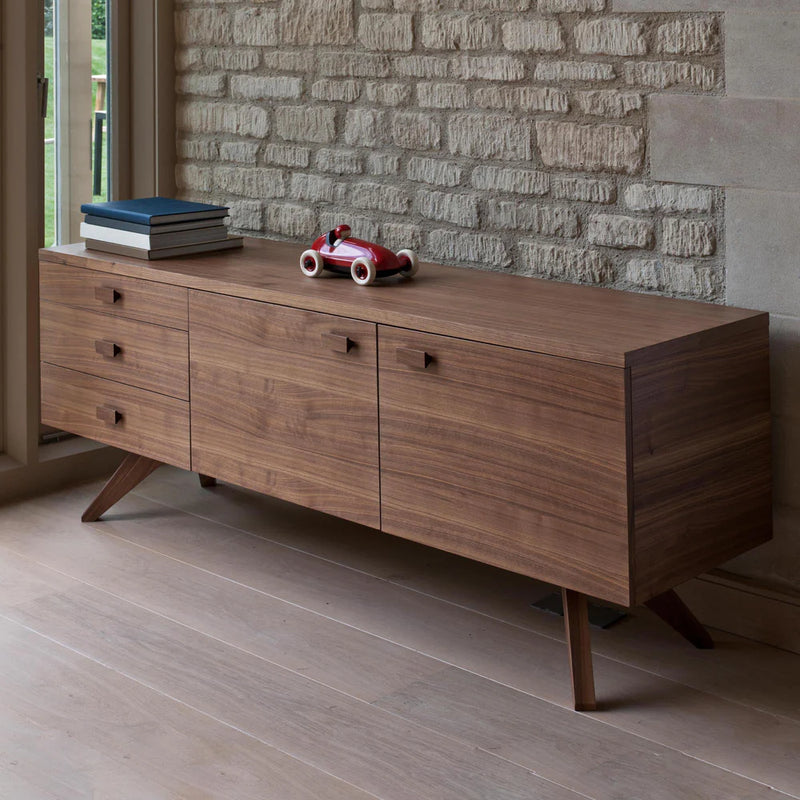
Case Furniture (founded 2005, London) has one of the cleanest design rosters in British furniture. Lead designer Matthew Hilton anchors the catalog, joined by the Robin Day estate, Gareth Neal, and others. Case is the brand to specify for dining chairs and credenzas when the brief calls for restraint.
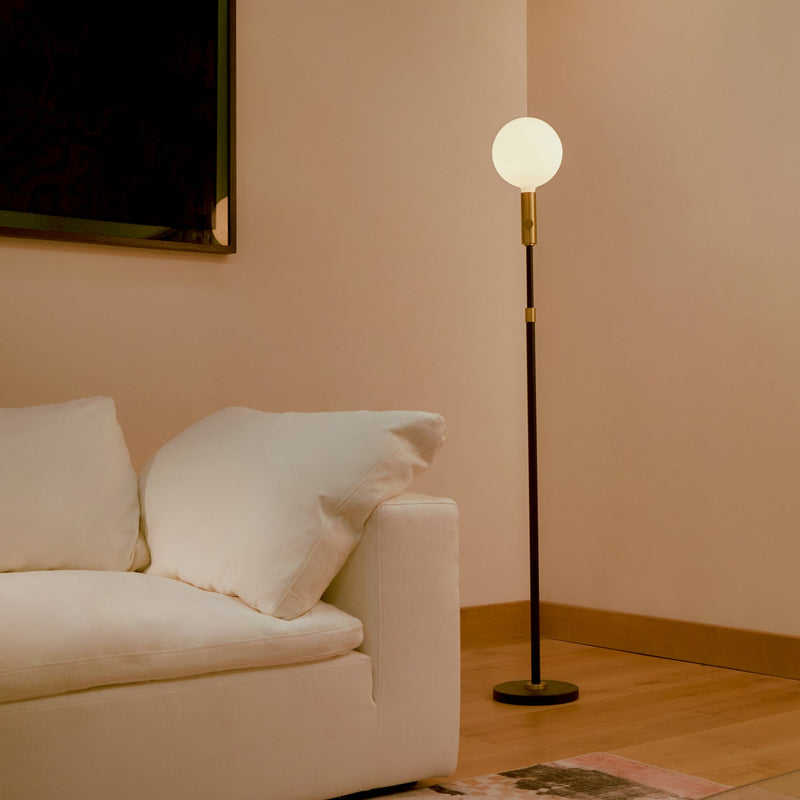
Tala is a B Corp lighting house specializing in LED bulbs and fixtures designed for color rendering and longevity rather than disposability. Tala appears across our lighting range.
From Spain — two houses
The Spanish cluster is small and split between two delivery models. Read the paragraphs below carefully — they affect your timeline.
Isimar (founded 1964, Pamplona, Navarra) is the one brand on this list that ships direct from Spain, with a typical lead time of four to six weeks for production and ocean freight. We carry the brand because the catalog — galvanized and powder-coated steel outdoor furniture made in Navarra — fills a price and silhouette gap our other outdoor brands don’t cover. If you need the piece on a short timeline, look at Fermob or Cane-Line first.
Resol (Les Preses, Girona, Catalonia) is the Spanish counterpoint to Isimar — polypropylene outdoor seating, dining furniture, and sun loungers made in-house in Catalonia, with recycled polypropylene in several lines, then stocked in our US warehouse for standard domestic freight. The catalog runs across the Toledo, Brisa, Gelato, and Baobab collections, with designers including Joan Gaspar, Josep Lluscà, and Benedetta Tagliabue. Resol is the choice when you want the Spanish design language without the Spanish lead time.
Spain's design heritage also reaches beyond outdoor furniture. Lladró (founded 1953, Valencia) is the Spanish porcelain house known for hand-finished figurative pieces, with workshops in Távernes Blanques where each piece is shaped, fired, and decorated by hand.
From Belgium — one house
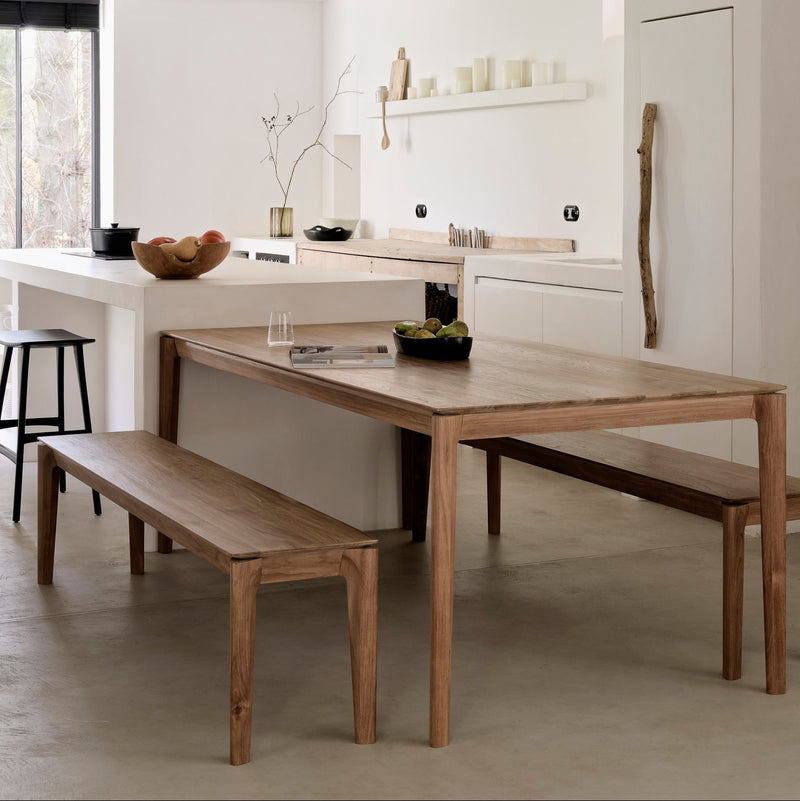
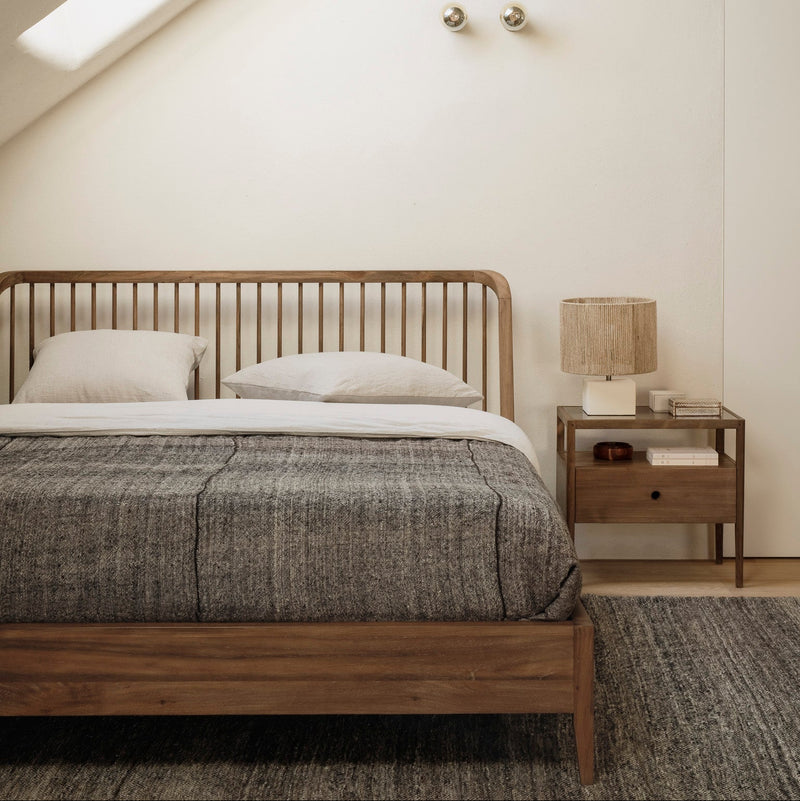
Ethnicraft (founded 1995 in Antwerp, Belgium) is the deepest sustainable wood specialist in our catalog, with roughly 350 products in active rotation. The house works in oak, teak, and mahogany (FSC-certified teak on select lines), and pieces are finished in oil or water-based varnish. Lead designer Alain Van Havre has shaped the silhouette of the brand since the mid-2000s.
Ethnicraft’s Serbian factory is powered by burning wood residues from its own production, and Ethnicraft says its new headquarters near Antwerp is being fitted to run on green and solar energy from rooftop panels. Two circular programs anchor the back end: “Live Light,” which extends piece lifespans through care and repair, and “Re-Loved,” which buys back and reconditions retired Ethnicraft furniture. Iconic items include the Bok dining chair and the Mikado dining table, both Van Havre designs that have stayed in production for more than a decade.
From Norway — two houses
Heymat (Oslo, Norway) makes premium doormats from recycled PET. Roughly 90% of the catalog uses 100% recycled-PET yarn drawn from post-consumer plastic bottles. The design roster — Kristine Five Melvær, Hallgeir Homstvedt — is contemporary Scandinavian. One useful note: for US-market mats, roughly 80% are now manufactured in the USA rather than shipped from Europe, which cuts the transport footprint considerably.
Varier is the Norwegian ergonomic-seating brand best known for the Variable balans kneeling chair (Peter Opsvik, 1979) and the Gravity recliner. Varier sits in our home office range as the alternative to a conventional task chair.
Materials guide
The strongest signal in sustainable furniture is named materials with named certificates. Below are the five material families that show up across the sixteen brands above.
FSC and PEFC certified solid wood
The Forest Stewardship Council (FSC) and Programme for the Endorsement of Forest Certification (PEFC) both audit forest-to-finished-product chains. Brands with these certificates can demonstrate that the oak in your dining table was harvested from a managed forest with replanting and biodiversity controls.
Ethnicraft (for select teak lines), Cane-Line, FDB Møbler, and Tiptoe all operate on FSC or PEFC supply chains. When you see “FSC oak” or “PEFC oak” on a credenza or dining table, the cert is the substance behind the claim.
Recycled polypropylene and polyethylene
Recycled PP and PE show up in molded outdoor furniture and contract seating. Resol uses recycled PP in several of its outdoor lines, including the Toledo Aire chair and the Brisa backrests and armrests. Tiptoe uses recycled PP for the SSDr indoor chair and MIDI outdoor chair. Heller (covered in our mid-century reissues guide) is the canonical American example.
The category matters because conventional outdoor plastic furniture is often virgin polypropylene that crumbles into microplastic within five summers.
Powder-coated steel
Powder-coated steel is the most repairable outdoor material on the market. The powder finish bonds electrostatically and resists chipping; a damaged piece can be re-coated rather than scrapped.
Fermob’s ISO 14001 certification covers the powder-coating process specifically, which means the solvents, off-gas capture, and waste streams in that production step are audited annually. Isimar uses the same construction with a galvanized substrate. Tiptoe’s leg system is also powder-coated steel.
Recycled PET textiles and yarn
Yarns spun from post-consumer plastic bottles appear in upholstery, outdoor rope, and now doormats. Cane-line Soft Touch is a proprietary example. Many of the sofas in our catalog use OEKO-TEX certified recycled PET blends. Heymat builds nearly the entire doormat catalog on 100% recycled PET.
Recycled PET tests at upholstery-grade abrasion resistance and avoids the PFAS-based stain treatments still common in conventional outdoor textiles.
Patented circular composites — Matek
Mater’s Matek deserves its own row. The composite combines industrial waste streams (coffee shell, mango skin, fishing nets) with binders into a material that machines, finishes, and behaves like wood. Matek is one of the few proprietary circular-materials systems shipping in production furniture today.
A useful sanity check when reading any furniture product page: count how many material terms appear with a number, a mill, or a certificate. A page that names “FSC oak from a Slovenian mill, finished in 0-VOC oil” tells you something. A page that says “responsibly sourced wood” tells you nothing.
Certifications, in one paragraph each
For the full rubric — including which Meter category each certification counts under — see the Sustainability Meter methodology. The summaries below are pointers.
FSC (Forest Stewardship Council) is the global chain-of-custody standard for wood. An FSC certificate means the timber can be traced from a certified forest, through every processing step, to the finished piece.
PEFC (Programme for the Endorsement of Forest Certification) is the European-led counterpart to FSC, with similar chain-of-custody auditing. Tiptoe’s oak ships under PEFC/07-31-60.
B Corp is a third-party audit of a company’s social and environmental performance, governance, transparency, and treatment of workers. Anglepoise, Tala, Tiptoe, and Rosendahl Design Group (covering Kähler, Holmegaard, Lyngby Porcelæn, and Rosendahl) all carry B Corp status.
ISO 14001 is the international standard for environmental management systems. Fermob has held it since 2010.
GREENGUARD Gold is an indoor air-quality certification administered by UL, testing finished products for VOC emissions against thresholds set for schools and healthcare.
OEKO-TEX certifies textiles for harmful substances against limits stricter than most national regulations.
Sustainable Furnishings Council (SFC) Gold Exemplary is a recognition from a North American membership organization for the furnishings industry. Fermob USA earned it in 2017, the fourth manufacturer to do so.
How to choose — by brief
The grid below replaces the long “how to choose” lists from earlier drafts. Find your brief, follow the link, shop the brand.
If you want timeless solid wood — start with Ethnicraft for oak and teak case goods, and FDB Møbler for chairs and shelving rooted in the post-war Danish canon. Both work in FSC supply chains and design for repair rather than replacement.
If you need outdoor furniture that survives winter — Fermob for powder-coated steel and Cane-Line for FSC teak with recyclable Soft Touch rope. Both ship from our US warehouse. Read our sustainable outdoor furniture guide for the full weather-resistance comparison.
If you want recycled-plastic outdoor at a contract price point — Resol for polypropylene seating and tables, with recycled content in several lines, stocked in our US warehouse.
If you want a circular-materials brand — Mater. The Matek composite is, by some distance, the most ambitious recycled-input material we carry.
If you’re outfitting a sustainable home office — Anglepoise for task lighting, Case Furniture for the desk and storage, Tala for ambient bulbs, and Tiptoe if you want a modular steel-and-oak desk you can rebuild later. Anglepoise, Tala and Tiptoe are B Corp certified.
If you want a doormat that isn’t landfill in three years — Heymat. Recycled PET, designed in Oslo, mostly made in the US for US buyers.
If you want heritage Danish tableware — Kähler for ceramics, Holmegaard for mouth-blown glass, and Lyngby Porcelæn for the fluted vase. All B Corp under Rosendahl Design Group.
If you want a B Corp brand specifically — Anglepoise, Tala, Tiptoe, and the four Rosendahl Design Group labels. Filter by B Corp on the sustainability page to see only certified houses.
Comparing against US mass-market retailers? Read our side-by-sides: Comosum vs West Elm and sustainable alternatives to Crate & Barrel.
Frequently asked questions
Which European sustainable furniture brand has the deepest US catalog?
FDB Møbler, with roughly 462 products in active rotation across chairs, tables, shelving, and accessories. Ethnicraft is next at about 350 products and is the strongest choice for solid-wood case goods.
Which of these brands hold B Corp certification?
Anglepoise, Tala, and Tiptoe are independently B Corp certified. Kähler, Holmegaard, Lyngby Porcelæn, and the Rosendahl own-label are owned by Rosendahl Design Group, which holds B Corp status at the group level.
Do all these brands ship from a US warehouse?
Fifteen of the sixteen do — including Resol, which is manufactured in Spain but stocked in the US. Isimar is the single exception: it ships direct from Spain with a four-to-six-week lead time.
Which Comosum brand is the most sustainable, on materials alone?
Mater, on the strength of the patented Matek composite — coffee shell, mango skin, and end-of-life industrial waste pressed into load-bearing wood-replacement components. No other brand on this list is shipping circular composite materials at this scale.
What’s the most sustainable outdoor furniture brand for cold climates?
Fermob is the strongest single answer. The 200°C powder-coat bake handles freeze-thaw cycles without cracking, ISO 14001 audits the production process, and the brand publishes care guidance for snow and salt exposure. Cane-Line is the close second when the brief calls for FSC teak rather than steel.
Which brand is best for a sustainable bedroom?
Ethnicraft for the bed frame and case goods in solid oak, with bedside tables from the same wood family. Add Anglepoise for the reading lamp and a Holmegaard glass for the bedside.
Are these brands available with trade pricing?
Yes. Comosum offers a trade program for interior designers, architects, and specifiers covering all sixteen brands. Apply at the trade page linked in the footer.
Is Comosum the only US retailer for any of these brands?
For several brands on this list — including FDB Møbler at this catalog depth, Tiptoe at this catalog depth, and Isimar in the US channel — Comosum is the primary or only US-side stockholder. For others (Ethnicraft, Fermob, Anglepoise) we are one of a small set of US retailers, distinguished by US warehouse stock and the Comosum Sustainability Meter ratings on every product page.
Browse all sixteen brands at Comosum, or jump to the Sustainability Meter methodology to see how each one scores. Interior designers and trade buyers can apply for trade pricing across the full catalog.
Proud Member of Be Original Americas
Comosum is also a proud member and advocate of Be Original Americas, the leading organization dedicated to supporting and protecting original design. Be Original Americas promotes the economic, ethical, and environmental value of authentic design, encouraging both creators and consumers to understand why originality matters. Through our membership, we stand alongside a global community that values creativity, innovation, and craftsmanship.
Being part of Be Original Americas reinforces our belief that great design should respect its creators and the planet. It’s a commitment to authenticity — ensuring that every piece we offer honors the artistry, sustainability, and integrity that define original design.
Proud Member of Be Original Americas
Comosum is also a proud member and advocate of Be Original Americas, the leading organization dedicated to supporting and protecting original design. Be Original Americas promotes the economic, ethical, and environmental value of authentic design, encouraging both creators and consumers to understand why originality matters. Through our membership, we stand alongside a global community that values creativity, innovation, and craftsmanship.
Being part of Be Original Americas reinforces our belief that great design should respect its creators and the planet. It’s a commitment to authenticity — ensuring that every piece we offer honors the artistry, sustainability, and integrity that define original design.

 🔒 Secure checkout
30-Day Returns
Warranty Included
🔒 Secure checkout
30-Day Returns
Warranty Included