

Bamboo vs. hardwood: how do they compare?
Bamboo is a grass and hardwoods are trees, so they renew at very different speeds. Made into solid furniture, they behave much alike.
| Material | What it is | Renews in | Hardness | Ask about |
|---|---|---|---|---|
| Solid Moso bamboo | A giant grass, laminated into solid boards | Under five years, from its roots (Greenington) | About 20% harder than red oak (Greenington) | The adhesive and emissions testing |
| Solid oak | A slow-growing temperate hardwood | Decades; Greenington puts hardwoods at 40 to 60 years | Hard and dense; the usual yardstick | FSC chain-of-custody |
| Rubberwood | A tropical hardwood from latex plantations | Felled when tapping ends, typically around 30 years | Softer than red oak (The Wood Database) | How it was dried and treated |
What is the best bamboo species for furniture?
Moso bamboo (Phyllostachys edulis). It is one of the largest bamboos on Earth, so its tall culms yield strips wide enough to laminate into solid boards, and it is the most widespread, most commercially valuable bamboo in China. Greenington builds every piece from it. The company says Moso matures in under five years and regrows from its roots after harvest, with no replanting, so the grove is never clear-cut.
How is solid Moso bamboo furniture made?
Greenington mills each culm into strips, steams them to caramelize the natural sugars, then laminates them into solid stock. That heat and pressure creates the Caramelized and Amber tones, so the color runs through the material rather than sitting on top as a stain. There is no plywood, particleboard or veneer, and the sawdust fires the kilns.
Is bamboo good for furniture?
Yes, when it is solid bamboo from a maker that names its material. Laminated Moso is hard, takes a finish well and holds dovetail joints. Greenington rates it about 20% harder than red oak, which is why its Marseilles table spans 72 inches without a stretcher. Because the strips are laminated, glue is part of the material, so ask which adhesive was used and how the piece is emissions-tested; our non-toxic furniture guide explains the labels. Keep bamboo at 40–55% humidity and skip wax and polish.
Bamboo vs. rubberwood vs. solid oak bed frames
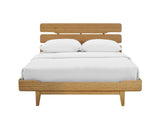
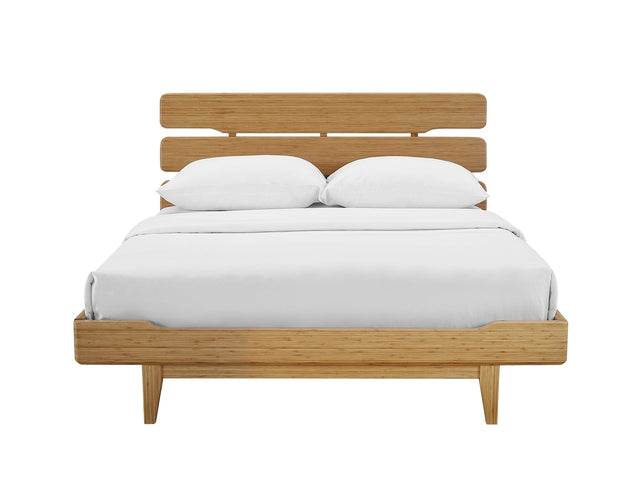
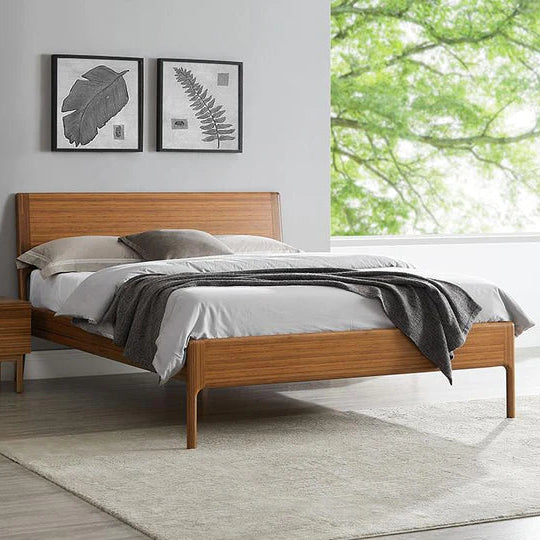
Solid bamboo. Hard and dense. Greenington’s Currant and Ventura beds are solid Moso bamboo down to the slats, which carry the mattress with no box spring.
Rubberwood. The usual material in budget frames. It comes from rubber plantations, felled once latex tapping ends, so it gives an existing crop a second use. The Wood Database rates it softer than red oak, with little natural resistance to decay or insects, and notes it is sometimes sold as “Malaysian oak.” Ask how it was dried and treated, and whether the frame is solid.
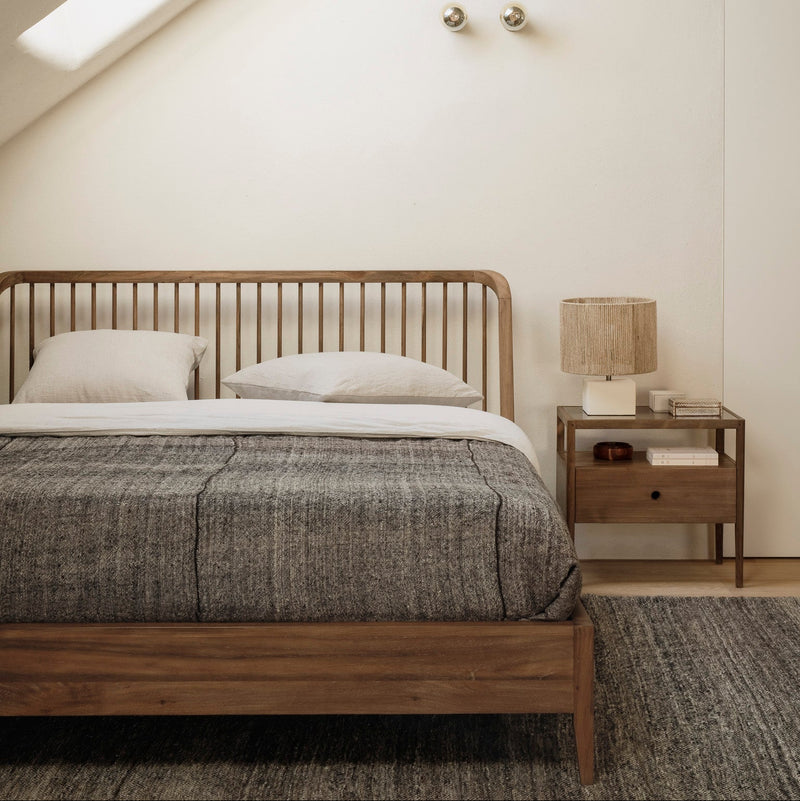
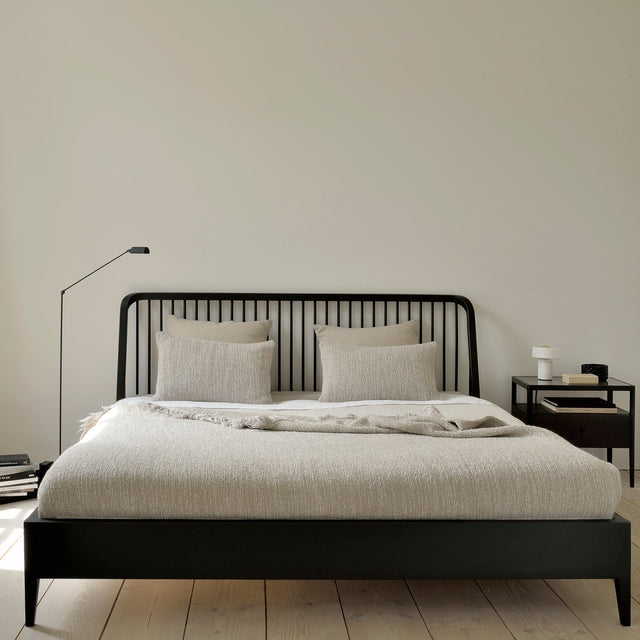
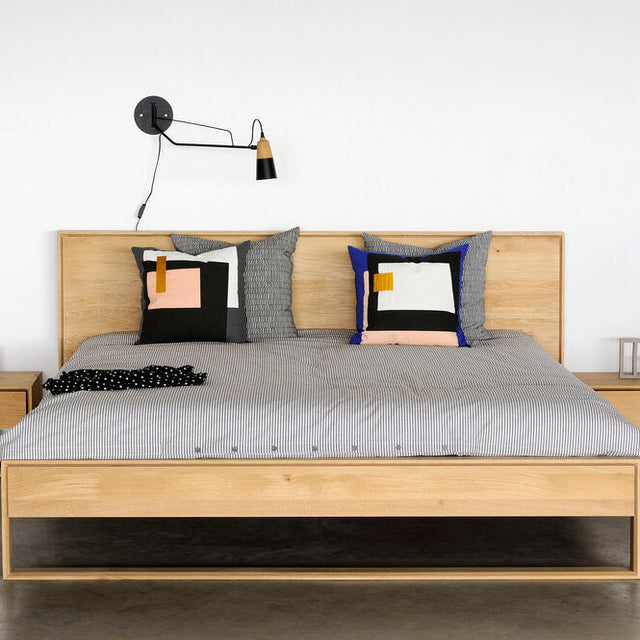
Solid oak. The slowest-growing of the three and the most familiar furniture hardwood. Ethnicraft’s Spindle, Nordic II and Air beds are solid oak made in Serbia, with wooden slats included.
 Shop the bedroom · 2 pieces
 Greenington · Meter 3.5Currant Platform BedSolid Moso bamboo; tone from heat and steam, not stain
From $2,089Shop →
Greenington · Meter 3.5Currant Platform BedSolid Moso bamboo; tone from heat and steam, not stain
From $2,089Shop →
 Greenington · Meter 3.5Ventura Platform BedSolid Moso bamboo, no MDF or plywood; bamboo slats
From $2,349Shop →
Greenington · Meter 3.5Ventura Platform BedSolid Moso bamboo, no MDF or plywood; bamboo slats
From $2,349Shop →
 Ethnicraft · Meter 3.5Oak Spindle BedSolid oak, made in Serbia; also in reclaimed teak
From $3,499Shop →
Ethnicraft · Meter 3.5Oak Spindle BedSolid oak, made in Serbia; also in reclaimed teak
From $3,499Shop →
 Ethnicraft · Meter 3.5Nordic II BedSolid oak, hardwax oil; wooden slats included
From $4,279Shop →
Ethnicraft · Meter 3.5Nordic II BedSolid oak, hardwax oil; wooden slats included
From $4,279Shop →
Bamboo or recycled wood headboard: which is more eco-friendly?
Reclaimed wood wins on raw material, because nothing new is cut. Bamboo is a strong renewable alternative, since the grove regrows without replanting. Beyond that, solid construction and a low-emission finish decide it. Ethnicraft makes its Spindle bed in reclaimed teak as well as oak; Greenington’s headboards are solid bamboo, like the frames.
Bamboo vs. oak: which is more sustainable?
On renewal speed, bamboo wins clearly. Sustainability is more than the plant, though, so look at what each maker can show.
Solid bamboo · Greenington
- Culms cut by hand; the roots stay in the ground
- Made in an ISO 14001-certified factory in China, shipped by sea
- Bamboo sawdust fuels the kilns and the press
- ISFD awards in 2022 and 2024
Solid hardwood · Ethnicraft, FDB Møbler
- Ethnicraft’s Serbian oak factory runs on wood-residue energy
- FSC-certified teak on select Ethnicraft lines
- FDB Møbler holds FSC chain-of-custody certification (FSC-C164841)
- FDB tests its furniture at the Danish Technological Institute
Choose bamboo for the fastest-renewing material, certified hardwood for documented forest sourcing. We grade every brand on six published categories; see how the Sustainability Meter works.
Bamboo or hardwood: which should you buy?

Fastest-renewing
Solid Moso bamboo. A grass that regrows from its roots and rates harder than red oak.

Documented sourcing
Certified solid hardwood. Oak or teak from a maker that names its certificate and factory.
Nothing newly cut
Reclaimed wood. The lightest raw-material footprint; check the finish and the joinery.
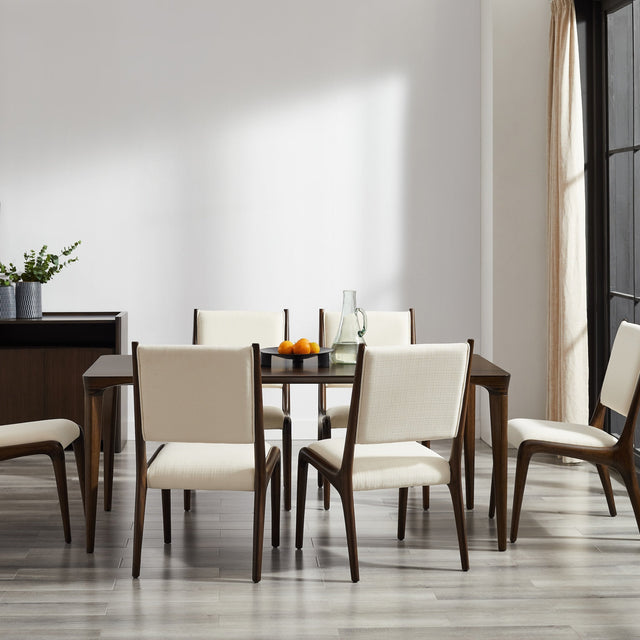
 Greenington · Meter 3.5Marseilles Dining TableSolid Moso bamboo; spans 72 in. with no stretcher
From $2,209Shop →
Greenington · Meter 3.5Marseilles Dining TableSolid Moso bamboo; spans 72 in. with no stretcher
From $2,209Shop →
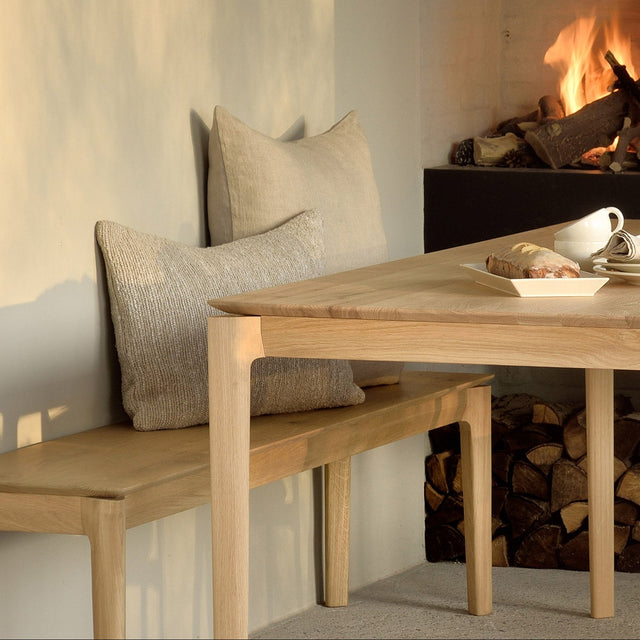
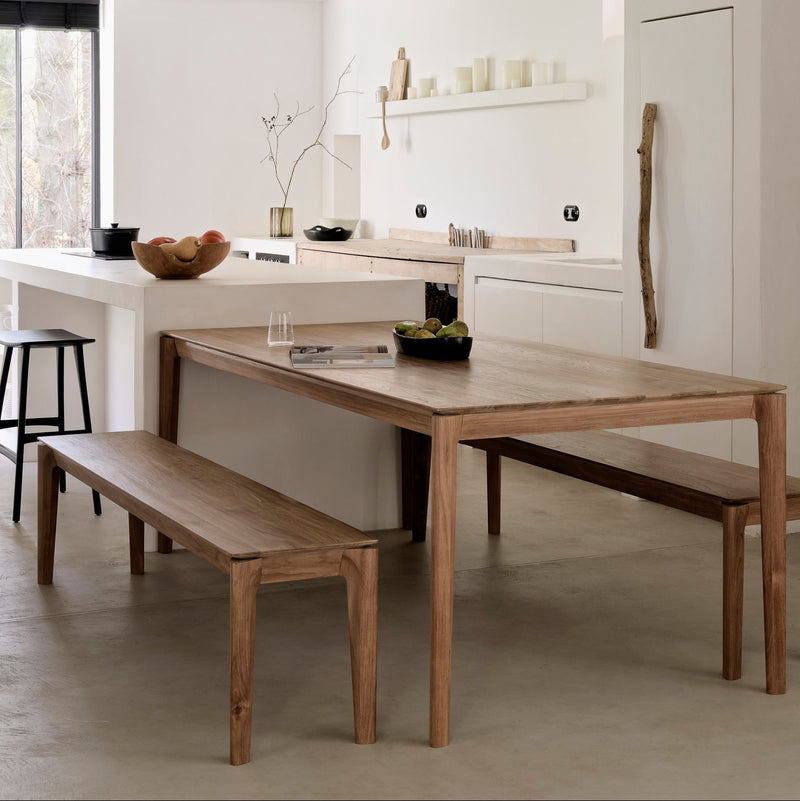
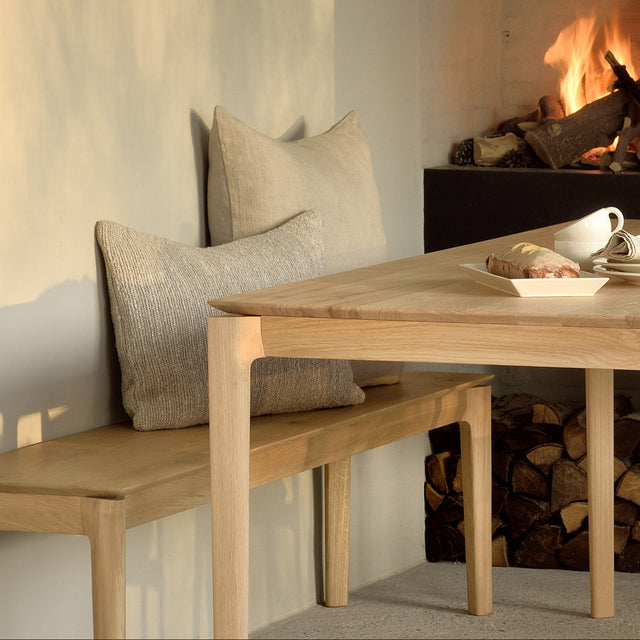
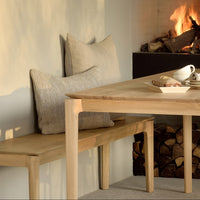 Ethnicraft · Meter 3.5Bok Dining TableSolid oak, or FSC-certified teak; seven sizes
From $1,999Shop →
Ethnicraft · Meter 3.5Bok Dining TableSolid oak, or FSC-certified teak; seven sizes
From $1,999Shop →
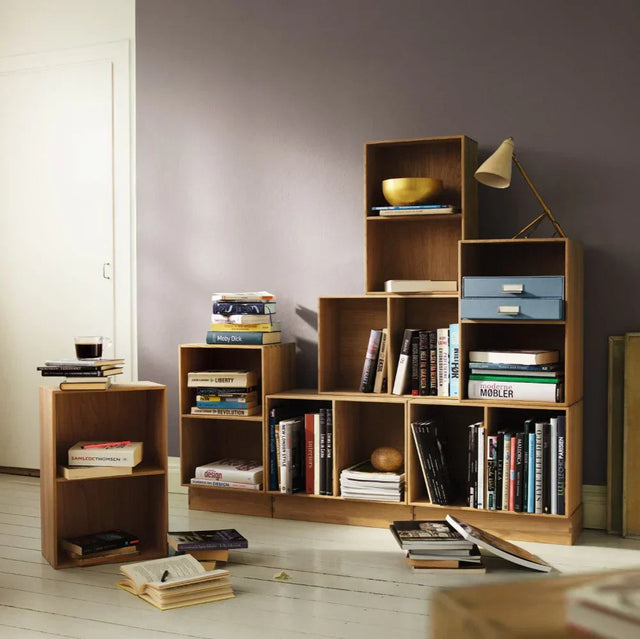
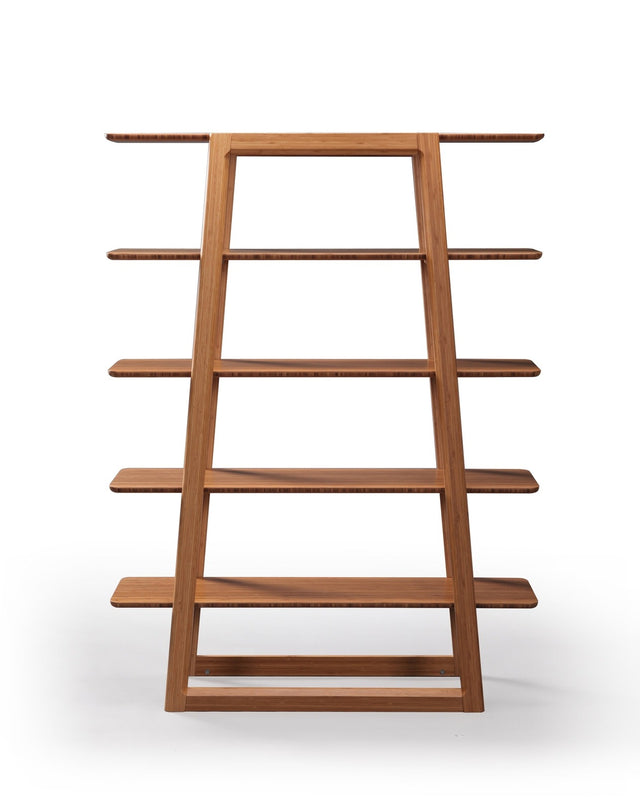
 Greenington · Meter 3.5Currant BookshelfSolid bamboo throughout: no MDF or plywood
From $1,319Shop →
Greenington · Meter 3.5Currant BookshelfSolid bamboo throughout: no MDF or plywood
From $1,319Shop →
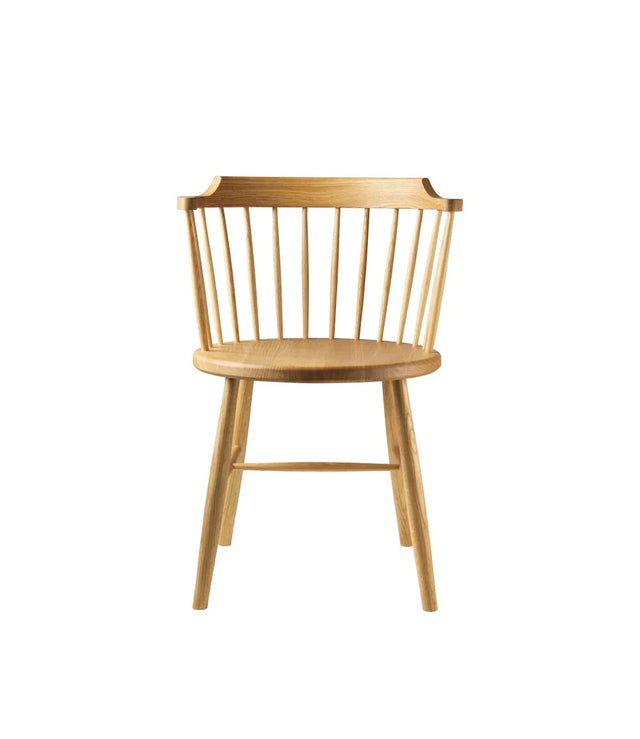
 FDB Møbler · Meter 3.7J18 ChairSolid oak, Nordic Swan Ecolabel; made in Slovenia
$979Shop →
FDB Møbler · Meter 3.7J18 ChairSolid oak, Nordic Swan Ecolabel; made in Slovenia
$979Shop →
Comparing tables? Read Greenington vs. Ethnicraft: bamboo or solid oak, or see solid wood vs. veneer vs. engineered wood.


Behind the bed · Greenington · Est. 2004 · Solid Moso bamboo
Furniture from a bamboo grove that’s never clear-cut
Yang Lin founded Greenington in 2004 to build furniture entirely from solid Moso bamboo. Farmers select and cut each culm by hand and leave the roots in the ground, so the grove regrows without replanting. The strips are steamed to caramelize their natural sugars, which gives the warm tones, then laminated into solid boards in an ISO 14001-certified factory.
- 100% solid Moso bamboo
- Sawdust fuels the kilns
- Sustainable Furnishings Council member
grade
Questions people ask
What is the best bamboo species for furniture?
Moso bamboo (Phyllostachys edulis). It is one of the largest bamboos, so its culms are big enough to mill into strips and laminate into solid boards. Greenington says it matures in under five years and regrows from its roots without replanting.
Is bamboo good for furniture?
Yes, if it is solid bamboo. Laminated Moso is hard, takes a finish well and holds dovetail joints; Greenington rates its bamboo about 20% harder than red oak. Ask which adhesive bonds the strips and how the piece is emissions-tested.
Is bamboo or rubberwood better for a bed frame?
Solid bamboo, for most buyers. Greenington rates its bamboo harder than red oak; The Wood Database rates rubberwood softer than red oak, with little natural resistance to decay or insects. If you choose rubberwood, ask how it was dried and treated.
Is bamboo wood good for a bed frame?
Yes. Solid Moso bamboo is hard and dense, and Greenington’s beds rest the mattress on solid bamboo slats, with no box spring needed.
Is bamboo stronger than oak?
Harder, by Greenington’s measure: about 20% harder than red oak. Hardness measures dent resistance; in furniture, thickness and joinery matter as much as species.
Is bamboo a hardwood?
No. Bamboo is a grass, so it is neither hardwood nor softwood; those terms describe trees. Laminated into solid boards, Moso is used just as hardwood is, for frames, tops and drawer fronts.
Is a bamboo or recycled wood headboard more eco-friendly?
Reclaimed wood has the lighter raw-material footprint, since nothing new is harvested. Bamboo is a strong renewable alternative because the grove regrows without replanting.
Is bamboo more sustainable than hardwood?
On renewal speed, yes: Greenington says Moso matures in under five years, where hardwoods take 40 to 60. Hardwood can bring documented sourcing, such as FDB Møbler’s FSC chain-of-custody certification. The greenest piece is the one you keep longest.