

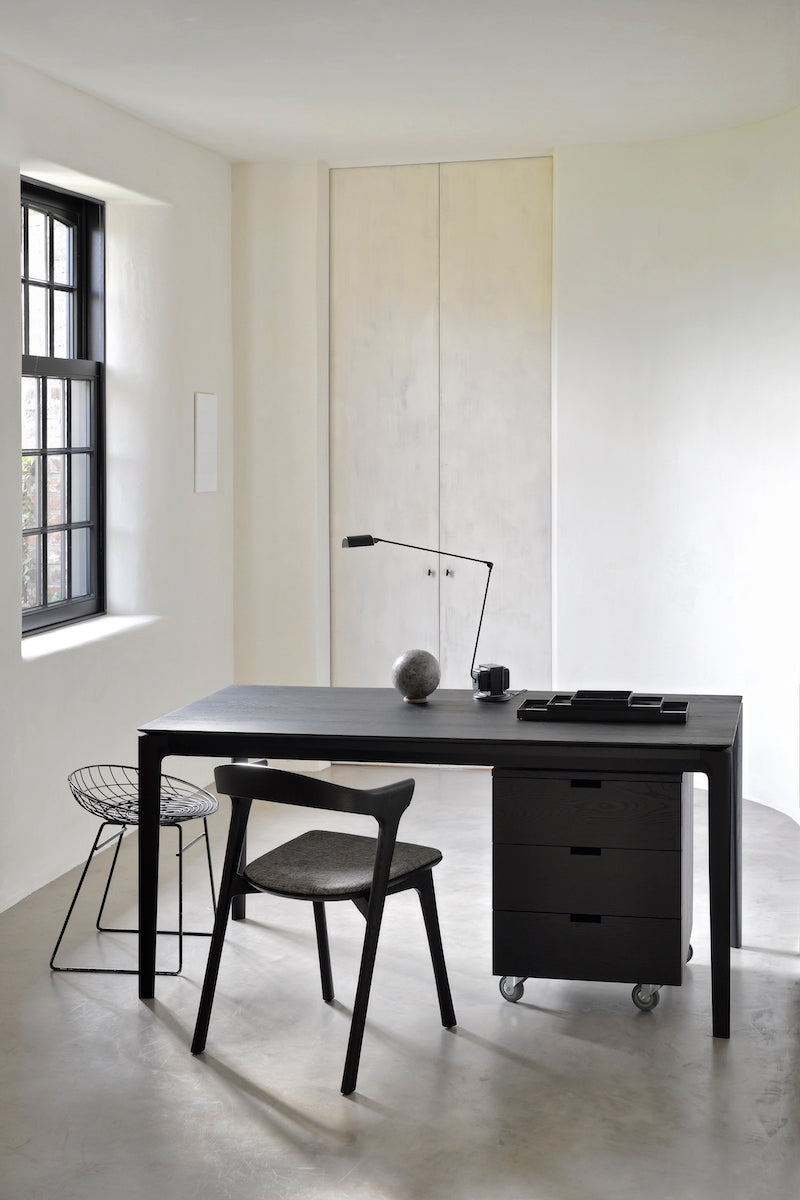
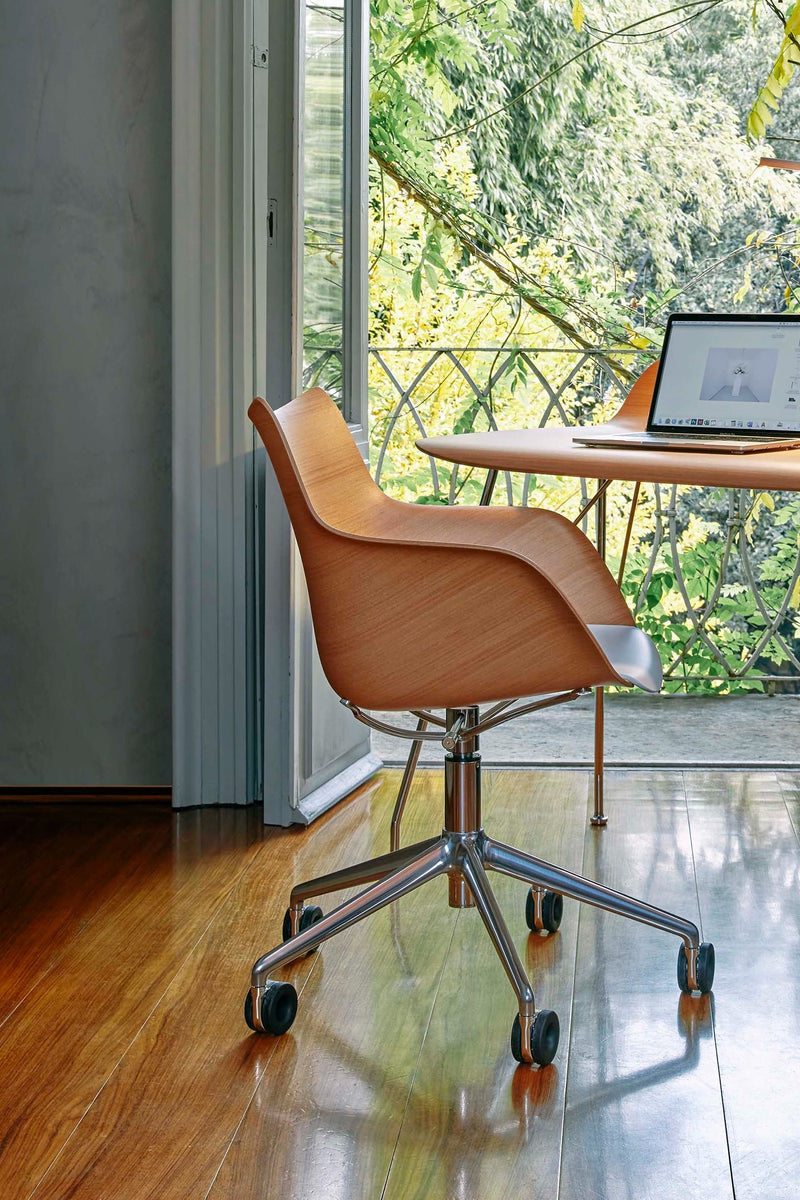
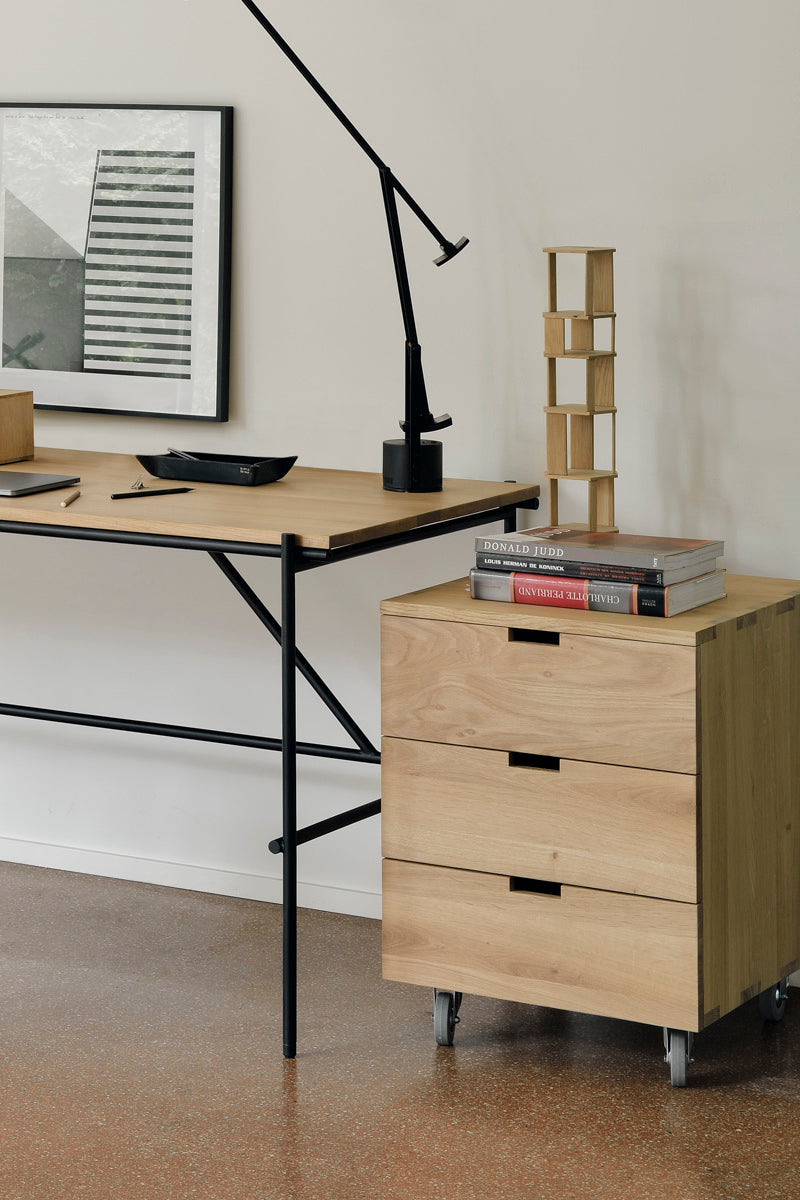
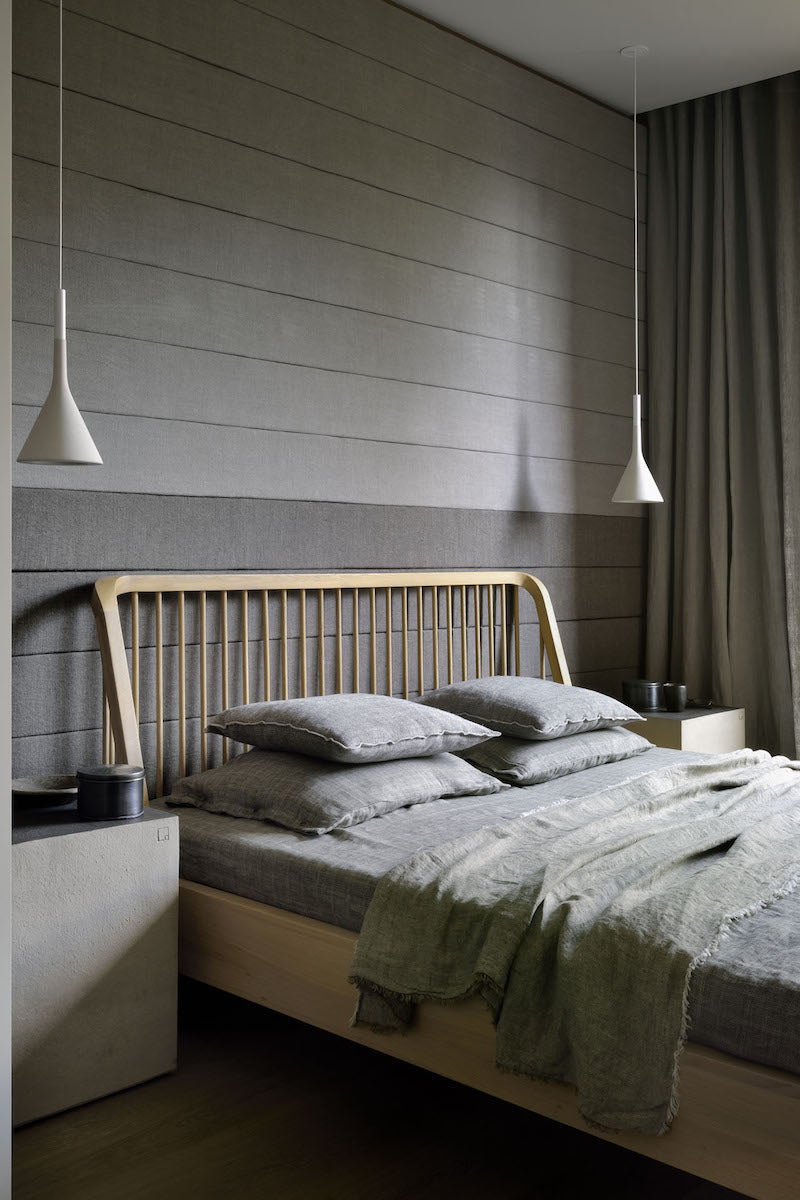
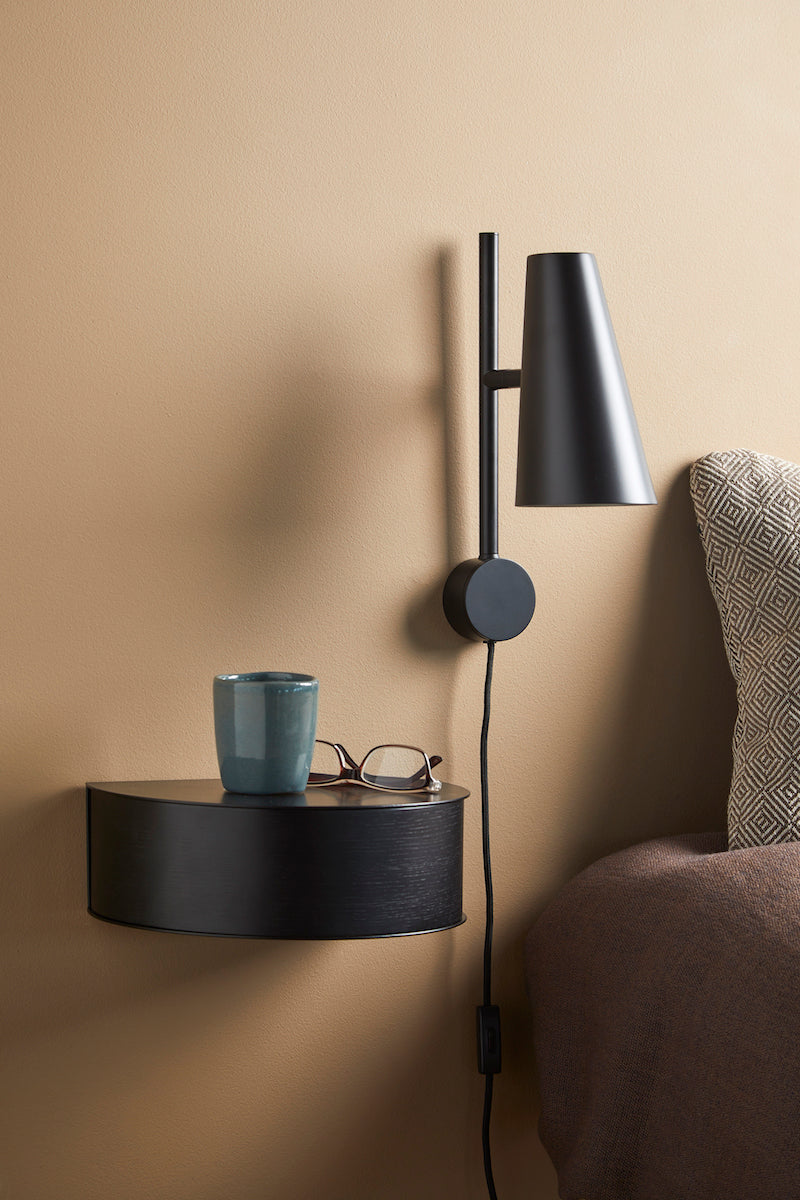
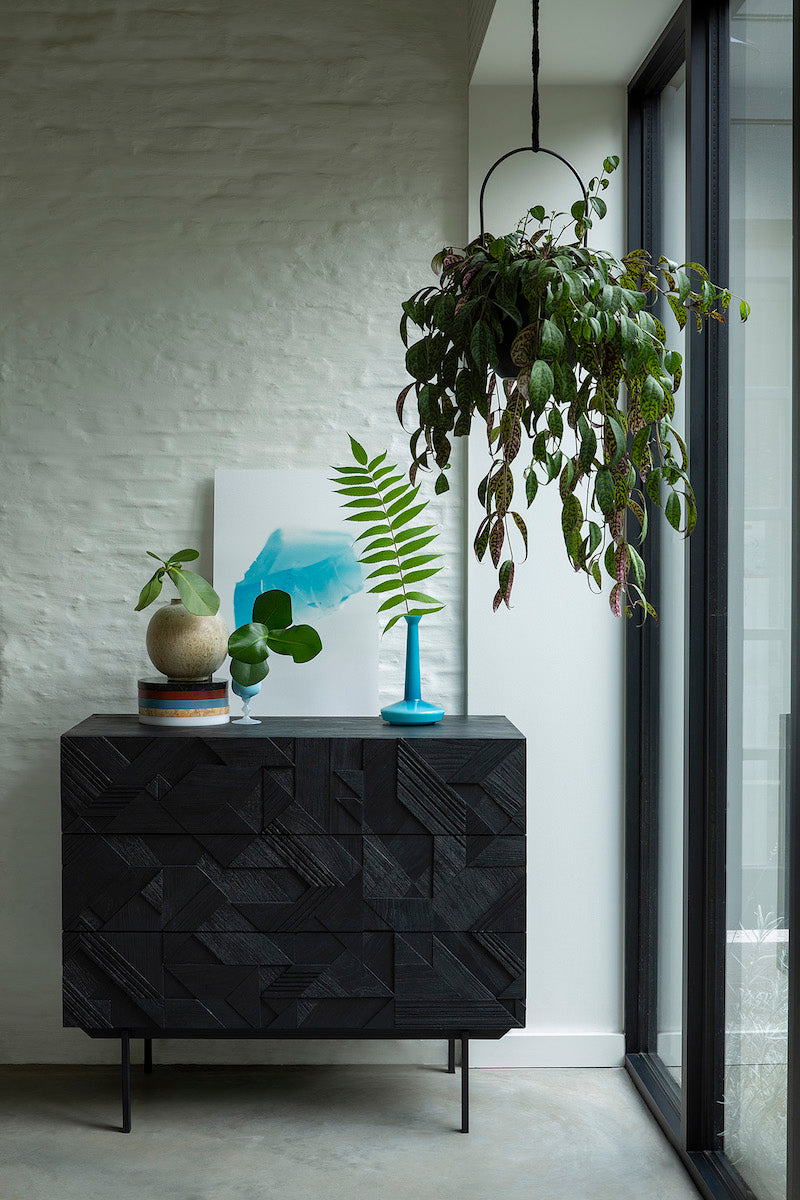
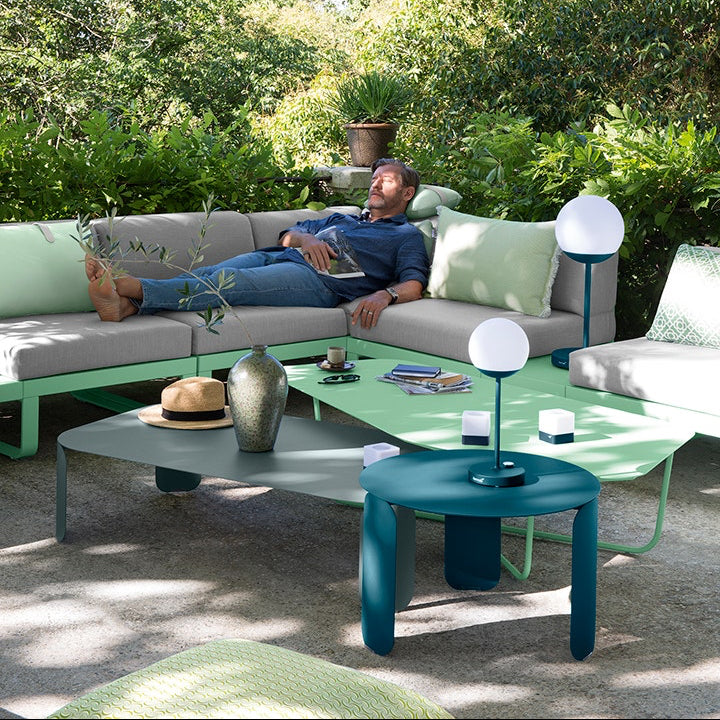
The material your outdoor furniture is made of is the biggest decision driving how it weathers, what it costs to maintain, and how it returns to the earth. At Comosum, we group outdoor pieces into three material families — powder-coated metal (Fermob, Isimar), FSC-certified hardwood (Ethnicraft, Cane-Line), and recycled polypropylene (Heller, Resol) — each with distinct trade-offs in durability, sustainability, and lifecycle. Here's how to choose between them.
Why Outdoor Furniture Material Matters
Outdoor furniture lives a harder life than indoor furniture. UV radiation, freeze-thaw cycles, salt spray, pollen, sunscreen, sticky drinks, and the occasional thunderstorm all attack the same piece across the same year. The material the piece is made of determines how it responds to each of those stresses — and what happens to it at end of life.
A solid teak chair oiled annually for twenty years can be sanded back, re-oiled, and live another twenty. A powder-coated steel frame can be stripped and re-coated. A polypropylene chair, if it's the right kind, can be ground down and re-extruded. The wrong kind goes to landfill. These differences compound across the typical 20-year life of a piece — and explain why "the most sustainable material" depends as much on the manufacturer as on the material itself.
The conversation has shifted from "what's the lowest-impact material to extract?" to "what lasts longest in the climate it'll live in, and what happens to it after?" The answer is rarely the same for every household — a Cape Cod beach house and a Phoenix patio need different materials, even when both want to be sustainable.
This guide compares the three material families we curate at Comosum across the six manufacturers we've vetted on durability, sustainability, and design integrity: Fermob and Isimar for metal, Ethnicraft and Cane-Line for wood, Heller and Resol for plastic.
Comparing the Three Material Families
Metal — Powder-Coated Steel and Aluminum (Fermob, Isimar)
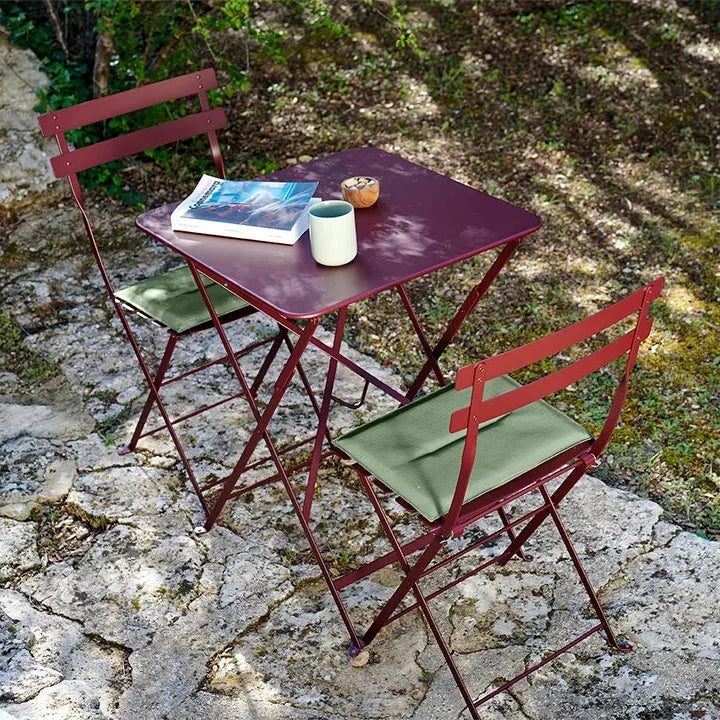
Metal outdoor furniture is built around a frame coated in baked-on powder coating, which is more durable and chemically stable than wet paint and can be stripped and re-coated rather than replaced. Pros: the frame is rigid enough to last decades; powder coating resists UV, salt spray, and abrasion; aluminum is rust-immune; recycled-content sourcing is increasingly common. Cons: exposed scratches will rust on uncoated steel; production energy footprint is higher than wood; less repairable than solid wood at the joinery level.
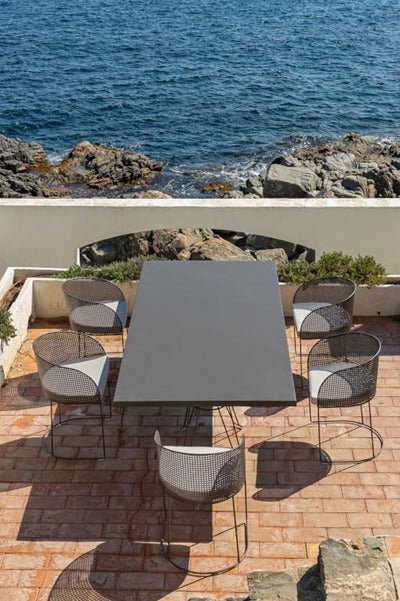
Fermob, the French brand whose Bistro chair has been in continuous Fermob production since 1989 (based on a Parisian café design from 1889), manufactures every powder-coated steel frame at a single factory in Thoissey, France, where each design is offered in 24 colors — enabling re-coloring as a refurbishment rather than a replacement. Isimar, based in Spain, builds its frames from 100% recycled and recyclable galvanized steel and aluminum, and powers its factory entirely on photovoltaic solar — generating five times more renewable energy than it consumes. Both brands' frames carry UV-stable, salt-spray-resistant powder coats rated for coastal applications.
Best for: coastal homes, hospitality venues, and anyone who wants 20+ years from a single set with minimal annual maintenance.
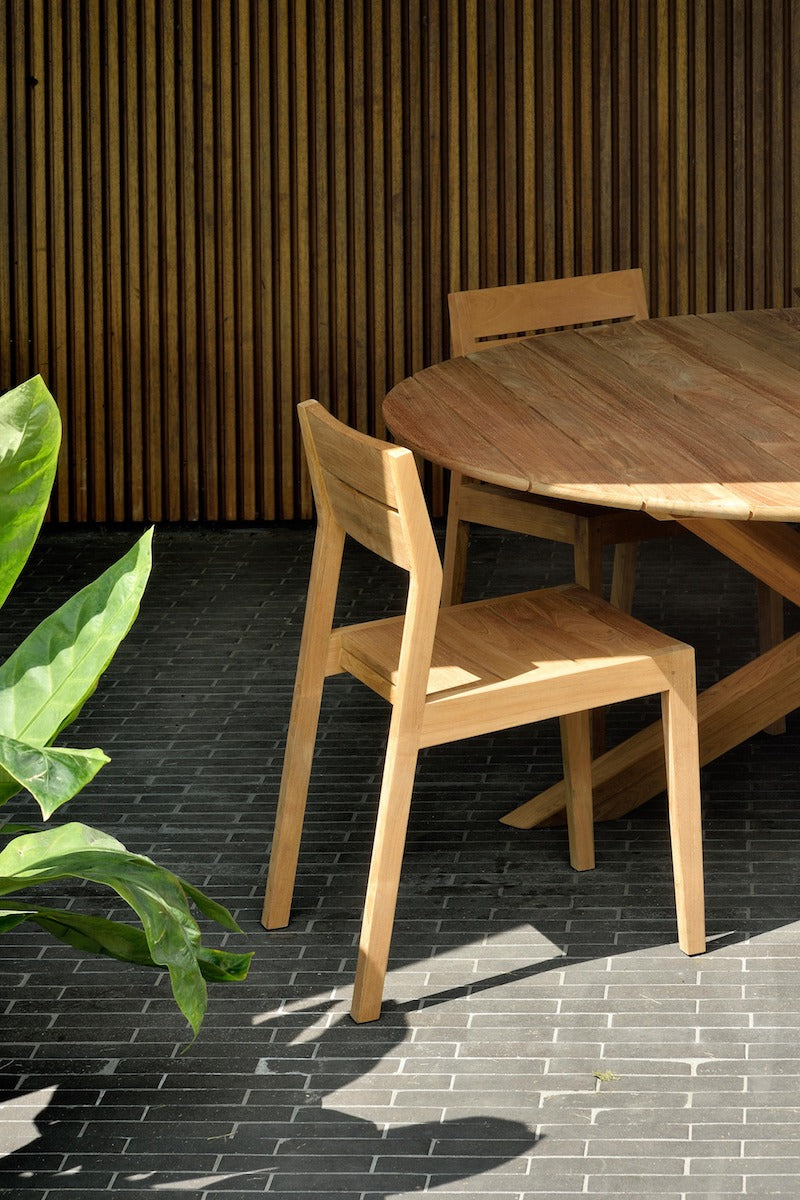
Wood — FSC-Certified Teak and Oak (Ethnicraft, Cane-Line)
Solid wood ages rather than wears out. Pros: when properly sourced, wood is the lowest-carbon option at point of manufacture and the most repairable — a damaged board can be sanded, re-oiled, or replaced individually; teak's natural oils mean it can weather without chemical treatment. Cons: wood requires annual maintenance (oiling for teak, sealing for oak); quality and sourcing vary wildly; un-certified tropical hardwoods often come from problematic forestry.
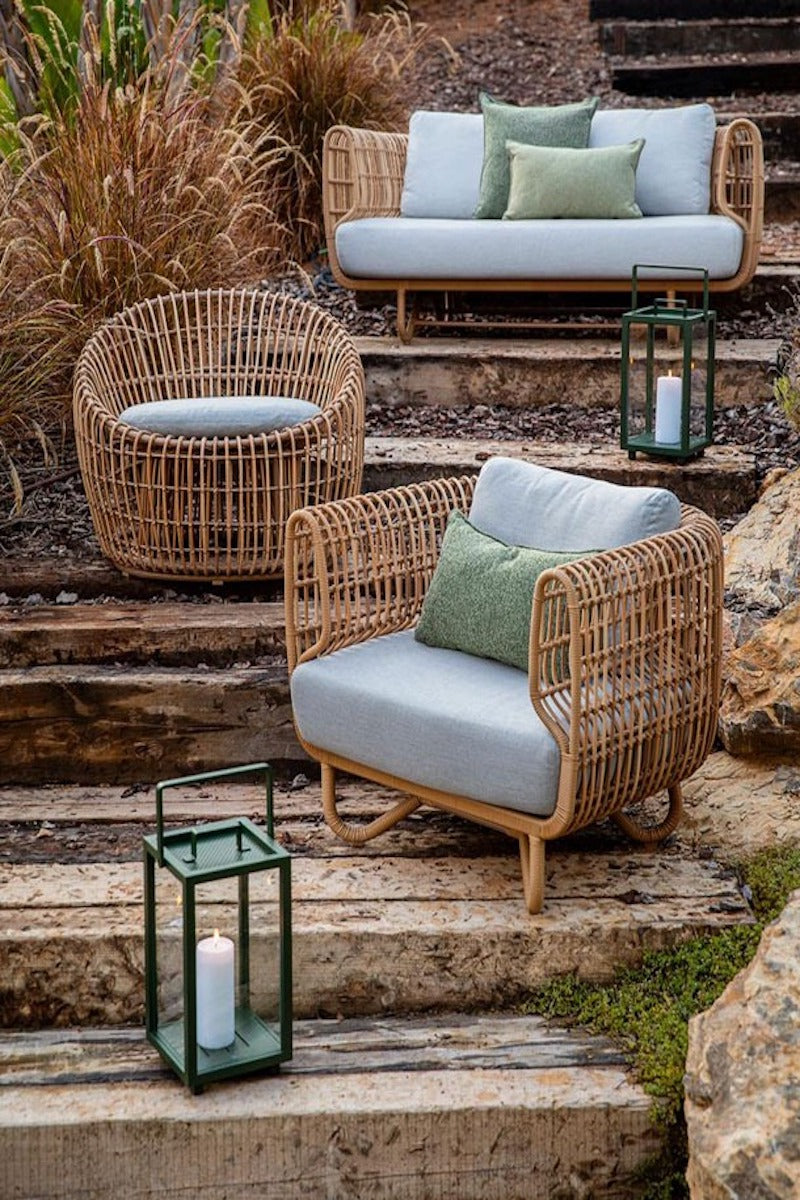
Ethnicraft, founded in Antwerp, Belgium in 1995, sources FSC-certified and SLVK-compliant timber across its outdoor catalog, finishing with water-based, low-VOC oils. The brand's Serbian manufacturing facility runs on wood-residue energy, and the Belgian headquarters is solar-powered; their Live Light and Re-Loved circular initiatives extend the lifespan of older Ethnicraft pieces through refurbishment. Cane-Line, the Danish brand founded in 1986, pairs FSC-certified teak with proprietary woven materials like Cane-line Soft Rope (made from recycled PET) and is targeting carbon-neutral operations by 2030. We've covered Cane-Line in depth in our brand spotlight.
Best for: buyers who want a piece that visibly improves with age, and who don't mind an annual oiling weekend.
Plastic — Recycled and Recyclable Polypropylene (Heller, Resol)
Modern outdoor plastic is not the brittle resin chair of the 1990s. Pros: the best polypropylene is UV-stabilized, fully recyclable, lighter than metal or wood, and immune to rust, rot, and most weather damage; recycled-content sourcing closes the material loop; lighter shipping weight reduces transport emissions. Cons: lower-quality plastic still goes brittle in sustained UV; design quality varies; recycled-content claims need to be verified independently; thermal expansion is higher than wood or metal.
Heller, founded in 1971 and manufactured in the USA, produces its iconic Bellini Chair — designed by Mario Bellini in 1998 and an instant icon at that year's Salone del Mobile — from fiberglass-reinforced polypropylene using Worry Free Plastics™ technology. The chair stacks six high, weathers without dedicated maintenance, and is fully recyclable at end of life. Resol, the Spanish brand, uses post-consumer recycled polypropylene across most of its catalog, operating under ISO 14001 and ISO 14006 environmental management standards, with closed-loop production that re-injects scrap into new pieces. We've covered Resol's manufacturing approach in detail in our brand profile.
Best for: apartment balconies, hospitality refits, and anyone who wants stackable, low-maintenance seating with a small footprint.
How We Curate Outdoor Furniture at Comosum
Across the three material families, we hold every brand to the same three tests: design integrity, durability, and a verifiable sustainability story. We carry pieces that have lasted as designs (Fermob's Bistro chair traces back 136 years; the Bellini Chair has been in continuous production since 1998) AND that come from manufacturers willing to publish, audit, and verify their environmental claims.
That last test matters more than it sounds. "Eco-friendly" is a marketing term. FSC chain-of-custody, ISO 14001 environmental management, and B Corp certification are independent verifications — a real auditor visited the factory. We weight these heavily in curation, which is why our outdoor catalog skews toward Ethnicraft (FSC-certified across the line), Isimar (100% recycled material, solar-powered factory), and Resol (ISO 14001 closed-loop production).
For our broader curation criteria across both indoor and outdoor furniture, see our guide to sustainable furniture brands.
Outdoor Pieces to Shop at Comosum
A starter set across all three material families:
- Heller Bellini Chair — Mario Bellini's 1998 polypropylene icon, stackable up to six high, four colorways, made in the USA. Sold in sets of two.
- Isimar Bolonia Lounge Chair — Spanish galvanized steel and aluminum lounger inspired by southern Spain's Bolonia beach, built at Isimar's solar-powered Valencia factory.
- Cane-Line Flip Folding Table — FSC-certified teak top with aluminum frame, designed to fold flat for storage; ideal for balconies and small patios.
- Ethnicraft Bok Dining Chair (Teak) — Belgian-designed, Indonesian-crafted FSC teak chair finished with hand-applied water-based oils; outdoor-rated.
- Fermob Aplô Wall Light — Powder-coated steel cordless outdoor lamp made in Thoissey, France; rechargeable, with magnetic wall mount.
Browse the full outdoor furniture collection at Comosum →
Frequently Asked Questions About Outdoor Furniture Materials
Which outdoor furniture material lasts longest?
With proper care, FSC-certified teak (used by Ethnicraft and Cane-Line) has the longest documented service life — 50+ years in coastal applications. Powder-coated steel and aluminum (Fermob, Isimar) typically last 20–30 years before recoating, while UV-stabilized polypropylene (Heller, Resol) runs 10–15 years. The "longest" answer depends on willingness to maintain — wood requires annual oiling; metal needs only occasional touch-ups; plastic needs only cleaning.
Is metal or wood outdoor furniture more sustainable?
Both can be sustainable, depending on the manufacturer. FSC-certified hardwood is usually the lowest-carbon option at point of manufacture, but recycled-content metal (like Isimar's 100% recycled aluminum) has a strong end-of-life story since metal is infinitely recyclable. The deciding factor is verification: look for FSC chain-of-custody for wood, ISO 14001 for metal manufacturing, and post-consumer recycled-content disclosures for plastic.
Does outdoor plastic furniture really hold up?
Modern engineered polypropylene does — it's not the brittle resin lawn chair of the 1990s. The Heller Bellini Chair has been in continuous production since 1998 with examples still in service after 25+ years. The keys are UV stabilization (which prevents the chalking and cracking that aged older plastic), structural reinforcement (fiberglass in the Bellini's case), and proper colorant selection.
Where is Comosum's outdoor furniture made?
Fermob in Thoissey, France; Isimar in Spain; Ethnicraft in Indonesia and Serbia (Belgian design); Cane-Line in Asia and Europe (Danish design); Heller in the USA; Resol in Spain.
How do I choose the right outdoor material for my climate?
Coastal homes need salt-resistant materials — galvanized steel (Isimar), aluminum, or teak (Ethnicraft, Cane-Line) hold up best. Hot dry climates with intense UV favor powder-coated metal or UV-stabilized polypropylene. Cold-winter climates with freeze-thaw cycles can damage some plastics; teak and powder-coated metal are most forgiving. For more, read our Ultimate Guide to Sustainable Furniture.


Leave a comment
This site is protected by hCaptcha and the hCaptcha Privacy Policy and Terms of Service apply.