


Sustainable sofas are upholstered seating built for a long life and a clean indoor environment — frames made from FSC-certified hardwood, foams that pass GREENGUARD or CertiPUR-US emissions tests, and upholstery certified to OEKO-TEX Standard 100 for chemical safety. The best examples are designed to be reupholstered, not replaced. Comosum carries a curated set of European and American sofa makers whose construction details are verifiable, not vague. You can shop all of them in our sustainable sofas and sectionals collection.
Why a Sofa Is the Sustainability Decision That Matters Most
The sofa is usually the largest piece of upholstered furniture in the home, the surface a household sits on for thousands of hours, and the single biggest contributor to a living room's indoor air-quality profile. For decades, polyurethane foam in US sofas was treated with chemical flame retardants to comply with California Technical Bulletin 117. When that standard was revised to TB117-2013, manufacturers were finally allowed to make compliant foam without those additives — but uptake has been uneven, and many imported sofas still rely on legacy chemistry.
Lifespan is the other half of the equation. A well-built sofa with a hardwood frame and replaceable cushions can be reupholstered and stay in service for 20 to 25 years. A flat-pack sofa with a softwood or particleboard frame and bonded foam is often replaced within five. The US Environmental Protection Agency estimates roughly twelve million tons of furniture reach American landfills each year. The single most environmentally consequential thing a household can do with a sofa is buy one that lasts. We've written more about this in The Hidden Cost of Fast Furniture.
Our picks: European sofas
Six sofas that ship to the contiguous 48 states. Prices as of September 2026.
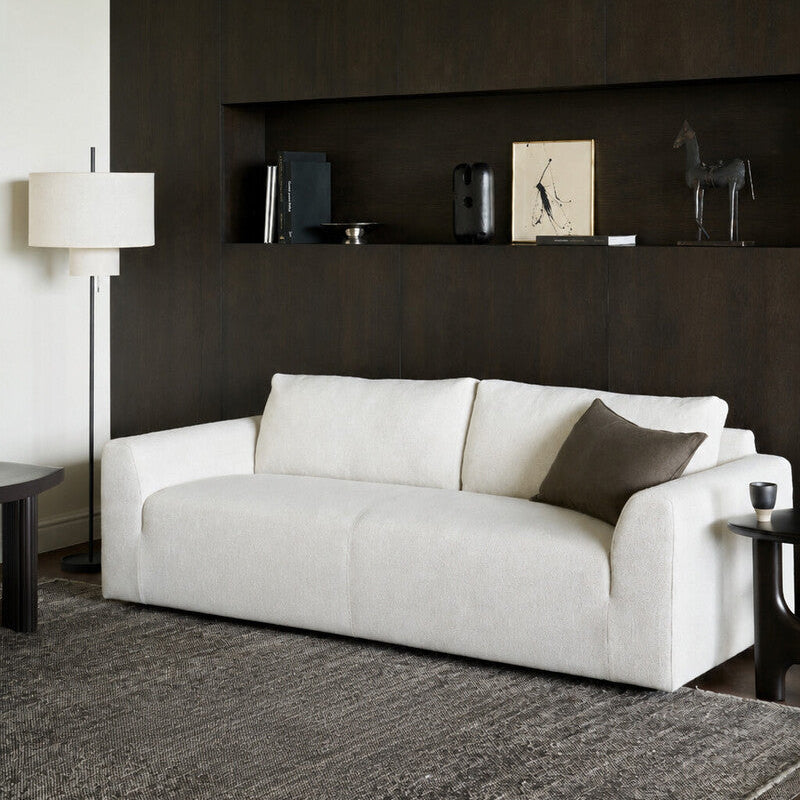
 EthnicraftEase SofaOEKO-TEX Standard 100 fabric and PFAS-free foam; meets TB 117-2013From $3,749
 FDB MøblerL42 Firhøj 2.5-Seat Sofa78 in wide on solid oak legs; designed by Unit10$2,999
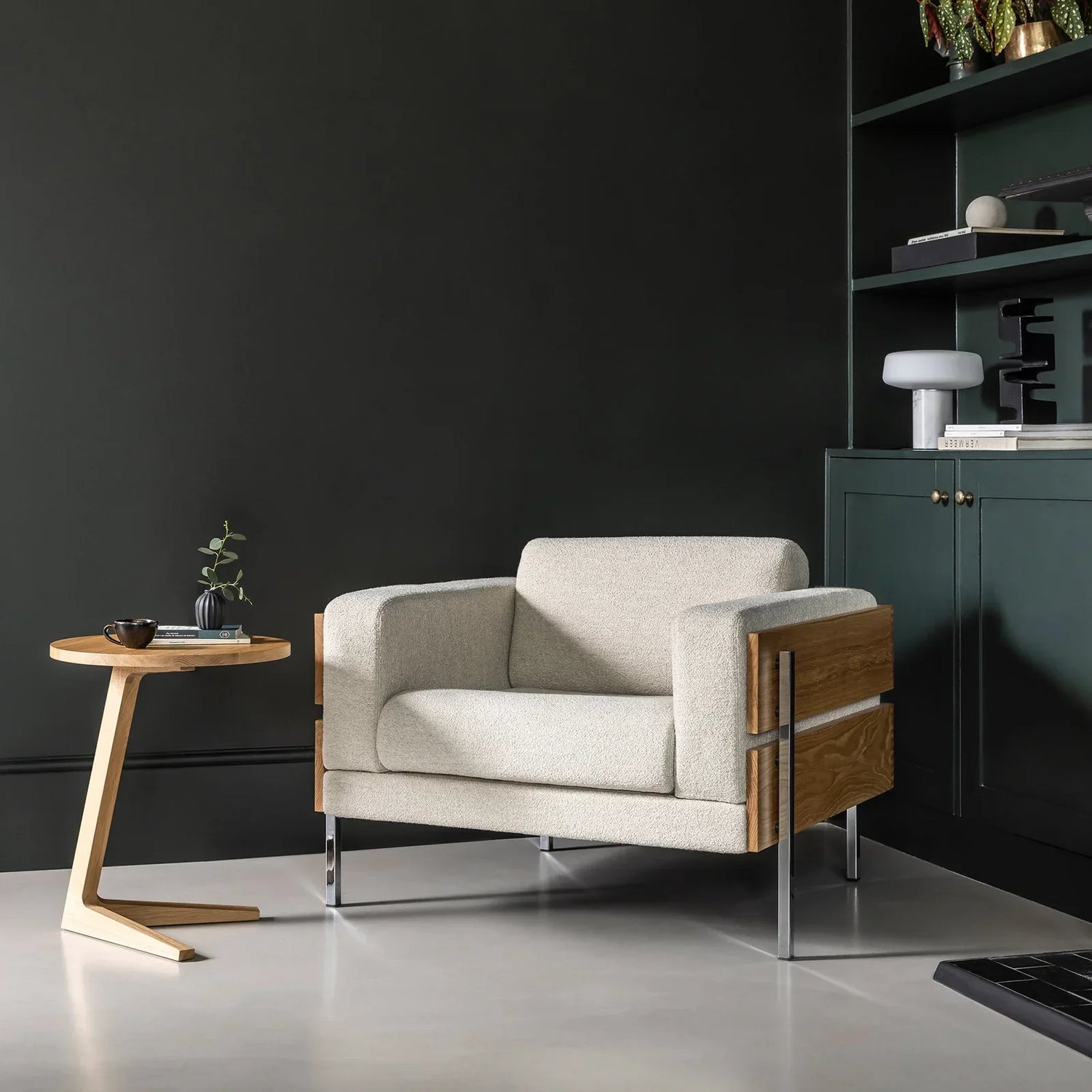
 CaseForum SofaSolid oak or walnut frame on a steel sub-frame; Robin Day, 1964From $3,188
 UMAGELounge Around 3 SeaterSolid oak frame, 91.2 in wide; 10-year warranty$3,499
 EthnicraftWeave Sofa96 in wide; linen-blend covers unzip for the washing machineFrom $3,909
 FDB MøblerJ148 Two-Seat Sofa60.2 in wide for smaller rooms; lacquered oak spoke back, 1978$4,839
Browse every sustainable sofa and sectional we carry →
How a Truly Sustainable Sofa Is Built
Materials
The frame is the chassis: a sustainable sofa uses kiln-dried, FSC-certified hardwood — typically European oak, beech, or birch — joined with mortise-and-tenon or doweled construction rather than staples and glue alone. Suspension is eight-way hand-tied springs in higher-end pieces, or sinuous-wire steel in mid-range builds. Cushions use CertiPUR-US or GREENGUARD-certified polyurethane foam, natural latex, or down/feather blends. Upholstery should carry an OEKO-TEX Standard 100 certification, which tests for more than three hundred harmful substances in finished textiles.
Manufacturing
European production tends to operate under stricter chemical and emissions rules than imported alternatives — REACH for chemicals, EUTR for legal timber sourcing, and country-level air-quality standards. In the US, look for CARB Phase 2 compliance on any composite-wood components and water-based glues and finishes. The strongest signal is whether the maker offers a reupholstery program or a structural warranty measured in decades, not seasons.
Certifications & Recognition
The certifications worth looking for on a sofa: FSC (Forest Stewardship Council) for the frame, GREENGUARD Gold for low-emission foam and finishes, OEKO-TEX Standard 100 for upholstery, and CertiPUR-US for foam itself. At the company level, B Corp certification indicates the manufacturer's overall environmental governance, not just one product.
Why Comosum Curates Sofas This Way
We don't list every sofa we can source — we list the ones whose construction we can defend. That means we lean toward European makers with documented chain-of-custody on their wood, US brands with verified low-emission foam, and designs built so individual components (cushion covers, springs, fills) can be replaced without scrapping the frame. We also publish our reasoning openly: see how we grade sustainable furniture and our broader notes on healthy upholstery and non-toxic interiors. The brands we feature in sofas — including Ethnicraft from Belgium and WOUD from Denmark — meet that standard.
Featured Sustainable Sofas at Comosum
A short list of where to start in our catalog:
- Ethnicraft sofas — Belgian solid wood frames in oak and teak, designed for decades of use and built around clean joinery rather than disposable construction.
- WOUD sofas — Danish contemporary design produced through European craftsmen with FSC-certified wood across the catalog.
- The full Comosum sofa & sectional collection — every sofa we carry, filtered by size, material, and brand.
Browse the full sofa & sectional collection at Comosum →
Frequently Asked Questions About Sustainable Sofas
What makes a sofa sustainable?
A sustainable sofa combines responsibly sourced materials (FSC-certified hardwood frame, low-emission foam, OEKO-TEX upholstery) with a construction designed to be repaired and reupholstered rather than replaced. The most environmentally meaningful attribute is lifespan — a sofa that lasts 20 years has roughly a quarter of the lifecycle impact of one replaced every five.
Are sustainable sofas non-toxic?
The credible certifications to look for are GREENGUARD Gold or CertiPUR-US for foam (which limit VOCs, formaldehyde, and certain heavy metals) and OEKO-TEX Standard 100 for upholstery fabric (which tests for more than three hundred harmful substances). Sofas made for the US market under TB117-2013 may also be free of the older PBDE flame retardants — but it's worth confirming with the manufacturer.
How long should a well-built sustainable sofa last?
A sofa built on a kiln-dried hardwood frame with eight-way hand-tied or sinuous-wire suspension and replaceable cushions should remain in service for 20 to 25 years, often longer if reupholstered once. Frames are typically the limiting factor; covers and fills are designed to be renewed.
Where are Comosum's sustainable sofas made?
The majority of the sofas we carry are produced in Europe — Belgium, Denmark, and surrounding EU countries — under REACH chemical regulations and FSC chain-of-custody. A smaller set is US-manufactured under CARB Phase 2 compliance. Country of origin is shown on every individual product page.
What is the most sustainable sofa material?
For frames, FSC-certified European hardwood (oak, beech, birch) is the gold standard because it combines longevity with verified forestry. For cushions, natural latex and down/feather blends have lower lifecycle impact than petroleum-based foam, but high-quality CertiPUR-US foam can also be a defensible choice when paired with a long-lived frame and removable covers. For upholstery, look for OEKO-TEX Standard 100 certified natural fibers (wool, linen, organic cotton) or recycled polyester.
Want help choosing the right sofa for your space? See the full Comosum sofa collection or read more about how we evaluate brands on our Sustainability page.


Leave a comment
This site is protected by hCaptcha and the hCaptcha Privacy Policy and Terms of Service apply.