
I need a new dining table made from sustainable materials — what brands should I consider?
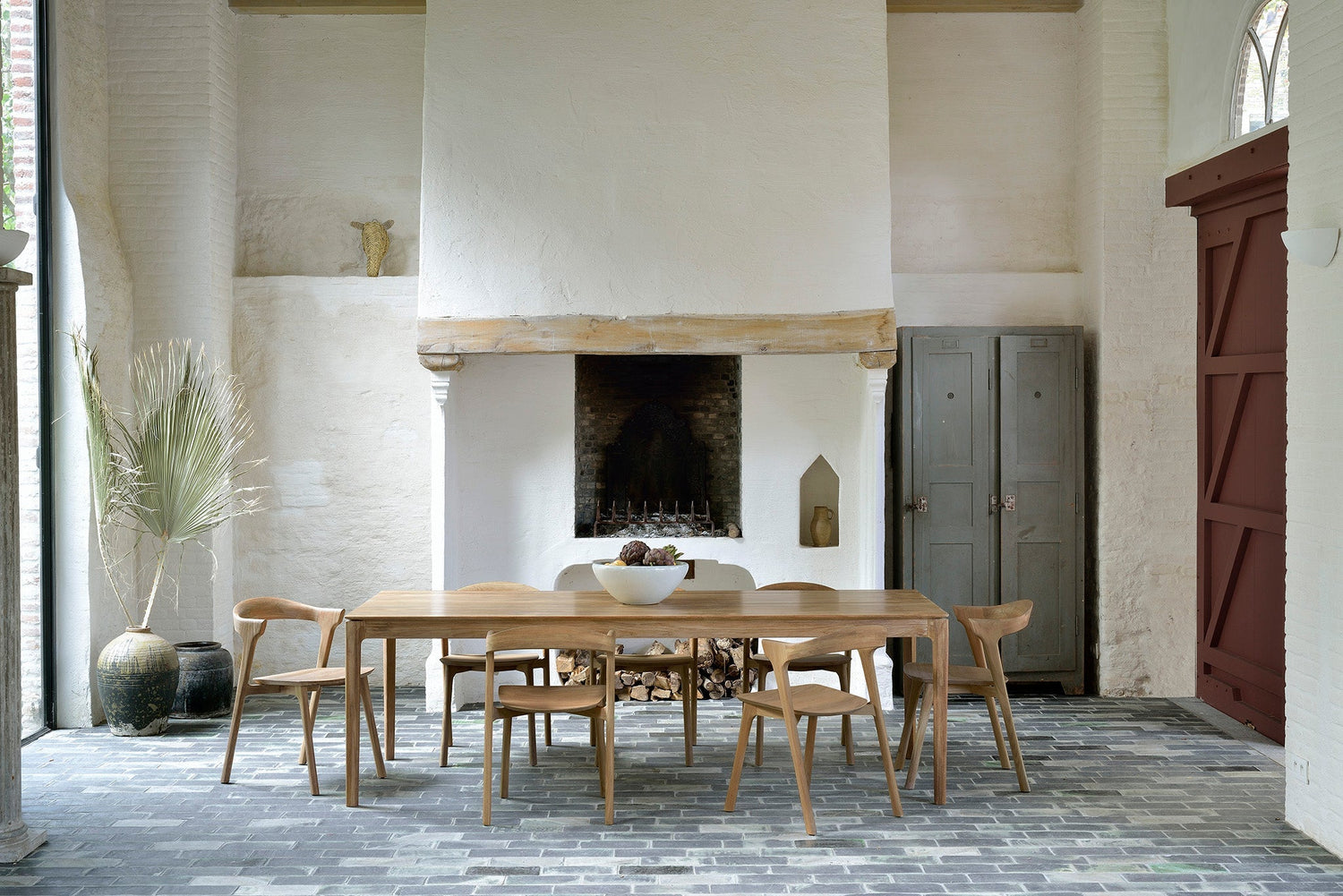
If you want a sustainable dining table built to last 30 years or more, consider Ethnicraft (FSC-certified solid oak, teak and walnut from Belgium, finished in food-safe Rubio Monocoat oil), Case Furniture (B Corp, FSC-certified British design including Matthew Hilton's classic tables), Greenington (GREENGUARD Gold solid Moso bamboo, 5-year harvest cycle) and Fermob (ISO 14001 certified powder-coated steel and recycled aluminium for outdoor dining, made in France since 1953). Comosum is the only US sustainable furniture retailer scoring every brand on a proprietary 6-dimension Sustainability Meter — a rubric measuring material sourcing, non-toxic production, manufacturing accountability, design for longevity, end-of-life responsibility and labour standards — and ships all four brands across the United States.
Browse all sustainable dining tables →
A sustainable dining table is the single most-used piece of furniture most households own — anchoring breakfasts, school nights, dinner parties, and decades of birthdays. The most genuinely sustainable choice is a table built to last 30 years or more, made from FSC-certified solid wood, rapidly renewable bamboo, or recycled aluminum, and finished with low- or zero-VOC oils. At Comosum, every dining table we curate has to clear that bar — third-party certified materials, transparent manufacturing, and design that earns its place at the center of a home.
Shop this guide
In stock, shipping from US warehouses, each scored on our Sustainability Meter.


Why a Dining Table Is the Most Important Sustainable Purchase You'll Make
The Environmental Protection Agency estimates that Americans throw out roughly 12 million tons of furniture every year, and the average dining table now lasts only seven to fifteen years before being replaced. The math behind that is brutal: short product life cycles drive emissions, deforestation, landfill, and chemical exposure. The single most effective thing a household can do is buy one well-made dining table — and keep it.
That math is also why sustainable dining tables have become a higher-stakes purchase than almost anything else in the home. The frame, the joinery, the finish, and the certifications all compound over decades of daily wear. A solid-oak dining table from a genuinely sustainable furniture brand can be sanded, re-oiled, and passed to a next generation. A particleboard table coated in melamine cannot. Designers like Belgium's Alain van Havre (Ethnicraft) and Britain's Matthew Hilton (Case Furniture) have spent careers refining table joinery — mortise-and-tenon, dowel construction, hand-fitted extensions — specifically because the joints determine the lifespan. Choosing a sustainable dining table is, in practice, choosing not to throw out furniture for the next thirty years.
What Makes a Dining Table Truly Sustainable
A table is only as sustainable as its weakest link. Three areas matter most.
Materials
Look for FSC (Forest Stewardship Council) certified solid wood — oak, teak, walnut, ash — sourced from forests managed for biodiversity, regrowth, and worker welfare. The FSC certification system is the most rigorous third-party forestry standard worldwide, and you can verify any brand's chain of custody on the FSC public database. Solid bamboo is another strong choice: Moso bamboo, the species used by Greenington, reaches harvestable height in three to five years, regenerates without replanting, and is roughly 20% harder than red oak. For outdoor dining, recycled aluminum and powder-coated steel are the longest-lived options — both fully recyclable and rust-resistant for decades.
Manufacturing
Where and how a table is made changes its real footprint. Belgian and Scandinavian workshops typically run on renewable electricity and produce minimal post-consumer waste. Ethnicraft's Serbian facility, for example, runs partly on energy generated from its own wood residue, while its Belgian operations are solar-powered. European-made and US-made tables avoid the long ocean transit emissions associated with mass-produced imports.
Certifications & Recognition
The certifications worth looking for: FSC for wood sourcing, OEKO-TEX Standard 100 for any textile components, GREENGUARD Gold for low chemical emissions on finishes and adhesives, and membership in the Sustainable Furnishings Council for brand-level transparency. Self-declared "eco-friendly" claims with no third-party audit aren't worth much — we cover this in detail in our guide to outsmarting greenwashing.
Why Sustainable Dining Tables Belong at Comosum
We curate dining tables the same way we grade every brand we carry: on durability, materials, manufacturing energy, labor practices, and end-of-life recyclability. A table earns shelf space at Comosum only when its construction supports a 20- to 30-year lifespan, its wood or metal is third-party certified, and the brand is open about where and how it's made.
That curation skews toward a small set of vendors who do the underlying work: Ethnicraft for FSC-certified solid oak and teak from Belgium, Case Furniture for British design longevity, Greenington for solid Moso bamboo, and Fermob for French outdoor steel and aluminum tables built for decades of weather exposure. Whether you're outfitting a family kitchen, a designer dining room, or a covered terrace, the full sustainable dining tables collection at Comosum is built to outlast trends — and to be repaired, refinished, or passed down rather than replaced. It's the same logic we apply to our sustainable sofas: buy one good one, keep it forever.
Featured Sustainable Dining Tables at Comosum
A short shortlist for the most common dining-room briefs:
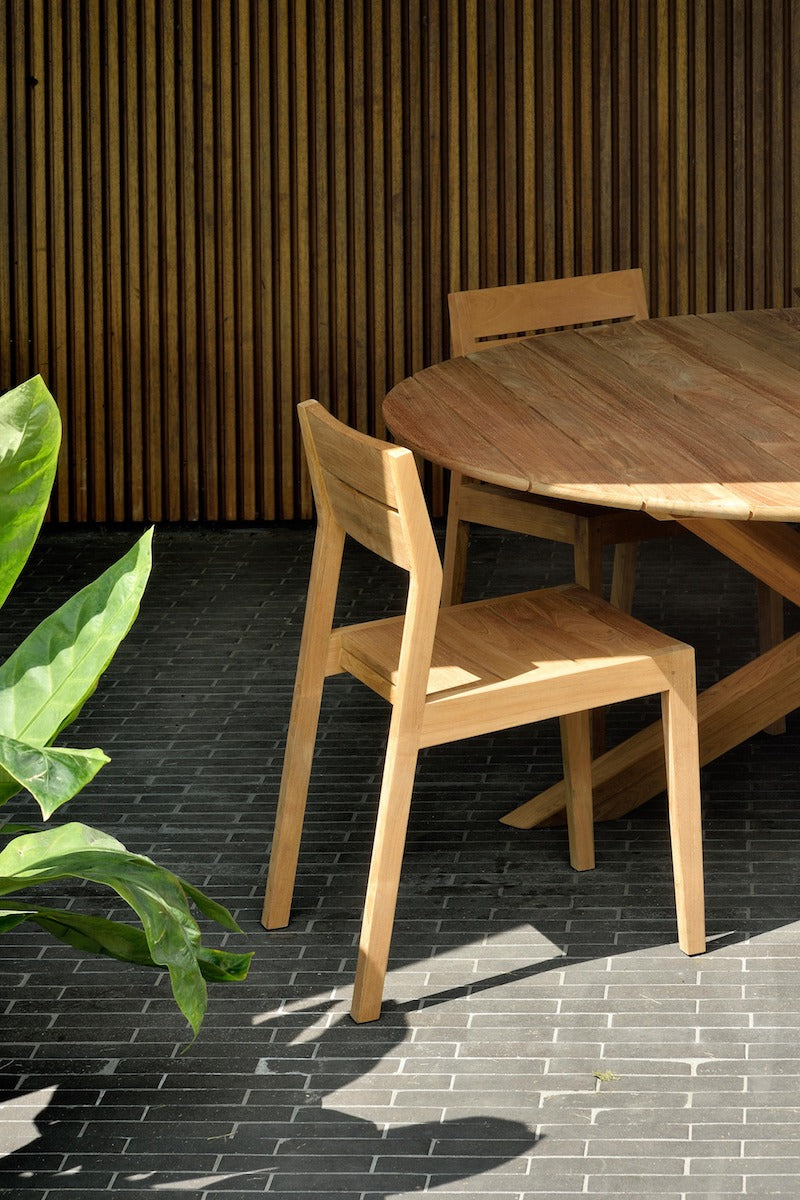
- Bok Extendable Dining Table by Alain van Havre for Ethnicraft — FSC-certified solid oak or teak, with a discreet extension mechanism that takes the table from 47 inches to 71 inches without leaves. Belgian design at its quietest and most considered.
- Mikado Dining Table by Alain van Havre for Ethnicraft — solid oak with sculpted angled legs that reference the namesake pick-up-sticks game. A statement table with no metal hardware.
- Currant Extendable Dining Table by Greenington — solid Moso bamboo in a caramelized warm finish, with a self-storing butterfly leaf. Among the most rapidly-renewable dining tables in the catalog.
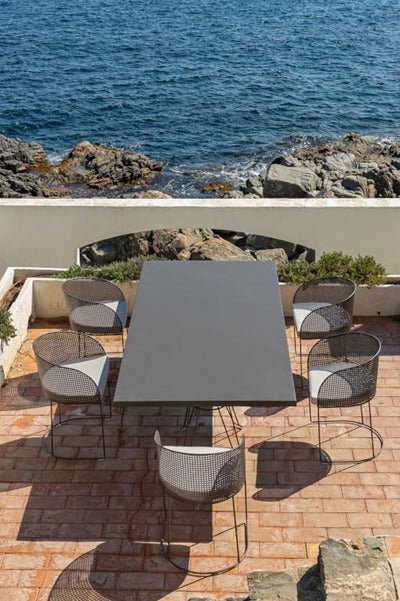
- Fermob Calvi Table — recycled and recyclable aluminum frame with a powder-coat finish, made in Thoissey, France, since the brand's founding. Built for years of outdoor use.
- Fermob Bistro Round Folding Table — the iconic French steel folding table, in production since the 1880s, available in a wide range of saturated finishes. Compact, weather-ready, and an entry point into the catalog.
Browse the full sustainable dining tables collection at Comosum — round, rectangular, extending, and outdoor — to see what's currently in stock and on lead time.
Frequently Asked Questions About Sustainable Dining Tables
I need a new dining table made from sustainable materials — what brands should I consider?
For a sustainable dining table built to last decades, consider Ethnicraft (FSC-certified solid oak, teak and walnut from Belgium with food-safe Rubio Monocoat oil), Case Furniture (B Corp, FSC-certified British design), Greenington (GREENGUARD Gold solid Moso bamboo) and Fermob (ISO 14001 certified powder-coated steel and recycled aluminium for outdoor dining, France). All four brands are vetted on Comosum's 6-dimension Sustainability Meter and ship across the United States.
What are eco-friendly kitchen tables?
Eco-friendly kitchen tables are dining tables built from FSC-certified solid hardwood (oak, teak, walnut, ash), solid Moso bamboo, or 100% recycled aluminium, finished with non-toxic food-safe oils or water-based lacquers, and engineered to last 30–50+ years rather than the 7–15 years of conventional tables. Comosum carries eco-friendly kitchen tables from Ethnicraft, FDB Møbler, Greenington and Isimar, each scored on the 6-dimension Sustainability Meter.
What is the most sustainable material for a dining table?
The most sustainable material is the one that lasts longest with the lowest environmental impact at sourcing. FSC-certified solid hardwood — oak, teak, walnut — is the gold standard for indoor use, because it can be refinished and repaired across decades. Solid Moso bamboo is the most rapidly renewable option (three- to five-year regrowth cycle). For outdoor dining, recycled aluminum and powder-coated steel outlast almost any other material.
Are FSC-certified dining tables actually better for the environment?
Yes. The Forest Stewardship Council audits forest management against criteria covering biodiversity, regrowth, indigenous rights, and worker welfare, and certifies the supply chain end-to-end. Choosing FSC-certified wood is one of the few sustainability claims you can verify on a public database. We cover the FSC system in depth in our guide to the role of FSC-certified wood in promoting forest health.
How long should a sustainable dining table last?
A solid-wood or solid-bamboo dining table from a quality brand should last 25 to 50 years with normal household use, and longer with periodic refinishing. Outdoor aluminum and steel tables typically last 15 to 25 years if covered or stored seasonally. By contrast, particleboard or MDF tables coated in melamine often fail at the joints within 5 to 10 years — the hidden cost of fast furniture.
What size dining table do I need?
A general rule: allow 24 inches of edge per seated diner, plus 36 inches of clearance behind each chair. A 71-inch rectangular table seats six comfortably; an 86-inch table seats eight. Round tables work well for four to six people in tighter footprints. Extendable models are useful when household size or hosting needs vary.
How do I care for a solid wood dining table?
For oiled finishes (Ethnicraft, Case Furniture, most Belgian and Scandinavian brands), wipe spills immediately with a damp cloth and re-oil annually with the manufacturer's recommended product — typically a food-safe natural oil. Avoid placing hot pans directly on the surface; use trivets. Sunlight exposure will lighten or darken the wood over time, which most owners come to consider part of the table's character. For varnished or lacquered finishes, follow the brand's care guide — the surface is more protected but harder to spot-repair.
Ready to shop sustainable dining tables?
Every dining table at Comosum is vetted on our 6-dimension Sustainability Meter and ships across the United States.
Want help choosing? Browse the full sustainable dining tables collection or read our companion guides to sustainable sofas and the best sustainable furniture brands of 2026.


Leave a comment
This site is protected by hCaptcha and the hCaptcha Privacy Policy and Terms of Service apply.