



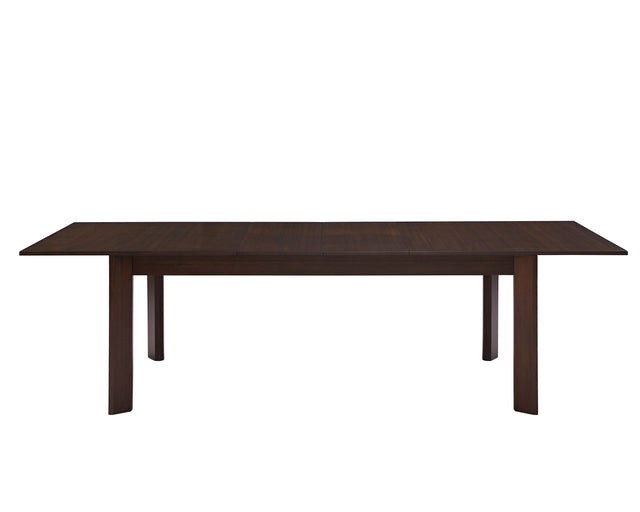
What are eco-friendly kitchen tables?
Eco-friendly kitchen tables are dining tables made of solid wood or solid bamboo from a source you can check, finished with a natural oil or water-based lacquer, and built to be sanded and re-oiled rather than replaced. Four checks tell you how to choose an eco-friendly dining table, or any eco-friendly kitchen furniture:
Solid all the way through
Veneer over MDF or particleboard hides a core usually bonded with formaldehyde-based resin, and it can only be sanded lightly.
A source you can check
FSC certification tracks wood from a managed forest to the factory. Without it, “sustainable wood” is the seller’s word.
A finish you can eat off
Hardwax oil, natural oil or a water-based lacquer, fully cured. Not an unnamed “protective coating” or a laminate top.
Built to be repaired
A solid frame and a surface you can renew at home. The table you never replace is the lowest-impact one.
What is the healthiest, safest dining table?
Solid wood or solid bamboo under a natural-oil, hardwax-oil or water-based finish. With no pressed-wood core and no solvent-heavy lacquer, a non-toxic dining table has very little to off-gas once the finish has cured, which also makes it the safest dining table for a family kitchen. For a low-VOC dining table, ask what the finish is. Our makers name theirs: Ethnicraft’s oak is hardwax-oiled or varnished, FDB Møbler’s Shaker table is nature-oiled, and Fermob’s powder coat is made without heavy metals or VOCs.
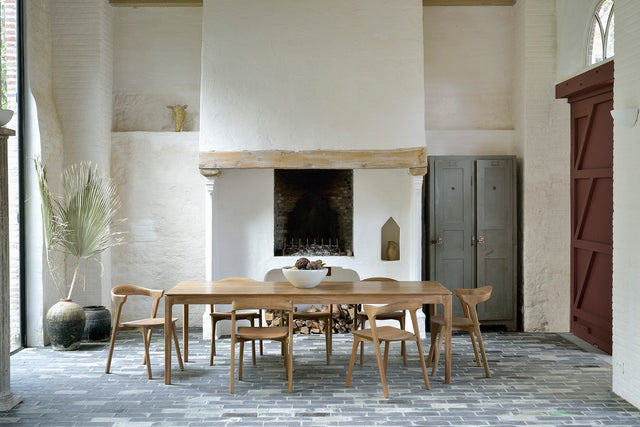
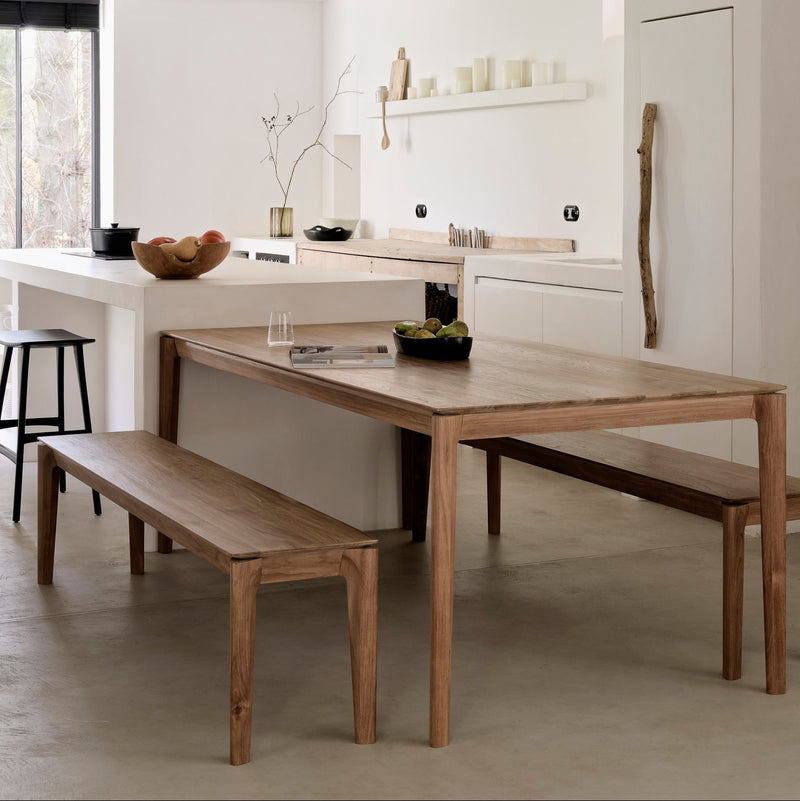
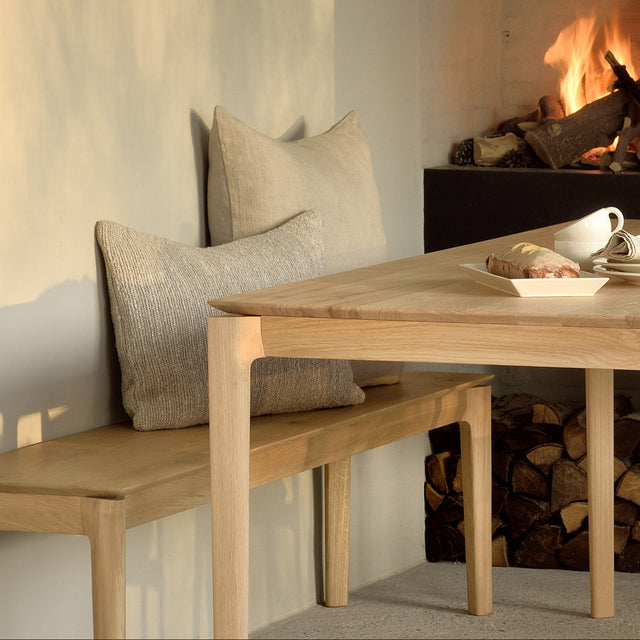
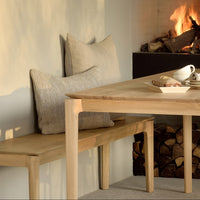 Ethnicraft · Meter 3.5Bok Dining TableHardwax-oiled or varnished solid oak
From $1,999Shop →
Ethnicraft · Meter 3.5Bok Dining TableHardwax-oiled or varnished solid oak
From $1,999Shop →
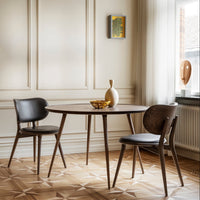
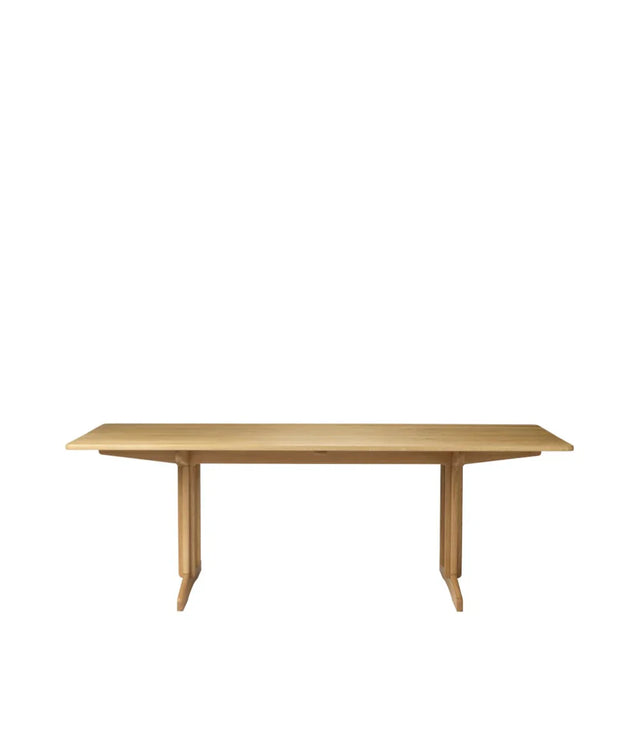
 FDB Møbler · Meter 3.7C64 Shaker Dining Table SolidFSC-certified solid oak, nature-oiled; Børge Mogensen, 1950
$5,439Shop →
FDB Møbler · Meter 3.7C64 Shaker Dining Table SolidFSC-certified solid oak, nature-oiled; Børge Mogensen, 1950
$5,439Shop →
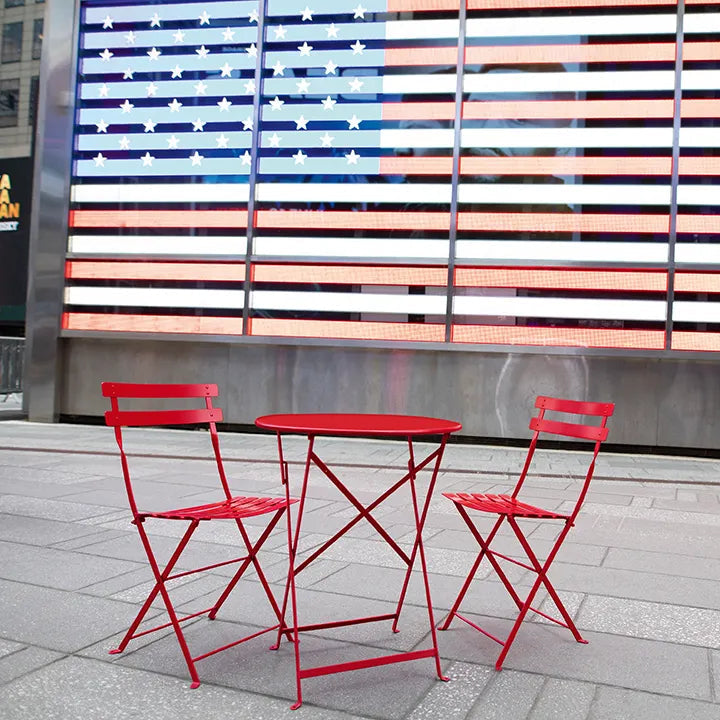
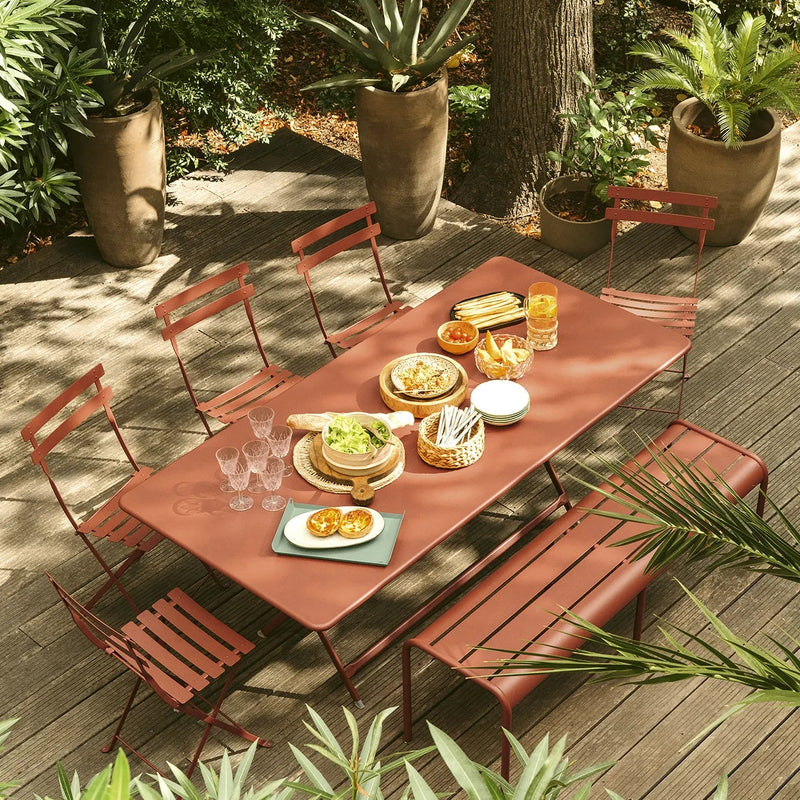
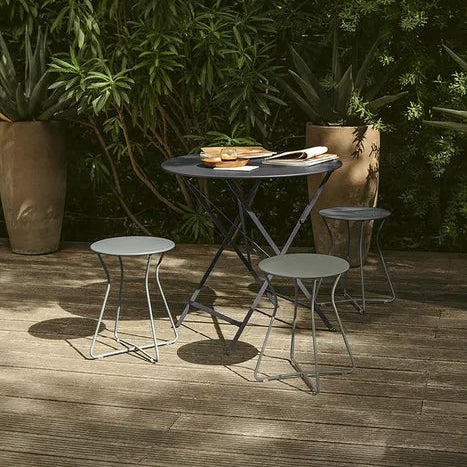
 Fermob · Meter 4.0Fermob Bistro 30.5" Round Folding TablePowder coat made without heavy metals or VOCs
$405Shop →
Fermob · Meter 4.0Fermob Bistro 30.5" Round Folding TablePowder coat made without heavy metals or VOCs
$405Shop →
Want a non-toxic dining set? Chairs add foam and fabric questions, covered in our sustainable dining chairs guide; the non-toxic furniture guide goes room by room.
FSC, GREENGUARD Gold or LEED: what does each label prove?
| Label | What it proves | What it doesn’t |
|---|---|---|
| FSC | The wood came from a responsibly managed forest and was tracked to the factory. Check the FSC-C code on FSC’s public database. | Anything about the finish, glue or emissions |
| GREENGUARD Gold | Low chemical emissions, formaldehyde included, tested against limits written for schools and healthcare. Look up the certificate in UL’s directory. | Where the wood came from |
| LEED | A building’s design and performance, rated by the US Green Building Council | Anything about a product: LEED is a building standard, so no table is “LEED certified” |
| B Corp | A whole company’s social and environmental performance. Tikamoon has been certified since December 2025. | Any single product’s materials |
“FSC tells you where the wood came from. GREENGUARD Gold tells you what the finish releases. LEED is about the building.”
For an FSC certified dining table: Mater’s Accent is solid FSC-certified oak, FDB Møbler holds FSC-C164841, and the Bok comes in FSC-certified teak. For a GREENGUARD Gold certified dining table, ask for the certificate number. See our certification glossary.
Which material makes the most sustainable dining table?
| Material | Why it works | Keep in mind |
|---|---|---|
| Solid oak | Hard, takes oil well, sands back to fresh wood | Wipe spills promptly on an oiled top |
| Solid teak or walnut | Teak’s natural oils resist water; walnut takes on a rich patina | Ask for the source, and whether the top is solid |
| Solid Moso bamboo | A grass that regrows from its roots; Greenington’s is about 20% harder than red oak | Keep indoor humidity at 40–55% |
| Powder-coated steel | Recyclable, folds flat, lives indoors or out | Harder and cooler than wood |
| Veneer on MDF or particleboard | Uses less hardwood | Resin-bonded core; only light sanding |
For most kitchens, solid oak or solid bamboo makes the most sustainable, eco-conscious table: tough enough for family use, refinishable, and available with a documented source. More in solid wood vs. veneer vs. engineered wood.
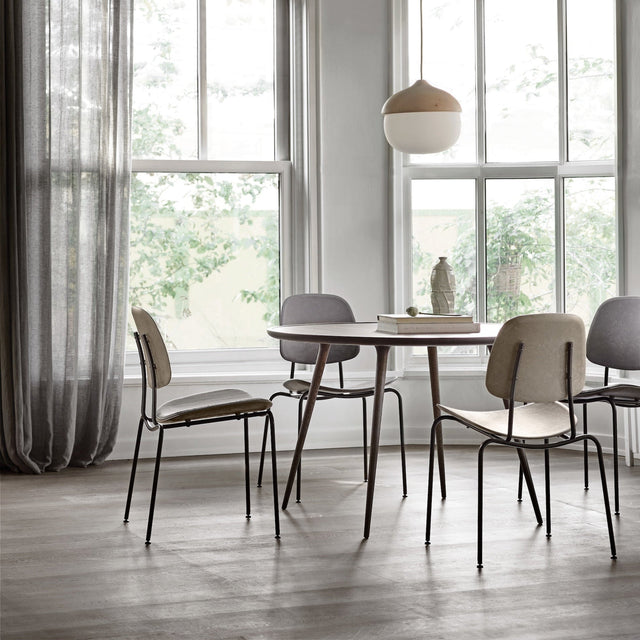
 Greenington · Meter 3.5Marseilles Dining Table100% solid Moso bamboo; the 72-inch seats eight
From $2,209Shop →
Greenington · Meter 3.5Marseilles Dining Table100% solid Moso bamboo; the 72-inch seats eight
From $2,209Shop →
 Tikamoon · Meter 4.0Arto Extendable Dining Table in Solid WalnutSolid walnut, oiled; extends to seat twelve
$3,999Shop →
Tikamoon · Meter 4.0Arto Extendable Dining Table in Solid WalnutSolid walnut, oiled; extends to seat twelve
$3,999Shop →
Which companies sell extendable dining tables with sustainable wood?
For a home that hosts, an extendable is the most efficient eco-friendly dining table: it seats the household on a Tuesday and ten at Thanksgiving. These four are solid wood or solid bamboo, and each keeps its extension in or with the table. More in our guide to extendable tables for holiday hosting.
 Ethnicraft · Meter 3.5Bok Extendable Dining TableIntegrated extension; the 47-inch opens to 71
From $3,999Shop →
Ethnicraft · Meter 3.5Bok Extendable Dining TableIntegrated extension; the 47-inch opens to 71
From $3,999Shop →
 Greenington · Meter 3.5Hudson Extendable Dining TableSolid bamboo; leaves fold under the top; seats up to 12
$2,489Shop →
Greenington · Meter 3.5Hudson Extendable Dining TableSolid bamboo; leaves fold under the top; seats up to 12
$2,489Shop →
 Tikamoon · Meter 4.0Eden Extendable Dining Table in Solid OakPöttker extension hides in the top; seats 6 to 10
$2,899Shop →
Tikamoon · Meter 4.0Eden Extendable Dining Table in Solid OakPöttker extension hides in the top; seats 6 to 10
$2,899Shop →
 FDB Møbler · Meter 3.7C69E Ry Dining table With 2 Extension LeavesFSC-certified solid oak; two leaves take it from 47 to 87 in
$5,439Shop →
FDB Møbler · Meter 3.7C69E Ry Dining table With 2 Extension LeavesFSC-certified solid oak; two leaves take it from 47 to 87 in
$5,439Shop →
What size dining table do I need?
Allow about 24 inches of edge per person and 36 inches behind each chair. From our makers’ own seating guides:
- Two: a 30-inch round, like Fermob’s folding Bistro.
- Four: a 43-inch round or a 55-inch rectangle.
- Six: a 71-inch rectangle or a 55-inch round.
- Eight: 72 to 95 inches. Greenington’s 72-inch Marseilles seats eight with its legs set inboard; Ethnicraft’s Bok needs 94.5.
In a small kitchen, a round or folding table keeps the room open. See our small-space dining guide.
 Shop the room · 2 pieces
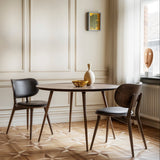
Eco-friendly dining tables: honest pros and cons
Pros
- Lasts decades: the top can be sanded and re-oiled
- No pressed-wood core under your plates
- Solid wood can be refurbished and resold
- One extendable does the work of two tables
Cons
- Several times the price of flat-pack up front
- Heavy: Tikamoon’s Eden weighs 171 lb
- Oiled tops want a re-oil once or twice a year
- Wood and bamboo move with humidity
Is it worth it? If you keep it, yes: the EPA counted 12.1 million tons of furniture and furnishings in US municipal solid waste in 2018, and about 80% went to landfill. A used or refurbished solid-wood table is an eco-friendly buy too; Ethnicraft’s Re-Loved program refurbishes its own pieces. For care, wipe spills with a damp cloth and natural soap along the grain; our oak care guide covers re-oiling.
Who offers eco-friendly tables made from sustainable materials?
Each maker below can show something specific; their Meter grades follow the guide.
Ethnicraft
Solid oak and teak from its own factories; the Serbian site runs on wood-residue energy.
FDB Møbler
FSC-certified wood, every design tested at the Danish Technological Institute, and a 10-year warranty.
Greenington
100% solid Moso bamboo; bamboo sawdust fires the kilns. Winner of the Sustainable Furnishings Council’s 2020 Green Ribbon Award.
Mater
The Accent table, by Space Copenhagen, is solid FSC-certified oak made in Slovenia.
Tikamoon
Certified B Corp, with product carbon footprints, buy-back and repair.
Fermob
Made in its own French factories since 1890, ISO 14001 certified, with rooftop solar.
Want an energy-efficient dining table? Look at the factory: Ethnicraft and Greenington fire their drying kilns with their own sawdust. For offices and lobbies, Mater rates the Accent for private and public use. Every maker of sustainable dining room furniture we carry is in our brand directory.


Behind the table · Tikamoon · Est. 2008 · Lille · Certified B Corp
A solid-oak table that arrives in one piece
Tikamoon has made furniture in solid oak, walnut, teak, mango and acacia since 2008, and leaves composite panels out of its eco-rated range. The Eden is solid oak, oiled to bring out the grain, with a Pöttker extension that slides out on concealed metal runners and takes it from six seats to ten. Tikamoon also publishes product carbon footprints, and buys back and repairs its furniture.
- Certified B Corp since December 2025
- Ships fully assembled, from New Jersey
- 2-year limited warranty
grade
Questions people ask
What is the healthiest dining table?
Solid wood or solid bamboo with a natural-oil, hardwax-oil or water-based finish. With no formaldehyde-bonded pressed-wood core and no solvent-heavy lacquer, very little is left to off-gas once the finish has cured.
Does FSC certification mean a dining table is non-toxic?
No. FSC certifies where the wood came from, not the finish, the glue or emissions. For emissions, look for GREENGUARD Gold.
Can a dining table be LEED certified?
No. LEED is the US Green Building Council’s rating system for buildings. A table’s materials can help a building project earn LEED credits, for example for responsibly sourced wood or low-emitting furniture.
What is the most sustainable wood for a dining table?
For most homes, FSC-certified solid oak: hard, refinishable and widely available with a certificate. Teak with a documented source resists water best, and solid Moso bamboo, strictly a grass, renews fastest.
Are bamboo dining tables durable?
Solid ones are. Greenington’s solid Moso bamboo is about 20% harder than red oak, enough for the 72-inch Marseilles top to span without a stretcher. Keep indoor humidity at 40 to 55 percent.
How long does a sustainable dining table last?
Decades, if it is solid and repairable: the top can be sanded and re-oiled. FDB Møbler backs its furniture with a 10-year warranty, and Ethnicraft sells spare parts. A veneered pressed-wood top can only be sanded lightly.
What are the most sustainable, non-toxic dining chairs?
The same rules as tables: solid wood or one recyclable material, a named finish, and for upholstered seats, foam and fabric you can identify. Our sustainable dining chairs guide compares them.