
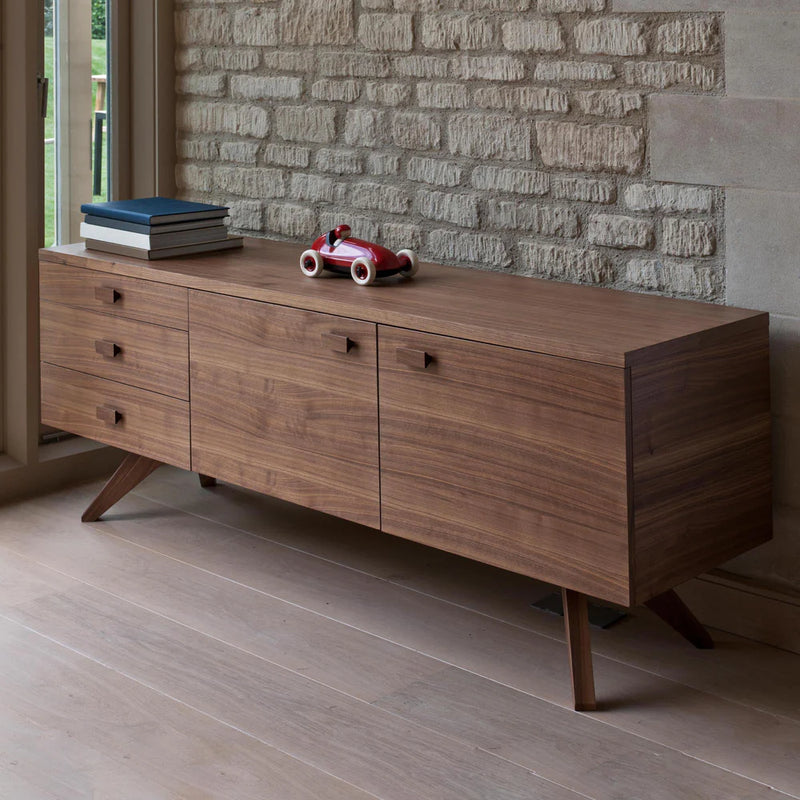
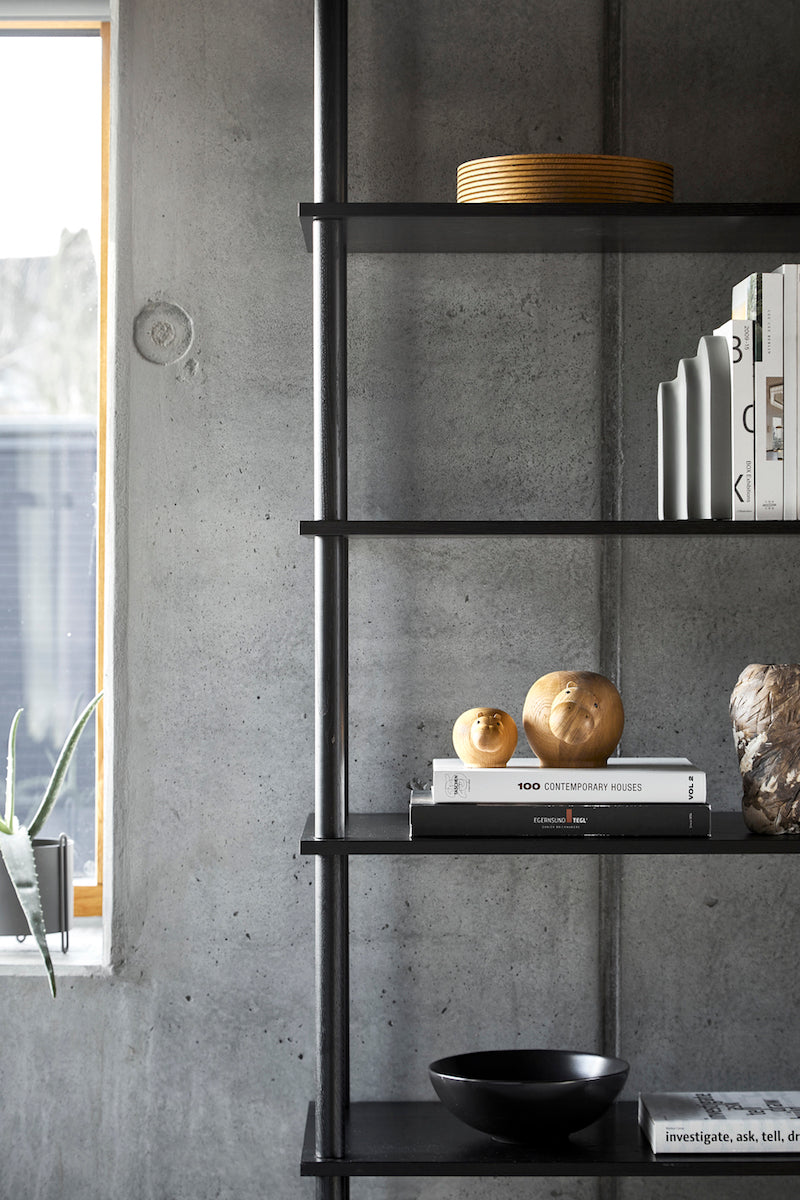
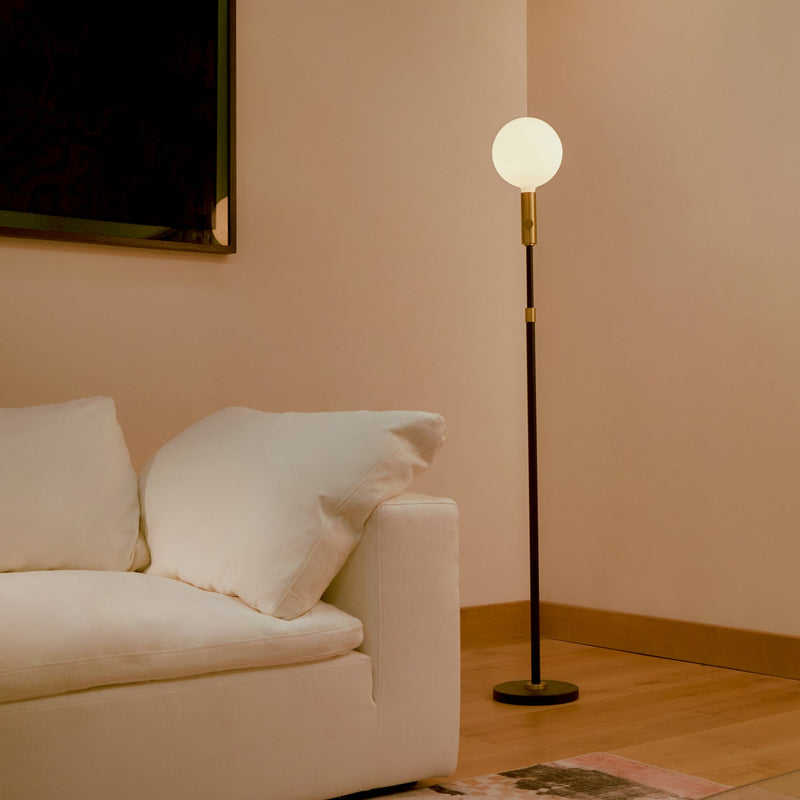

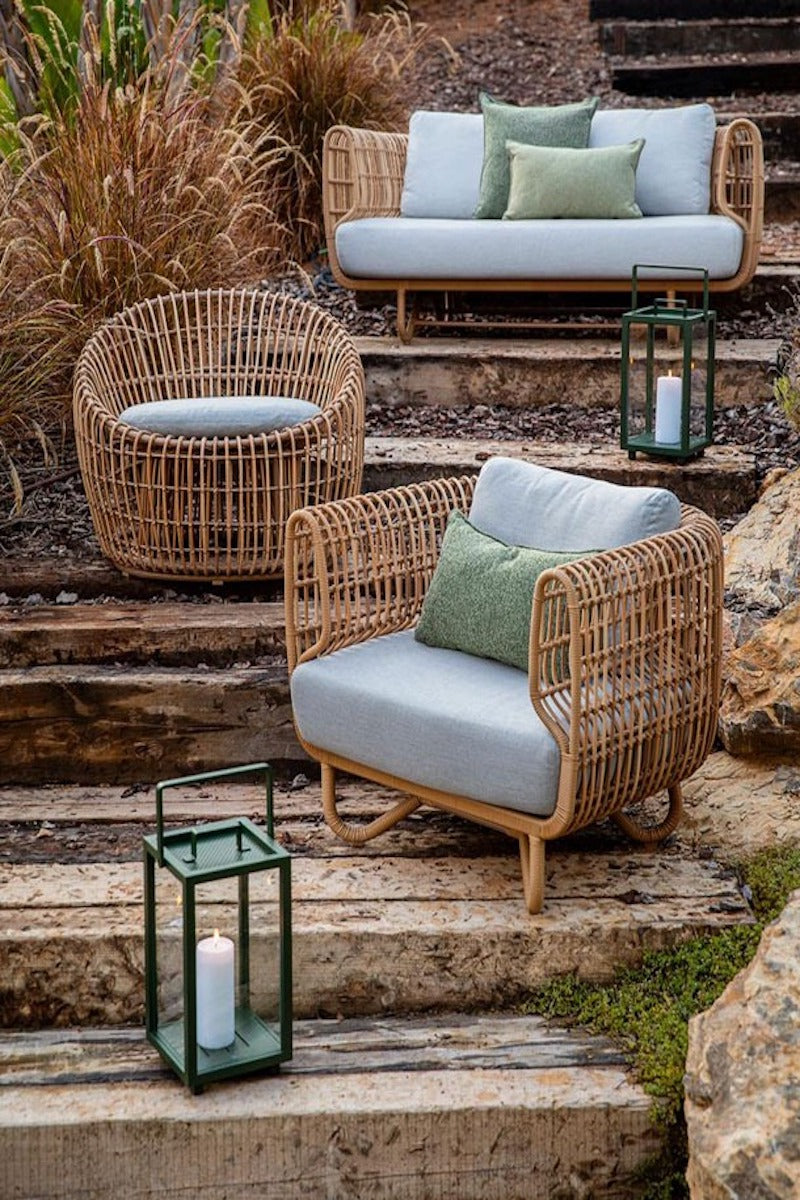
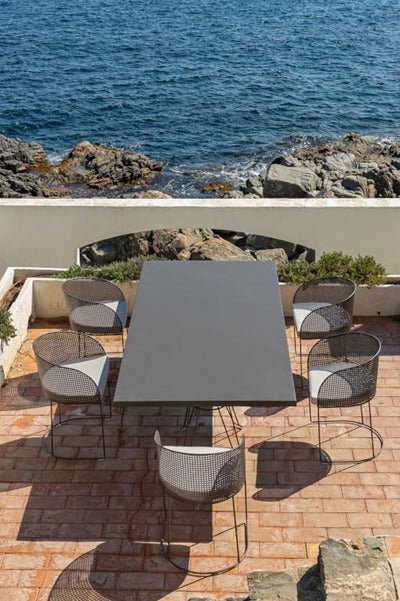

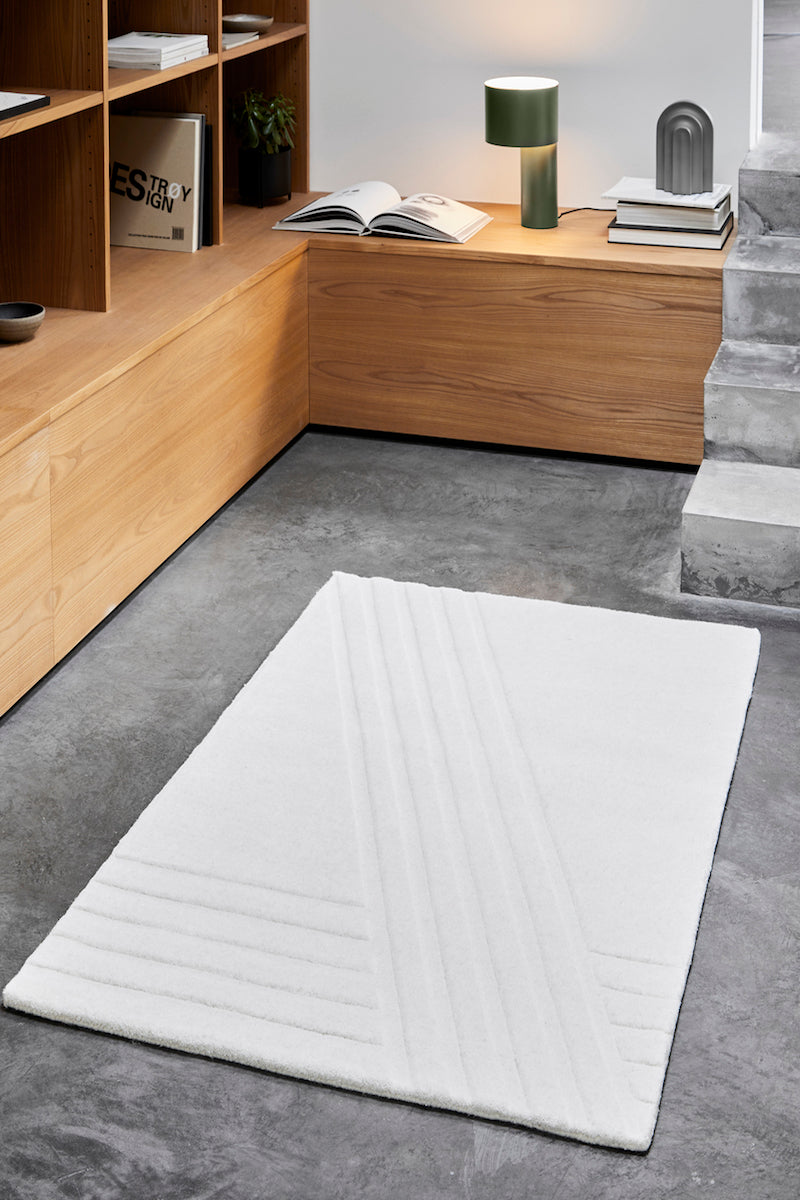
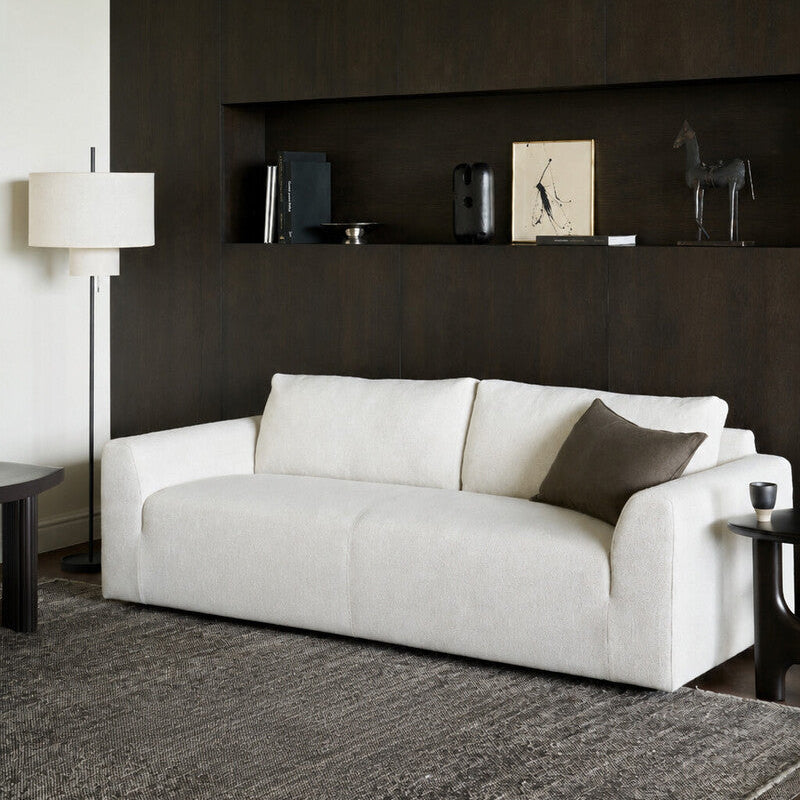
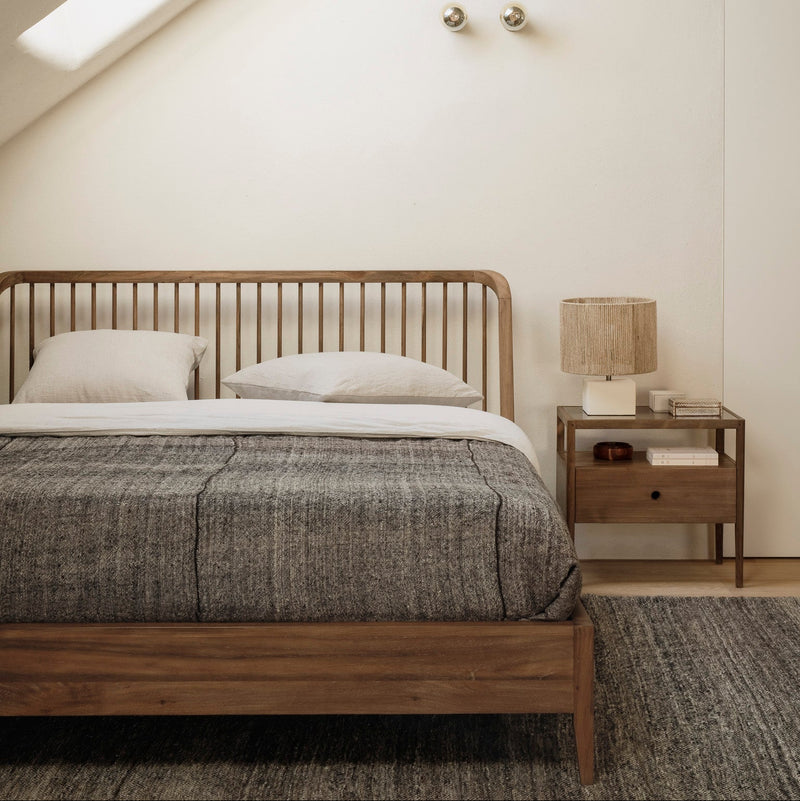
A sustainable office desk is built from FSC-certified hardwood, FSC plywood, or rapidly renewable bamboo, sealed with low-VOC water-based finishes, and engineered for 20-plus years of daily use. The strongest examples come from a small group of manufacturers — Humanscale (B Corporation since March 2024, with 29 climate-positive products as of 2025), Ethnicraft (Belgian-designed solid oak), Greenington (Moso bamboo, founded 2004), and Danish democratic-design house FDB Møbler. At Comosum, we curate sustainable office desks that pair traceable materials with ergonomics built for the way work actually happens.
Why the Home Office Desk Decision Matters
The desk is the single piece of furniture you spend the most contact-hours with. A salaried remote worker logs roughly 2,000 hours a year at their desk — more time than they spend in any chair, sofa, or bed. The cost of getting it wrong is paid in two currencies: the wear-and-failure cycle of cheap construction, and the cumulative effect of formaldehyde-emitting particleboard within arm's reach of your face for 40 hours a week.
A sustainable desk reverses both. FSC-certified solid wood, FSC plywood, or Moso bamboo is dimensionally stable enough to last decades. Low-VOC water-based finishes hold up to coffee, ink, and disinfectant wipes without off-gassing into the room. And ergonomically considered designs — from sit-stand mechanisms to fixed-height writing desks calibrated to typing posture — keep your spine, wrists, and shoulders working with the desk instead of against it.
The four levers that separate a heirloom-grade desk from a five-year purchase: material (FSC hardwood, FSC plywood, Moso bamboo — never MDF or particleboard), finish (water-based, low-VOC, no high-gloss polyurethane), certifications (B Corp, FSC, GREENGUARD), and ergonomics (correct typing height, sit-stand range, proper depth for monitor placement).
Shop this guide
In stock, shipping from US warehouses, each from a brand graded on our Sustainability Meter.


What Makes an Office Desk Sustainable?
Materials
The cleanest material for a desk is FSC-certified solid hardwood — typically oak from FDB Møbler; Ethnicraft's oak desks are solid oak without an FSC label. The Forest Stewardship Council standard traces a specific tree from a managed forest through mill, factory, and shipping container, with stricter biodiversity and indigenous-rights criteria than the more common PEFC label.
The next-cleanest options are FSC-certified plywood (more dimensionally stable than solid wood for very wide tops, with a credible sustainability story when the certifications are explicit) and Moso bamboo — the species used by Greenington, which regrows on a 3–5-year cycle in plantation forests and reaches a Janka hardness above red oak.
What to avoid: medium-density fiberboard (MDF), particleboard, and laminate over engineered cores without explicit FSC sourcing. These materials fail faster and emit formaldehyde unless they meet CARB Phase 2 limits or stricter.
Manufacturing
Look for low-VOC water-based finishes — Greenington uses water-based stains and sealers on its bamboo collection; Ethnicraft offers its oak desks in hardwax oil or varnish, depending on the model. Hardwax oils penetrate the grain so the desk can be spot-repaired with a cloth and a small amount of fresh oil rather than fully refinished.
Humanscale has gone further than most contract-furniture manufacturers, with an aggressive climate-positive product program. Per the Humanscale corporate sustainability report, the company has 29 products independently certified as climate-positive — meaning each unit removes more carbon, water, and energy from the environment than its production consumes. Humanscale is also a Certified B Corporation as of March 2024.
Certifications and Recognition
The certifications worth weighting: FSC (forest sourcing, with full chain of custody), B Corporation (third-party assessment of social and environmental performance, with an 80-point B Impact Assessment threshold for certification and recertification every three years), and GREENGUARD Gold (Underwriters Laboratories' chemical-emissions standard, common on contract furniture and required for many school and healthcare environments). The Sustainable Furnishings Council, a membership organization for the home furnishings industry, publishes education and tools on responsible sourcing, including its Wood Furniture Scorecard.
Why We Recommend These Desks at Comosum
We curate office desks from a small list of brands because most desks sold in the United States can't credibly answer the four questions above. The ones we carry can.
Humanscale builds the most ergonomically-considered office furniture on the market and has been Certified B Corp since March 2024. Their Float Micro Desk uses a counterbalanced sit-stand mechanism — no electric motors, no plug, no whining sound — that lets you change posture without breaking flow.
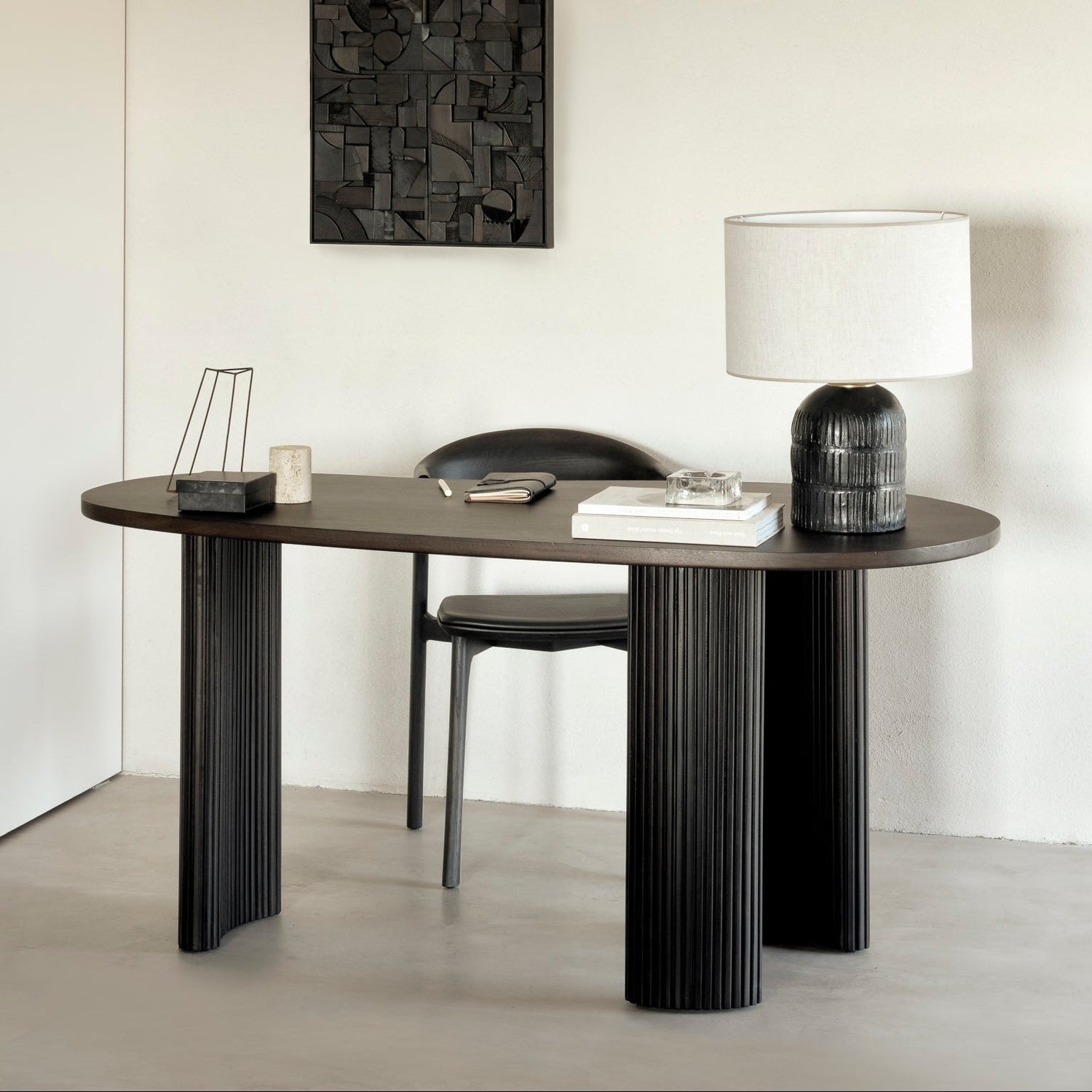
Ethnicraft is a Belgian design house that's been building solid-wood furniture since 1995. Their U Desk and Bok Adjustable Desk are honest pieces of solid oak — not veneer over MDF — and read more like residential furniture than office furniture, which is exactly what most home offices need.
For Scandinavian taste, WOUD builds Danish-designed desks and writing tables from FSC oak. And for a fast-growing renewable-material option, the Greenington Currant Writing Desk in Moso bamboo is a credible alternative to oak at a lower price.
For the full curation philosophy, see our sustainability page and sustainable furniture brands hub. The full office collection extends beyond desks to seating, storage, and lighting.
What to Shop at Comosum
Four desks built for different home-office setups:
- Float Micro Desk by Humanscale — A compact sit-stand desk in five colors (white, black, gray, ultramarine blue, forest green). Counterbalanced height adjustment, no motor, no cord. Designed by Humanscale's in-house team.
- U Desk by Ethnicraft — A solid oak writing desk in two sizes (55 × 27½ in. or 63 × 31½ in.) and two finishes (natural oak or oak black). Traditional joinery, varnish finish.
- Bok Adjustable Desk Table Top by Ethnicraft — A solid oak top designed to mount on third-party sit-stand bases. Integrated cable management; available in oak natural or oak black with white or black bases.
- Currant Writing Desk by Greenington — A Mid-Century-influenced writing desk in solid Moso bamboo, available in Camalized, Black Walnut, or Amber finishes. The most renewable-material option in our desk catalog.
Browse the full desk collection at Comosum →
Frequently Asked Questions About Sustainable Office Desks
Where is Humanscale furniture made?
Humanscale produces furniture across a global manufacturing network with major facilities in the United States, Ireland, and partnerships with audited suppliers. The company is headquartered in New York and reports manufacturing under its B Corp and climate-positive product programs. Their corporate responsibility report details facility locations and production standards.
Is bamboo more sustainable than oak for a desk?
For carbon footprint per cubic foot of finished material, bamboo is typically more sustainable: Moso bamboo regrows in 3–5 years versus 60–80 years for European oak. But durability matters too, and a properly certified FSC oak desk and a Greenington bamboo desk should both last 20-plus years. The honest answer: an FSC-certified solid hardwood desk and a certified bamboo desk are both credible, sustainable choices. Avoid MDF, particleboard, and laminate over uncertified engineered cores.
What's the difference between a sit-stand desk and a height-adjustable desk?
Sit-stand desks are designed for users to alternate between sitting and standing during the workday — typically with a 25-inch range of height adjustment to accommodate both postures. Height-adjustable desks may have a smaller range (a few inches) and are intended for one-time setup, not daily transitions. For a true sit-stand workflow, look for at least 22 inches of vertical range.
What finish is best for a wood office desk?
A water-based hardwax oil (Osmo, Rubio Monocoat) or a low-VOC water-based lacquer. Hardwax oils penetrate the wood, can be spot-repaired with a cloth and a small amount of fresh oil, and produce far less off-gassing than solvent-based polyurethanes. They also wear in rather than wear out — small scratches darken with use rather than chipping off.
How do I set up an ergonomic home office desk?
The desk should sit at a height where your elbows form a 90-degree angle when typing, with your forearms parallel to the floor (around 28–30 inches for a seated user of average height, or higher for a sit-stand setup when standing). The monitor's top edge should sit at or just below eye level, about an arm's length away. A proper task chair, a separate keyboard tray if needed, and adequate task lighting complete the setup.



Leave a comment
This site is protected by hCaptcha and the hCaptcha Privacy Policy and Terms of Service apply.