

Sustainable kitchen accessories are made from durable, traceable materials — FSC-certified hardwood, lead-free porcelain, recyclable steel, and stoneware fired in long-running European workshops — and built to outlast the disposable cycle of cheap kitchenware. The strongest examples come from family-owned design houses with multi-generational lineages: Kähler (Denmark, 1839), Lyngby Porcelæn (Denmark, 1936), Rosendahl (Denmark, 1984), Petite Friture (France, 2009), and Ethnicraft (Belgium, 1995). At Comosum, we curate sustainable kitchen accessories that pair traceable materials with design provenance — the opposite of fast kitchenware.
Why the Kitchen Accessories Decision Matters
The kitchen is the fastest-cycling room in most homes. Mugs chip, glasses break, chopping boards warp, salt grinders jam — and the default response is to replace them with another batch of cheap stoneware and another bamboo board glued from offcuts. The cumulative footprint of that cycle is significant: the average American household replaces tableware and small kitchen tools every 3–5 years, sending intact ceramics and split boards to landfill because the manufacturer never intended them to outlast a single rental lease.
A sustainable kitchen accessory inverts those tradeoffs. A solid beech chopping board can be planed and re-oiled across decades. A Danish stoneware mug from a workshop founded in 1839 is dishwasher-safe, microwave-safe, chip-resistant, and replaces a stack of giveaway cups. A Forest Green carafe from a Certified B Corporation tableware house is part of a product family made since the 1990s, with replacement parts still in production. Buy fewer pieces, buy better pieces, and the kitchen counter quietly stops being a waste stream.
The four levers that separate heirloom kitchen accessories from a five-year purchase: material (FSC-certified hardwood, lead-free porcelain, food-grade stainless steel, fully-fired stoneware), provenance (named designer, named workshop, named country of origin), certifications (FSC, B Corporation), and design lineage (does this piece belong to a product family that has been in continuous production?).
What Makes a Kitchen Accessory Sustainable?
Materials
The cleanest woods for kitchen tools are solid beech and mahogany — dense, food-safe hardwoods that hold an edge and don't splinter. Case's Splash Chopping Board uses solid beech, designed by London designer Gareth Neal. Ethnicraft's Satellite and Striped bowls use SVLK-certified mahogany from Indonesia, finished in food-safe varnish.
For tableware, look for fully-fired stoneware and lead-free porcelain from named European workshops. Stoneware fires at 2,200–2,400°F (compared to ~2,000°F for porous earthenware), giving it the chip-resistance and dishwasher durability that earthenware lacks. Lead-free glazes are now standard for European-made porcelain — both the Lyngby Porcelæn Rhombe series and Kähler's Hammershoi range are produced under EU food-contact regulations that prohibit lead in glazes.
For metal tools, look for food-grade stainless steel (typically 18/10 chrome-nickel) and borosilicate glass for carafes and water bottles. Both are infinitely recyclable and don't leach chemicals into food.
Manufacturing
The brands worth paying attention to are still operating their original workshops. Kähler has been making ceramics in Næstved, Denmark since 1839 — six generations of master ceramicists. Lyngby Porcelæn was established outside Copenhagen in 1936 and is best known for the fluted Lyngby Vase, an icon of Danish modernism. Rosendahl Design Group, founded by Erik Rosendahl in 1984 and headquartered in Hørsholm, stewards a portfolio of long-running tableware designs and is the parent group behind both Kähler and Lyngby Porcelæn.
In France, Petite Friture has worked with independent designers like Pia Chevalier since 2009 to produce small-batch ceramic pieces in European workshops. In Belgium, Ethnicraft's accessories program operates from the same Indonesian workshops that produce its solid-wood furniture, with SVLK timber-legality certification on its teak and mahogany.
Certifications and Recognition
The certifications worth weighting in the kitchen: FSC (Forest Stewardship Council) for any wood components, B Corporation for the brand's broader social and environmental performance (Rosendahl Design Group, which includes Kähler and Lyngby Porcelæn, is a Certified B Corporation), and food-contact safety under EU or FDA regulation. The Sustainable Furnishings Council, a membership organization for the home furnishings industry, publishes education and tools on responsible sourcing, including its Wood Furniture Scorecard.
Why We Recommend These Brands at Comosum
We curate kitchen accessories from a short list of European design houses because most kitchen brands sold in the United States can't credibly answer the four questions above. The ones we carry can.
The Rosendahl Group — parent of Kähler, Lyngby Porcelæn ceramics, and the Rosendahl tableware line — gives us three certified-B-Corp brands under a single sourcing standard, and product families like Grand Cru, made since the 1990s.
Petite Friture, the independent French design house we featured in our Petite Friture brand spotlight, brings handcrafted ceramic pieces from named designers — small-batch work in colors and forms you don't see from mass producers.
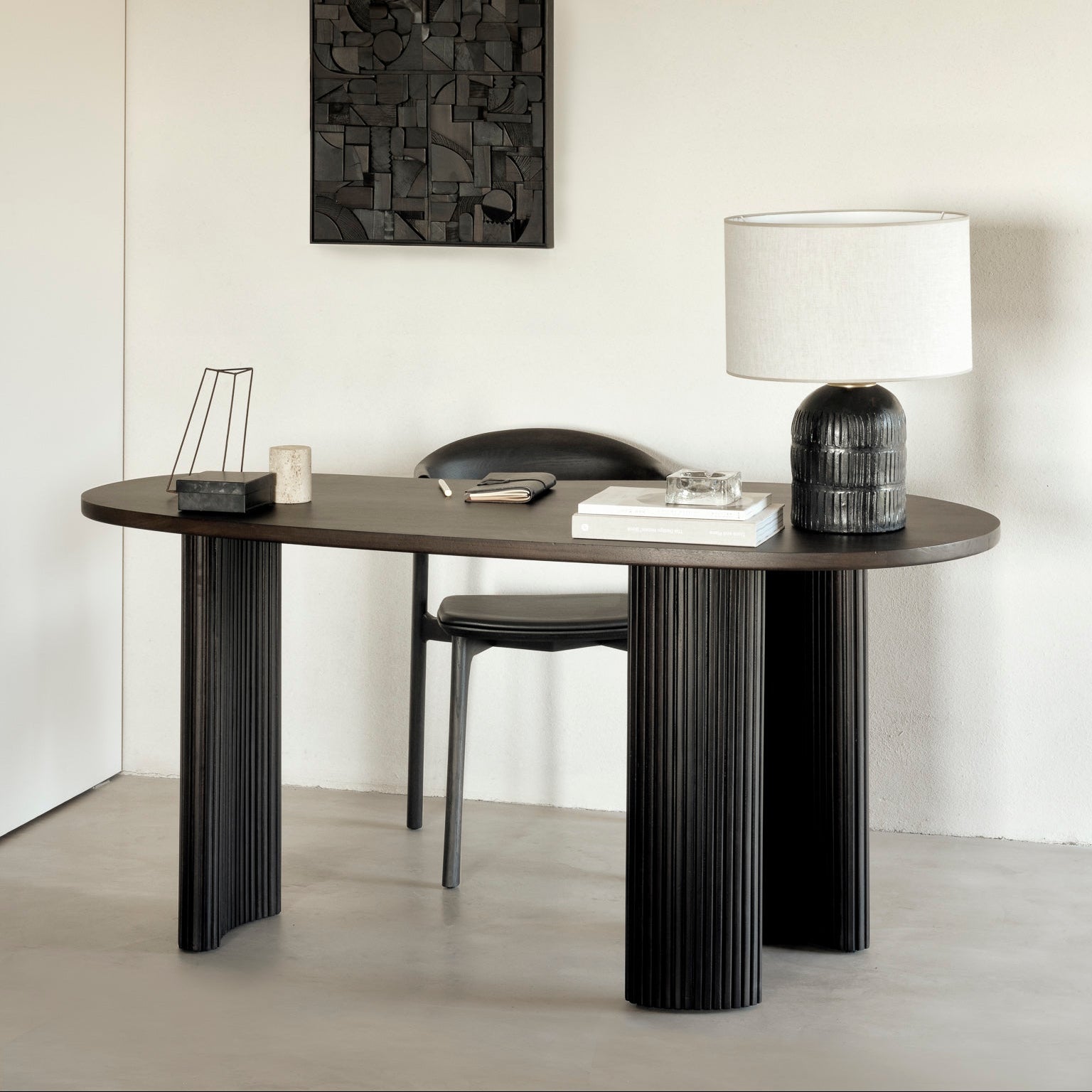
For wooden boards and bowls, Ethnicraft extends its solid-hardwood program from dining tables and desks (see our sustainable dining tables guide for context) into accessories. And designer-led independent makers like Case (designed by Gareth Neal) round out the catalog with statement pieces in solid beech.
For broader context on sustainable kitchen and dining choices, see our sustainable dining tables buyer's guide. And for the curation philosophy behind every brand we carry, see the Comosum sustainability page and the sustainable furniture brands hub.
What to Shop at Comosum
Six kitchen accessories that anchor different rituals:
- Splash Chopping Board by Case — Solid beech, designed by London designer Gareth Neal. A statement board that doubles as a serving piece.
- Hammershoi Grinders by Kähler — Stoneware salt and pepper mills with ceramic grinding mechanisms in five colors. Named after Danish painter Vilhelm Hammershøi and produced in the 1839-founded Kähler workshop.
- Lyngby Porcelæn Rhombe Color Mug — A faceted-form porcelain mug in five contemporary colors (rose, sand, blue, terracotta, green). Lead-free glaze, dishwasher- and microwave-safe.
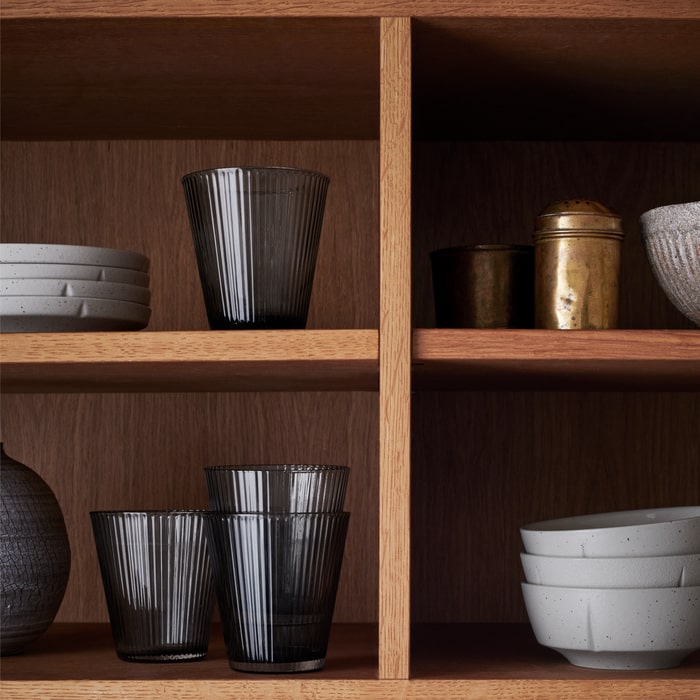
- Rosendahl Grand Cru Glassware — A product family Rosendahl has made since the 1990s, available in tumblers, highballs, and wine glasses. Sets of four to six.
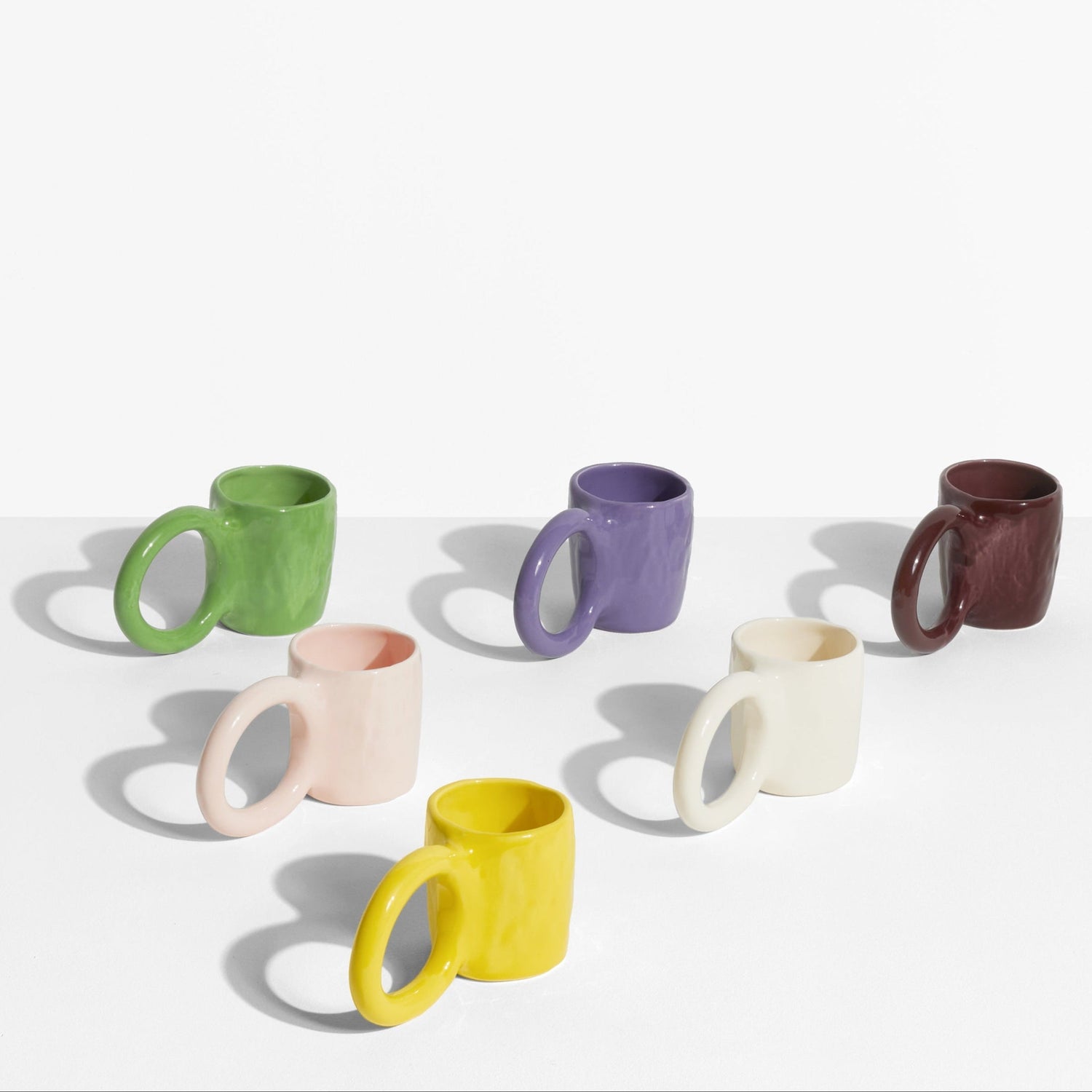
- Donut Espresso Set by Petite Friture — Handcrafted ceramic espresso cups in pistacchio, lemon, and bubble gum, designed by Pia Chevalier. A two-piece set that brings color to the morning ritual.
- Satellite Bowl by Ethnicraft — A solid varnished mahogany serving bowl from Ethnicraft's accessories line. SVLK-certified hardwood, food-safe finish, sized for the center of a dining table.
Browse the full kitchen accessories collection at Comosum →
Frequently Asked Questions About Sustainable Kitchen Accessories
What materials are best for sustainable cutting boards?
Solid FSC-certified hardwood — typically beech, maple, walnut, or mahogany — is the most sustainable cutting board material. These boards can be re-planed and re-oiled across decades and don't require glues that fail with moisture. Avoid bamboo boards made from glued offcuts and any plastic boards that are sold as "eco-friendly" without explicit recycled-content certification.
Are Danish ceramic brands more sustainable than mass-market tableware?
Generally, yes. Family-owned Danish workshops like Kähler (founded 1839) and Lyngby Porcelæn (founded 1936) operate to long product lifecycles — pieces stay in production for decades, replacement parts remain available, and manufacturing happens under EU food-contact and labor regulations. The Rosendahl Group, which owns both brands, is a Certified B Corporation, which adds independent third-party verification of social and environmental performance.
Is stoneware better than ceramic for everyday kitchen use?
Stoneware is a category of ceramic — and one of the more durable types. It's fired at higher temperatures (2,200–2,400°F) than earthenware, which makes it chip-resistant, dishwasher-safe, and microwave-safe in most cases. Porcelain is similarly durable. The terms to be cautious about are "ceramic" without further specification (which can include cheaper earthenware) and any decorative pieces with non-food-safe finishes.
How do I care for a wooden chopping board?
Wash with warm soapy water (don't soak), dry immediately, and re-oil periodically with food-grade mineral oil or board butter. Avoid the dishwasher, which warps and splits even FSC-certified hardwood. With this care routine, a solid hardwood board should last 20-plus years. If the surface develops grooves, plane or sand it lightly and re-oil — the board can be restored multiple times rather than replaced.
What's the most sustainable way to build a kitchen accessory collection?
Buy fewer pieces and buy better ones. Replace single-use kitchen items with one well-made alternative — a single Hammershoi salt mill instead of a stack of paper salt packets, a Rosendahl Grand Cru carafe instead of a case of bottled water, a Lyngby Porcelæn mug instead of disposable coffee cups. Most sustainability impact in the kitchen comes from owning durable goods that displace single-use ones, not from buying additional "eco-friendly" products.


Leave a comment
This site is protected by hCaptcha and the hCaptcha Privacy Policy and Terms of Service apply.