
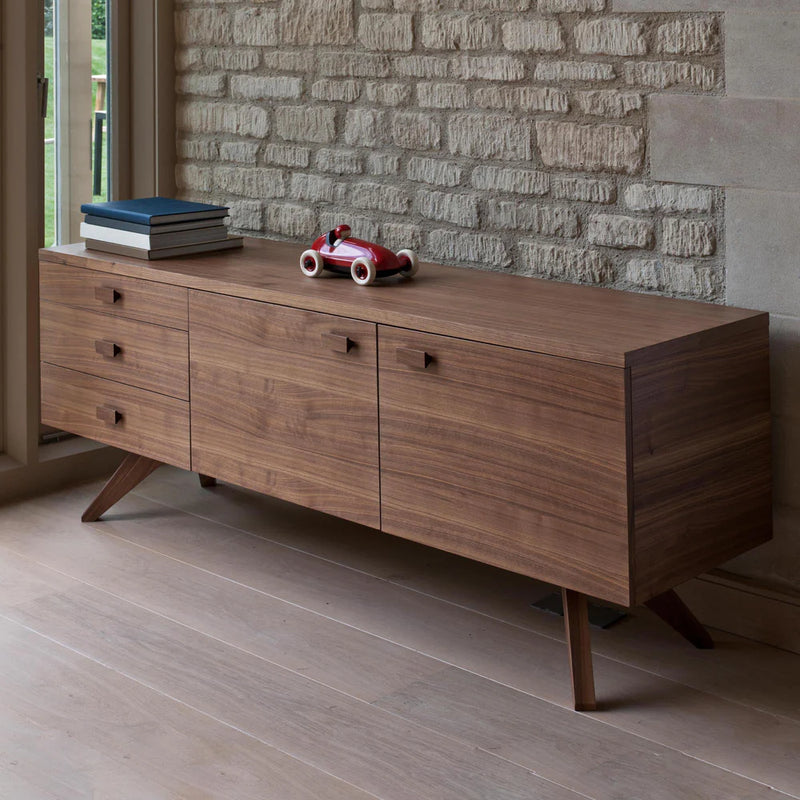
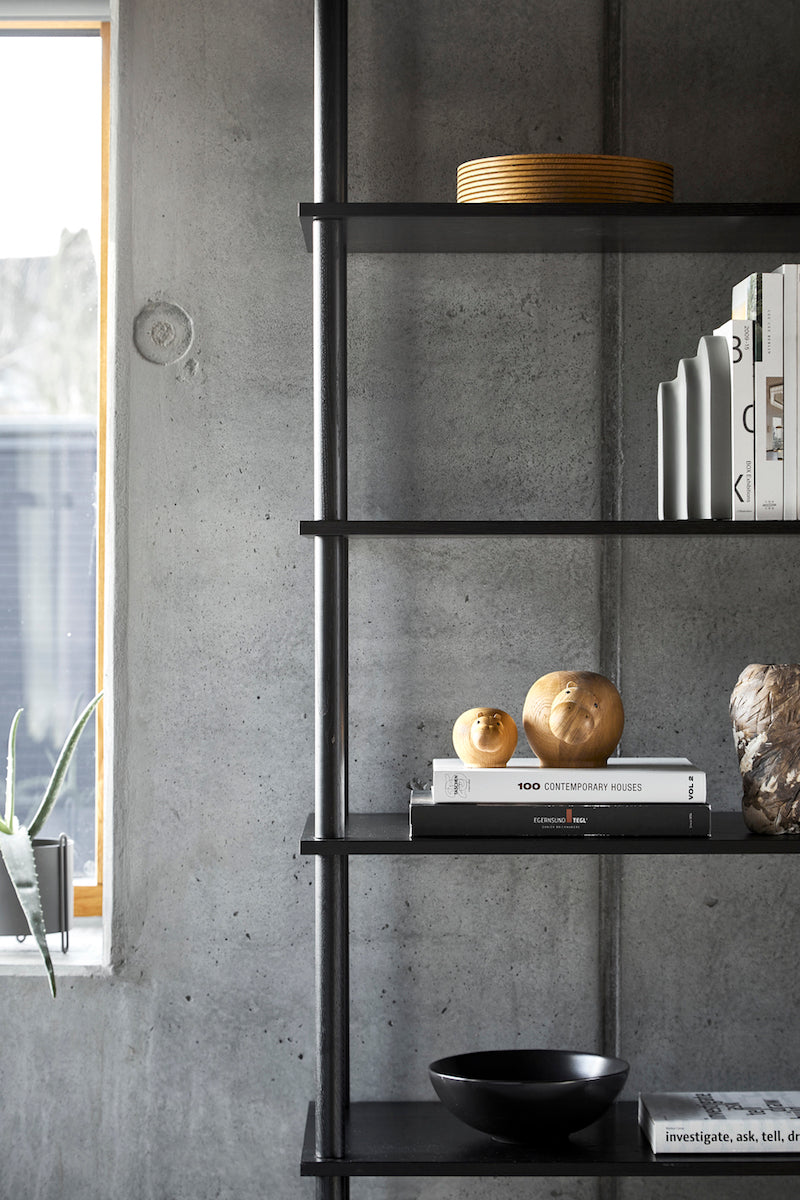

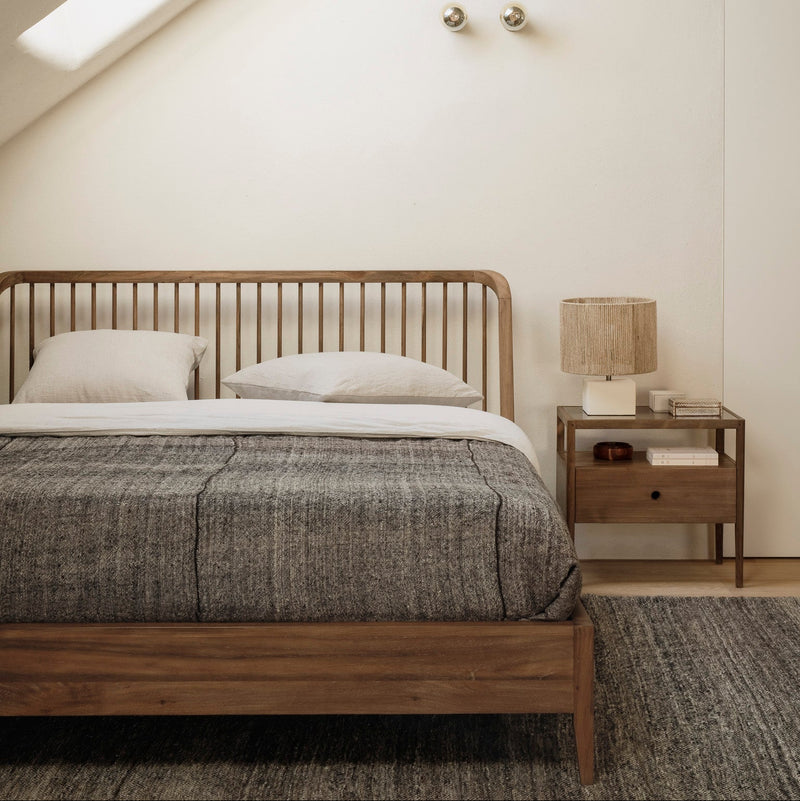
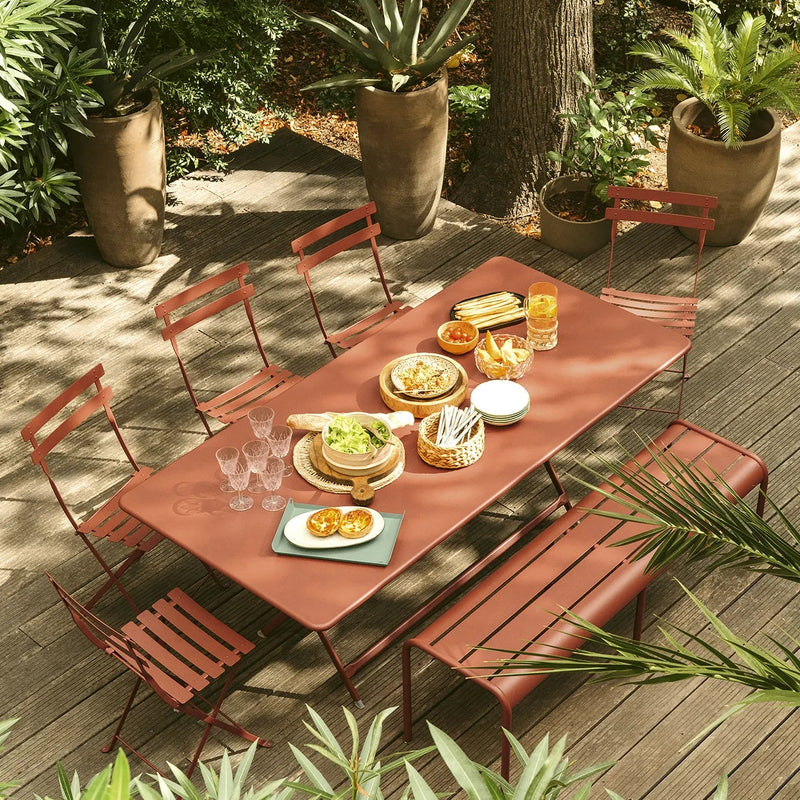
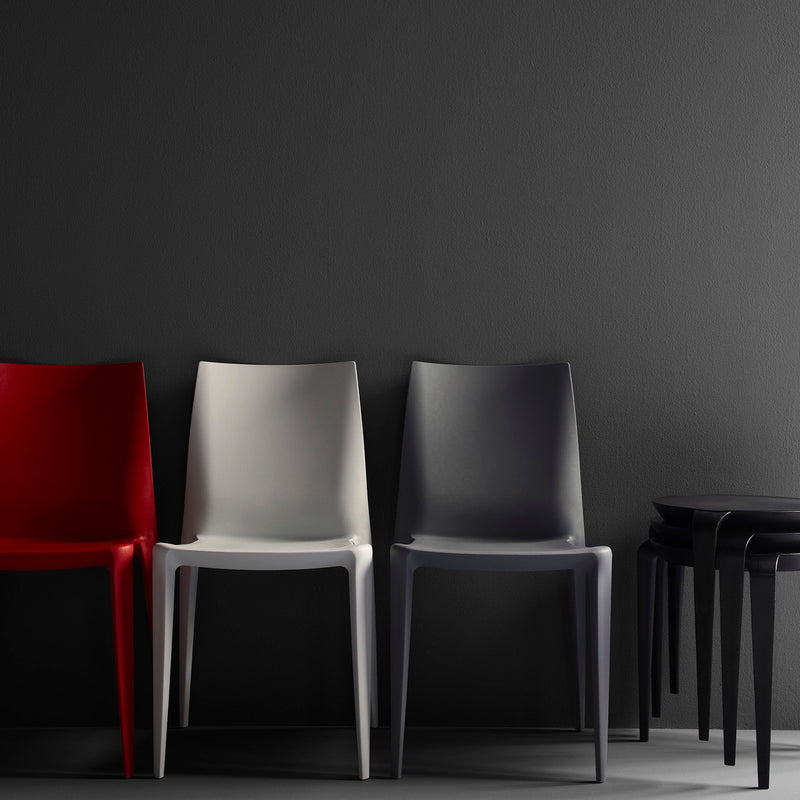
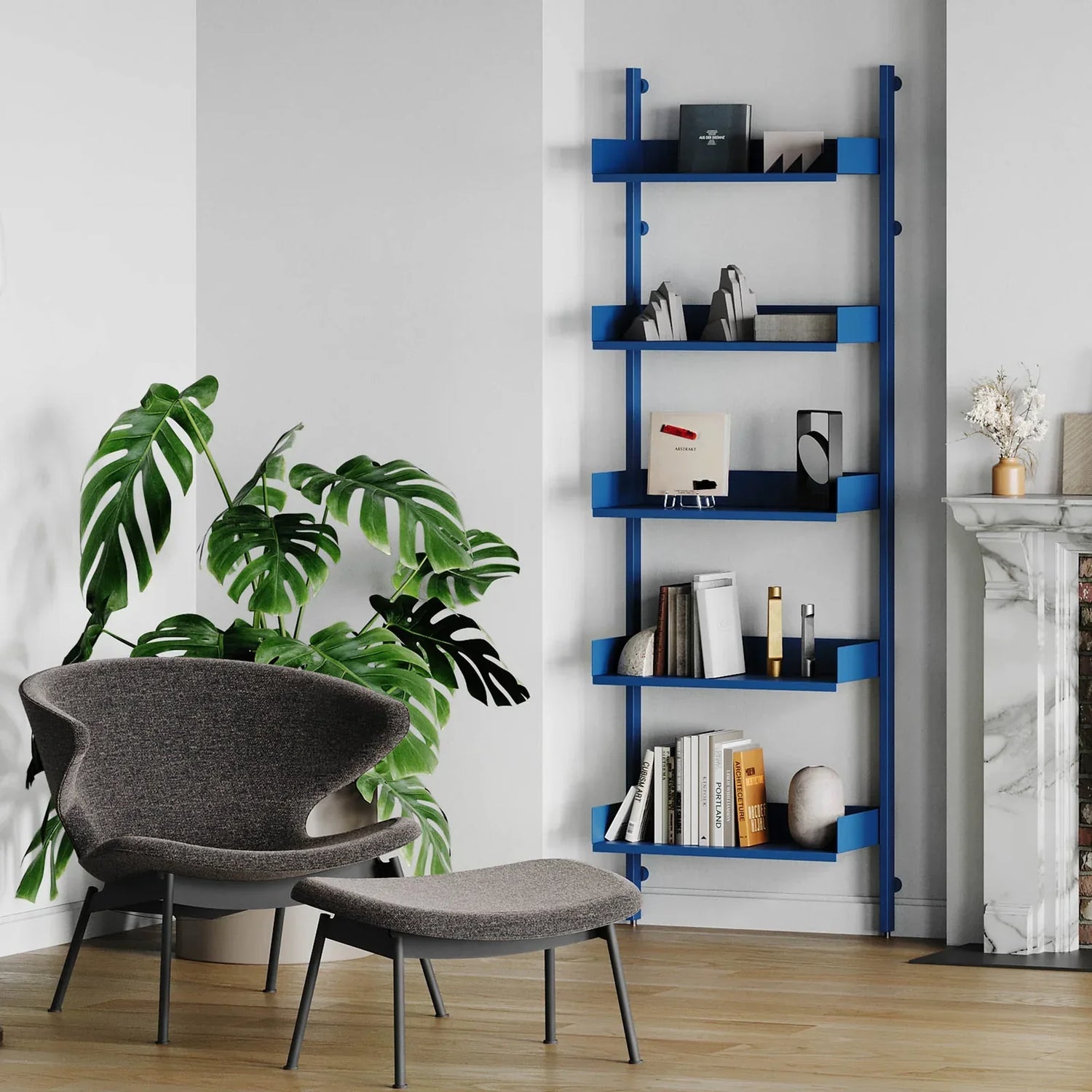
A sustainable bookshelf is a storage piece built from responsibly sourced or recycled material — most often FSC-certified solid oak, rapidly renewable bamboo, or recycled plastic — and engineered to outlast the trend cycle rather than the warranty. The most durable options use solid wood or single-material constructions that can be repaired, refinished, and disassembled, avoiding the particleboard-and-laminate shelving that warps within a few years. At Comosum, every bookcase and wall shelf we carry comes from a brand with a verifiable materials story. Shop them all in our sustainable bookcases collection.
For wall shelves and other pieces that free up floor space, see our edit of furniture for small apartments.
Why This Decision Matters
Shelving is the piece most people buy fastest and replace most often. A flat-pack particleboard bookcase is cheap because its core is wood dust and resin wrapped in a printed plastic skin — and the moment a loaded shelf sags or a corner swells from humidity, there is nothing to refinish or repair. It goes to landfill, and another one gets ordered. Furniture is one of the least-recycled categories in the home, in large part because composite construction can't be taken apart cleanly.
Sustainable shelving inverts that math. A solid oak bookcase or a folded-steel wall shelf costs more upfront, but it is built to be lived with for decades: sanded back when scratched, re-oiled when dry, unbolted and moved when you move. The carbon you "spend" making it is amortized across a much longer life. For books, ceramics, and the things you actually want on display, the difference between a piece that lasts three years and one that lasts thirty is the whole point.
The choice also comes down to two formats — floor-standing bookcases and wall-mounted shelving — and each solves a different problem, which is where most buyers go wrong.
Shop this guide
In stock, shipping from US warehouses, each from a brand graded on our Sustainability Meter.


What Makes Shelving Sustainable?
Not all "eco" shelving is equal. Three factors separate a genuinely sustainable piece from a greenwashed one.
Materials
The headline material is solid wood with a credible chain of custody. FSC (Forest Stewardship Council) certification — the most widely recognized independent forest-management standard, founded in 1993 — means the oak, mahogany, or beech was traced from an audited forest to the finished shelf. Bamboo is the other strong option: technically a grass, Moso bamboo regenerates in roughly three to five years versus the decades a hardwood needs, and Greenington's shelving uses 100% solid Moso bamboo rather than a veneer over a composite core. Recycled plastic is the third path — Heller's shelving is molded from 100% recycled, regenerative polypropylene. What to avoid: MDF and particleboard cores, which can off-gas formaldehyde and cannot be repaired.
Manufacturing
Where and how a shelf is made matters as much as the wood. Look for water-based, low-VOC or 0-VOC finishes rather than solvent-heavy lacquers; Ethnicraft offers its oak shelving in hardwax-oil or varnished finishes. Flat-pack and modular construction reduces shipping volume and lets you replace one component instead of the whole unit. Folded single-sheet steel, as Tiptoe uses, eliminates welds and joints — fewer failure points, and fully recyclable metal.
Certifications & Recognition
Beyond FSC, watch for PEFC (a parallel forest-certification scheme) and B Corp status at the brand level, which audits the whole company rather than one product. Tiptoe, for example, is a certified B Corp producing in Europe, and its oak shelves carry FSC/PEFC certification. These labels are the difference between a sustainability claim you can check and one you have to take on faith.
How to Choose: Floor-Standing vs. Wall-Mounted
The single most useful thing to get right is matching format to load — and to your wall.
Floor-standing bookcases carry the most weight because the floor does the work. They're the right call for a full book collection, heavy ceramics, or a room where you want a freestanding anchor. Solid-wood units like the FDB Møbler B98 or Greenington's Currant series hold serious load without sagging because the shelves are solid stock, not a thin composite span. When comparing, check shelf depth (books need 9–12 inches) and whether the unit is one fixed piece or a modular system you can extend later.
Wall-mounted shelving frees up floor space — the reason it's a favorite for small apartments — but it lives and dies by the fixing. A wall shelf is only as strong as what it's screwed into. In standard US framing, studs sit 16 inches on center, so a shelf rated for real weight should be anchored into at least one stud, not drywall anchors alone. Longer spans deflect more under load, so for books rather than light décor, choose a shorter shelf or one with a center bracket. Folded-steel and solid-oak shelves resist the bowing you'll see in laminate floating shelves within a year or two.
If you're furnishing a tight footprint, our room-by-room guide to sustainable furniture for small apartments pairs naturally with this one, and a wall of shelving is one of the highest-impact moves in a sustainable home office setup.
Why We Recommend Building Storage to Last
We curate shelving the way we curate everything: sustainability, original design, and craftsmanship that earns its keep. Storage is where shortcuts show fastest, so we lean toward solid-material pieces from brands that publish what they use — Ethnicraft's solid-oak wall shelves and the PI Wall Shelf designed by Alain van Havre, WOUD's modular oak Bricks system, FDB Møbler's heritage Danish bookcases, and Greenington's bamboo cases.
We also favor modular and repairable design because it respects how real homes change. A modular system grows with your collection instead of being outgrown; a solid shelf can be re-oiled instead of replaced. That's a better outcome for your home and a measurably better one for the planet than a cycle of disposable flat-packs. You can see the same philosophy across our sustainable furniture brands, and these pieces sit comfortably alongside the rest of a storage collection built to last.
What to Shop at Comosum
A few sustainable shelving pieces worth starting with, all in stock:
- Ethnicraft Wall Shelf — solid European oak, made in Serbia, in three lengths, a clean horizontal line that works in any room. The easiest entry point into solid-wood wall shelving.
- FDB Møbler B98 Bookcase — a Mogens Koch design from 1944, a Nordic icon in solid nature-lacquered oak, built to be stacked and added to over time.
- Greenington Currant Leaning Bookshelf — Mid-Century-inspired and crafted from 100% solid Moso bamboo, a rapidly renewable alternative to hardwood.
- WOUD Bricks Modular Storage — minimalist oak cubes you arrange and stack into a bookcase, room divider, or sideboard as your needs change.
- Tiptoe BRACKET Wall Shelf Set — folded-steel brackets paired with an FSC/PEFC-certified European oak board, from a certified B Corp producing in Europe.
Browse the full bookcases and wall-mounted shelving collections at Comosum →
Frequently Asked Questions About Sustainable Shelving
What is the most sustainable material for a bookshelf?
The strongest options are FSC-certified solid hardwood, which can be repaired and refinished for decades, and solid Moso bamboo, which regenerates in roughly three to five years. Recycled plastic shelving is also sustainable when the product is itself recyclable at end of life. The least sustainable choice is MDF or particleboard, which can off-gas and cannot be repaired or recycled.
How much weight can a wall-mounted shelf hold?
It depends almost entirely on the fixing, not the shelf. Anchored into a wood stud — typically spaced 16 inches on center in US framing — a solid shelf can hold substantial weight, while drywall anchors alone are suitable only for light décor. Longer shelves also deflect more under load, so for a row of books, choose a shorter span or a shelf with a center bracket.
Are bamboo bookshelves durable?
Yes. Solid Moso bamboo is harder than many common hardwoods and resists warping well, which is why brands like Greenington use it for full bookcases rather than veneer. As with any wood-based furniture, keeping indoor humidity moderate and wiping spills promptly extends its life considerably.
How do I care for a solid oak bookcase?
Dust regularly, wipe spills quickly to prevent water marks, and re-oil the surface every one to three years depending on use to keep the wood from drying out. Keep it out of direct sunlight and in stable indoor humidity to avoid cupping. Solid oak's repairability is its biggest advantage — light scratches sand out and the finish renews.
Is wall-mounted or floor-standing shelving better for a small space?
Wall-mounted shelving usually wins in a small space because it frees the floor and draws the eye upward, making the room feel larger. Floor-standing bookcases are better when you need to hold a lot of weight or want a freestanding anchor. Many small apartments use both: a tall, narrow bookcase for capacity, plus wall shelves for display.
At Comosum, we curate sustainable furniture from independent and design-led brands — solid-wood, bamboo, and recycled-material pieces built to last. Explore more in our journal.


Leave a comment
This site is protected by hCaptcha and the hCaptcha Privacy Policy and Terms of Service apply.