
Non-toxic kids furniture means furniture certified to a published chemical-emissions standard — most commonly GREENGUARD Gold, which sets stricter limits for products used in schools and healthcare environments where children are present. The Gold standard caps formaldehyde at roughly half the level allowed by basic GREENGUARD and screens for more than 360 individual volatile organic compounds. For a nursery or child's bedroom, the practical short list is heirloom-grade solid wood or Moso bamboo with water-based finishes, OEKO-TEX-certified upholstery, and case goods built to convert and outlast a single childhood.
Why Nursery Furniture Is a Different Sustainability Decision
A nursery is the densest furniture room in a child's life and the room with the longest daily exposure. Newborns sleep 14–17 hours a day inside a crib that is, by design, a sealed micro-environment a few inches from their face. A two-year-old climbing into a dresser drawer is putting their hands and mouth on finishes that were applied weeks or months earlier. Children also breathe more air per pound of body weight than adults, which means whatever the furniture is off-gassing, they are absorbing more of it.
The two chemistries that matter most in kids' furniture are formaldehyde (from urea-formaldehyde glues in particleboard and MDF) and volatile organic compounds (from finishes, sealants, and adhesives). Both off-gas most aggressively in the first weeks after a piece is built — exactly the period during which most nurseries are assembled. A piece that meets GREENGUARD Gold emissions limits has been tested for cumulative chemical exposure in a sealed chamber and re-tested annually to keep the certification. A piece that is "non-toxic" because the label says so has not.
The same logic that applies to a non-toxic bedroom for adults applies double for a nursery — but with the certification bar raised.
What "Non-Toxic" Actually Means in a Child's Room
Used loosely, "non-toxic" is a marketing word. Used precisely, it points to three published standards. A piece of kids' furniture that meets all three is genuinely safer than the alternatives.
GREENGUARD Gold
GREENGUARD is a UL Solutions certification that measures total VOC and individual chemical emissions inside a sealed test chamber. The standard GREENGUARD level certifies that a product meets indoor-air-quality thresholds for offices and adult bedrooms. GREENGUARD Gold — originally called GREENGUARD Children & Schools — is the stricter tier, with lower caps on formaldehyde, TVOC, and individual chemicals such as benzene and acetaldehyde. It is the certification you want printed on a crib, a changing table, or a nursery dresser.
OEKO-TEX Standard 100
For anything textile — mattress ticking, cushion covers, soft toys, rugs — the equivalent benchmark is OEKO-TEX Standard 100, which tests for more than 350 harmful substances including lead, phthalates, formaldehyde, and azo dyes. OEKO-TEX uses four product classes; Product Class I is the strictest and is the class required for items in direct contact with babies and infants.
FSC and Heirloom Construction
The third pillar is the wood itself. FSC (Forest Stewardship Council) certification confirms the wood was harvested without deforesting old-growth forests; it doesn't speak to chemistry directly but it tells you the manufacturer is documenting its supply chain at all. Pair FSC certification with solid-wood or bamboo construction (no particleboard core), water-based finishes, and mortise-and-tenon or dovetail joinery, and you have a piece that will survive being climbed on, drawn on, and handed down. The Living Building Challenge Red List provides a parallel reference for which chemicals to avoid in any children's environment.
Why We Recommend These Brands for Nurseries and Kids' Rooms
We carry two brands that consistently meet the bar above, and a third whose construction quality earns it a place in older kids' rooms even where individual SKUs are not always nursery-specific certified.
Greenington builds bedroom and storage furniture from Moso bamboo — a fast-regenerating grass that reaches harvest maturity in three to five years versus the 40+ years a hardwood tree needs to mature. The brand uses food-safe, water-based finishes and avoids urea-formaldehyde adhesives. Currant, Sienna, Ventura, and Studio Plus lines all share the same materials specification, which means a nursery built around Greenington can grow with the child — the crib-adjacent dresser becomes a teenager's bookshelf without ever being replaced. Read our broader sustainability standards for the framework we apply to every brand we carry.
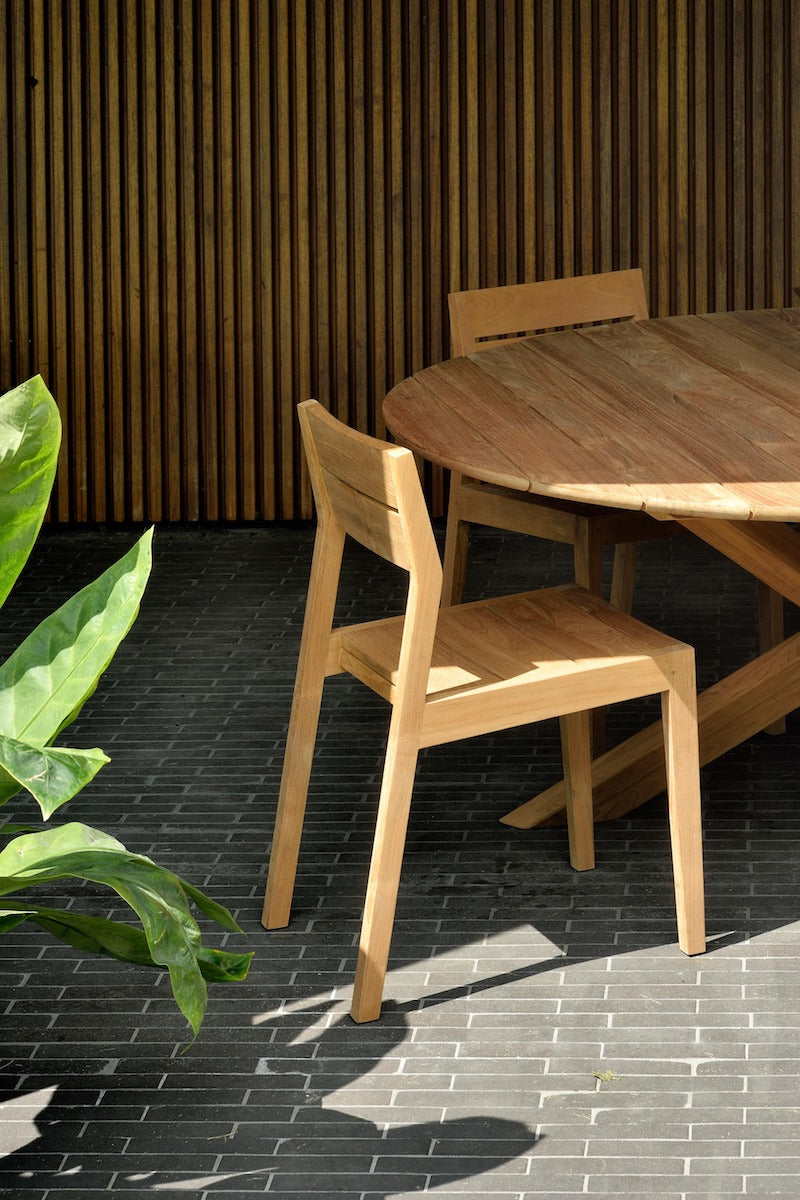
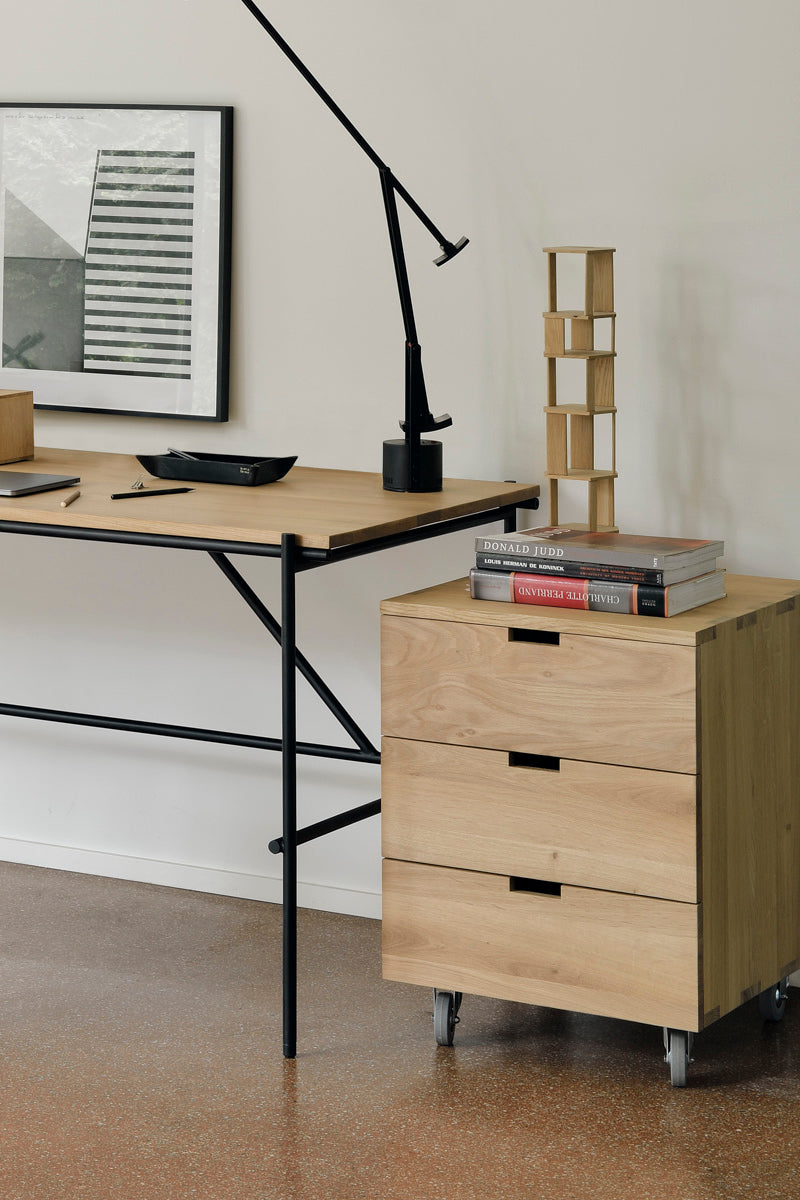
Ethnicraft is FSC-certified solid wood — teak, European oak, and walnut — with mortise-and-tenon construction and a water-based finish program. Their pieces are not marketed as "kids' furniture," but a solid-oak storage bench or a small console table in a child's room is the definition of heirloom: it will be there at the next house, and the one after that.
For the full bedroom collection — including pieces that work in nurseries, kids' rooms, and shared bedrooms — start with solid wood or bamboo, water-based finishes, and joinery you can see.
What to Shop at Comosum for a Non-Toxic Nursery or Kids' Room
A few pieces we'd build a child's room around, in order of how much daily contact they get.
- Greenington Sienna Five-Drawer High Chest — Moso bamboo, water-based finish, full-extension drawer slides; a dresser that doubles as a changing-table base in a nursery and stays in the room when the changing pad comes off.
- Greenington Ventura 4-Drawer Double Dresser — wider, lower silhouette in solid Moso bamboo; works as a nursery dresser and a kid's room dresser without modification.
- Greenington Currant Bookshelf — a bamboo bookshelf scaled for picture books at toddler height and chapter books at ten; the same finish chemistry as the dressers.
- Greenington Sienna Nightstand — pairs with the dresser above; the right height next to a toddler bed or a twin.
- FDB Møbler J181 Sønderup Step Stool — solid oak, oiled finish, designed by Chastine Lavoie for FDB's Danish cooperative; the kind of step stool that survives three siblings.
Browse the full bedroom furniture collection at Comosum.
Frequently Asked Questions About Non-Toxic Kids Furniture
What is GREENGUARD Gold certification, and why is it important for kids' furniture?
GREENGUARD Gold is the children-and-schools tier of UL Solutions' indoor-air-quality certification. It caps formaldehyde and total VOC emissions at lower thresholds than basic GREENGUARD and screens for more than 360 individual chemicals. For furniture used in a nursery or children's bedroom — where exposure is dense and prolonged — Gold is the bar to look for.
Is bamboo furniture safe for a nursery?
Solid Moso bamboo furniture from manufacturers that use food-safe, water-based finishes and avoid urea-formaldehyde adhesives is appropriate for a nursery. The brand-level question matters more than the material — ask for the adhesive type and the finish chemistry. Greenington publishes both.
What's the difference between "non-toxic" and "GREENGUARD Gold certified"?
"Non-toxic" is a marketing claim with no regulatory definition in the US furniture industry. "GREENGUARD Gold certified" is a third-party tested certification with published thresholds, an annual audit, and a public registry. If the piece is genuinely non-toxic, the manufacturer has had it tested and can show you the certificate.
Should I worry about lead and phthalates in kids' furniture?
US furniture sold for children is subject to the Consumer Product Safety Improvement Act (CPSIA), which limits lead in surface coatings and substrates and restricts six phthalates. CPSIA compliance is the legal floor, not the ceiling. Pieces that also carry GREENGUARD Gold and use OEKO-TEX textiles add a meaningful margin.
Can a nursery dresser become a kid's room dresser?
Yes — that is the point of buying heirloom-grade pieces. The dressers we recommend (Greenington Sienna and Ventura, Ethnicraft solid-oak storage) are full-size adult dressers that happen to be the right scale for a changing table at the start and a kid's room afterward. Buying them once is cheaper and lower-impact than replacing flatpack nursery furniture every three years.

Leave a comment
This site is protected by hCaptcha and the hCaptcha Privacy Policy and Terms of Service apply.