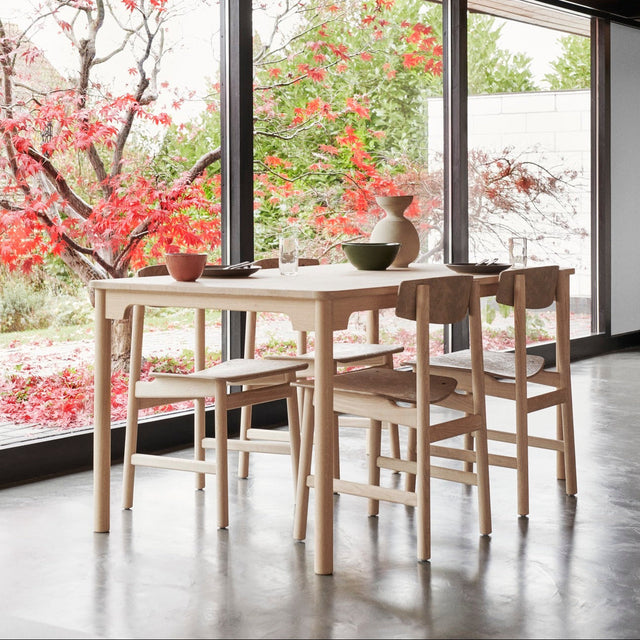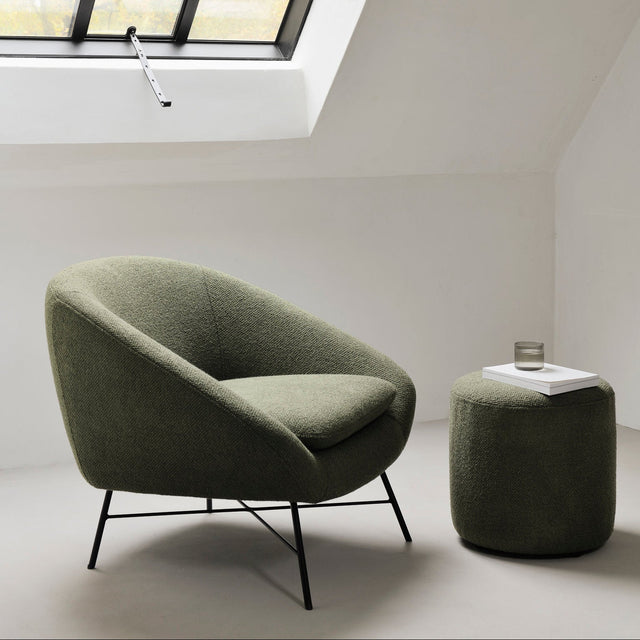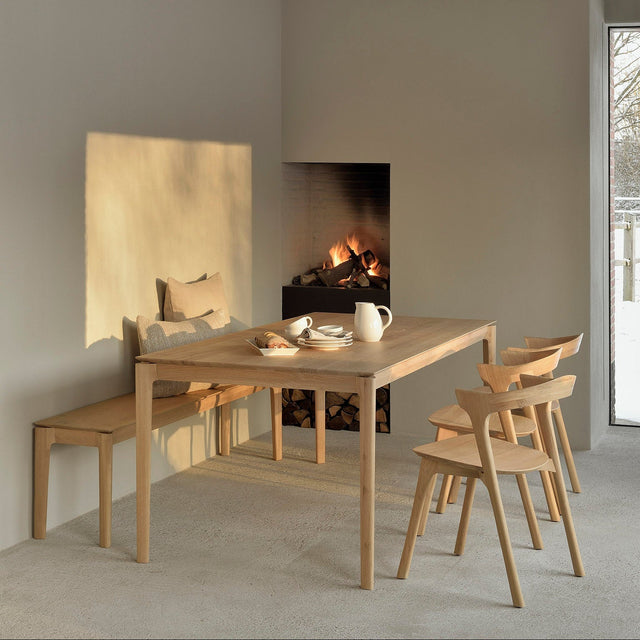
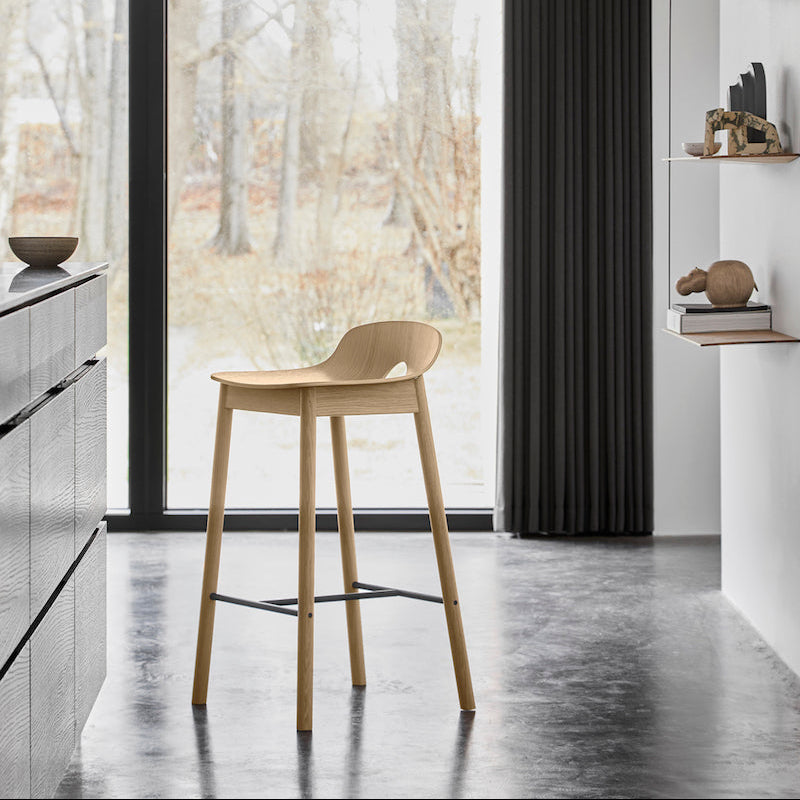
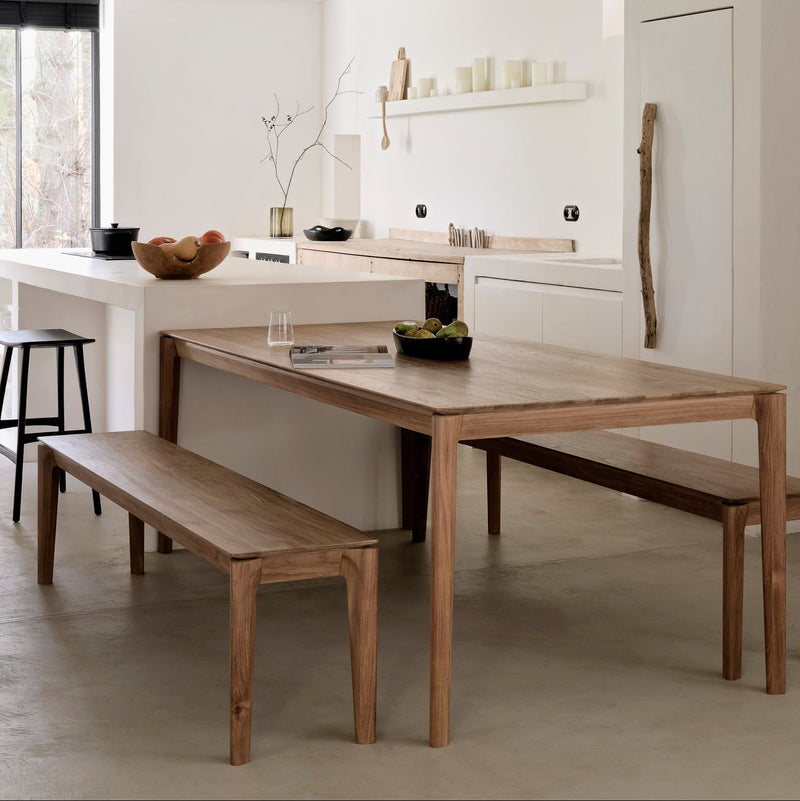

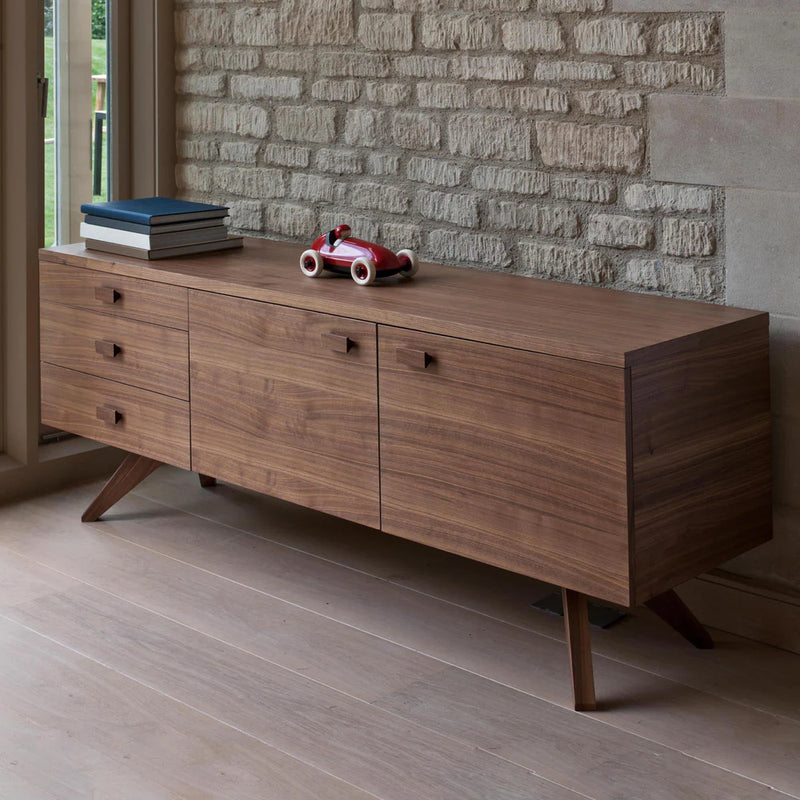


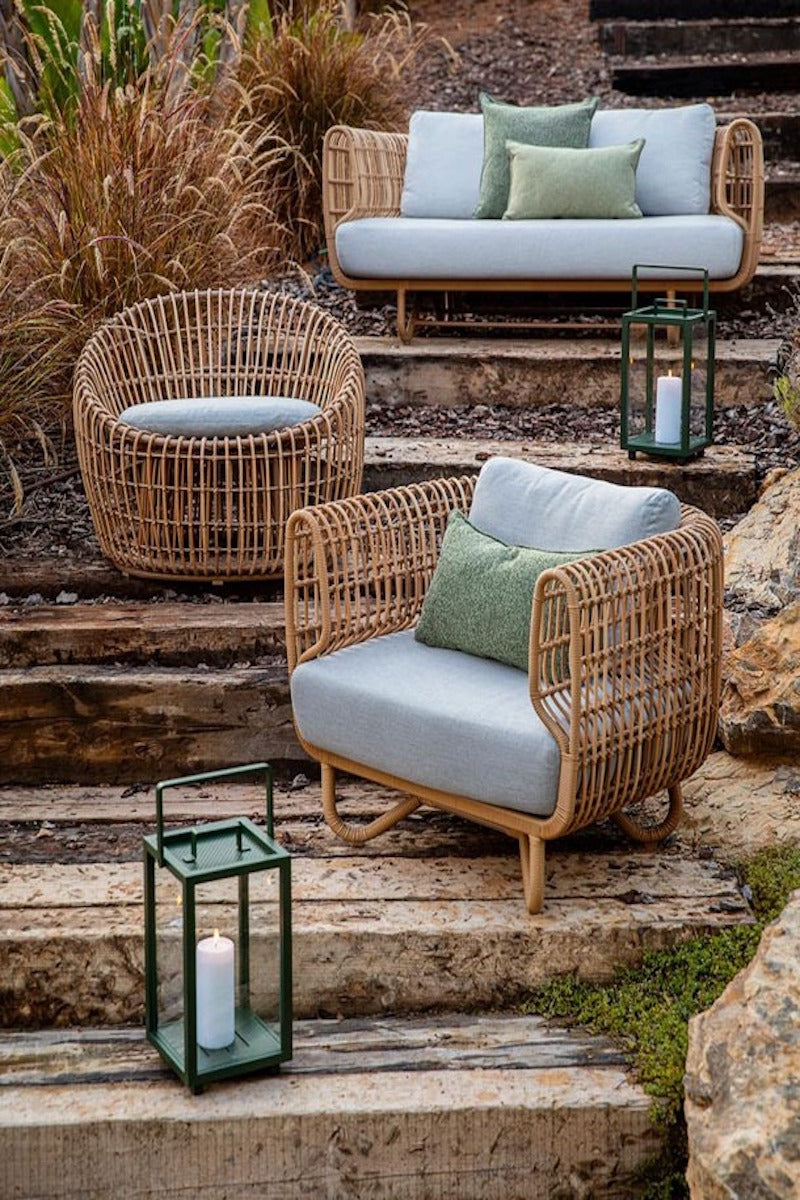
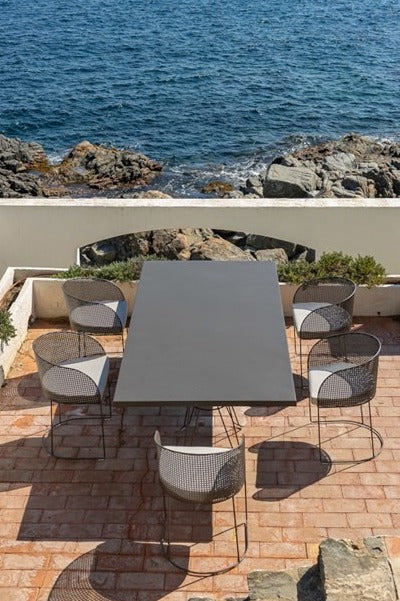

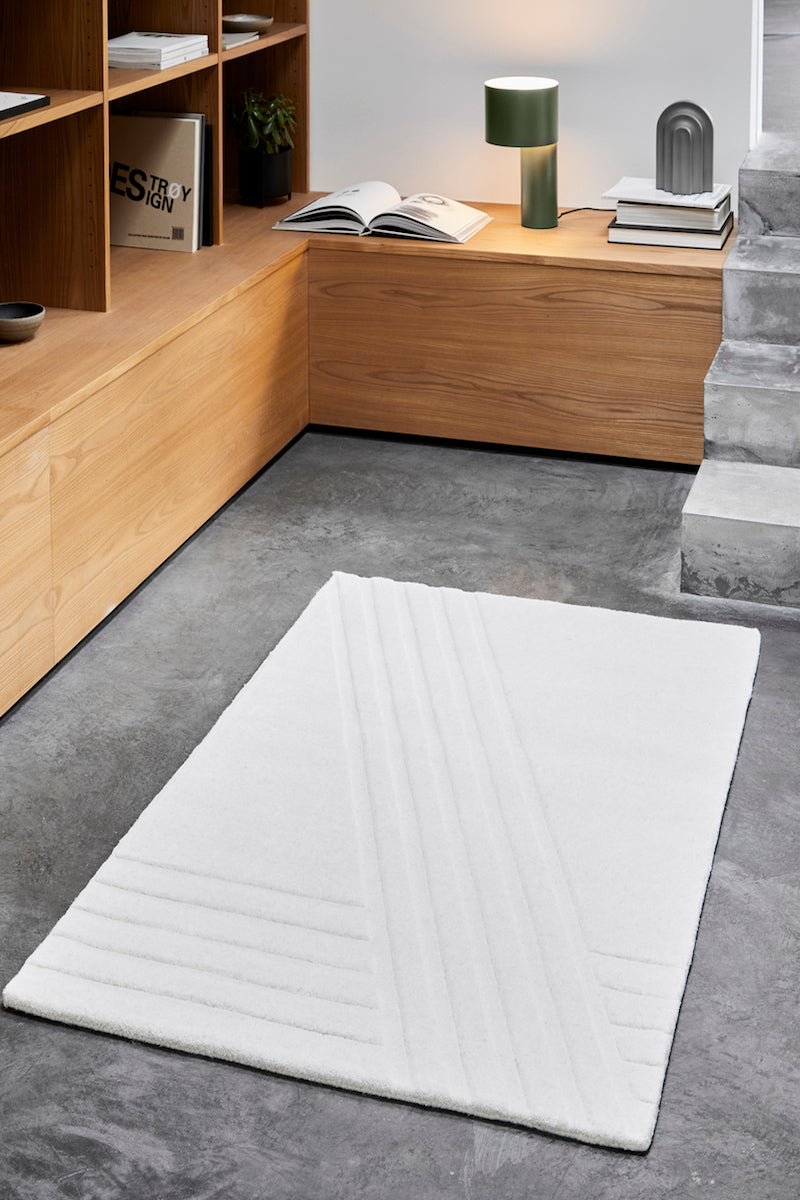
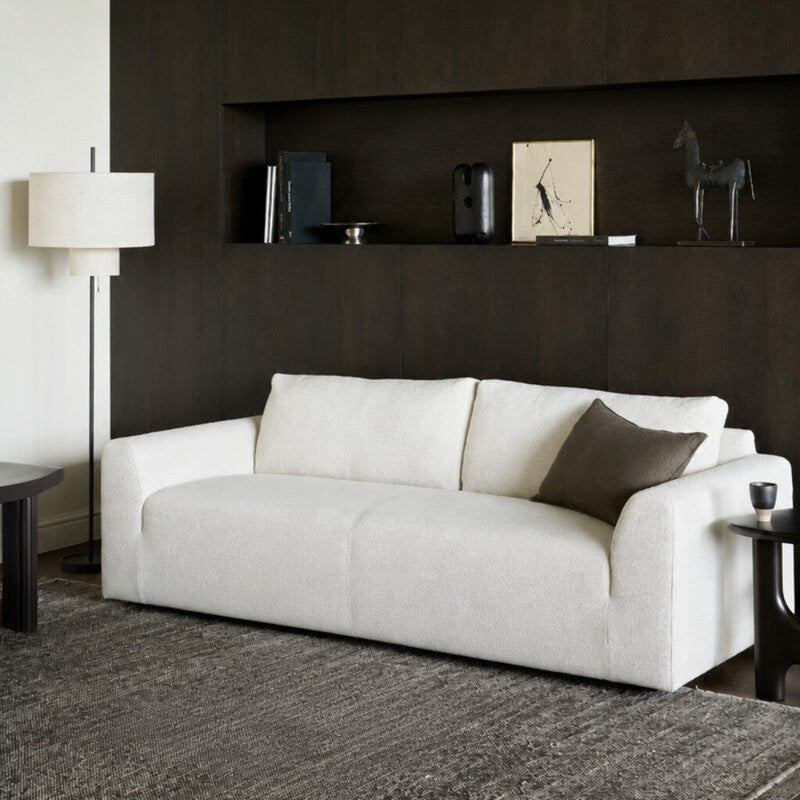



Non-toxic furniture is furniture built and finished to keep the chemicals of most concern out of your home: formaldehyde-based glue in particleboard and MDF, high-VOC finishes, PFAS stain treatments on fabric and added flame retardants in foam. No law defines the term and nothing is literally chemical-free, so the useful test is whether a maker names the core, the finish and the label. This guide covers what to check, what the rules say and a short answer for every room, with links to our deeper guides.
What makes furniture toxic?
Four groups of chemicals do most of the damage, and each one hides in a predictable place.
Formaldehyde
The glue in particleboard, MDF and plywood. The World Health Organization’s cancer agency classifies it as carcinogenic to humans, and it can off-gas for years.
VOCs
Solvent-based lacquers and adhesives release benzene, toluene and xylene, most strongly while the finish is new.
Flame retardants
PBDEs were common in upholstery foam until recently. They build up in the body and are still in millions of older sofas.
PFAS and heavy metals
PFAS “forever chemicals” turn up in stain-repellent fabric treatments. Lead, cadmium or chromium can turn up in some colored paints, a worry on surfaces children touch.
Why it matters indoors. The US EPA estimates that Americans spend about 90% of their time indoors, reports that levels of many VOCs are consistently higher indoors than outdoors, and lists building materials and furnishings among the sources. Emissions are strongest while a piece is new, and you spend about eight hours a night in the bedroom, often with the windows shut.
What certifications should you look for in non-toxic furniture?
Look for a label that tests the thing you’re worried about. Emissions labels test the finished piece in a chamber, textile labels test fabric and foam, and FSC tells you where the wood came from. A named certificate beats “natural” or “eco” every time. Our certification glossary explains each label, and our guide to what furniture certifications really mean covers the sustainability labels too.
| Label | What it checks | Use it for |
|---|---|---|
| GREENGUARD Gold | Chemical emissions, tested in a chamber against 360+ criteria; the strict tier written for schools and healthcare | Anything you sleep or sit on for hours |
| SCS Indoor Advantage Gold | Indoor air emissions from the finished product, verified by SCS Global Services | Office chairs and desks |
| OEKO-TEX Standard 100 | Fabric, thread, trims and foam tested for harmful substances | Upholstery, cushions, throws |
| CertiPUR-US | Polyurethane foam tested for emissions and made without certain flame retardants, formaldehyde and heavy metals | Sofa and chair cushions |
| GOTS | At least 70% certified organic fiber, plus processing and social criteria | Organic cotton and linen covers |
| Nordic Swan Ecolabel | The whole product lifecycle, with limits on formaldehyde and VOCs in glues, panels and finishes | Scandinavian wood furniture |
| FSC | Where the wood came from: responsibly managed forests and chain of custody | Wood sourcing. It doesn’t cover finishes or glue. |
| CARB Phase 2 / TSCA Title VI | The legal formaldehyde limit for plywood, particleboard and MDF sold in the US | A floor every composite board must meet, not a mark of low emissions |
“FSC tells you where the wood came from — not what’s in the glue.”
On top of labels, we grade every brand we carry on six published categories. How the Sustainability Meter works.
Low-VOC and zero-VOC furniture: which finishes off-gas least?
VOCs (volatile organic compounds) are carbon-based chemicals that evaporate at room temperature. In furniture they come mostly from the finish and the glue: the solvents that carry a lacquer, the thinners in a stain, the binders in an adhesive. Most of the release happens while a finish cures, which is why a new piece often smells strongest in its first days. “Low-VOC,” “zero-VOC” and “no-VOC” aren’t tightly defined for furniture, so ask what the finish actually is.
Water-based lacquer and paint
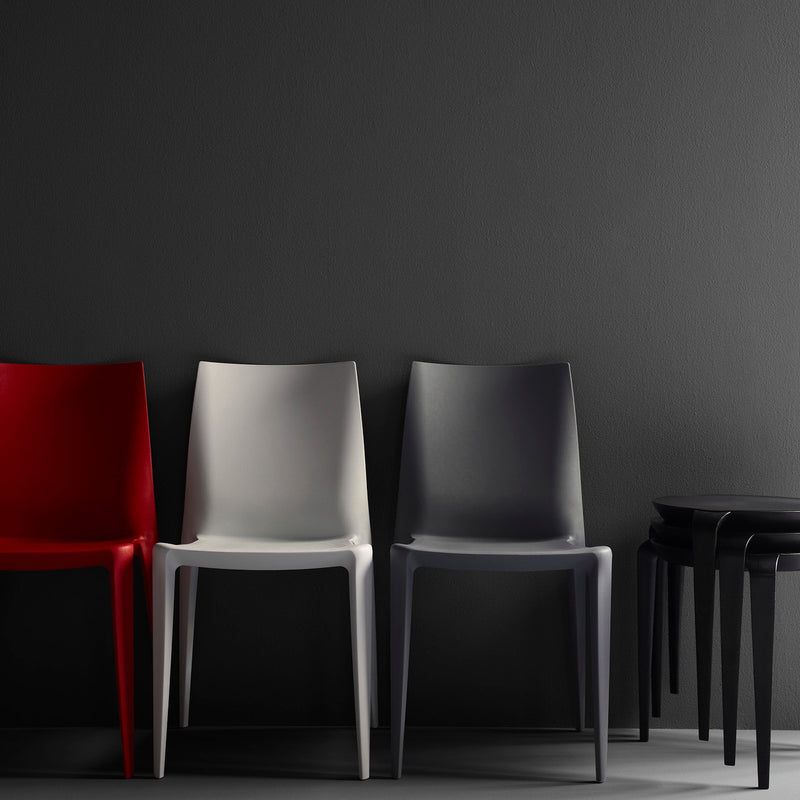
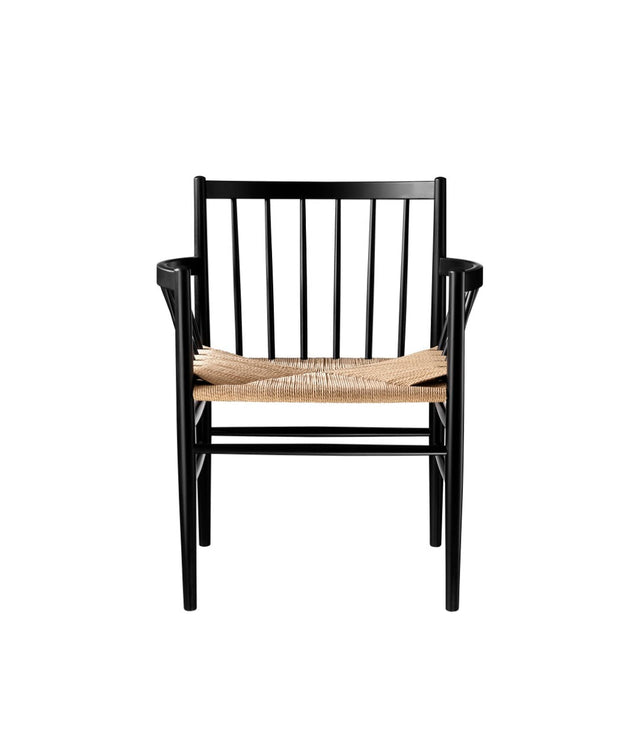
Water carries the finish instead of petroleum solvents, which cuts VOCs sharply, and it stays clear rather than ambering. FDB Møbler finishes Nordic Swan-labeled chairs such as the J81 and the P9 in water-based paint or lacquer.
Hardwax oil and natural oil
Oil soaks into the wood rather than forming a film on top, and a hardwax oil adds wax for a matte, wipeable surface. Scratches can be spot-repaired and the finish renewed at home.
Soap
A Danish tradition for pale oak and beech: soap flakes and water, with no solvents at all. It leaves the wood looking raw and asks for a little more upkeep. Mater’s Conscious Chair comes in soaped oak.
Powder coat
Powder is sprayed on dry and baked, with little or no solvent to evaporate, which makes powder-coated steel and aluminum a low-VOC choice for frames and outdoor pieces.
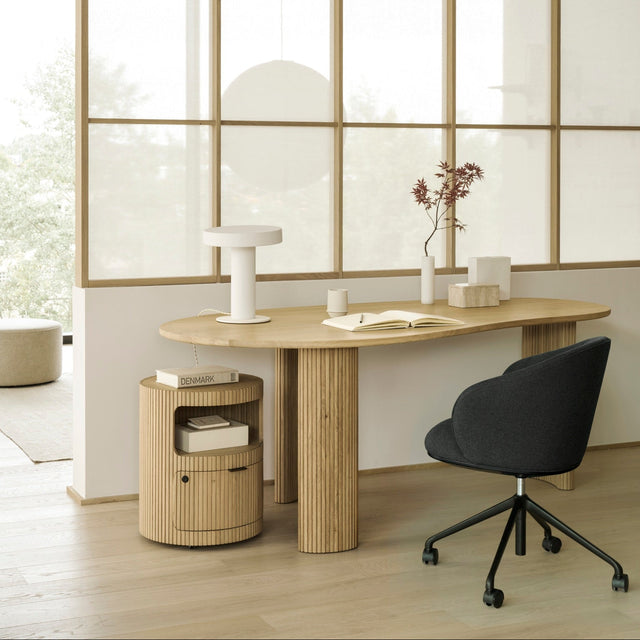
For furniture you buy, the lowest-emission wood finishes are a fully cured hardwax oil or natural oil, soap or a water-based lacquer, and for painted pieces, water-based paint. A product-level label such as the Nordic Swan Ecolabel or GREENGUARD Gold tests the finished piece rather than the can. A varnish can be low-emission too: Ethnicraft lists the polyurethane varnish on its Boomerang desk as low-emission and PFAS-free.
 FDB Møbler · Meter 3.7J81 Chair - Jet BlackBeech in water-based paint; Nordic Swan Ecolabel
$915
 Ethnicraft · Meter 3.5Boomerang DeskSolid oak or mahogany; low-emission, PFAS-free varnish
From $1,949Shop →
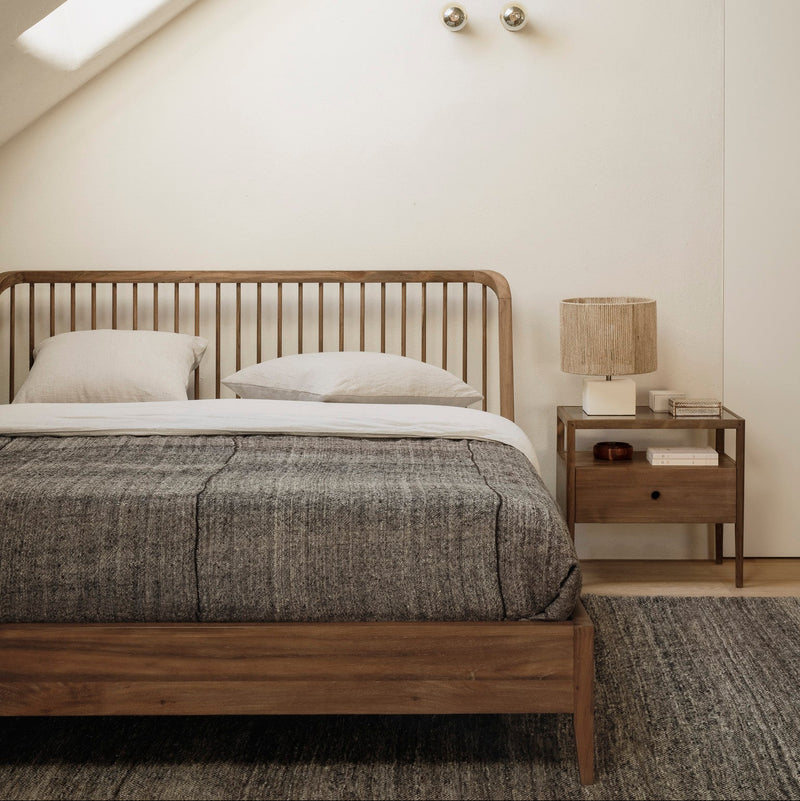
 Ethnicraft · Meter 3.5Spindle Bedside TableSolid oak, hardwax oil or black varnish; glass top
From $889Shop →
Shopping for a bed? Our bedroom guide compares zero-VOC finishes for bed frames.
PFAS, formaldehyde and flame retardants: what the rules say
Three chemical groups account for most of the worry about furniture, and each has a rule or a label you can check.
Formaldehyde: is MDF toxic?
Formaldehyde comes from the resins that bind particleboard, MDF and plywood. US law (TSCA Title VI, which adopted California’s CARB Phase 2 limits) caps emissions at 0.05 ppm for hardwood plywood, 0.09 ppm for particleboard and 0.11 ppm for MDF. So compliant MDF isn’t unregulated, but it isn’t formaldehyde-free either. If a piece uses composite board, ask for NAF (no added formaldehyde) or ULEF (ultra-low-emitting formaldehyde) resin. Solid wood and solid bamboo avoid particleboard and MDF altogether, and formaldehyde-free shelving means solid material in the carcass and the back panel, not just the doors.
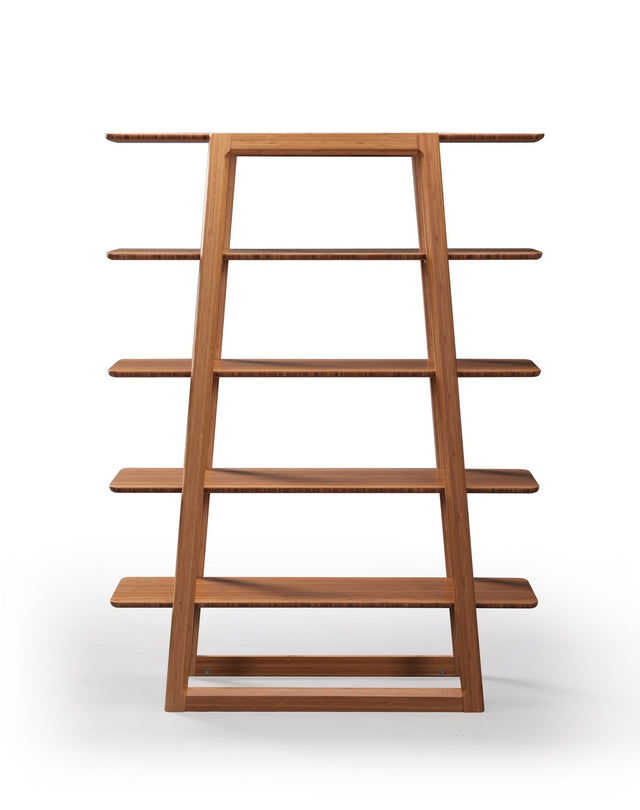
 Greenington · Meter 3.5Currant Bookshelf100% solid bamboo: no MDF or plywood
From $1,319Shop →
 Ethnicraft · Meter 3.5M RackSolid oak, hardwax-oiled or varnished; made in Serbia
From $1,909Shop →
PFAS: stain-resistant fabric
PFAS were long used in stain- and water-repellent fabric treatments. They persist in the environment, and several US states now restrict them in textiles. Look for “PFAS-free” in writing on the fabric, not just “performance” or “stain-resistant.” Stain resistance doesn’t need PFAS: Ethnicraft’s Ellipse sofa has a stain-repellent fabric it lists as PFAS-free and certified to OEKO-TEX Standard 100.
Flame retardants and TB 117-2013
California’s old TB 117 pushed makers to load sofa foam with flame-retardant chemicals. Its replacement, TB 117-2013, is a smolder test that upholstered furniture can pass without them, and California requires a label saying whether a piece contains added flame-retardant chemicals. Look for that label, or for CertiPUR-US foam. Ethnicraft lists TB 117-2013 for its Figur and Ellipse sofas and its Unda office chair.
How long does new furniture off-gas?
Emissions are highest while a piece is new and fall over time. There is no fixed number of days: it depends on the materials, the finish, the temperature and the airflow. Unpack new furniture in a ventilated room, open the windows for the first days, keep the room cool and dry, and take cardboard and plastic wrap outside. The EPA’s advice on formaldehyde is the same: increase ventilation, especially after bringing new sources into the home.
Non-toxic furniture by room
Start where you spend the most hours. Each room gets the short answer and pieces that pass; the linked guide has the full list.

01 · Bedroom
Bedroom: start here
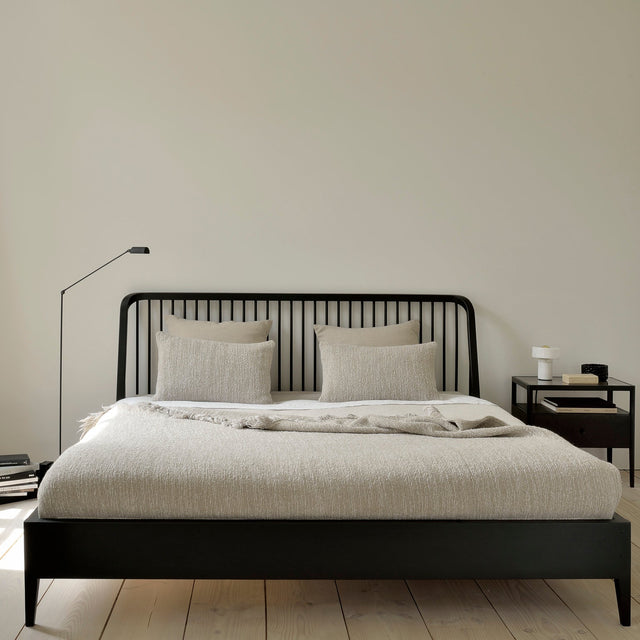
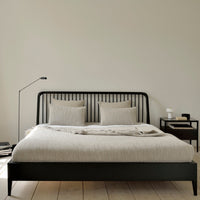
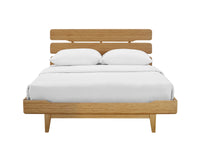
Choose a frame that is solid wood or solid bamboo all the way through, slats included, with a hardwax oil or water-based finish. If it’s upholstered, ask for a removable natural-fiber cover. You sleep here about eight hours a night, so this is the room to get right first.
02 · Living room
Living room: the sofa first
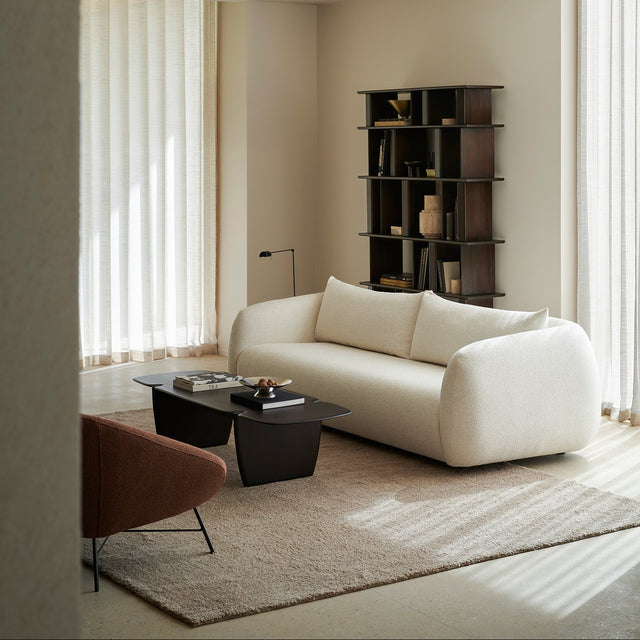
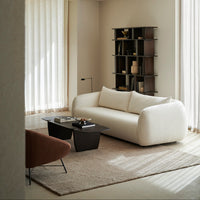
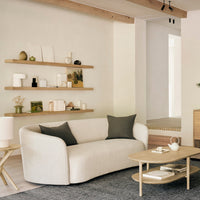
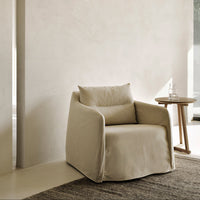
The sofa is the piece to question hardest: PFAS-free fabric, OEKO-TEX on fabric and foam, and a TB 117-2013 label that says no flame retardants were added. Ethnicraft’s Figur lists OEKO-TEX fabric and foam, PFAS-free fabric and TB 117-2013 over a TSCA Title VI plywood frame.
03 · Upholstery
Upholstered chairs and fabric
On armchairs, cushions and headboards the fabric is the layer you touch: look for a published fiber content, OEKO-TEX Standard 100 and “PFAS-free” in writing. Covers that come off and wash are the alternative to stain-repellent sprays.

04 · Home office
Home office: desk and chair
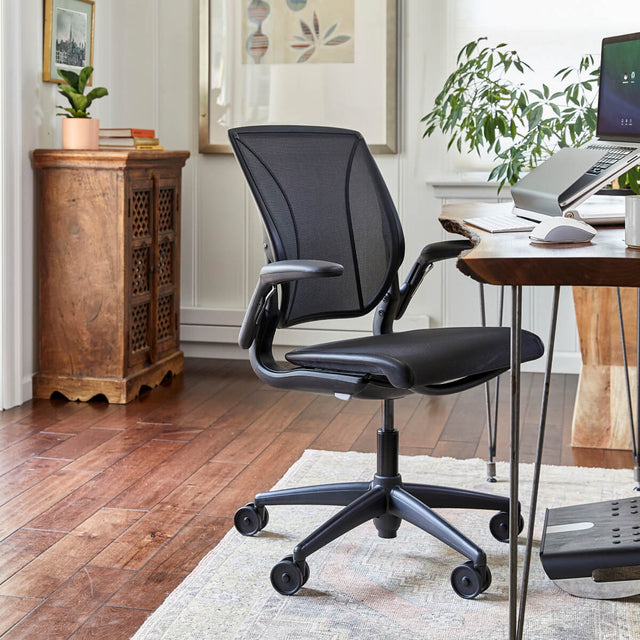
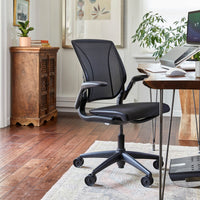
Skip MDF desks with laminate tops for solid wood or powder-coated metal, and ask the chair maker for an emissions certificate. Humanscale’s World LM carries SCS Indoor Advantage Gold; Ethnicraft’s Unda lists PFAS-free fabric, foam and coating.
05 · Dining
Dining: where food meets the finish
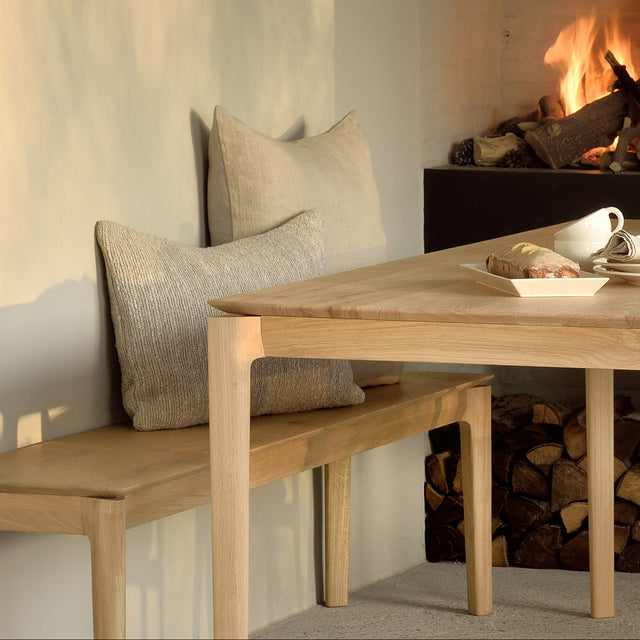
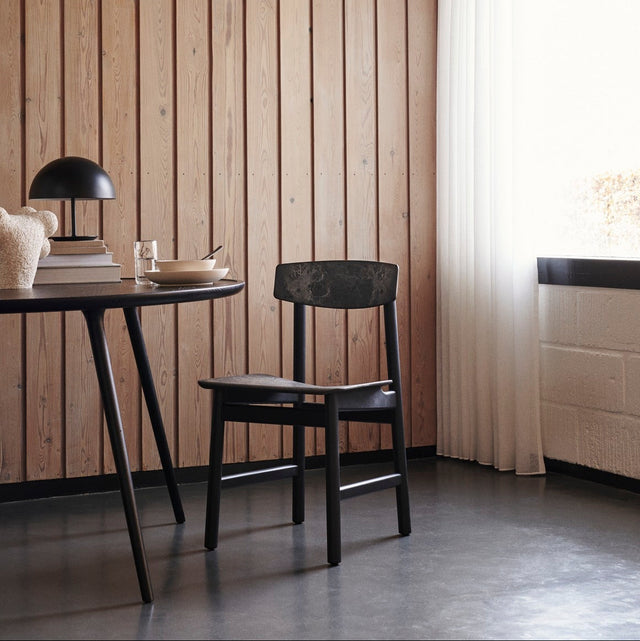
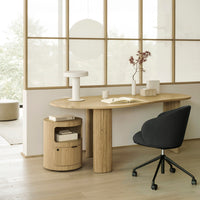
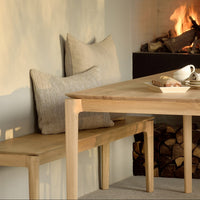
Food and small hands meet this surface every day. Choose solid wood with no particleboard core and a food-safe finish: natural oil, soap or a fully cured water-based lacquer. Skip laminate-topped tables; the decorative layer usually hides a pressed-wood core. Chairs follow the same rule, and our dining chair guide has more.

06 · Kids’ rooms
Kids’ rooms and nurseries
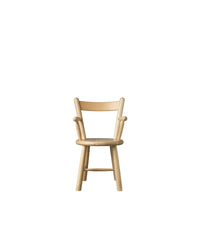
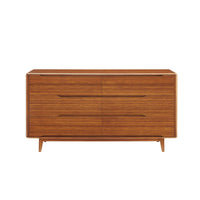
Children’s furniture gets chewed, climbed and slept beside, so the bar is higher: a solid core, a water-based finish or none, and a product-level label such as the Nordic Swan Ecolabel or GREENGUARD Gold. Dressers should also meet the federal STURDY tip-over standard, and every tall piece should be anchored to the wall.
07 · Outdoor
Outdoor: weather resistance without the chemistry
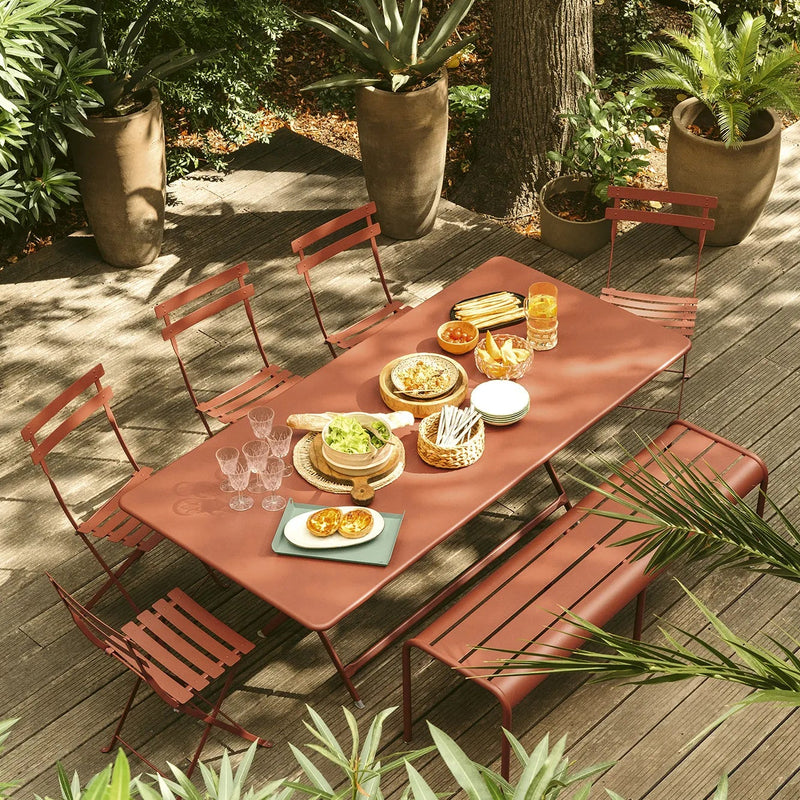
Pressure-treated lumber made before 2004 can contain chromated copper arsenate, and PVC and solvent-heavy marine finishes are the other usual suspects. Teak’s natural oils, and powder-coated aluminum or steel, do the same job without them. Our teak vs. acacia vs. aluminum guide compares the three.
Is solid wood non-toxic? Safe materials vs. materials to avoid
Solid wood is the safest core because there is no particleboard or MDF in it; what’s left to check is the finish and any glued panels. Watch for “solid wood” that turns out to be veneer over MDF on the top or the back. Our guide to solid wood vs. veneer vs. engineered wood shows how to tell.
Choose
- Solid hardwood (oak, walnut, teak, ash, beech) with an oil, soap or water-based finish
- Solid bamboo with a water-based finish, or color from heat rather than stain
- Powder-coated aluminum and steel
- Natural latex or CertiPUR-US foam rather than unlabeled foam
- OEKO-TEX or GOTS textiles, linen and wool
- Glass and natural stone
Avoid or question
- Particleboard and MDF (if unavoidable, ask for NAF or ULEF resin and TSCA Title VI compliance)
- PVC and vinyl upholstery, which can contain phthalates
- Unspecified “performance” or stain-repellent fabric treatments
- Foam with no flame-retardant label
- Solvent-based paints and lacquers
Which non-toxic furniture brands can you check?
No brand is non-toxic across the board, so judge the piece, not the logo. These makers we carry publish the details on the products themselves.
| Brand | What it documents |
|---|---|
| Ethnicraft | Figur and Ellipse sofas: OEKO-TEX Standard 100 fabric and foam, PFAS-free fabric, TB 117-2013. Solid oak in hardwax oil or varnish; a low-emission, PFAS-free varnish on the Boomerang desk. |
| FDB Møbler | The Nordic Swan Ecolabel on named pieces, with water-based paint or lacquer on chairs such as the J81 and the P9 children’s chair. |
| Greenington | 100% solid Moso bamboo with no MDF or plywood in pieces such as the Currant bookshelf; the color comes from heat and pressure, not stain. |
| Humanscale | SCS Indoor Advantage Gold on the World LM task chair. |
Every maker we carry, each with its Meter grade, is in our directory of sustainable furniture brands.


Behind the chair · Mater · Est. 2006 · Copenhagen
A 1958 school chair, rebuilt from 2,140 grams of waste
Børge Mogensen and Esben Klint drew this chair for Danish schools in 1958. Mater relaunched it with a seat and back of Matek, made from recycled fiber and plastic waste, on an FSC-certified beech or oak frame. It is made in Latvia.
- Reclaimed and recycled materials
- Copenhagen design since 2006
grade
Questions people ask
What certifications should I look for when buying premium furniture to ensure it’s safe and non-toxic?
GREENGUARD Gold or SCS Indoor Advantage Gold for emissions from the finished piece, OEKO-TEX Standard 100 for fabric and foam, CertiPUR-US for polyurethane foam, the Nordic Swan Ecolabel for Scandinavian wood furniture and GOTS for organic textiles. FSC is worth having for wood sourcing, but it says nothing about glue or finish.
How do I know if furniture is non-toxic?
Check three things: the core (solid wood, solid bamboo or metal rather than particleboard or MDF), the finish (natural oil, soap or water-based) and the labels (GREENGUARD Gold for emissions, OEKO-TEX for fabric). If a seller can’t name a certification or a finish, treat “natural” and “eco” as marketing.
What material is safest for kids’ furniture without harmful chemicals or off-gassing?
Solid hardwood such as beech or oak, or solid bamboo, with a water-based or natural-oil finish, so there is no particleboard or MDF glue to off-gas. Look for a product-level label such as the Nordic Swan Ecolabel or GREENGUARD Gold, OEKO-TEX on anything soft, and the STURDY standard on dressers.
What is the healthiest furniture material?
Solid hardwood or solid bamboo with a natural-oil or water-based finish. Solid material needs no formaldehyde-based binder, unlike particleboard or MDF.
Which brands avoid toxic materials in furniture?
Judge the product rather than the brand, but some makers publish the details: Ethnicraft lists OEKO-TEX, PFAS-free fabric and TB 117-2013 on sofas such as the Figur; FDB Møbler carries the Nordic Swan Ecolabel on named pieces; Greenington makes pieces such as the Currant bookshelf in solid bamboo with no MDF or plywood; Humanscale’s World LM carries SCS Indoor Advantage Gold.
What does low-VOC furniture mean?
Finishes, adhesives and materials that release few volatile organic compounds into the room, usually water-based lacquers, natural oils, soap or powder coat in place of solvent-based finishes. “No-VOC” and “VOC-free” are marketing terms; an emissions label on the finished piece is the proof.
What does zero-VOC mean on a furniture finish?
That the coating is formulated to release little or no volatile organic compounds as it cures. The term isn’t strictly regulated, so check what the finish is (water-based, hardwax oil, soap) or look for an emissions label on the finished piece.
Is MDF toxic?
MDF is bonded with resin that can release formaldehyde. MDF sold in the US must meet the TSCA Title VI limit of 0.11 ppm, so it isn’t unregulated, but it isn’t formaldehyde-free unless the maker uses NAF or ULEF resin. Solid wood or solid bamboo avoids the question.
How do I avoid PFAS in furniture?
Ask for fabric labeled PFAS-free in writing and certified to OEKO-TEX Standard 100, skip unspecified “performance” or stain-repellent treatments, and choose covers you can remove and wash.
Do sofas still contain flame retardants?
Often not. Since TB 117-2013, upholstered furniture can meet California’s flammability standard without added flame-retardant chemicals, and California requires a label saying whether they were added. Check that label, especially on older or unlabeled sofas.
How long does new furniture off-gas?
Emissions are highest when a piece is new and fall over time, faster with fresh air. Air the room well for the first days, keep it cool and dry, and remove the packaging. Solid wood with a cured oil or water-based finish has the least to release.
Is IKEA furniture non-toxic?
IKEA products meet the chemical limits where they are sold, but much of the range is particleboard and MDF, which use formaldehyde-based binders even within legal limits. If you want to keep exposure as low as possible, solid wood with a natural finish is the lower-emission choice.
Is there such a thing as chemical-free furniture?
No. Every material is made of chemicals, and most finishes and glues release some compounds into the air. The useful goal is furniture with low chemical emissions: solid wood, bamboo or metal instead of particleboard and MDF, natural-oil or water-based finishes, and third-party emissions testing such as GREENGUARD Gold.
What is organic furniture?
“Organic” certifies fibers, not furniture: GOTS covers organic cotton, linen and wool in cushions and covers. For the frame, the closest equivalent is solid wood or bamboo with a natural-oil, soap or water-based finish. “Organic modern” is a design style, not a material claim.
What should I avoid in a sofa?
Conventional polyurethane foam that may contain flame retardants, unspecified stain-repellent treatments, and PVC or vinyl upholstery. Ask what the foam is (natural latex or CertiPUR-US) and look for OEKO-TEX or GOTS fabric that is PFAS-free.
Where can I buy non-toxic furniture online?
Comosum sells solid-wood, solid-bamboo and recycled-material furniture from European and American makers. Every brand is graded on our six-category Sustainability Meter, and orders ship across the US.