





Sustainable dining chairs are seats built to last decades rather than seasons — made from FSC-certified solid wood, recycled plastic, or responsibly upholstered frames, and sealed with low-emission finishes. The difference shows up in the joinery: a chair that can be re-glued, re-oiled, and reseated will outlive a dozen flat-pack replacements. At Comosum, every dining chair comes from a brand graded on our Sustainability Meter before it earns a place in the collection. Browse them all in our sustainable dining chairs collection.
What Makes a Dining Chair Sustainable?
A dining chair takes more daily abuse than almost any other seat in the house. It gets dragged across floors, tilted onto its back legs, wiped down after every meal, and sat in by guests of every size. That is exactly why it is a useful test of whether a piece of furniture is genuinely built to last — or built to be replaced.
Three things separate a sustainable chair from a disposable one. The first is honest materials: solid wood rather than veneered particleboard, recycled or recyclable plastic rather than virgin polymer, and upholstery you can clean or replace instead of a bonded foam that crumbles. The second is construction — mortise-and-tenon or doweled joinery that can be repaired, versus staples and glue blocks that loosen and cannot. The third is the finish, because a coating is the layer you actually touch three times a day. Water-based lacquers and natural oils cure with far fewer volatile organic compounds than high-solvent varnishes, and an oiled seat can be spot-repaired at home rather than sent out or thrown away.
None of this is exotic. It is simply the standard that furniture met before fast furniture taught us to expect two or three years from a dining set. The Sustainable Furnishings Council makes the same case: longevity is itself a sustainability strategy, because the greenest chair is the one you never have to buy twice.
Shop this guide
In stock, shipping from US warehouses, each from a brand graded on our Sustainability Meter.


The Three Seat Types: Wood, Recycled, and Upholstered
Most sustainable dining chairs fall into one of three material families. Each has a different strength, and the right answer depends on your table, your household, and how you clean.
Solid Wood
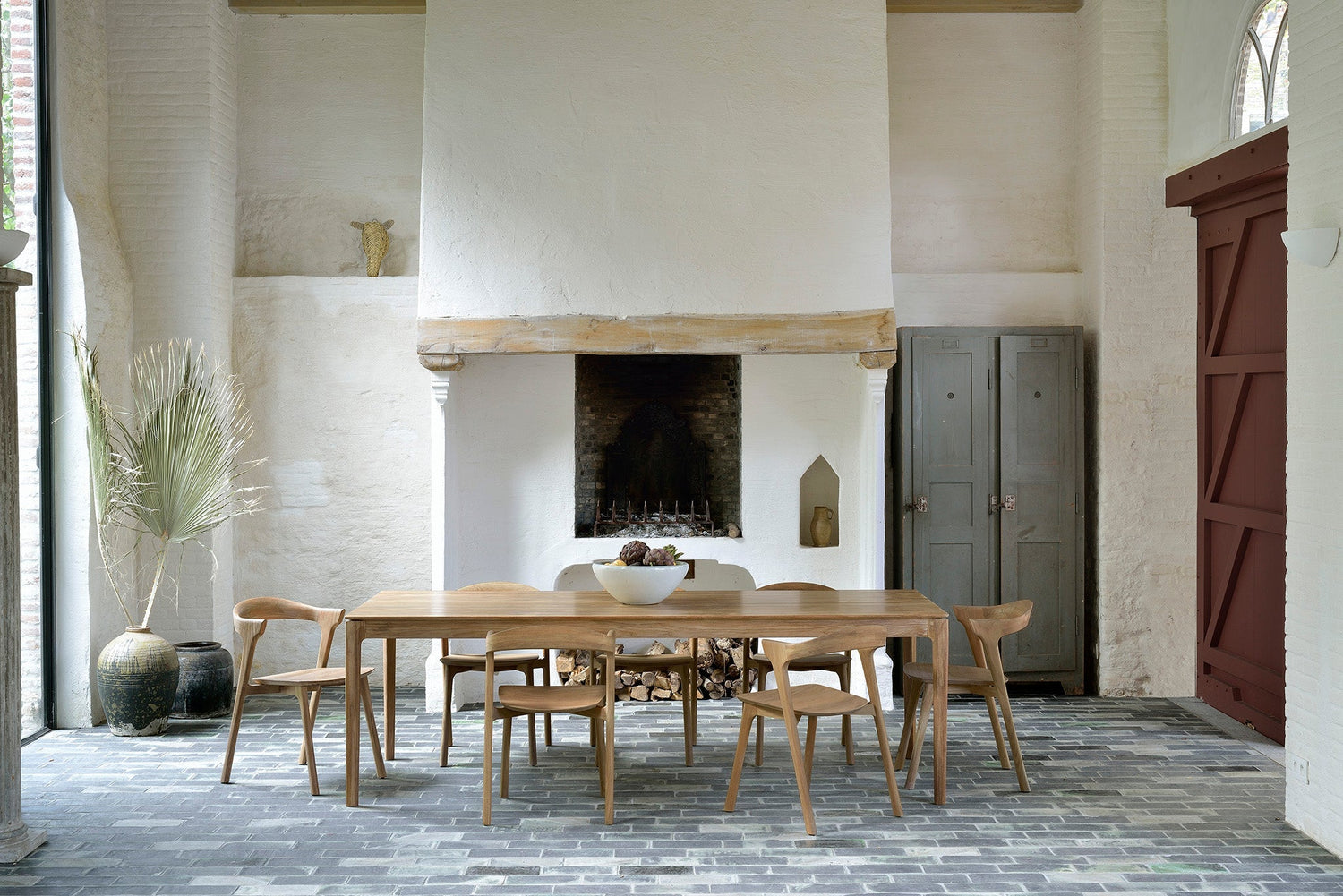
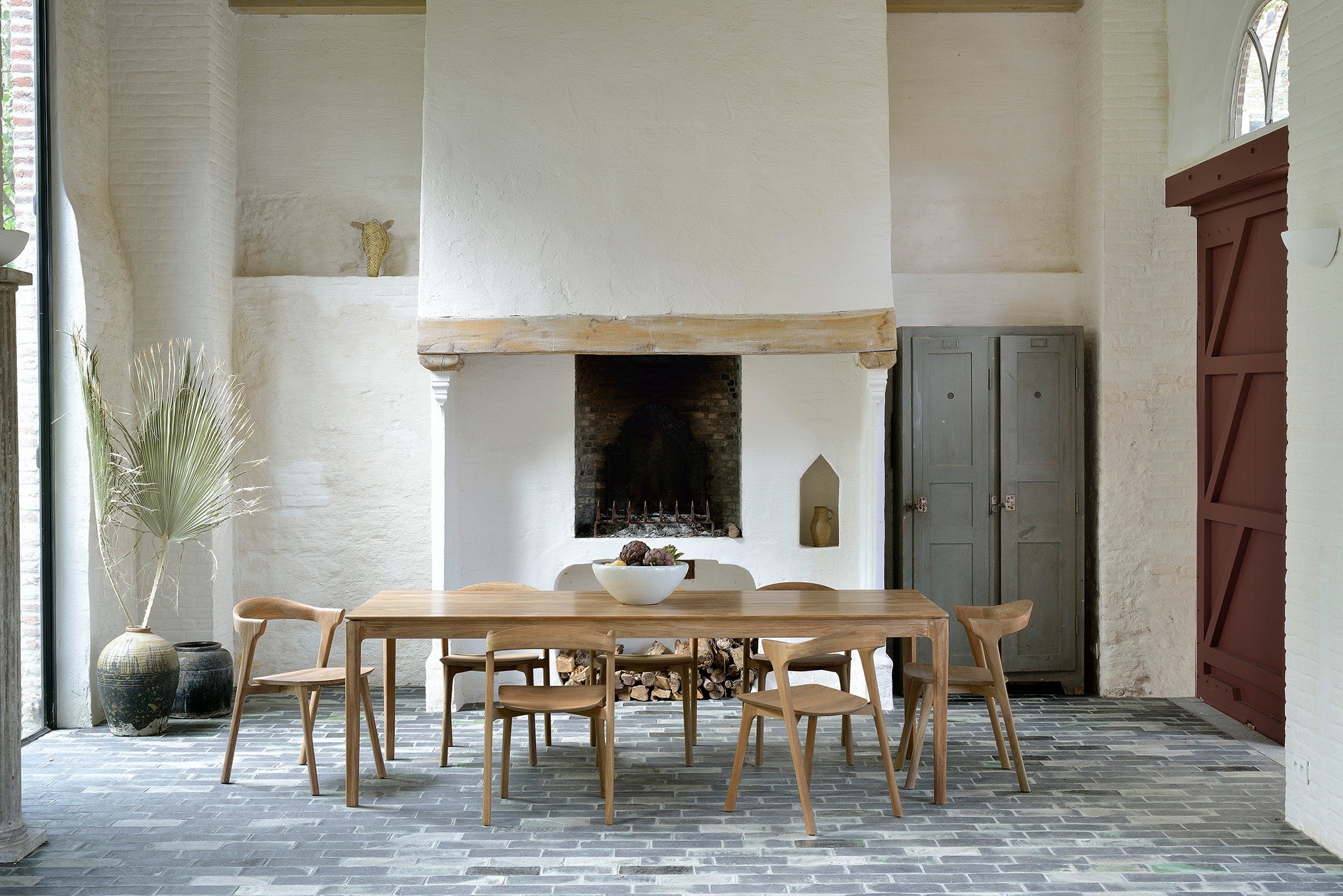
Solid wood is the classic dining chair, and for good reason: a well-jointed hardwood frame can be handed down. Look for FSC (Forest Stewardship Council) certification, which traces the timber back to a responsibly managed forest. Oak and beech are the workhorses — hard, dense, and forgiving of decades of use — while teak brings weather resistance to indoor-outdoor chairs. Ethnicraft, the Belgian solid-wood house founded in 1995, builds most of its dining chairs from solid oak and teak (FSC-certified on the Bok and PI teak chairs) in oiled or water-based finishes. Danish design studio FDB Møbler, founded in 1942, has kept postwar classics like Børge Mogensen's 1945 J18 and Poul Volther's 1956 J46 spoke-back chair in continuous production — proof of how long a good wood chair can stay relevant. FDB's paper-cord J80 and J81, and Mater's Nestor, are gathered in our woven dining chairs collection.
Recycled Plastic and Composite
Recycled-plastic and bio-composite chairs answer the objection that plastic seating is inherently wasteful. Paris-based Tiptoe, a B Corp, molds its SSDr seat from recycled plastic on a powder-coated steel frame that stacks and disassembles for moving. Copenhagen’s Mater goes further with Matek, a composite pressed from recycled coffee-bean shells and wood waste bound in bioplastic — a seat made from what a café throws away. Because the material is a single, identifiable polymer or composite, these chairs are far easier to recycle at end of life than the mixed-material seating they replace.
Upholstered Seats
An upholstered seat adds comfort for long dinners, but it is also where greenwashing hides. The questions worth asking: is the foam CertiPUR-US or plant-based, is the fabric OEKO-TEX-tested for harmful substances, and is the cover removable for cleaning or replacement? A woven paper-cord or leather seat — like the natural-cord seats FDB Møbler and Mater use — often outlasts foam entirely and patinas rather than degrades.
Getting the Fit Right: Seat Height and Clearance
Even the best chair fails if it does not fit your table. Standard dining chairs have a seat height of roughly 18 to 19 inches, which suits the near-universal 29- to 30-inch dining table. The number that actually matters is the clearance: aim for 10 to 12 inches between the top of the seat and the underside of the tabletop, so legs and armrests slide under comfortably. If you are pairing chairs with one of our sustainable dining tables, check the apron depth too — a deep apron eats into that clearance. For counter- and bar-height tables, size up to stools built on the same frames, which we cover in our bar and counter stool guide.
Why We're Selective About Dining Chairs
We carry dining chairs the way we would buy them for our own kitchens: for the long haul. That means favoring makers who publish their materials and let you choose your finish, and passing on the anonymous flat-pack sets that dominate this category. When a chair is offered in both an oiled and a varnished version, or in FSC oak alongside a recycled-plastic sibling, that transparency is the point — you are buying a decision, not a mystery.
It also means looking for third-party proof rather than marketing. FSC certification on the wood, the Nordic Swan Ecolabel on FDB Møbler's finishes, and B Corp certification behind Tiptoe are all independently verified — unlike the word "eco," which anyone can print. Every chair we stock comes from a brand graded on the same open criteria, which you can read in our Sustainability Meter methodology and on our page of sustainable furniture brands, so a well-made recycled-plastic chair and a solid-oak heirloom are judged on their real merits, not their price tag.
Our Sustainable Dining Chair Recommendations
Good chairs exist at every price. Here are five in-stock picks that span wood, recycled, and upholstered seats:
- FDB Møbler J46 Chair (from $369) — Poul Volther's 1956 spoke-back classic in beech, water-based finish, carrying the Nordic Swan Ecolabel. Our value benchmark for an affordable, genuinely sustainable dining chair.
- Tiptoe SSDr Recycled Plastic Dining Chair ($470) — a recycled-plastic seat on a powder-coated steel frame that stacks and comes apart with a wrench. B Corp–made in France and Lithuania.
- Ethnicraft Casale Dining Chair (from $529) — Studio Kaschkasch's pared-back design in solid oak, in oiled or varnished finishes.
- Mater Conscious Chair (from $697) — a Børge Mogensen and Esben Klint design from 1958, reissued in Mater's recycled coffee- and wood-waste composite. Winner of the Wallpaper* Smart Space Award 2023 for best sustainable step forward.
- Ethnicraft Bok Dining Chair (from $1,029) — Alain van Havre's sculptural solid oak or teak chair, available with an upholstered leather seat. The heirloom end of the range.
Browse the full sustainable dining chairs collection at Comosum.
Frequently Asked Questions About Sustainable Dining Chairs
What makes a dining chair sustainable?
A sustainable dining chair uses honest, traceable materials — FSC-certified solid wood, recycled plastic, or responsibly sourced upholstery — joined with repairable construction and sealed with a low-VOC finish. The goal is a chair you can re-glue, re-oil, or reseat rather than replace. Longevity, not just material, is what makes it sustainable.
Are recycled-plastic dining chairs durable enough for daily use?
Yes. Recycled-plastic and composite dining chairs from makers like Tiptoe and Mater are engineered to contract-grade standards, meaning they are tested for the wear a busy café or dining room delivers. Because the seat is a single molded material on a steel frame, it resists stains and scratches and can be recycled at end of life.
What is the right seat height for a dining chair?
Most dining chairs sit about 18 to 19 inches from the floor, which pairs with a standard 29- to 30-inch table. Aim for 10 to 12 inches of clearance between the seat and the underside of the tabletop so you can sit comfortably. For counter or bar tables, choose stools sized to that taller surface instead.
Are Comosum's dining chairs non-toxic?
The chairs we carry favor water-based lacquers, natural oils, and OEKO-TEX-tested textiles over high-solvent finishes and treated foams. You can read how we think about coatings in our guides to non-toxic furniture and zero-VOC finishes. Where a finish is named on the product page, that transparency is deliberate.
How much should I expect to pay for an affordable sustainable dining chair?
A well-made sustainable dining chair typically starts around $370 and rises with material and provenance. That is more than a flat-pack chair up front, but the math favors it: a $370 chair kept twenty years costs less per year than a $90 chair replaced every two or three. Buying once is both cheaper and greener over time.


Leave a comment
This site is protected by hCaptcha and the hCaptcha Privacy Policy and Terms of Service apply.