





Why is your desk chair a sustainability decision?
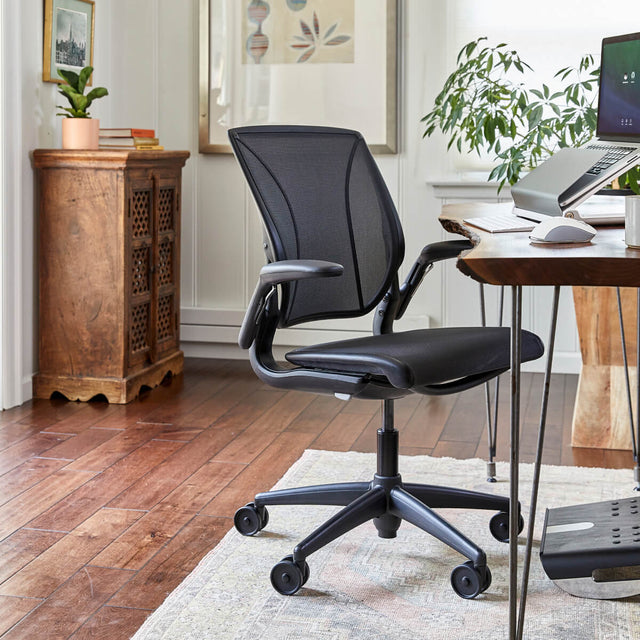
No piece of furniture works harder. If you work from home, you spend more waking hours in your desk chair than on your sofa or in your bed, a few inches from your breathing zone. Its chemistry and its build both matter.
Conventional task chairs fail early: cheap gas lifts, glued foam and mechanisms nobody can repair, in mixed materials that are nearly impossible to recycle. The fix is the one we apply across our sustainable furniture brands: buy once, buy well. This guide pairs with our guides to sustainable desks and the full home office setup.
Materials: recycled content you can weigh
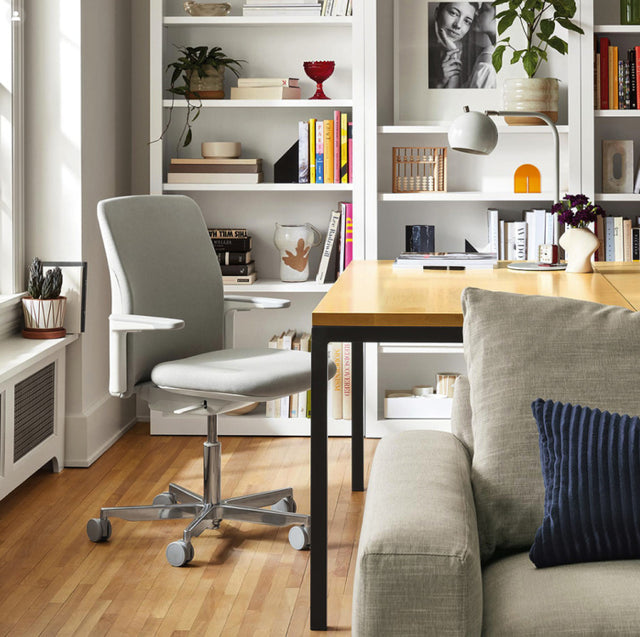
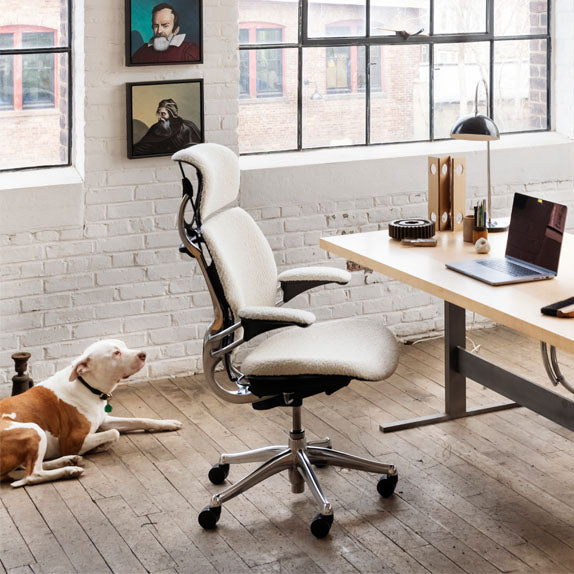
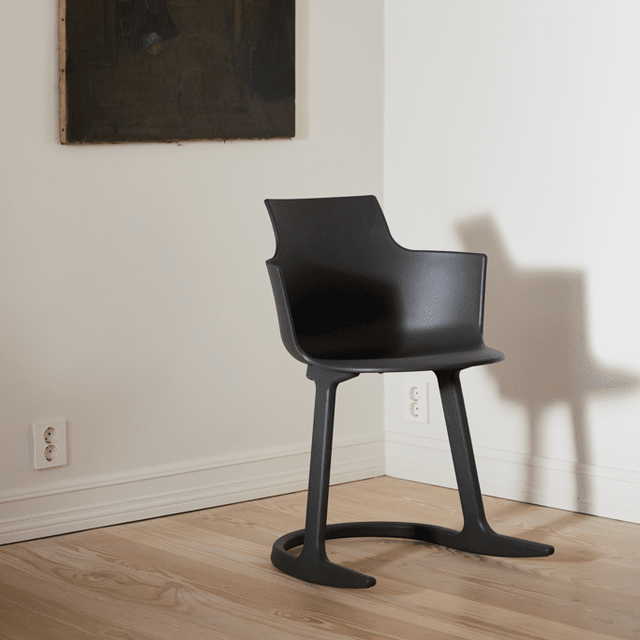
Vague “eco materials” claims are useless; look for numbers. Humanscale’s Path carries 22 pounds of recycled content per chair, including 10 pounds of reclaimed ocean fishing net. The Freedom Ocean uses up to 4.2 pounds of plastic upcycled from ocean and coastal environments. Varier’s Social chairs, designed by Snøhetta, are moulded in one piece from glass-fibre-reinforced polypropylene that is 55–75% post-consumer recycled.
 Humanscale · Meter 5.0Path Task Chair22 lb of recycled content, 10 lb of it ocean fishing net
From $1,277
Humanscale · Meter 5.0Path Task Chair22 lb of recycled content, 10 lb of it ocean fishing net
From $1,277 Humanscale · Meter 5.0Freedom Ocean HeadrestUp to 4.2 lb of upcycled ocean plastic
From $1,939
Humanscale · Meter 5.0Freedom Ocean HeadrestUp to 4.2 lb of upcycled ocean plastic
From $1,939 Varier · Meter 4.2Social Tilt Chair (Set of 2)Snøhetta design; 55–75% recycled plastic
From $1,198Shop →
Varier · Meter 4.2Social Tilt Chair (Set of 2)Snøhetta design; 55–75% recycled plastic
From $1,198Shop →
Which certifications matter for seating?
Four labels do the heavy lifting in this category, plus a durability test standard and one label at the level of the whole company.
| Label | What it tells you | Where you’ll see it |
|---|---|---|
| GREENGUARD Gold | Low chemical emissions, tested in a chamber by UL | The non-toxic credential for anything you sit against all day |
| SCS Indoor Advantage Gold | Indoor air quality emissions, third-party certified | An alternative to GREENGUARD on many task chairs |
| ANSI/BIFMA X5.1 | The safety and durability test standard for office chairs: stability, strength and cycle tests | A test standard, not an eco label; ask for it on any task chair |
| BIFMA LEVEL | The furniture industry’s multi-attribute sustainability standard; LEVEL 3 is the top tier | Humanscale’s World LM, Path and Trea carry LEVEL 3 |
| Living Product Challenge | Net-positive impact on climate, water and energy, from the International Living Future Institute | Humanscale’s Trea and Freedom Ocean |
| B Corp | The whole company’s social and environmental performance | Humanscale, certified since 2024 |
Every label we use is explained in our certification glossary.
Red flags to avoid
- Unspecified “performance” fabric treatments: many rely on PFAS-based stain repellents.
- No stated warranty, or no replacement-parts program: both signal a chair built to be thrown away.
- “Recyclable” claims on chairs whose foam, fabric and frame are bonded together. Theoretical recyclability isn’t recycled content you can weigh.
By contrast, Humanscale vets its Corde 4 textile as free of more than 20 harmful chemical classes. For the chemistry in depth, see our non-toxic furniture guide.
Which chairs are most durable, with the longest warranties?
For a chair you sit in eight hours a day, warranty length is the most honest durability claim a maker can put in writing.
| Chair | Recycled content | Warranty | Best for |
|---|---|---|---|
| Humanscale World LM | Not stated | 12 years | Full-time desk work at the entry price |
| Humanscale Trea | Not stated | 5 years | Meetings and shorter sessions |
| Humanscale Path | 22 lb per chair | 15 years | Recycled content first |
| Humanscale Freedom Ocean | Up to 4.2 lb ocean plastic | 15 years | Recline with a headrest that moves with you |
| Varier Social Tilt | 55–75% recycled plastic | 10-year Varier warranty | Dining or desk, sessions under a couple of hours |
On the Humanscale chairs, textiles, cushions, arm pads and casters are covered for 5 years.
“Spread over its warranty, a well-made task chair costs less per year than a budget chair replaced every three.”


Behind the chair · Humanscale · Est. 1983 · New York
Designed so the chair adjusts to you
Niels Diffrient designed the Freedom and the World for Humanscale around one idea: the chair should respond to the body, not the other way round. The Freedom’s recline reads your weight and its headrest travels with you as you lean back; the World LM does the same job with 78 parts where a typical task chair uses more than 200.
- Living Product Certified designs
- 70+ patents
grade
The best eco-friendly office chairs, by price
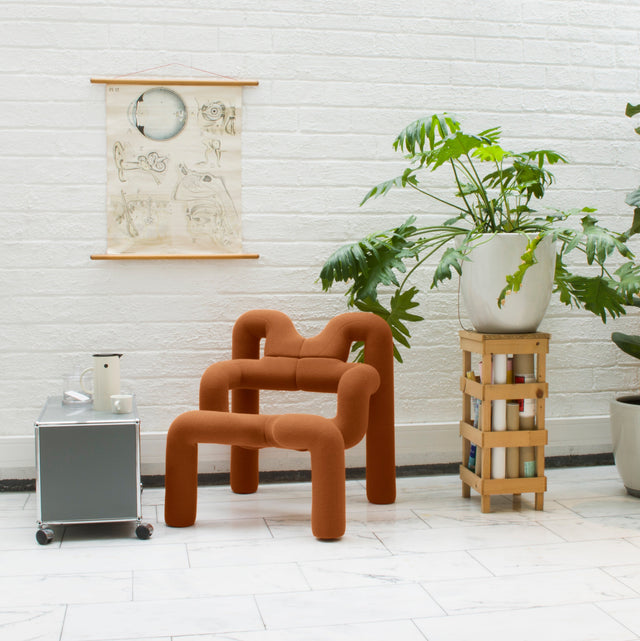
We carry Humanscale for measurable recycled content and Varier for the Norwegian school of posture variation, which holds that the best sitting position is the next one. Varier’s Ekstrem lounge chair, designed by Terje Ekstrøm in 1984, is the most vivid example.
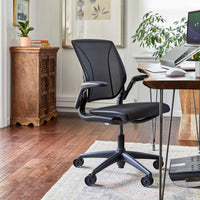 Humanscale · Meter 5.0World LM Task ChairNiels Diffrient design; 12-year warranty
$545
Humanscale · Meter 5.0World LM Task ChairNiels Diffrient design; 12-year warranty
$545 Humanscale · Meter 5.0Trea Task ChairRecline built into the shell, no levers
From $939Shop →
Varier · Meter 4.2Social Tilt Chair (Set of 2)Snøhetta design; 55–75% recycled plastic
From $1,198Shop →
Humanscale · Meter 5.0Path Task Chair22 lb of recycled content, 10 lb of it ocean fishing net
From $1,277Humanscale · Meter 5.0Freedom Ocean HeadrestUp to 4.2 lb of upcycled ocean plastic
From $1,939
Humanscale · Meter 5.0Trea Task ChairRecline built into the shell, no levers
From $939Shop →
Varier · Meter 4.2Social Tilt Chair (Set of 2)Snøhetta design; 55–75% recycled plastic
From $1,198Shop →
Humanscale · Meter 5.0Path Task Chair22 lb of recycled content, 10 lb of it ocean fishing net
From $1,277Humanscale · Meter 5.0Freedom Ocean HeadrestUp to 4.2 lb of upcycled ocean plastic
From $1,939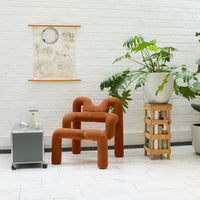 Varier · Meter 4.2Ekstrem Lounge ChairTerje Ekstrøm, 1984: built for moving while you sit
$4,999Shop →
Varier · Meter 4.2Ekstrem Lounge ChairTerje Ekstrøm, 1984: built for moving while you sit
$4,999Shop →
Browse all office chairs → · Pair it with a desk →
Questions people ask
What is the most sustainable office chair?
By measurable recycled content, Humanscale’s Path is the strongest case we know: 22 pounds of recycled material per chair, including 10 pounds of reclaimed ocean fishing net. Its gravity-powered mechanism also has fewer parts to fail or replace.
What makes an office chair non-toxic?
Look for GREENGUARD Gold certification, which verifies low emissions for indoor air, and textiles screened for harmful substances. Humanscale’s Corde 4 fabric is vetted free of more than 20 chemical classes, including PFAS-based treatments. Avoid unspecified stain-repellent coatings and glued foams with no emissions data.
What certifications should I look for in a sustainable office chair?
GREENGUARD Gold or SCS Indoor Advantage Gold for low emissions, BIFMA LEVEL for manufacturing impact, the Living Product Challenge for net-positive climate, water and energy performance, and B Corp certification at the company level.
Is the Varier Ekstrem an office chair?
Not strictly. It is a lounge chair, but Terje Ekstrøm designed it in 1984 around posture variation, and many owners use it as a reading and laptop chair because it supports sitting forward, sideways or reclined.
Can a dining chair work as a desk chair?
For sessions under a couple of hours, yes, especially designs with built-in movement such as Varier’s Social Tilt, whose curved base encourages the small adjustments a fixed chair prevents. For full-time desk work, a height-adjustable task chair with lumbar support is the better long-term choice.
How do you choose an eco-friendly office chair?
Check four things, in this order: recycled content stated in pounds or percent, a low-emission certification such as GREENGUARD Gold, a long warranty on the mechanism, and a replacement-parts program. The longer a chair lasts, the lower its footprint per year of use.
Is there an organic office chair?
Not as a whole chair: the mechanism is steel, aluminum and plastic. “Organic” applies to the upholstery, so look for GOTS-certified organic cotton or wool on the textile. For the air you breathe, a low-emission certification such as GREENGUARD Gold matters more, because it covers the whole chair.