


Non-toxic bedroom furniture is furniture built from solid wood, bamboo, or natural textiles, finished with low- or zero-VOC oils rather than solvent-based lacquers, and free of the formaldehyde-emitting composite panels regulated under CARB Phase 2 and TSCA Title VI. Because you spend roughly a third of your life asleep a few inches from your bed frame, the bedroom is the room where material chemistry matters most. At Comosum, we curate beds and bedside pieces against exactly this standard.
Why the Bedroom Deserves Your Strictest Materials Standard
Most furniture guidance treats every room the same. The bedroom is different for one simple reason: exposure time. Eight hours a night, every night, in a room that is often the smallest and least ventilated in the home. Whatever your bed frame, headboard, and nightstand emit, you breathe — at close range, for longer than you're exposed to any other piece of furniture you own.
The main concern is volatile organic compounds (VOCs), a family of chemicals that evaporate from certain glues, finishes, and engineered-wood panels at room temperature. The best-known of these is formaldehyde, a common binder in particleboard and MDF (medium-density fiberboard) and a known human carcinogen at sustained exposure levels. Off-gassing is strongest when furniture is new and declines over weeks to months — but budget bedroom furniture built from bonded composite panels can continue emitting at low levels for years.
The good news: this is one of the easiest problems in furniture to buy your way around. Three checks do most of the work — the material itself, the finish on top of it, and the certification that verifies both. We cover each below, then share the bedroom pieces in our range that pass.
What Makes Bedroom Furniture Non-Toxic
Materials: solid wood and bamboo first
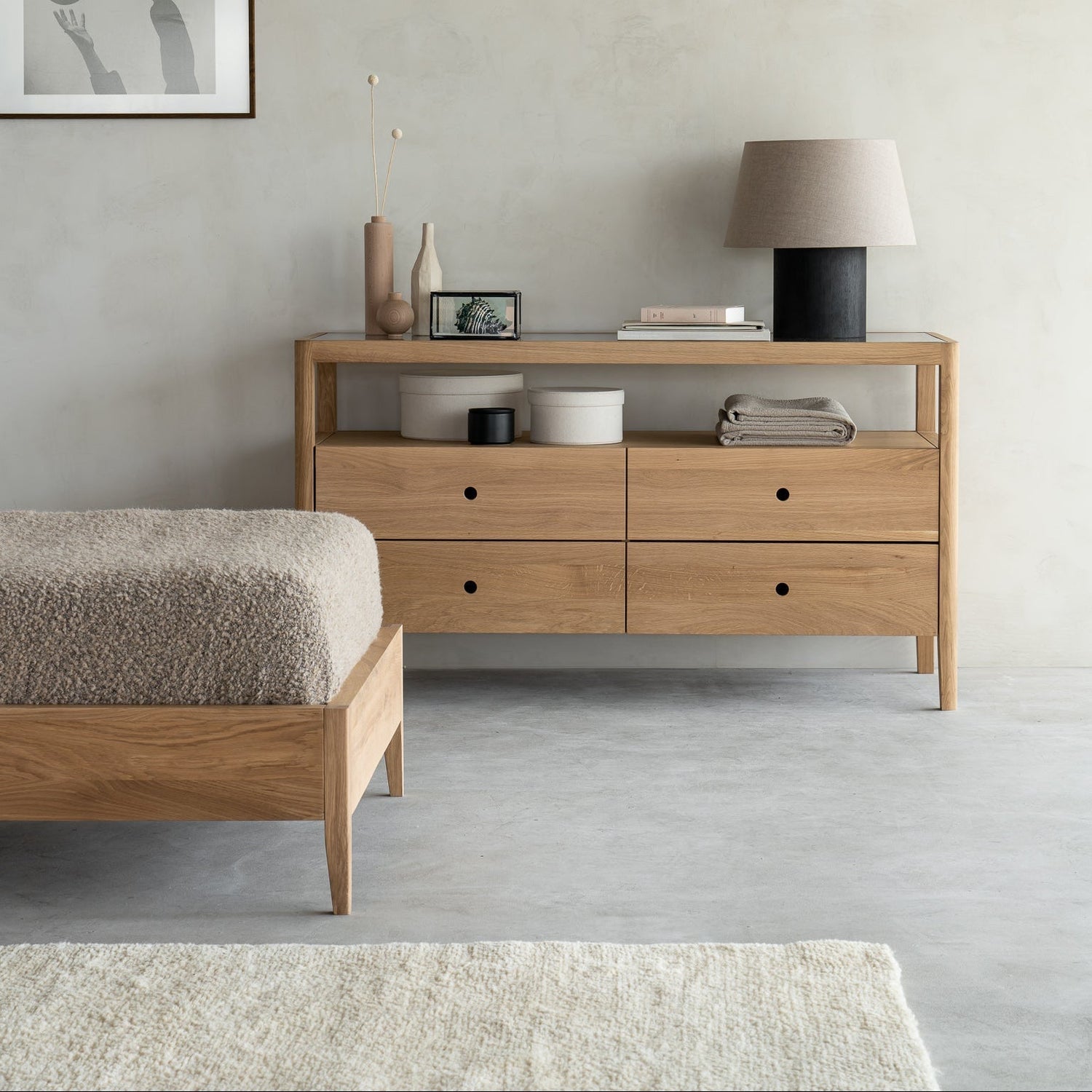
The fastest way to avoid formaldehyde-based binders is to buy furniture that doesn't need them. A bed frame cut from solid European oak or solid Moso bamboo contains no composite core, so there is nothing to off-gas from within the panel. That's why solid construction is our first filter for every bedroom piece we stock.
Engineered woods are not automatically disqualifying — since June 2018, all composite wood sold in the US must meet TSCA Title VI formaldehyde emission limits (mirroring California's CARB Phase 2 standard). But those limits cap emissions; they don't eliminate them. If a "solid wood" listing mentions MDF drawer bottoms or a veneered particleboard headboard in the fine print, you're buying regulated composite, not solid timber. For textiles — upholstered headboards, bed covers — look for natural fibers like linen and wool, ideally tested under OEKO-TEX Standard 100, which screens fabrics against a list of several hundred harmful substances.
Finishes: oils and water-based, not solvent lacquers
A safe material can still carry a problematic finish. Traditional solvent-based lacquers and polyurethanes are among the largest VOC contributors in furniture. The alternatives are well established: natural hardwax oils, plant-based oil finishes, and modern water-based sealants, all of which emit little to nothing once cured. Ethnicraft finishes its solid oak bedroom pieces with natural hardwax oil; Greenington's amber-toned bamboo gets its color from heat, steam, and pressure rather than chemical stains. If a retailer can't tell you what's on the wood, that's an answer in itself.
Certifications: how claims get verified
Marketing says "natural"; certifications prove it. GREENGUARD Gold, administered by UL, tests finished products against strict emission limits for hundreds of individual VOCs — limits set with sensitive groups like children in mind, which makes it especially relevant for the room where exposure is longest. OEKO-TEX Standard 100 covers textiles, and FSC certification verifies responsible forestry behind solid wood. We explain how to read each label in our certification glossary and our plain-English guide to GREENGUARD Gold, so posts like this one can stay focused on the furniture.
Why We Curate the Bedroom This Way
We built Comosum around a simple observation: most "eco-friendly" furniture claims fall apart the moment you ask what the piece is actually made of. So we ask. Every bedroom piece we carry has to clear the three checks above — honest solid material, a finish we can name, and third-party verification where it exists — before design even enters the conversation.
That filter leads us to two brands again and again. Ethnicraft, the Belgian solid-wood house, builds its beds from solid European oak with hardwax oil finishes and publishes its European compliance standards. Greenington works exclusively in solid Moso bamboo — one of the fastest-regenerating structural materials on earth — with no chemical stains. Neither builds down to a price with hidden composite panels, which is precisely the corner-cutting that makes so much bedroom furniture a chemistry problem. You can meet the rest of our roster on our sustainable furniture brands page.
Our Recommendations: Non-Toxic Beds and Nightstands
A shortlist from the range, laddered by budget:
- Revive Bed (Ethnicraft, from $789) — a fully upholstered frame in 100% flat-weave European linen with a removable, dry-cleanable cover. Natural fiber where your pillow actually touches the bed. Sand or Grey, queen and king.
- Sienna Queen Platform Bed (Greenington, $2,089) — solid caramelized Moso bamboo with a solid bamboo European slat system, so no box spring required.
- Ventura Platform Bed (Greenington, from $2,349) — 100% solid Amber bamboo, colored by heat and steam rather than stain, with metal-to-metal connecting hardware built for repeated disassembly.
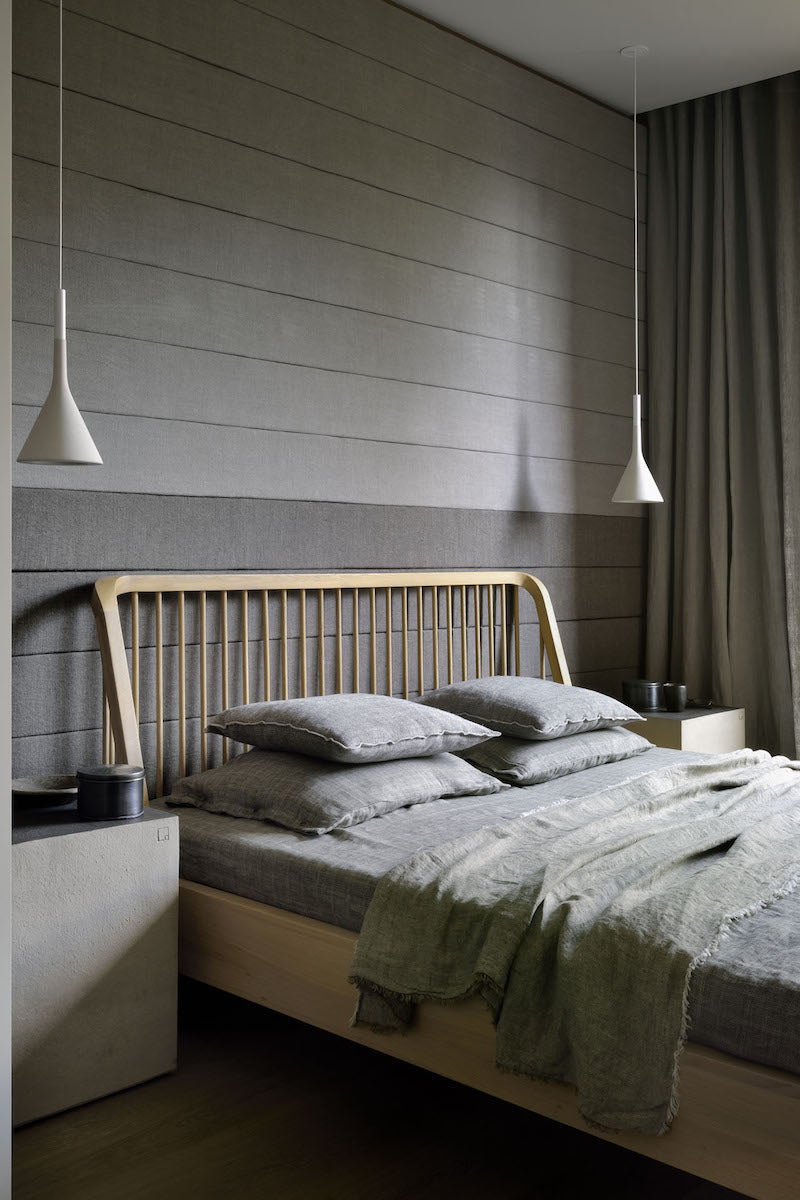
- Air Bed (Ethnicraft, from $3,029) — Alain van Havre's solid oak frame with softened edges and precision joinery; a bed designed to last decades, not leases.
- Nordic II Bed (Ethnicraft, from $4,279) — solid European oak finished in natural hardwax oil, with built-in adjustable wooden slats.
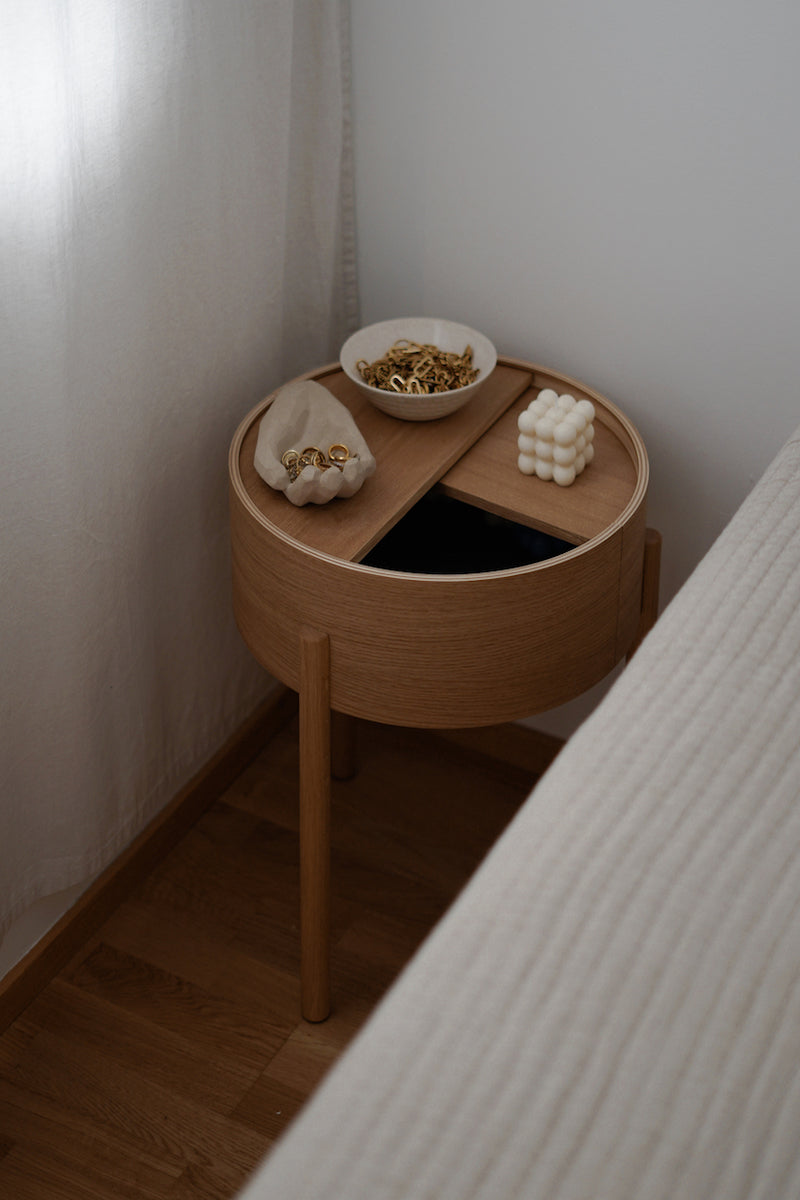
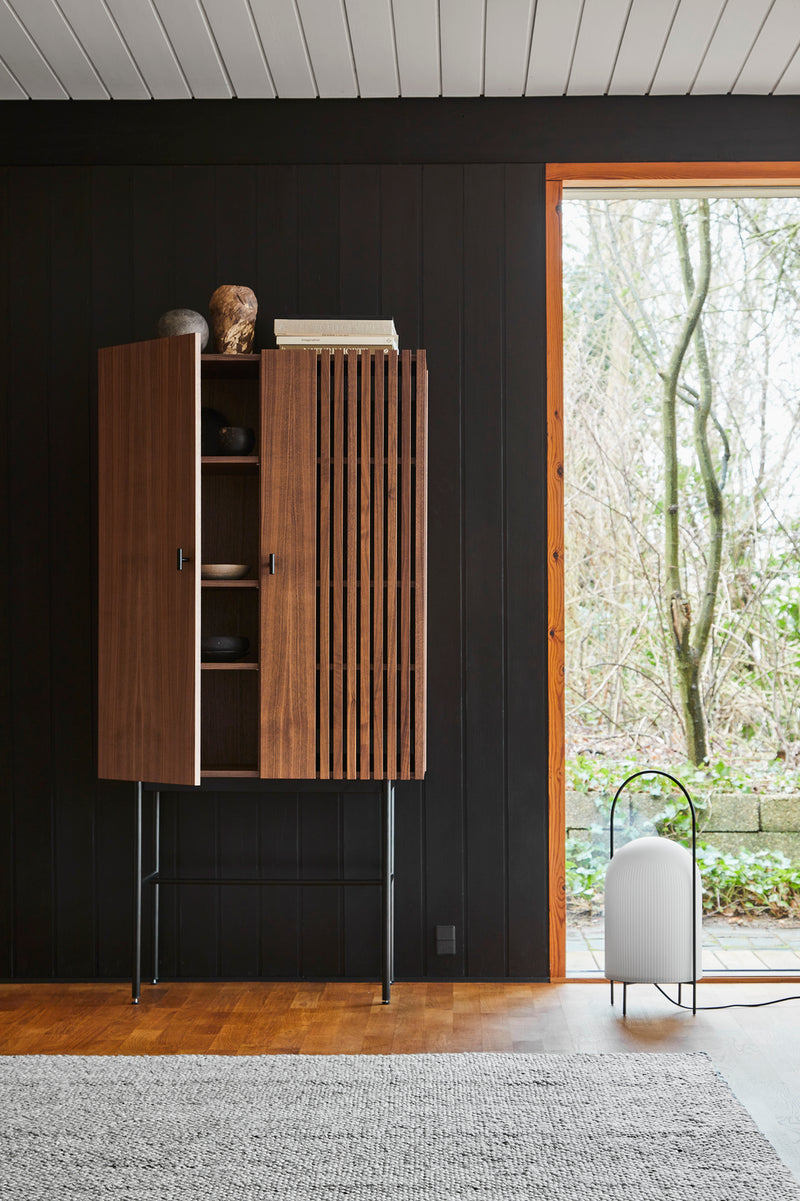
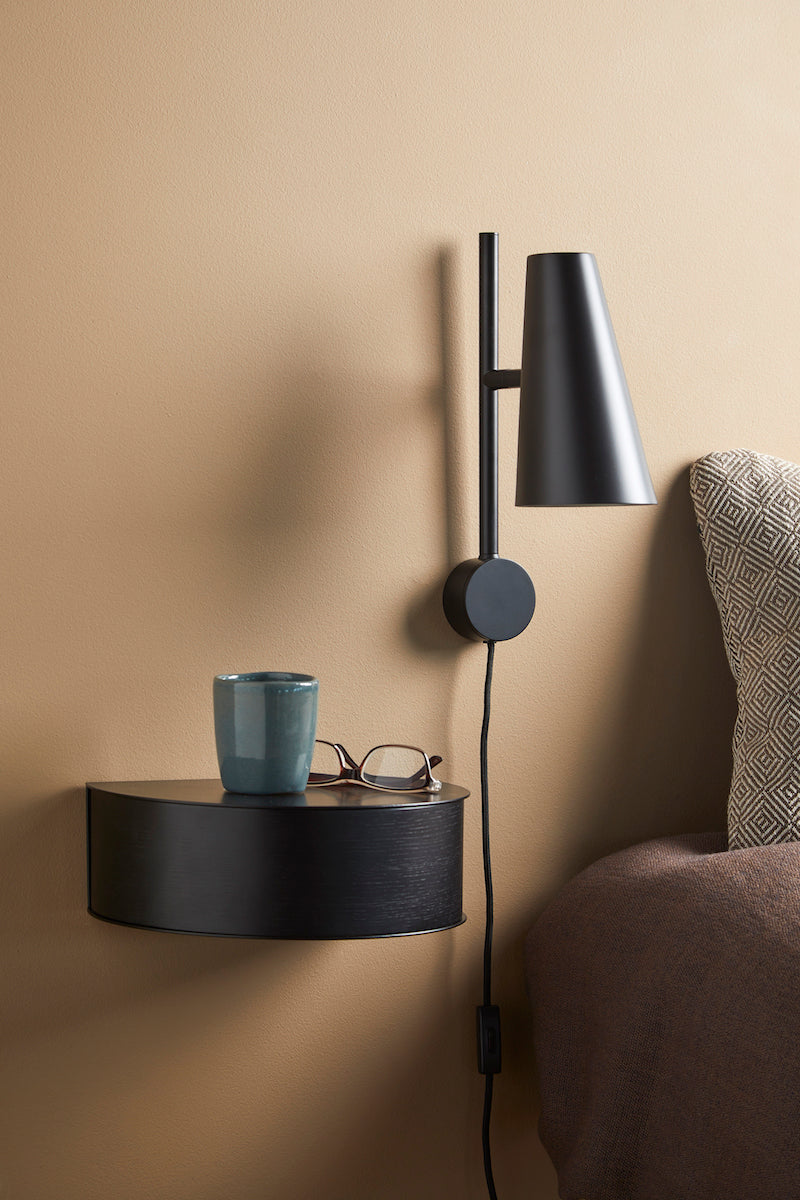
For the bedside, the Arc Side Table (WOUD, from $819) in oak or ash keeps the nightstand solid too — and if you're starting smaller, Ethnicraft's solid-wood PI Wall Hanger ($79) replaces the chair-that-collects-clothes for less than a set of sheets.
Browse the full sustainable beds collection at Comosum →
Frequently Asked Questions About Non-Toxic Bedroom Furniture
Are there zero-VOC finishes for sustainable bed frames?
Yes. Natural hardwax oils, plant-based penetrating oils, and many modern water-based finishes are formulated to emit zero or near-zero VOCs once cured. Ethnicraft's oak beds use natural hardwax oil, and Greenington's bamboo is finished without chemical stains at all.
What is the safest material for a bed frame?
Solid hardwood or solid bamboo with a natural oil finish is the most reliably low-emission choice, because there is no composite core bonded with formaldehyde-based resin. Solid construction also outlasts particleboard frames by decades, which is its own kind of safety.
Does non-toxic bedroom furniture cost more?
Usually upfront, yes — solid wood costs more than particleboard. Spread over its life, the math flips: a solid oak or bamboo bed serves 20+ years, while composite frames commonly fail at the joints within a few. Upholstered options like the Revive Bed start at $789.
How do I know if my current furniture is off-gassing?
A persistent chemical or "new furniture" smell, especially in a closed room, is the clearest sign of active VOC emission, most intense in the first weeks after manufacture. Ventilation speeds the decline, but composite-heavy pieces can emit at low levels for years — replacing the pieces closest to your pillow first is the highest-impact swap.
What certifications should I look for in bedroom furniture?
GREENGUARD Gold for verified low chemical emissions, OEKO-TEX Standard 100 for any textile components, and FSC for responsible solid-wood sourcing. The Sustainable Furnishings Council also maintains resources on healthier furnishing choices. Our guide to what PFAS, formaldehyde, and TB117 really mean goes deeper, and our sustainable bedroom guide covers styling the rest of the room.



Leave a comment
This site is protected by hCaptcha and the hCaptcha Privacy Policy and Terms of Service apply.