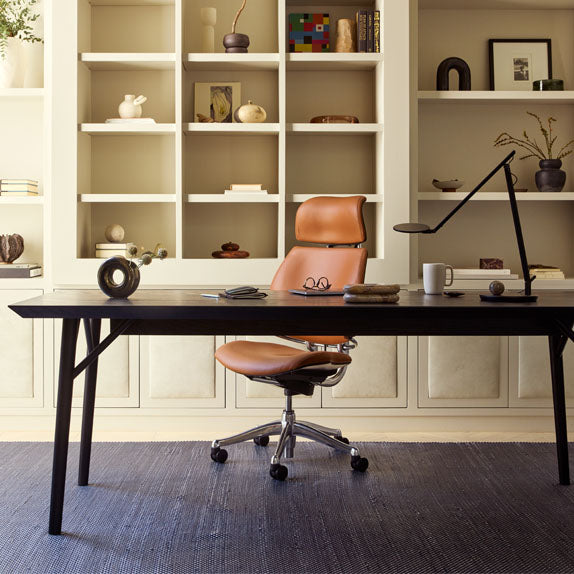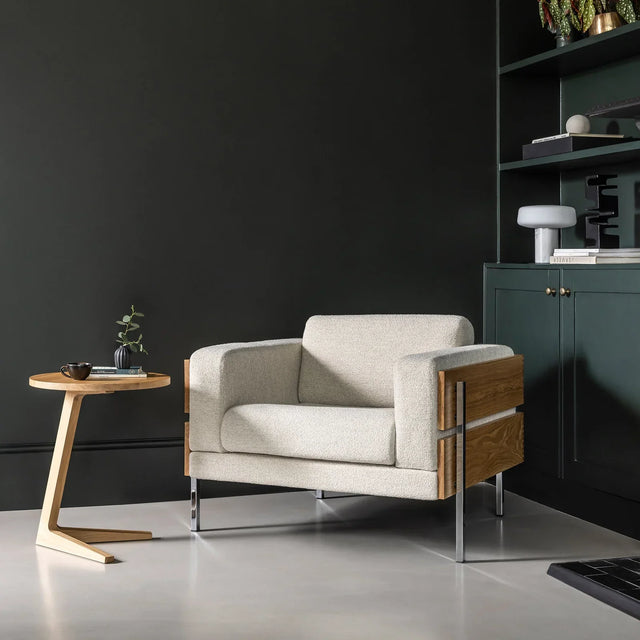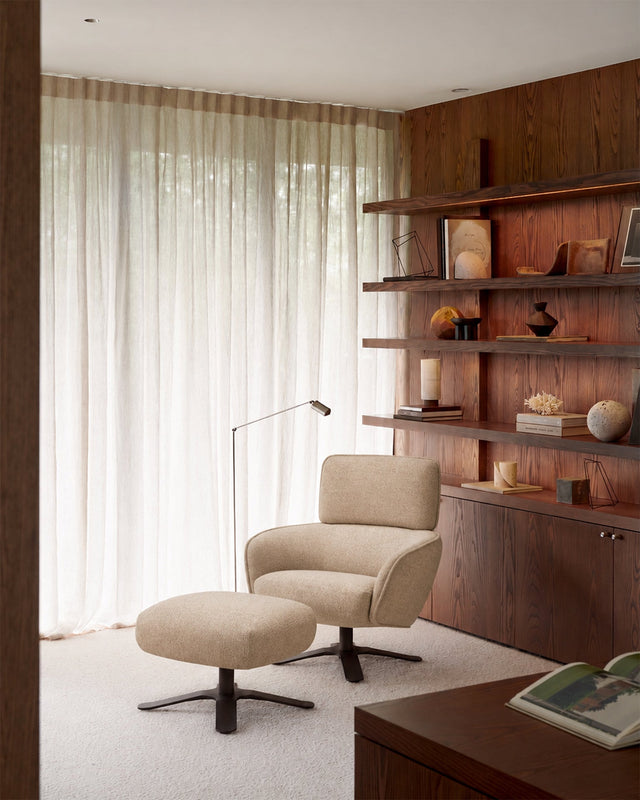






A lounge chair is a frame, a fill and a fabric, and each can be built to last decades or a few years. Below: the eco-friendly lounge chairs, accent chairs and armchairs we’d buy, by style, then how to judge each part yourself.
The best sustainable lounge and accent chairs, by style
An eco-conscious lounge chair gets the frame right first, then the fabric. Every chair here is in our lounge chair collection.
| Chair | Style | Why it’s here |
|---|---|---|
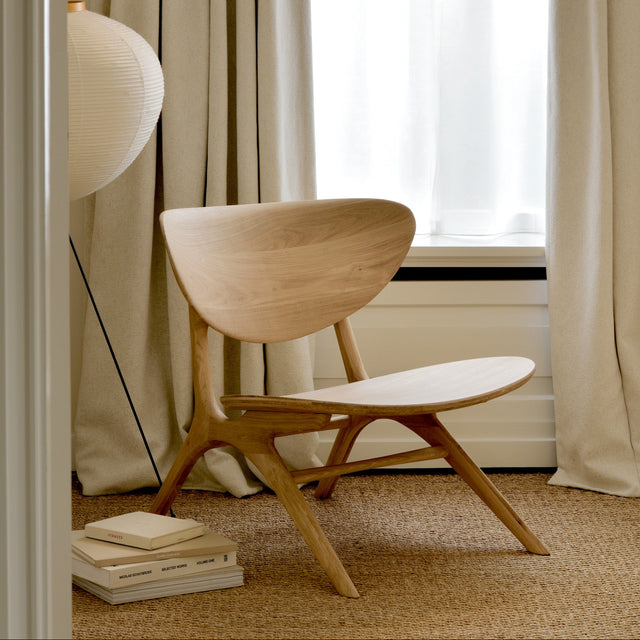
| Ethnicraft Eye | Wood frame | Solid oak, made in Serbia |
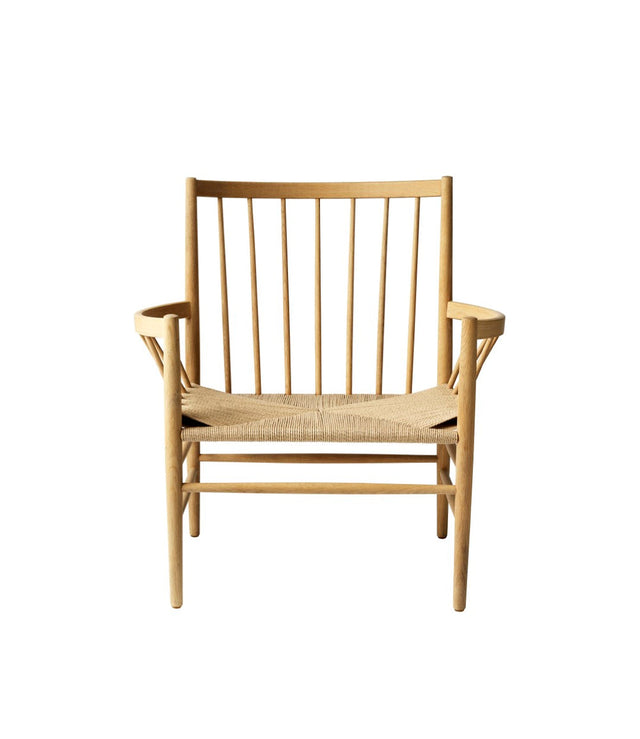
| FDB Møbler J82 | Wood frame | Nordic Swan Ecolabel; water-based lacquer |
| WOUD Meadow | Upholstered | Kvadrat wool and fabric; made in Poland |
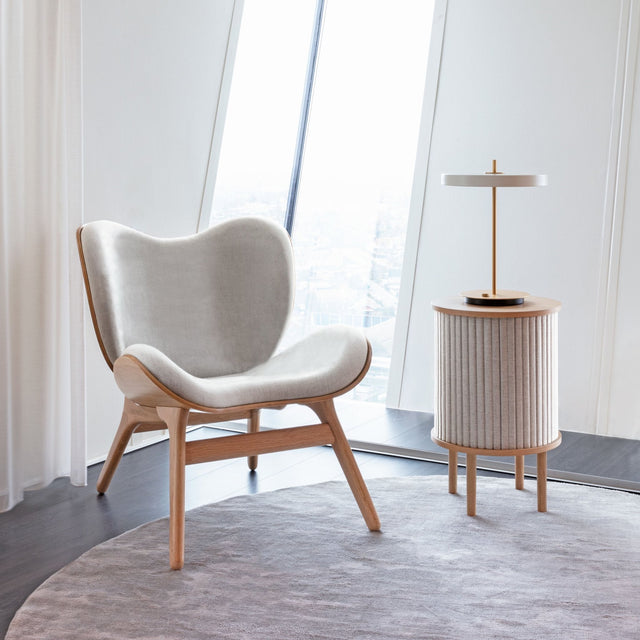
| UMAGE A Conversation Piece | Upholstered | Interchangeable covers on solid oak |
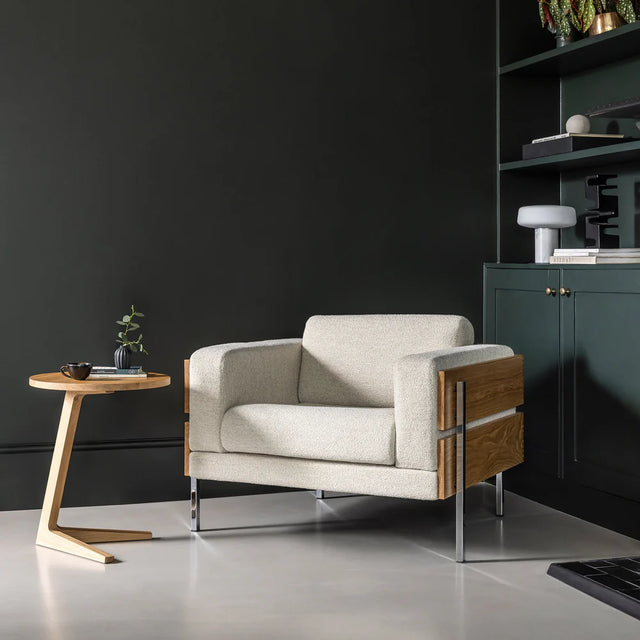
| Case Forum | Wood and upholstery | Robin Day’s 1964 design in solid oak or walnut |
| Mater Ocean Lounge | Outdoor | Slats of recycled plastic waste |
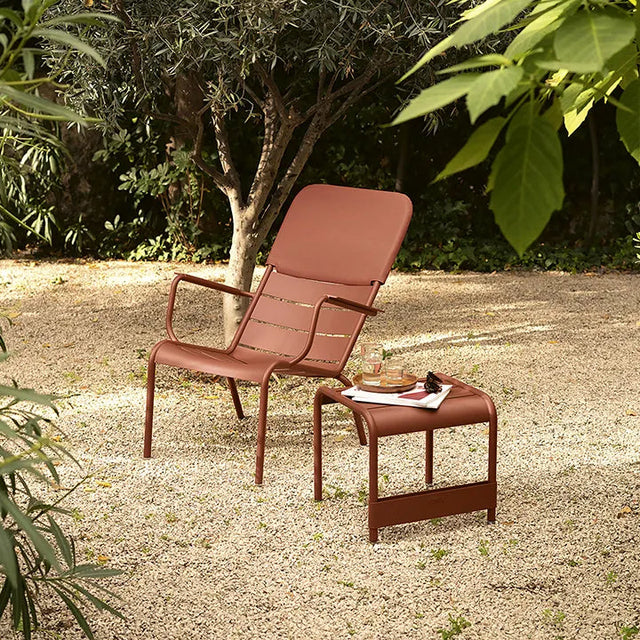
| Fermob Luxembourg Low | Outdoor | Aluminum, made in France |
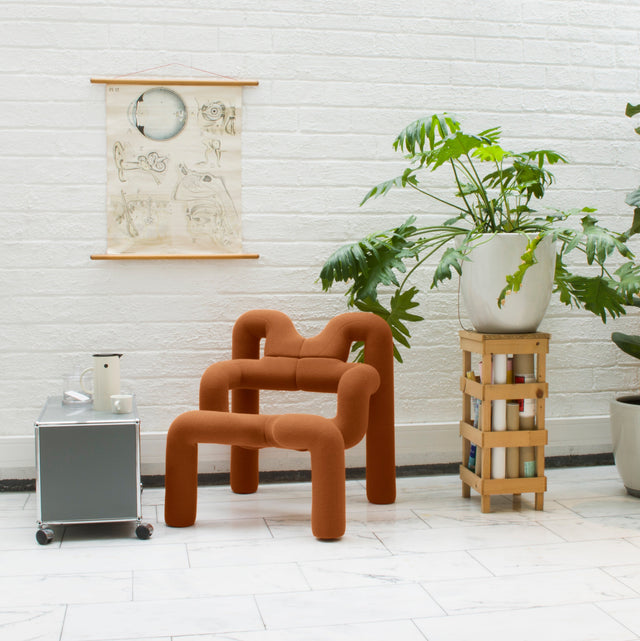
| Varier Ekstrem | Active sitting | 10-year frame warranty if registered; published EPD |
What frame makes a sustainable armchair?
The frame has to outlive everything else, so it decides whether a chair can be re-covered and kept.
- Solid wood. Oak, beech and walnut can be sanded, re-oiled and re-glued. Look for a named species and finish: the Eye is solid oak, varnished or hardwax-oiled, and Case’s Forum replaces the original’s tropical-hardwood veneers with solid oak or walnut.
- Steel and aluminum. They carry the sculptural and outdoor chairs here. Ask what the coating is.
- Recycled plastic. Mater casts the Ocean’s slats from recovered plastic waste and designs the collection for disassembly.
An FSC-certified armchair tells you where the wood came from, not what is in the glue or finish. FDB Møbler holds FSC chain-of-custody certification (FSC-C164841).
 Ethnicraft · Meter 3.5Eye Lounge ChairSolid oak, made in Serbia; designed by Alain van Havre
From $1,869Shop →
Ethnicraft · Meter 3.5Eye Lounge ChairSolid oak, made in Serbia; designed by Alain van Havre
From $1,869Shop →
 FDB Møbler · Meter 3.7J82 Lounge Chair - Natural OakNordic Swan Ecolabel; water-based lacquered oak, paper cord
$2,219Shop →
FDB Møbler · Meter 3.7J82 Lounge Chair - Natural OakNordic Swan Ecolabel; water-based lacquered oak, paper cord
$2,219Shop →
 Case · Meter 3.0Forum ArmchairRobin Day, 1964; solid oak or walnut frame
From $1,950Shop →
Case · Meter 3.0Forum ArmchairRobin Day, 1964; solid oak or walnut frame
From $1,950Shop →
How do you choose sustainable upholstered chairs?
Credit only what the maker writes down.
- The fabric. A named textile beats “premium fabric.” The Meadow wears Kvadrat wool and fabric, the Ekstrem is hand-upholstered in Devold wool knit or Kvadrat velvet, and UMAGE offers Horizons, a 100% recycled textile.
- The label. OEKO-TEX tests textiles and leather for harmful substances; UMAGE’s Hope leather carries it, and the Dunes leather it offers from Sørensen Leather carries the Nordic Swan Ecolabel.
- The fill. Most upholstered chairs sit on foam: molded in the Meadow, polyurethane in the Ekstrem, Dacron-wrapped in the Forum. None of these chairs lists a certification for its foam, so we don’t claim one.
 Shop the corner · 3 pieces

 WOUD · Meter 3.2Meadow Lounge ChairKvadrat wool and fabric on a steel base; made in Poland
From $4,379Shop →
WOUD · Meter 3.2Meadow Lounge ChairKvadrat wool and fabric on a steel base; made in Poland
From $4,379Shop →
 UMAGE · Meter 3.8UMAGE A Conversation Piece Lounge Chair, Low, OakInterchangeable covers, incl. 100% recycled Horizons
From $2,899Shop →
UMAGE · Meter 3.8UMAGE A Conversation Piece Lounge Chair, Low, OakInterchangeable covers, incl. 100% recycled Horizons
From $2,899Shop →
 UMAGE · Meter 3.8UMAGE The Reader Wing Chair, OakTor Hadsund design; interchangeable upholstery
From $3,299Shop →
UMAGE · Meter 3.8UMAGE The Reader Wing Chair, OakTor Hadsund design; interchangeable upholstery
From $3,299Shop →
How wool, bouclé and performance fabrics wear: our upholstery fabric guide. Furnishing the whole room? See our sustainable sofa guide.
What is a low-VOC lounge chair?
VOCs (volatile organic compounds) off-gas mostly from finishes, glues and treated fabrics. A low-VOC, non-toxic lounge chair shows you its finish and, ideally, an emissions label.
- Water-based lacquer, as on the J82’s oak.
- An ecolabel with emission limits: the J82 carries the Nordic Swan Ecolabel, whose furniture criteria limit formaldehyde and VOC emissions and ban halogenated flame retardants.
- Powder coat without solvents: Fermob’s contains no heavy metals or VOCs, and Petite Friture lists a VOC-free coat on the Week-End Bridge.
- Solid wood, oiled or water-based varnished, as Ethnicraft uses.
For chamber-tested emissions on a whole chair, look for GREENGUARD Gold. Every label is explained in our certification glossary.
How long should an eco-friendly armchair last?
Longer than its fabric. The greenest armchair is the one you re-cover instead of replace, so check what you can buy separately.
Covers
The Weave Lounge Chair’s linen-blend covers come off and machine-wash. UMAGE’s A Conversation Piece takes a new cover, not a new chair.
Cushions
The Jack Lounge Chair’s cushion set is sold separately, so its mahogany frame can move from fabric to leather.
Parts
Mater sells replacement Ocean slats in every color. Varier, Fermob and Ethnicraft offer spare parts.
Warranty
10 years on the Ekstrem frame and on UMAGE (both when registered), 5 years on the Week-End Bridge, 2 years on the Forum.
 Ethnicraft · Meter 3.5Weave Lounge ChairLinen-blend covers come off and machine-wash
$2,199Shop →
Ethnicraft · Meter 3.5Weave Lounge ChairLinen-blend covers come off and machine-wash
$2,199Shop →
 Ethnicraft · Meter 3.5Jack Lounge ChairMahogany frame; cushion set sold separately
From $2,158Shop →
Ethnicraft · Meter 3.5Jack Lounge ChairMahogany frame; cushion set sold separately
From $2,158Shop →
Eco-friendly lounge chairs that can live outside
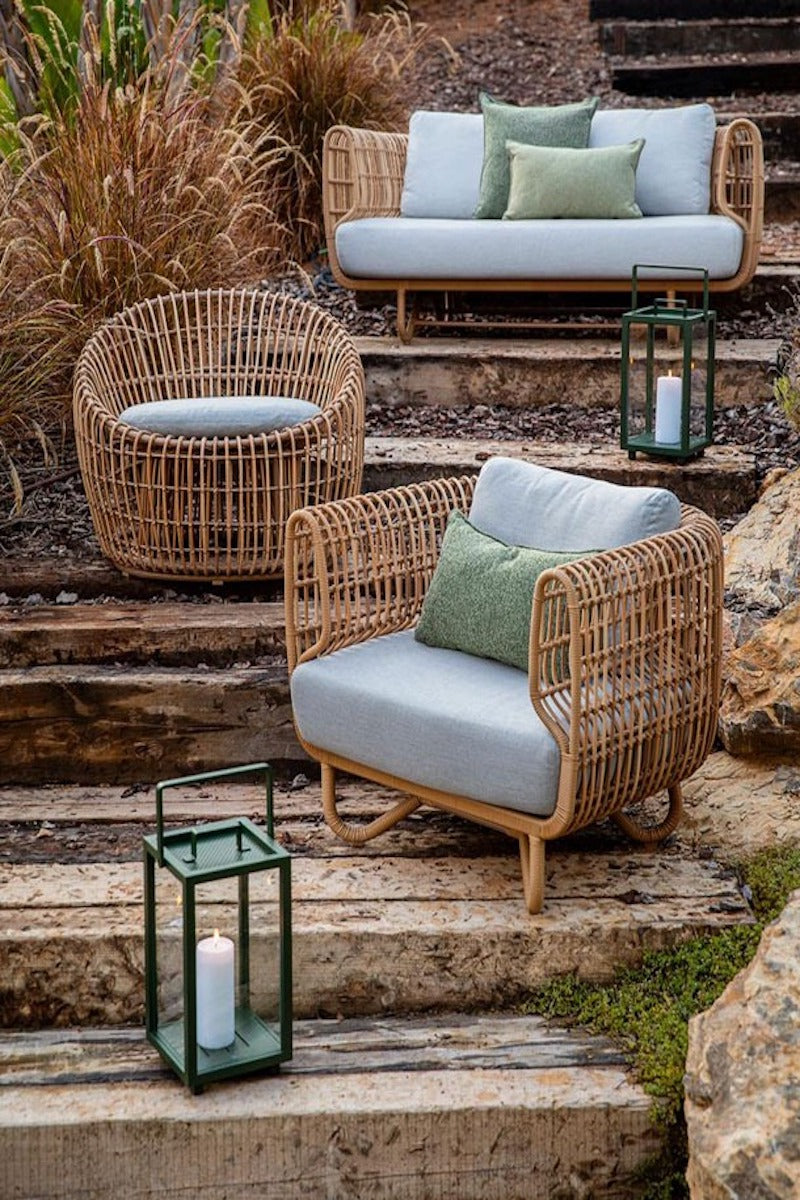
Mater’s Ocean Lounge Chair is Nanna and Jørgen Ditzel’s 1955 design, with slats from recovered waste: ocean plastic in Black and Sand, pharma plastic in Green, e-waste in Burnt Red and Dusty Blue. Fermob builds the Luxembourg Low in aluminum in Thoissey, France, under an anti-corrosion layer and a UV-resistant powder coat. Petite Friture’s aluminum Week-End Bridge stacks four high for winter.
 Mater · Meter 3.8Ocean Lounge ChairSlats of recycled plastic waste; replacement slats sold
From $623Shop →
Mater · Meter 3.8Ocean Lounge ChairSlats of recycled plastic waste; replacement slats sold
From $623Shop →
 Fermob · Meter 4.0Fermob Luxembourg Low ArmchairAluminum, made in Thoissey, France; stacks six high
$1,080Shop →
Fermob · Meter 4.0Fermob Luxembourg Low ArmchairAluminum, made in Thoissey, France; stacks six high
$1,080Shop →
 Petite Friture · Meter 3.8Week-End Bridge Armchair (Set of 2)Aluminum, VOC-free anti-UV coat; 5-year warranty
$1,310Shop →
Petite Friture · Meter 3.8Week-End Bridge Armchair (Set of 2)Aluminum, VOC-free anti-UV coat; 5-year warranty
$1,310Shop →
For full-length loungers, see our sun lounger guide.
An eco-conscious accent chair that keeps you moving
Most lounge chairs hold you in one pose. Varier’s Ekstrem lets you sit forward, sideways or reclined and keep shifting, which many owners find more comfortable over long sessions. Varier publishes an Environmental Product Declaration for it.


Behind the chair · Varier · Norwegian active sitting since 1979
A 1984 chair that refuses to hold one pose
Terje Ekstrøm designed the Ekstrem in 1984 as two mirror-image steel frames wrapped in polyurethane foam, with the fabric fitted over them by hand. The open geometry is the point: sit forward, sideways or reclined, and keep moving. Varier designs it in Norway, builds it in Poland and backs the frame with a 10-year warranty when you register it.
- 10-year frame warranty when registered
- Third-party-verified EPDs on most models
- Spare parts available
grade
Questions people ask
What makes sustainable chairs ecologically sound?
A durable frame of solid wood, metal or recycled plastic; materials the maker names, with labels such as FSC for wood or OEKO-TEX for fabric; and a design you can repair, re-cover or buy parts for. A chair kept for decades beats one replaced every few years.
What should an eco-conscious armchair be made of?
A solid hardwood frame such as oak or walnut, or steel or aluminum for outdoor pieces; wool, linen-blend or recycled-textile upholstery; and an oil or water-based finish. The Ethnicraft Eye and FDB Møbler J82 are our wood-frame picks.
What does OEKO-TEX mean on a chair?
That the textile or leather was tested for harmful substances. It covers the upholstery only, not the frame, foam or finish. UMAGE’s Hope leather option is OEKO-TEX-certified.
Is an FSC-certified lounge chair non-toxic?
Not necessarily. FSC certifies that the wood comes from responsibly managed forests; it says nothing about glues, finishes or fabric. For emissions, look for GREENGUARD Gold or an ecolabel such as the Nordic Swan, which limits formaldehyde and VOC emissions.
Is there a LEED-certified lounge chair?
LEED certifies buildings and interiors, not chairs. A chair can count toward a LEED interiors project’s product-disclosure credit if it has a qualifying Environmental Product Declaration (EPD). Varier publishes EPDs for most models, the Ekstrem included.
What are the top green chairs made with recycled fibers?
Here, UMAGE’s A Conversation Piece and The Reader in Horizons, a 100% recycled textile, and Mater’s Ocean Lounge Chair, with slats of recycled plastic waste. For dining or desk use, Varier’s Social chairs are molded from 55–75% recycled plastic.
Who sells eco-friendly chaise lounges with modern designs?
We do. Ethnicraft’s Jack Outdoor Adjustable Lounger is solid teak with an optional quick-dry cushion, and FDB Møbler’s M8 Sammen Sun Lounger is solid oiled teak with an adjustable back. Our sun lounger guide compares more.