

Sustainable lighting is fixtures designed to last decades rather than years — through repairable construction, replaceable LED engines, certified materials, and manufacturers committed to verified environmental practices. The Anglepoise Original 1227, designed by George Carwardine in 1935, is still in production today, and every new one carries Anglepoise's lifetime guarantee. At Comosum, we curate sustainable lighting from heritage British, French, and Spanish brands whose lamps are built to be repaired, not replaced. Every lamp, pendant, and fixture in this guide is in our sustainable lighting collection, shipping from US warehouses.
The Story Behind Sustainable Lighting
Lighting is the most replaced category in many homes — and the most quietly wasteful. A cheap pendant with sealed components, an LED strip with integrated drivers, a desk lamp whose articulated arm wears through in two years: each one becomes a small sealed unit of e-waste because there is no path back to a workshop.
The brands that took lighting seriously a century ago set a different standard. George Carwardine's Original 1227, released in 1935 as the three-spring home version of his industrial Model 1208, used an articulated arm built around principles borrowed from automotive suspension. That same design, still produced by Anglepoise, now headquartered in Hampshire, England, is one of the most-shipped lamps in our collection today.
Tristan Lohner's Balad lamp for Fermob, first released in 2014, has evolved into the Balad² with USB-C charging and dimmable LEDs while keeping the same powder-coated steel shade that owners can pair with replacement bases, accessories, or new colorways for years to come. Constance Guisset's Vertigo Pendant for Petite Friture, released in 2010, has been built around the same hand-finished fiberglass canopy and woven ribbon construction for more than a decade — a sign that the manufacturing process itself is stable enough to keep producing parts that match.
The lighting designs worth buying tend to be the lighting designs worth keeping. They share three traits: repairable mechanical assemblies, replaceable LED engines rather than glued-in arrays, and a manufacturer with a track record of sustaining the model over decades rather than seasons.
Shop this guide
In stock, shipping from US warehouses, each from a brand graded on our Sustainability Meter.


How Sustainable Lighting Is Built
The difference between a lamp built to last and one built to sell is mostly invisible until something breaks. Here is what to look for under the shade.
Materials
Quality fixtures use powder-coated steel or aluminum frames, FSC-certified (Forest Stewardship Council) hardwoods on table-lamp bases, hand-crafted porcelain or hand-blown glass on shades, and natural cotton or paper diffusers in place of plastic. Anglepoise says its packaging is now 95% plastic-free. Fermob's Aplô and Balad² lamps are built from steel and aluminum, finished in Fermob's 24-color powder-coat palette at the company's factories in the Lyon region. Lladró has been hand-crafting porcelain at a single facility in Tavernes Blanques, Valencia, since 1953, with every piece kiln-fired and finished in-house.
Manufacturing
The most credible sustainability signal is geographic stability. A brand that has manufactured in the same location for decades has accountability for what happens in those buildings. Fermob builds in France; Lladró builds in Spain; Petite Friture is designed in Paris and produced through long-standing European partners. Onshore manufacturing also shortens supply-chain carbon footprints and makes replacement-part logistics realistic rather than aspirational.
Certifications & Recognition
Anglepoise is a certified B Corporation and gives every new lamp bought since 2020 a lifetime guarantee. Fermob has been ISO 14001 environmental-management certified since 2010 and publishes annual sustainability reports tracking material and energy use. For the LED itself, the most useful spec is the L70 rating — the operating hours before light output drops to 70% of original brightness. Quality LED engines should be rated to L70 of at least 25,000 hours, which translates to roughly 17 years of daily use at four hours per evening.
Why Sustainable Lighting Belongs at Comosum
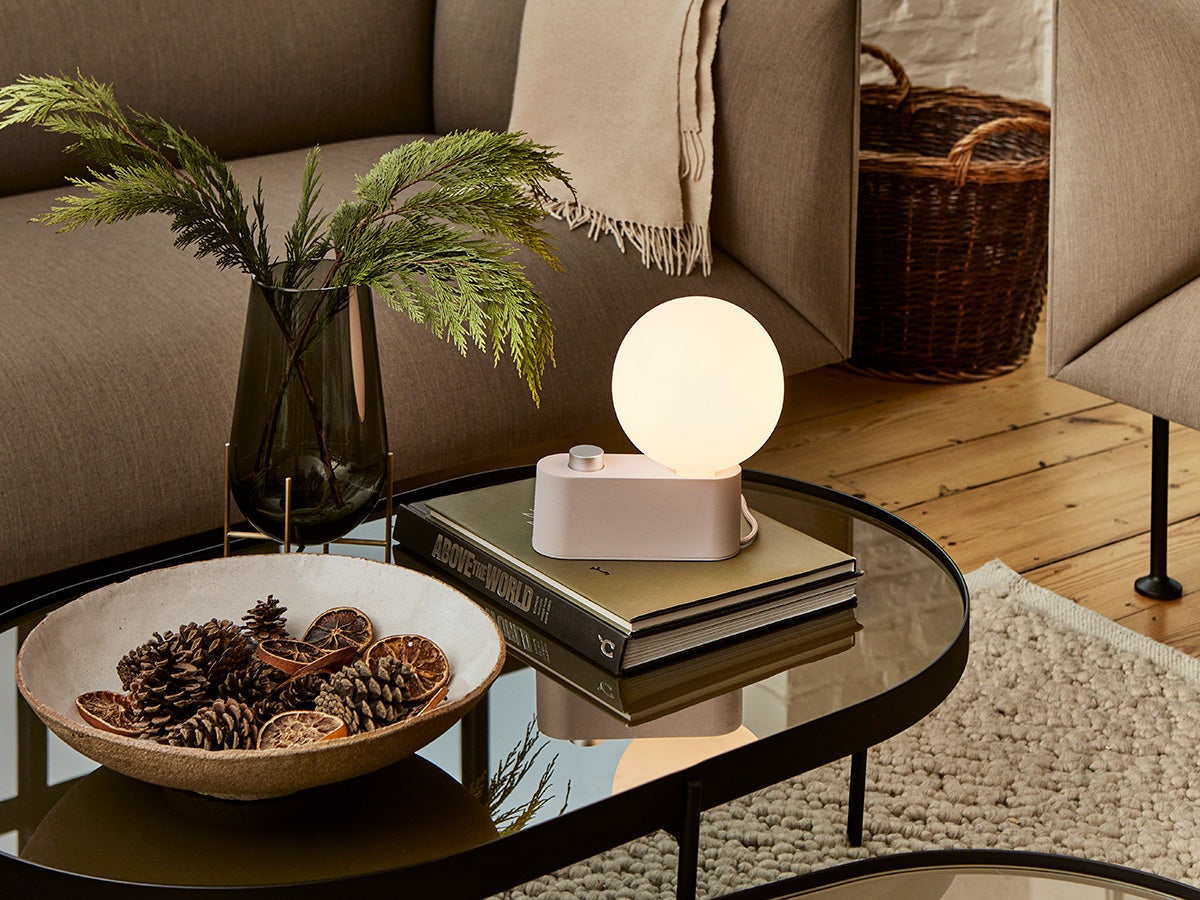
We carry lighting from manufacturers who treat their designs as long-running products rather than seasonal SKUs. That is a narrow filter, and it intentionally rules out most of the lighting market. What it lets through is heritage brands like Anglepoise — a British family-owned company whose Original 1227 has been in continuous production since 1935 — alongside contemporary brands with verified environmental practices like Fermob (France), Petite Friture (Paris), and Lladró (Spain). The newest of these is Tala, a London B Corp founded in 2015 whose pendants and table lamps are built around replaceable E26 LED bulbs — the replaceable-engine principle this guide argues for.
We choose pieces with three things in mind: replaceable LED engines so a burned-out chip doesn't retire the lamp, mechanical joints that can be serviced, and aesthetic credibility that does not age out of relevance. Most of the lamps we carry are part of our broader curation of sustainable furniture brands, and many have been featured in design publications including Dezeen and Wallpaper across multiple decades — a signal that the design has held its own through several rounds of fashion cycling. Our sustainability page describes the broader curation framework.
Explore Sustainable Lighting at Comosum
A starting set of pieces from our lighting collection:
- Anglepoise Original 1227 Desk Lamp — George Carwardine's 1935 design, articulated three-spring arm, made in China for the Hampshire-based brand.
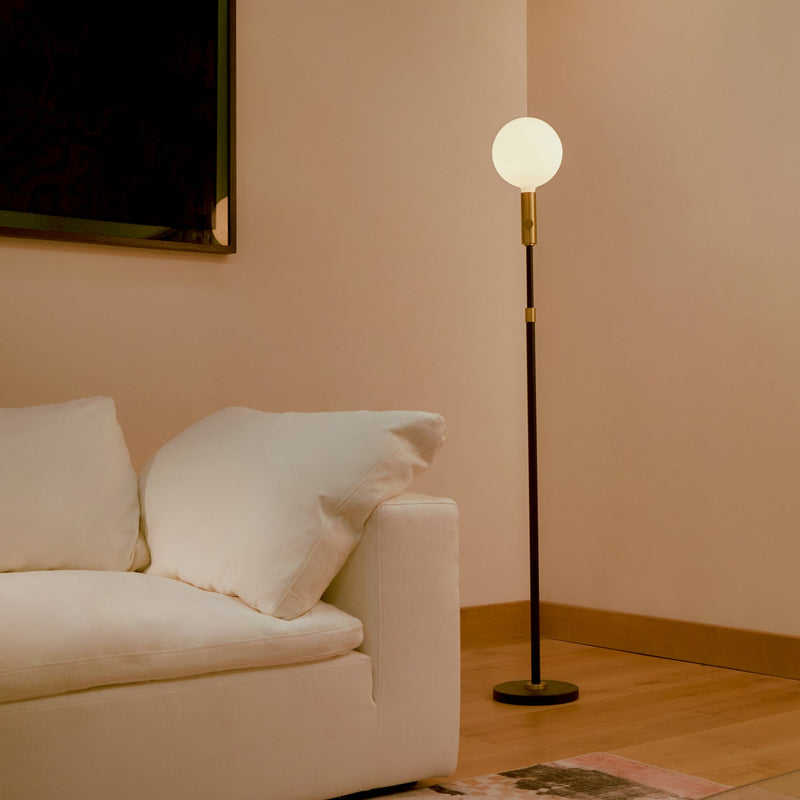
- Anglepoise Type 75 Floor Lamp — designed by Sir Kenneth Grange, the modern refinement of the Anglepoise articulated lamp, available in jet black, slate grey, alpine white, and silver lustre.
- Fermob Balad² Lamp H.15 in. — Tristan Lohner's evolution of the 2014 Balad, USB-C rechargeable, dimmable, IP54-rated for indoor and outdoor use.
- Petite Friture Vertigo Pendant — Constance Guisset's hand-finished fiberglass and ribbon canopy, a Paris-designed centerpiece available in multiple colorways.
- Lladró Firefly Table Lamp — wireless USB-rechargeable porcelain lamp hand-crafted at Lladró's Valencia atelier.
Browse the full lighting collection at Comosum →
Frequently Asked Questions About Sustainable Lighting
What makes a lighting fixture sustainable?
A lighting fixture is sustainable when it is built to be repaired, contains replaceable rather than glued-in LED components, uses certified materials like FSC wood or recycled metals, and comes from a manufacturer with verified environmental practices such as B Corp certification or ISO 14001. The shortest version: it lasts decades and can be serviced when something wears out.
Is Anglepoise a sustainable brand?
Anglepoise is a B Corp certified British brand headquartered in Hampshire, England; most of its lamps are made in partner factories in China, and its Giant lamps in the UK. The company gives every new lamp bought since 2020 a lifetime guarantee, says its packaging is now 95% plastic-free, and carries more than 60 spare parts, re-engineering parts for older designs going back to the Original 1227 of 1935.
How long should an LED lamp last?
A quality LED lighting fixture should carry an L70 rating of at least 25,000 hours — meaning the light output stays at 70% or higher of original brightness for 25,000 hours of operation. At four hours per day, that translates to roughly 17 years before the LED engine itself needs replacement, and ideally that engine should be replaceable rather than fixed inside the housing.
Where is Fermob lighting made?
Fermob designs and manufactures its lighting at factories in the Lyon region of France. The Balad², Aplô, and Mooon portable-lamp lines share the same powder-coated metal frames used across Fermob's outdoor furniture, and the company has been ISO 14001 environmental-management certified since 2010.
Can I use sustainable outdoor lamps indoors?
Yes — many of the portable lamps in our lighting collection, including the Fermob Balad² and Aplô lines, are IP54-rated and designed for both indoor and outdoor use. The rechargeable battery, cordless silhouette, and dimmable LED make them as useful on a bedside table as on a patio.


Leave a comment
This site is protected by hCaptcha and the hCaptcha Privacy Policy and Terms of Service apply.