
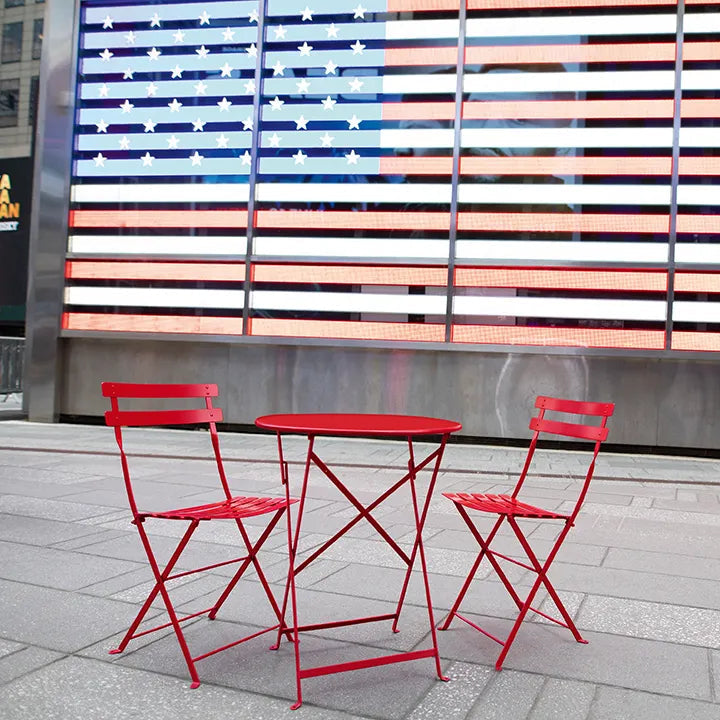

Fermob's Luxembourg and Bistro chairs are the two most recognisable seats the French manufacturer makes, and buyers routinely choose between them. The Bistro is a folding steel café chair whose design dates to 1889; the Luxembourg is a stackable aluminium chair that Frédéric Sofia reissued in 2004 from a 1923 Paris parks original. Both are made in France to the same ISO 14001 environmental standard and finished in the same powder-coat palette. The real difference is steel-and-folding versus aluminium-and-stacking.
Why This Comparison Matters
Most furniture comparisons pit one brand against another. This one is different: both chairs come from the same maker, carry the same certifications, and sit on the same showroom floor — so the decision is not about which brand to trust, but about which design fits how you actually live outdoors. Get it wrong and you either buy a folding chair you never fold, or a stackable chair for a balcony that needed something to hang on a hook.
The Fermob collection at Comosum runs to dozens of pieces, but the Bistro and Luxembourg lines are the anchors — the two silhouettes people picture when they picture a French garden. They solve the same problem (a good-looking, weatherproof seat) with two different centuries of engineering behind them. Knowing which is which saves you from the most common outdoor-furniture regret: buying for the picture instead of the patio.
The Story Behind Each Chair
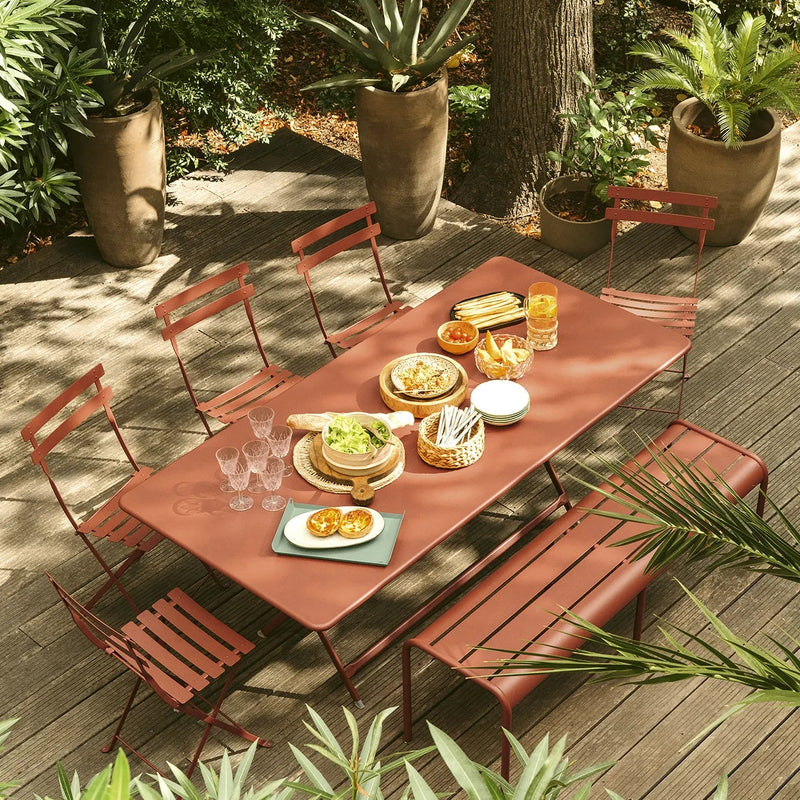
The Bistro is the older design. Its folding steel café chair dates to 1889, when it was the standard seat of Parisian pavement cafés and public gardens — light enough to carry out at opening and fold away at close. Fermob still builds it as a faithful reincarnation of that archetype, in weatherproofed steel with a modern powder-coat finish. It is the chair most people mean when they say "French bistro chair."
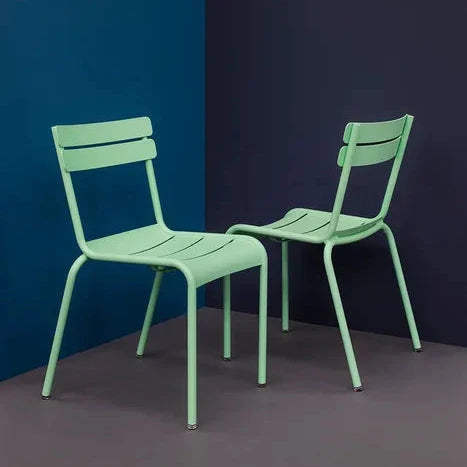
The Luxembourg is younger by a generation and grander in scale. The original was a steel garden chair created in 1923 by the workshops of the City of Paris for the Jardin du Luxembourg, where rows of them still fill the gravel around the fountain. In 2004 Fermob asked designer Frédéric Sofia to reinterpret it; he rebuilt the silhouette in aluminium with improved ergonomics while keeping the curved slats and generous proportions intact (Fermob historical collections). Where the Bistro is a working café chair, the Luxembourg is a park lounger.
Head-to-Head: How They Compare
The two lines diverge across four practical dimensions.
Materials
The Bistro is steel; the Luxembourg is aluminium. That single difference drives most of the others. Steel is rigid, heavy, and inexpensive — ideal for a compact folding frame that needs to stay rigid under a folding hinge. Aluminium is lighter and does not rust, which matters if a chair lives permanently outdoors or near salt air. Both metals are highly recyclable at end of life, and both wear the same solvent-free powder-coat finish. For a coastal deck or a chair you will never bring inside, the aluminium Luxembourg has the edge; for a chair you fold and stash, the steel Bistro is more than sturdy enough.
Mechanism & Storage
The Bistro folds flat; the Luxembourg stacks. A folding Bistro collapses to a few inches and can hang on a wall hook or slide behind a door — the reason it remains the default for tiny balconies and pop-up dining. The Luxembourg does not fold, but its side chair and armchair stack several high, so you can clear a terrace for a party and restack afterwards. Folding wins for the smallest spaces; stacking wins where you have a corner to store a column of chairs but want a more substantial seat day to day.
Comfort & Scale
The Luxembourg is the more comfortable chair. Its seat is wider, its back is taller, and Sofia's 2004 revision deepened the recline for lingering over a long lunch. The range extends into a genuine low armchair built for lounging rather than dining. The Bistro is upright and space-efficient — perfect for a quick coffee or a two-person café table, less so for an afternoon of sitting. If your outdoor time is meals and conversation, Luxembourg; if it is espresso and newspapers, Bistro.
Price & Range
The Bistro is the entry point. The Bistro Metal Chair starts at $160, making it one of the most affordable ways into designer outdoor furniture; a weatherproof Bistro Duraflon Chair set of two runs $360. The Luxembourg Side Chair starts at $400 and the line climbs through the armchair, the high stool, and the low armchair. Per seat, a Luxembourg costs roughly two-and-a-half times a Bistro — the price of aluminium, more metal, and a bigger frame.
How Both Are Built Sustainably
Whichever you choose, the sustainability story is the same, and it is a real one. Fermob, founded in 1953, has been ISO 14001 environmental-management certified since 2010 and produces both lines in France (what ISO 14001 means). The powder-coat finish on both chairs is applied dry and oven-cured rather than sprayed as a solvent-based enamel, so it emits far fewer VOCs than conventional outdoor paint — and it is rated for roughly 10–15 years of outdoor use before any meaningful fade. The underlying steel and aluminium frames are themselves among the most recyclable materials made, and Fermob's colour-match service means a worn chair can be refinished rather than replaced (Fermob brand page). Both chairs sit comfortably within our wider curation of sustainable furniture brands whose material claims survive scrutiny.
Which Fermob Chair Should You Buy?
Buy the Bistro if you have a small balcony, need to fold and store your seating, or want the classic café look at the lowest entry price. Its folding steel frame is the more practical choice anywhere space is tight — the same logic we lay out in our small-balcony furniture guide.
Buy the Luxembourg if your furniture lives outside year-round, if you sit for hours rather than minutes, or if you are near the coast where aluminium's rust resistance earns its premium. It is the more comfortable, more substantial chair, and it pairs naturally with a Fermob outdoor table for a permanent terrace set. Many customers end up with both: Bistro chairs for flexible overflow, a Luxembourg set as the everyday seating. For a cross-brand view, our Fermob vs. Cane-Line comparison covers metal against teak.
Explore Fermob at Comosum
A starting set from each line:
Bistro (steel, folding):
- Fermob Bistro Metal Chair — the 1889 café archetype in weatherproof steel, folds flat, from $160.
- Bistro 24" Round Folding Table — the balcony-sized folding companion, $335.
Luxembourg (aluminium, stacking):
- Fermob Luxembourg Side Chair — Frédéric Sofia's 2004 aluminium reissue of the 1923 Paris parks chair, stackable, from $400.
- Fermob Luxembourg Low Armchair — the deep-reclining lounge version for long afternoons, from $1,080.
The Luxembourg line also includes a rocking chair, and Fermob makes a Sixties Rocking Chair too; both are in our rocking chairs collection.
Browse the full outdoor chairs collection at Comosum →
Frequently Asked Questions About Fermob Luxembourg vs. Bistro
Where are Fermob Luxembourg and Bistro chairs made?
Both lines are manufactured in France by Fermob, a company founded in 1953 and ISO 14001 environmental-management certified since 2010. The chairs are formed, powder-coated, and assembled in-country before shipping.
What is the difference between the Fermob Luxembourg and Bistro chairs?
The Bistro is a folding steel café chair whose design dates to 1889; the Luxembourg is a stackable aluminium chair reissued in 2004 from a 1923 Paris parks original. The Bistro folds flat and costs less, while the Luxembourg is larger, more comfortable, rust-proof, and stacks rather than folds.
Are Fermob chairs sustainable?
Yes. Fermob has been ISO 14001 certified since 2010, and both chairs use a solvent-free, oven-cured powder-coat finish that emits far fewer VOCs than conventional outdoor enamel. The steel and aluminium frames are highly recyclable, and Fermob offers a colour-match service so worn chairs can be refinished rather than discarded.
Which Fermob chair is better for a small balcony?
The Bistro, in most cases. It folds flat to a few inches, so it can hang on a hook or slide behind a door when not in use. The Luxembourg stacks but does not fold, which suits a terrace with storage space better than a tight balcony.
Can you leave Fermob chairs outside all year?
Both are built for permanent outdoor use, with powder-coated frames rated for roughly 10–15 years. The aluminium Luxembourg has an edge in wet or coastal settings because it cannot rust; the steel Bistro is best brought under cover during prolonged heavy snow to protect the finish.
How much do Fermob Luxembourg and Bistro chairs cost?
The Fermob Bistro Metal Chair starts at $160, and a Bistro Duraflon chair set of two is $360. The Fermob Luxembourg Side Chair starts at $400, with the armchair, high stool, and low armchair priced higher as the frame grows.


Leave a comment
This site is protected by hCaptcha and the hCaptcha Privacy Policy and Terms of Service apply.