










Sustainable rugs and doormats are floor textiles made from responsibly sourced or recycled fibers — wool, jute, and recycled PET among them — built to be walked on for years rather than replaced every season. The clearest signal to look for is OEKO-TEX Standard 100 certification, which tests a finished textile for more than 1,000 harmful substances. At Comosum, we carry rugs and doormats from Norway's Heymat and Denmark's WOUD, chosen because they pair honest materials with designs made to last.
Why the Material Choice Matters
A rug is one of the largest textile surfaces in most rooms, and a doormat is the single hardest-working one. Both spend their lives underfoot, absorbing grit, moisture, and daily traffic — which means the fiber you choose determines how long the piece lasts and what it puts into your home along the way.
Conventional floor textiles are where a lot of hidden problems hide. Many mass-market rugs are tufted from virgin synthetic pile glued to a backing with latex adhesives, then treated with stain repellents that can include PFAS "forever chemicals." They look fine on day one and flatten, shed, or off-gas within a couple of years. A doormat made from cheap PVC-backed nylon tends to crack and curl once it has seen a few winters.
Sustainable alternatives solve the problem from opposite directions. Natural fibers like wool and jute are renewable, biodegradable, and — in wool's case — naturally stain- and flame-resistant without chemical treatment. Recycled fibers, chiefly recycled PET spun from post-consumer plastic, divert waste from landfill and produce a hard-wearing, weather-tolerant surface ideal for entry mats. Knowing which fiber suits which spot in your home is the whole game, and it is worth getting right the first time.
Shop this guide
In stock, shipping from US warehouses, each from a brand graded on our Sustainability Meter.


What Makes a Rug or Doormat Sustainable
Materials
The fiber is the foundation. Wool is the benchmark for indoor rugs: durable, springy under compression, naturally soil-resistant, and drawn from a renewable, biodegradable source. WOUD's Tact rug, for instance, is hand-woven from 90% wool into looped droplets you feel with bare feet. Jute and wool-jute blends add texture and structure at a lower price and are fully compostable at end of life. Recycled PET is the standout for doormats — Heymat weaves its Norwegian-designed mats from recycled plastic, giving post-consumer waste a second life as a dense, weather-ready surface that scrapes boots clean.
Manufacturing
How a textile is made matters as much as what it is made from. Look for hand-weaving or low-waste production, water-based rather than solvent-based dyes, and mats designed to be machine-washable so they can be cleaned rather than thrown out. Heymat's all-weather mats are built for real weather and repeated washing; WOUD's rugs are woven in small, design-led runs rather than mass-produced.
Certifications & Recognition
The credential that matters most for floor textiles is OEKO-TEX Standard 100, an independent certification that screens a finished product for harmful substances across every component, from the pile to the backing thread. It is the plain-language way to confirm a rug or mat will not off-gas into your home. For a fuller explanation, see our guide to the OEKO-TEX Standard 100, and for the wider picture of responsible sourcing, the Sustainable Furnishings Council is a useful reference.
Why We Recommend Buying Fewer, Better Floor Textiles
We think about rugs and doormats the way we think about everything else we carry: as pieces you buy once and keep. A $210 recycled-PET doormat that survives ten winters of washing costs less per year than a $40 mat replaced every second season — and it keeps a decade of vinyl mats out of landfill.
That is why we lean toward two makers in particular. Heymat, from Oslo, turned the ugly rubber doormat into a design object woven from recycled material, with patterns drawn by Norwegian and Nordic designers. WOUD, from Denmark, brings the same quiet discipline to indoor rugs in wool and jute. Between them they cover the whole floor: a washable mat for the threshold, a wool rug for the living room, a runner for the hallway. You can explore both alongside the rest of our sustainable furniture brands, all curated for materials we can stand behind.
What to Shop at Comosum
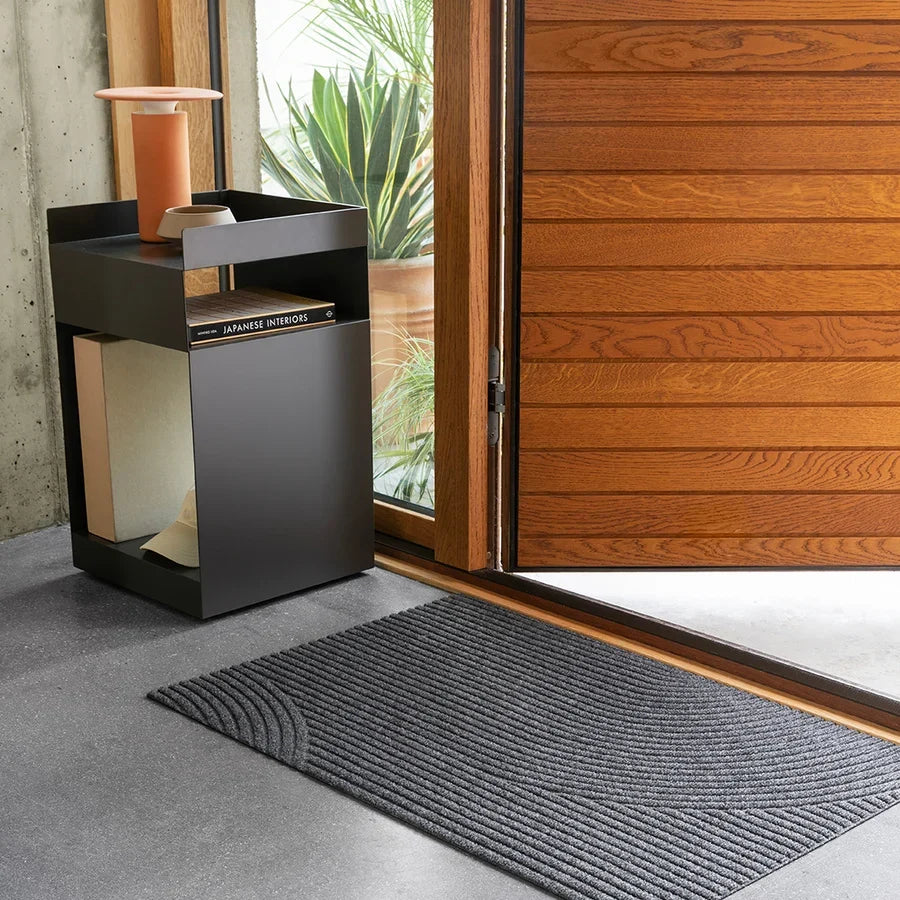
- Heymat Sand All-Weather Doormat — Kristine Five Melvær's raked, Zen-garden texture in a calm beige, woven from recycled material and built for indoor or outdoor use. A best-seller for good reason.
- Heymat Stein All-Weather Doormat — a three-dimensional grey mat engineered to handle real weather at the door, part of Heymat's hardest-wearing all-weather line.
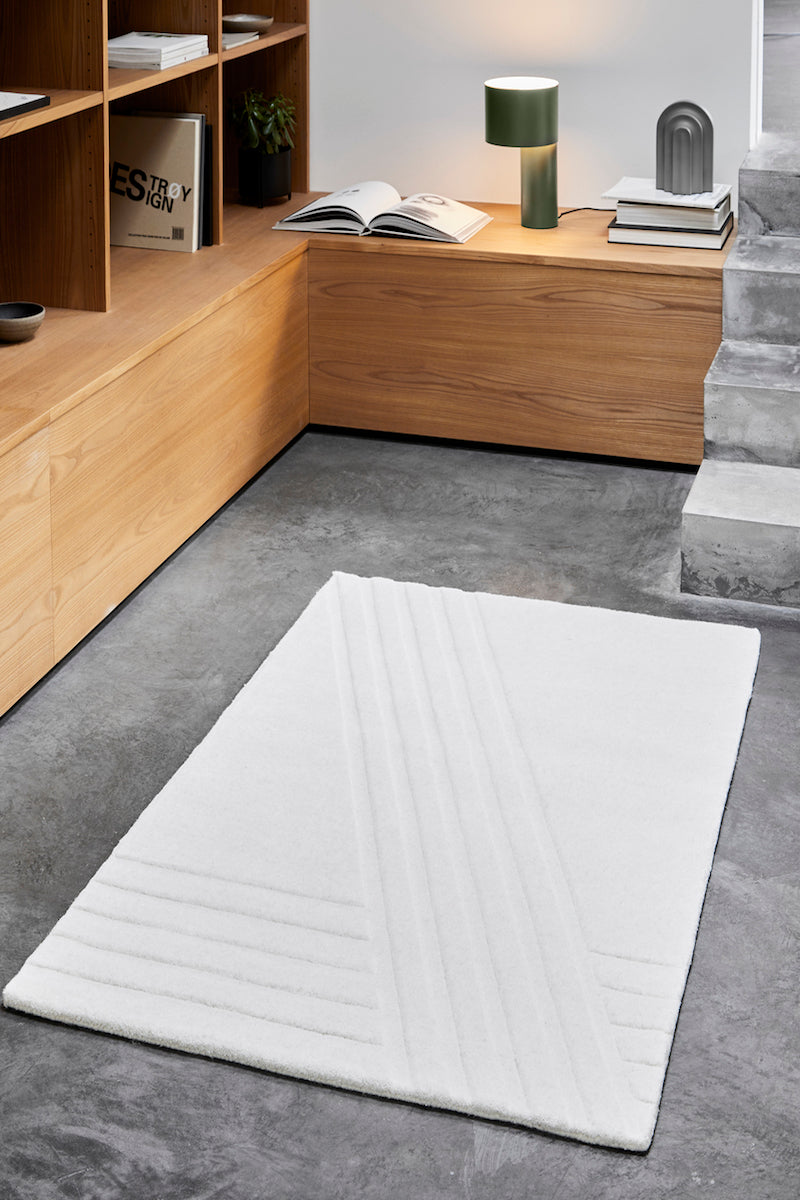
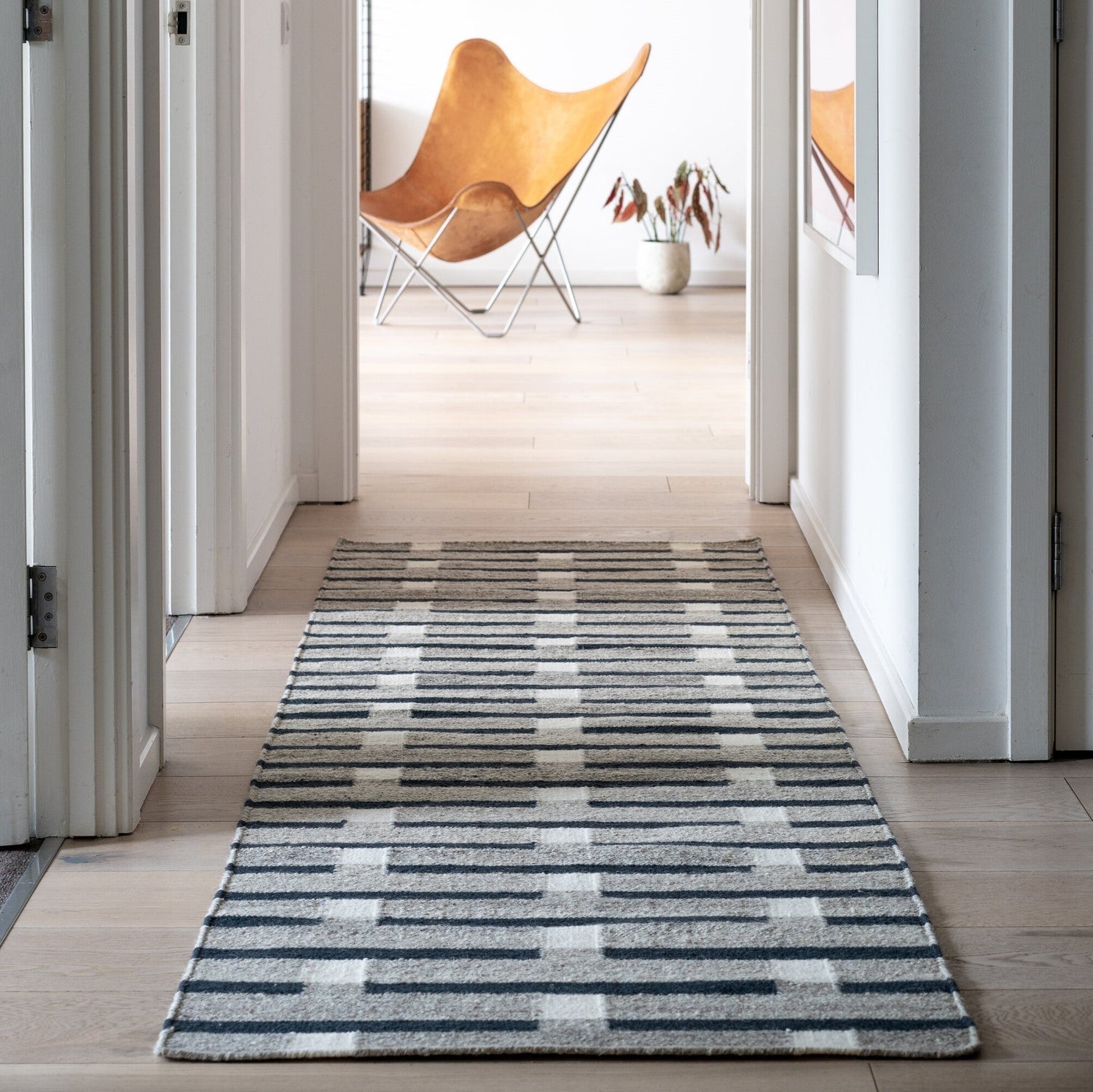
- WOUD Tact Rug — hundreds of hand-woven wool droplets rising from a 90% wool base, designed by Shazeen Ansari; a rug you read with your feet.
- WOUD Rombo Rug — a hand-woven wool-and-jute blend by Studio MLR's Marie-Louise Rosholm, where rhombi rise as texture before pattern.
- Heymat Mix Teklan — Swedish designer Tekla Evelina Severin's seventies-pastel recoloring of a Heymat classic, in recycled fiber.
Browse the full rugs and doormats collection at Comosum →
Frequently Asked Questions About Sustainable Rugs and Doormats
What materials make a rug sustainable?
The most sustainable rug fibers are wool, jute, and recycled PET. Wool and jute are renewable and biodegradable; recycled PET is spun from post-consumer plastic and diverts waste from landfill. Look for OEKO-TEX Standard 100 certification to confirm the finished textile is free of harmful substances.
Are recycled PET rugs and doormats any good?
Yes. Recycled PET produces a dense, weather-tolerant surface that resists moisture and scrubs clean, which makes it ideal for doormats and high-traffic entry zones. Heymat's Norwegian-designed mats are woven from recycled material and built to be machine-washed repeatedly rather than replaced.
Wool versus recycled PET — which should I choose?
Choose wool for indoor rugs where softness, warmth, and natural stain resistance matter, as in a living room or bedroom. Choose recycled PET for doormats and entryways where you need a hard-wearing, washable, weather-tolerant surface. Many homes use both.
How do I clean and care for a sustainable rug?
Vacuum regularly to lift grit before it wears the fibers, and blot spills rather than rubbing them in. Wool naturally resists staining, so most spills lift with water and mild soap; many recycled-PET doormats are fully machine-washable. Always check the maker's care label before washing.
Where are Heymat and WOUD made?
Heymat is a Norwegian brand based in Oslo, designing recycled-fiber doormats and rugs with a roster of Scandinavian designers. WOUD is a Danish design house producing wool and jute rugs in small, design-led runs. Both are available at Comosum.
For more on building a home around textiles that last, see our pet-friendly furniture guide, our sustainable living room guide, and our spotlight on why we carry Heymat.



Leave a comment
This site is protected by hCaptcha and the hCaptcha Privacy Policy and Terms of Service apply.