







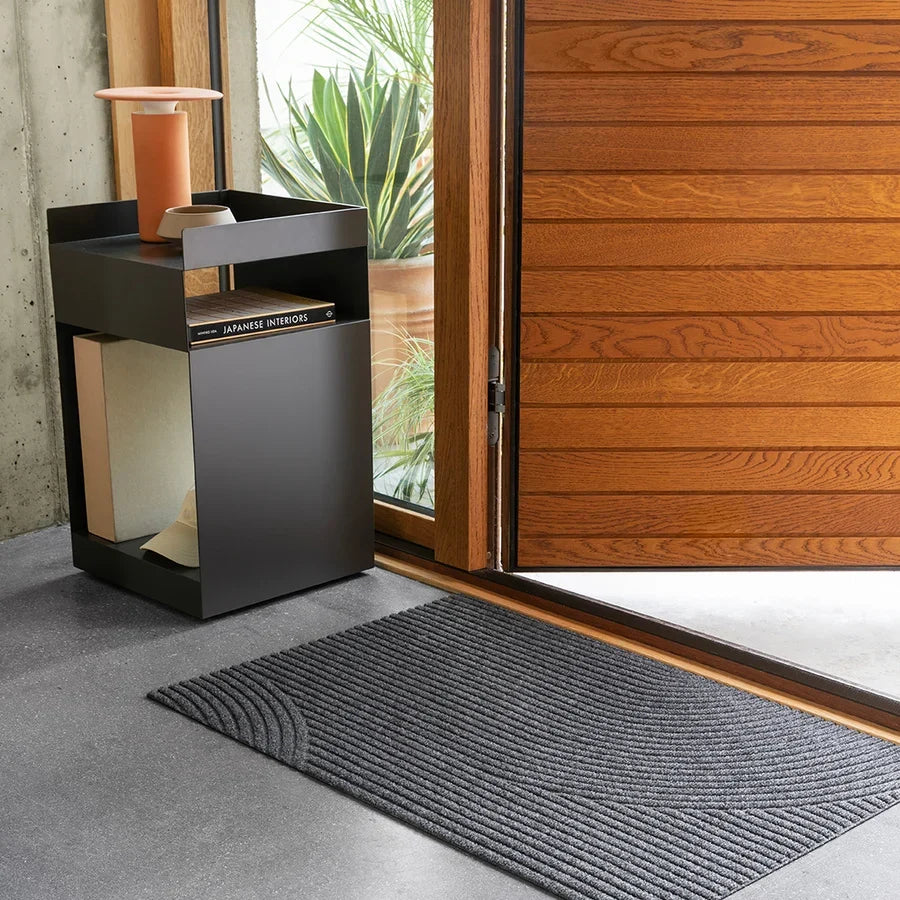
Heymat is a Norwegian design company founded in 2015 by Sonja Djønne and Thoralf Lian, built on a simple frustration: industrial doormats work, but they are ugly. From a base in Northern Norway, Heymat weaves machine-washable doormats and rugs, and 90% of its range is made with 100% recycled PET spun from used plastic bottles. For Comosum, a Heymat doormat is the rare accessory that is sustainable, genuinely useful, and good-looking enough to leave on show.
The Story Behind Heymat
Heymat began where you would expect a doormat brand to be tested hardest: the exposed, fjord-and-mountain landscape of Northern Norway, with all its wet, windy, boot-tracking weather. Founders Sonja Djønne and Thoralf Lian came at the problem from two directions. Thoralf's family had worked with doormats for three generations, so he understood industrial mats and how they perform. Sonja brought a background in design and interior architecture. The industrial mats they used at home did their job — they kept the floors clean — but they were unattractive enough that most people hide them.
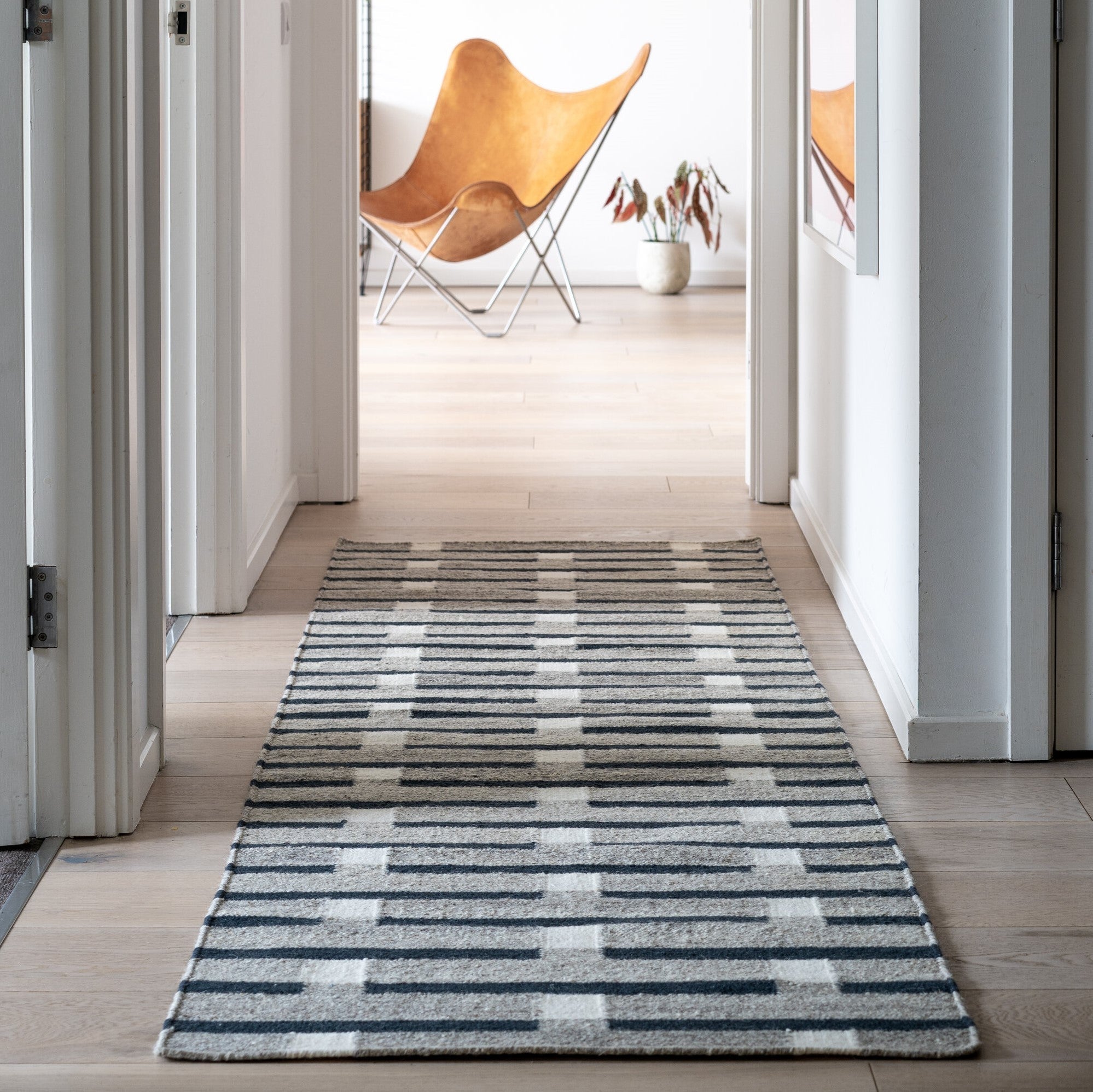
So in 2015 the couple set out to make a doormat you would actually want by the door: high-performance underfoot, but designed with the same care as a rug or a piece of furniture. The idea grew into a full range of patterned mats made in collaboration with a roster of respected Scandinavian designers, including Kristine Five Melvær, Hallgeir Homstvedt, Stine Aas, the studio Vera&Kyte, and Studio Sløyd. Heymat has since reached beyond Norway, working with the Swedish colourist Tekla Evelina Severin and the New York design platform Sight Unseen on limited collections. Each mat carries a name and a story — from the Zen-garden calm of Sand to the ski-trail lines of Løype — which is a long way from the rubber slab in the hallway. That blend of performance and design has drawn coverage from design outlets such as Gessato, and it has carried Heymat beyond the home into contract and commercial spaces through its modular Entry Mat Tiles system for larger entrances.
How Heymat Doormats Are Built Sustainably
Materials
The heart of Heymat's sustainability story is its yarn. By the brand's own account, 90% of its products are made with 100% recycled PET, the fibre spun from post-consumer plastic bottles. This wasn't the starting point but the destination of a deliberate shift: Heymat moved from nylon to a part-recycled PET in 2017, and since the end of 2020 the pile on its mats has been 100% recycled PET. Because the surface is a single, consistent fibre rather than a blend, the mats stay easy to clean and hold their pattern over years of foot traffic.
Manufacturing
Heymat also thinks about the miles a mat travels. Rather than shipping everything from one factory, the brand manufactures close to where products are sold: today around 80% of the mats it sells in the USA are made in the USA, with the remainder produced in Europe, and mats sold in Europe are made in Europe. Producing near the end market cuts freight emissions and means mats arrive in good condition without long transcontinental journeys.
Longevity and Care
The most sustainable doormat is the one you keep. Heymat's indoor mats are machine washable in a domestic machine — commonly at up to 60°C (140°F) — so a muddy season doesn't mean a landfill trip and a replacement. That washability, paired with durable recycled PET and strict in-house quality criteria, is what lets a Heymat mat stay in service for years rather than months. And because the pile is a single PET fibre rather than a bonded blend, it is a cleaner material to recycle when a mat finally reaches the end of a long life.
Why Heymat Belongs at Comosum
We carry a lot of solid-wood tables and repairable lighting, but the entryway is where a home meets the weather, and it deserves the same thinking. Heymat fills a specific gap in our catalogue: it is the textile brand that turns the least glamorous object in the house — the doormat — into something considered, sustainable, and worth looking at. It also happens to be one of the most accessible ways to start buying better. You don't need to replace a sofa to make a greener choice; you can start at the door. It is the sort of buy-it-to-keep-it thinking that industry groups like the Sustainable Furnishings Council put ahead of any single green label.
Heymat lands squarely on our three pillars. On sustainability, it offers a range built overwhelmingly on 100% recycled PET, made close to market. On original design, it runs real collaborations with named Scandinavian and international designers, not anonymous factory patterns. On quality, its mats are engineered to be washed, kept, and used hard. They pair naturally with the rest of our sustainable furniture brands, and if you share your floors with animals, a washable recycled-PET mat is a sensible companion to the picks in our guide to pet-friendly sustainable furniture.
Explore Heymat at Comosum
- Måne All Weather Doormat — an all-weather mat by Studio Sløyd with a calm, timeless face; at around $169 it is the most accessible way into the collection.
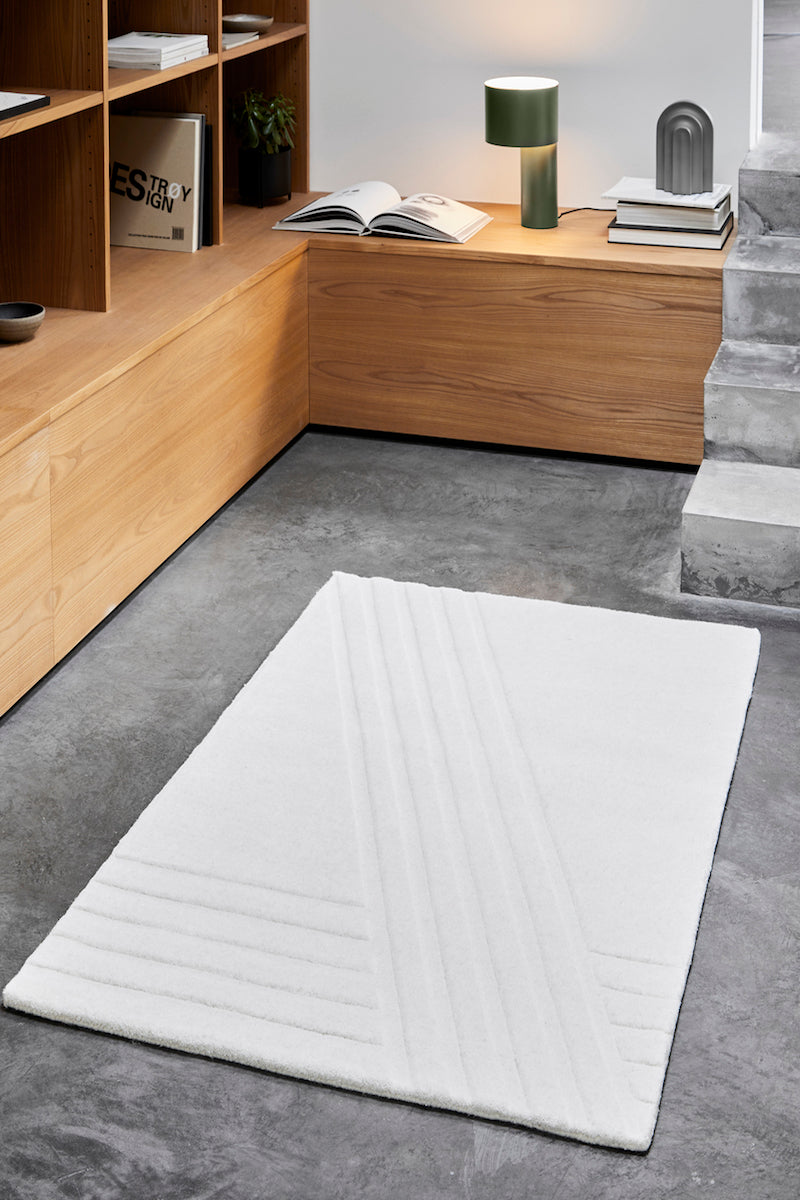
- Sand All Weather Doormat — a bestseller inspired by raked Japanese Zen gardens, with a soft three-dimensional pattern that hides everyday grit.
- Stein All Weather Doormat — a hard-working indoor/outdoor mat that balances a refined look with genuine scraping performance.
- Heymat x Sight Unseen (Emerald) — a limited design created with the New York studio Sight Unseen, inspired by iconic furniture forms.
- Mix Teklan — a 1970s-leaning colour study made with Swedish designer Tekla Evelina Severin.
Browse the full Heymat doormat collection at Comosum, or see it alongside our wider range of sustainable rugs and doormats.
Frequently Asked Questions About Heymat
Where are Heymat doormats made? Heymat is a Norwegian brand, founded and designed in Northern Norway. Production happens close to the customer: roughly 80% of the mats Heymat sells in the USA are manufactured in the USA, and the remainder are made in Europe. Mats sold in Europe are produced in Europe.
Are Heymat doormats sustainable? Yes, that is the point of the brand. By Heymat's own account, 90% of its products are made with 100% recycled PET spun from used plastic bottles, and the company manufactures near its end markets to limit shipping emissions. Because the indoor mats are machine washable, they are designed to be kept and reused rather than thrown out each season.
What are Heymat doormats made of? The pile is 100% recycled PET, a polyester fibre made from post-consumer plastic bottles, on most of the range. All-weather styles combine that recycled surface with a durable backing built to handle rain, snow, and outdoor use.
Are Heymat doormats machine washable? Heymat's indoor mats are machine washable in an ordinary domestic machine, most commonly at up to 60°C (140°F). This is the feature that makes them practical for busy, boot-heavy entryways — you refresh the mat instead of replacing it.
Which Heymat doormat should I choose? For a covered indoor entry, choose an indoor mat you can toss in the wash, such as Sand or Mix Teklan. For an exposed front door facing the elements, pick an all-weather style like Måne, Stein, or Sjø. Measure your doorway first and size up where you can — a slightly larger mat catches more dirt before it reaches your floors.
Heymat proves that even the doormat, the most overlooked object in the house, can be designed well and made responsibly — which is exactly why we carry it.


Leave a comment
This site is protected by hCaptcha and the hCaptcha Privacy Policy and Terms of Service apply.