
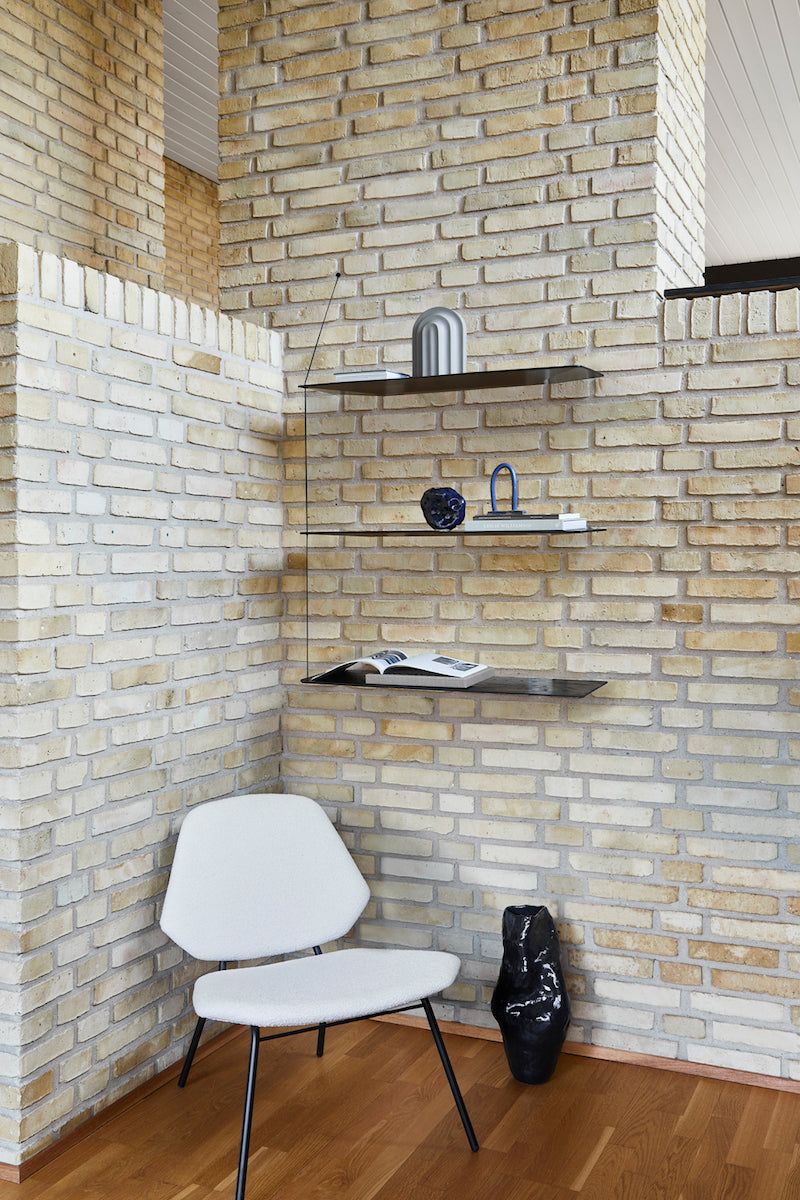
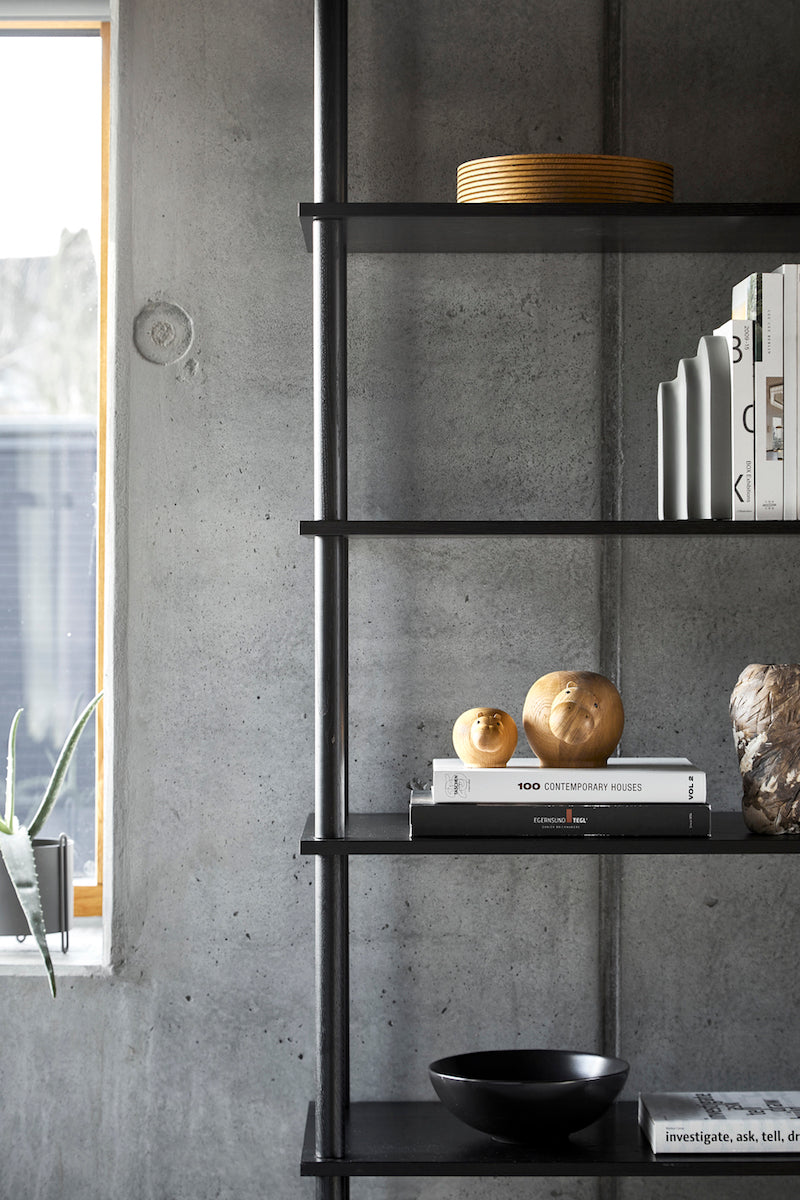
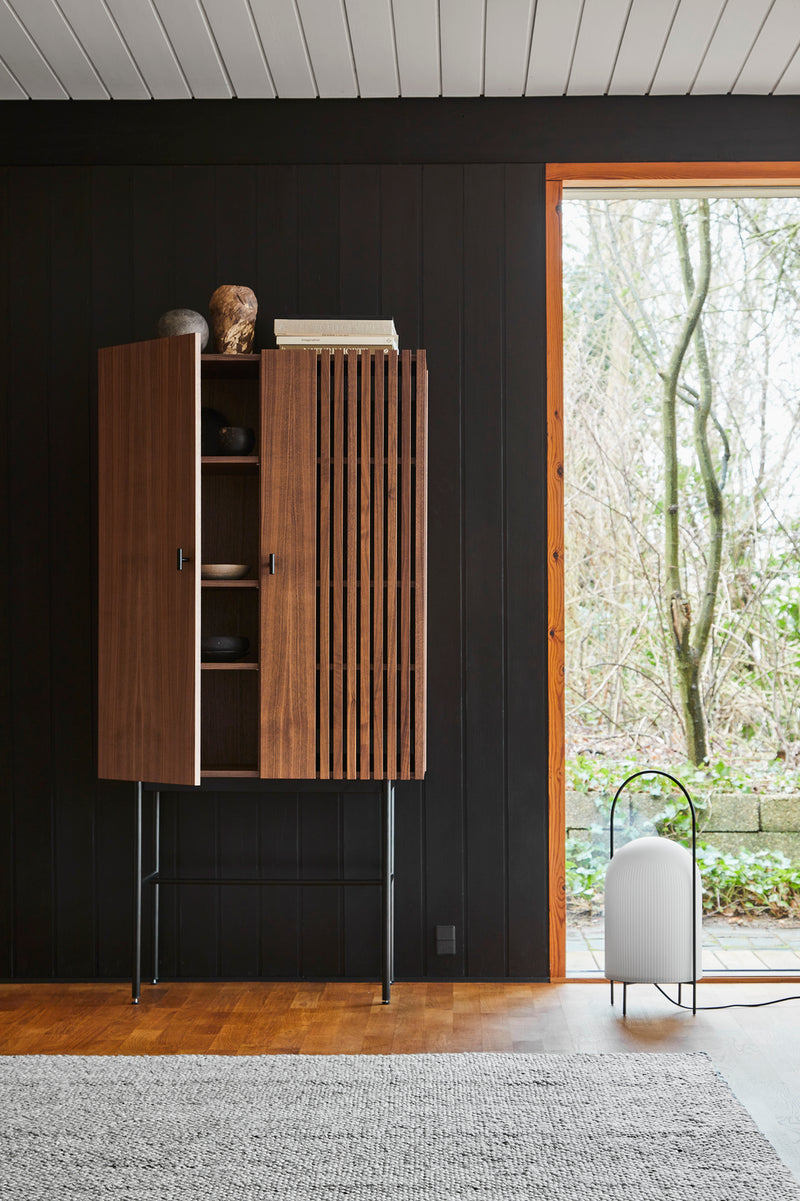
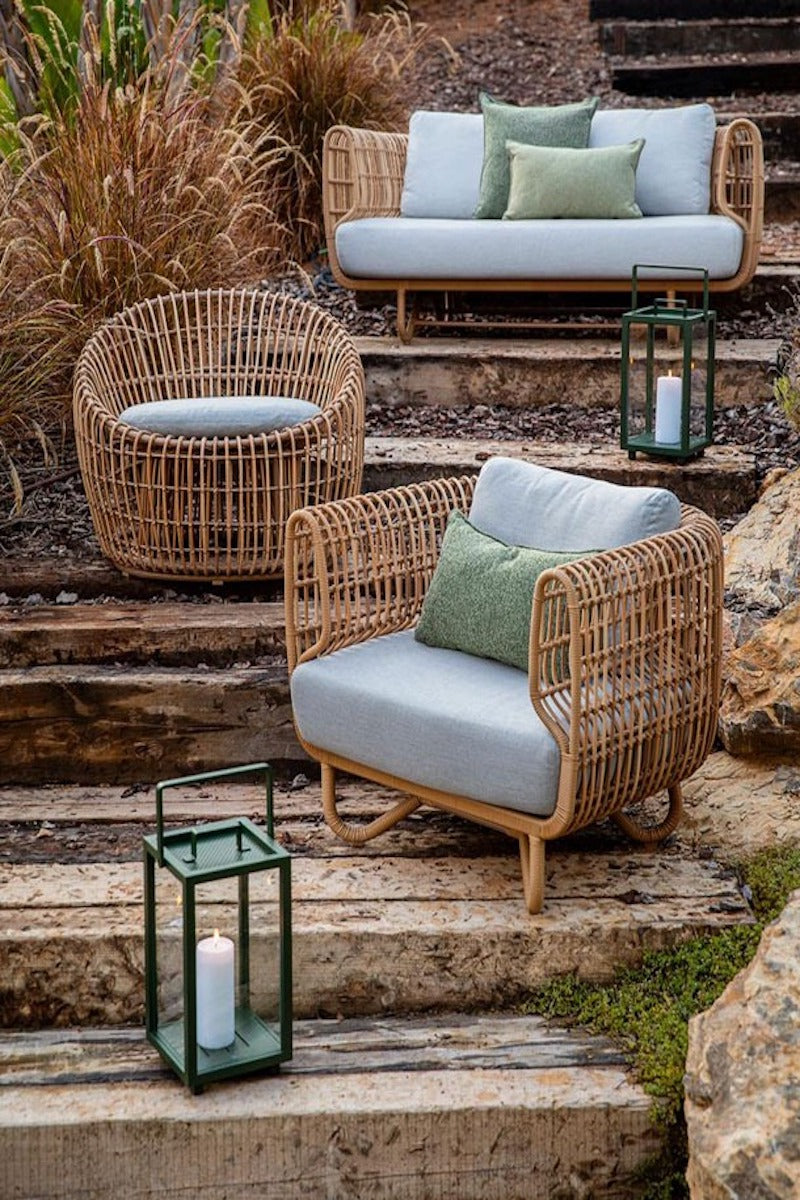
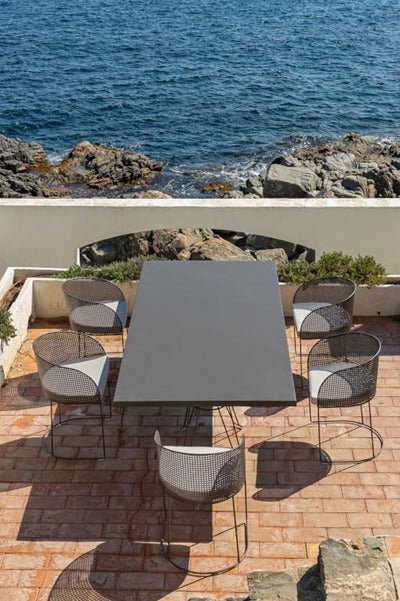
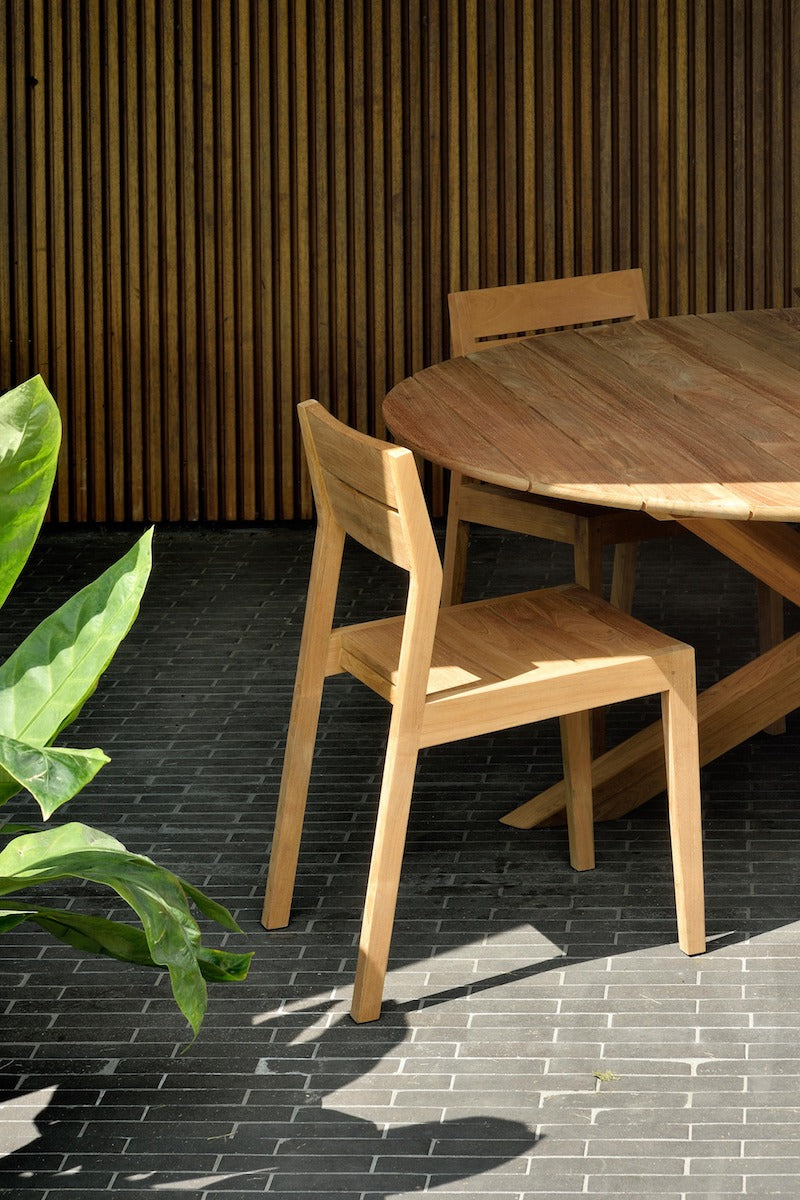
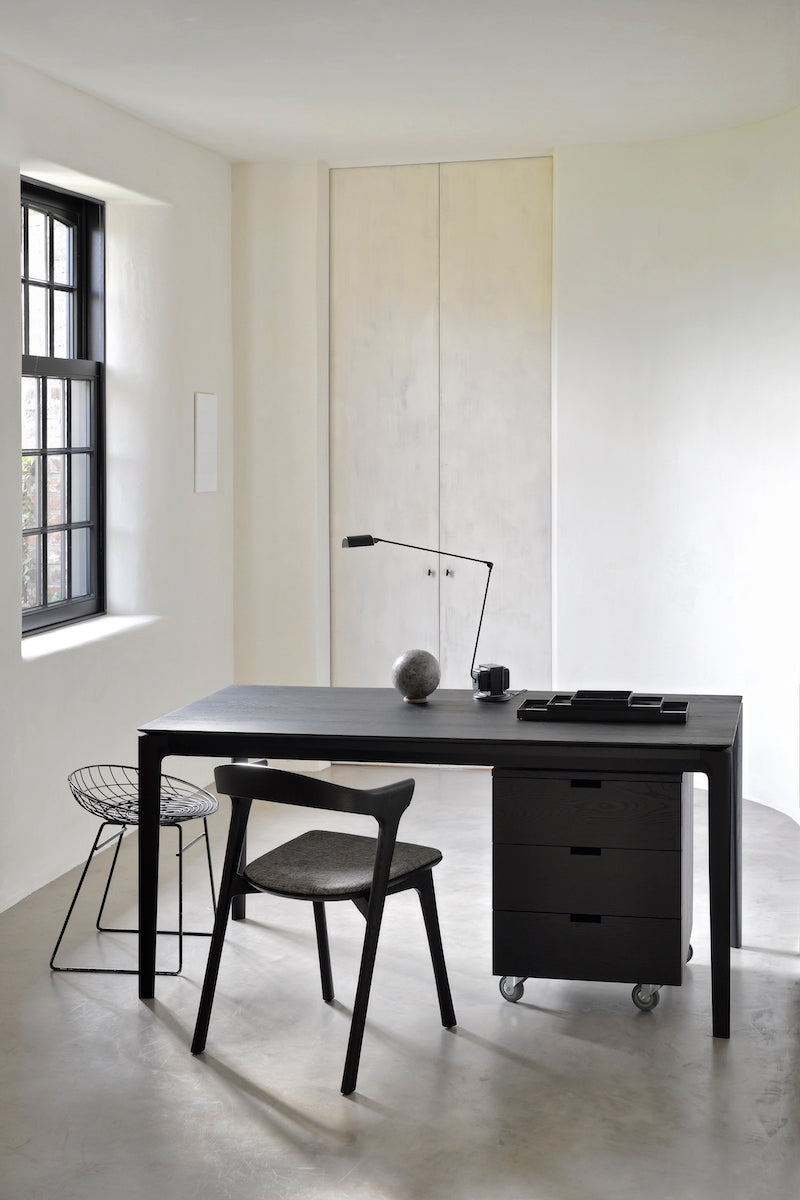
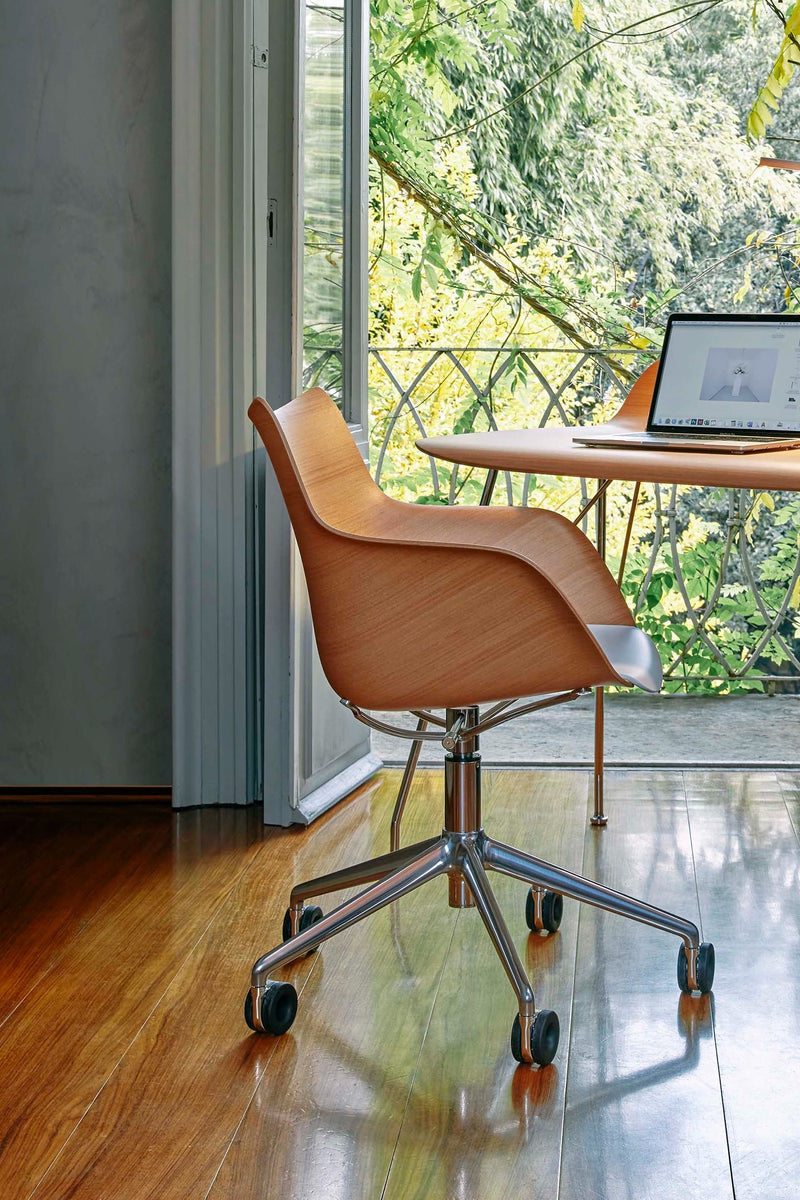
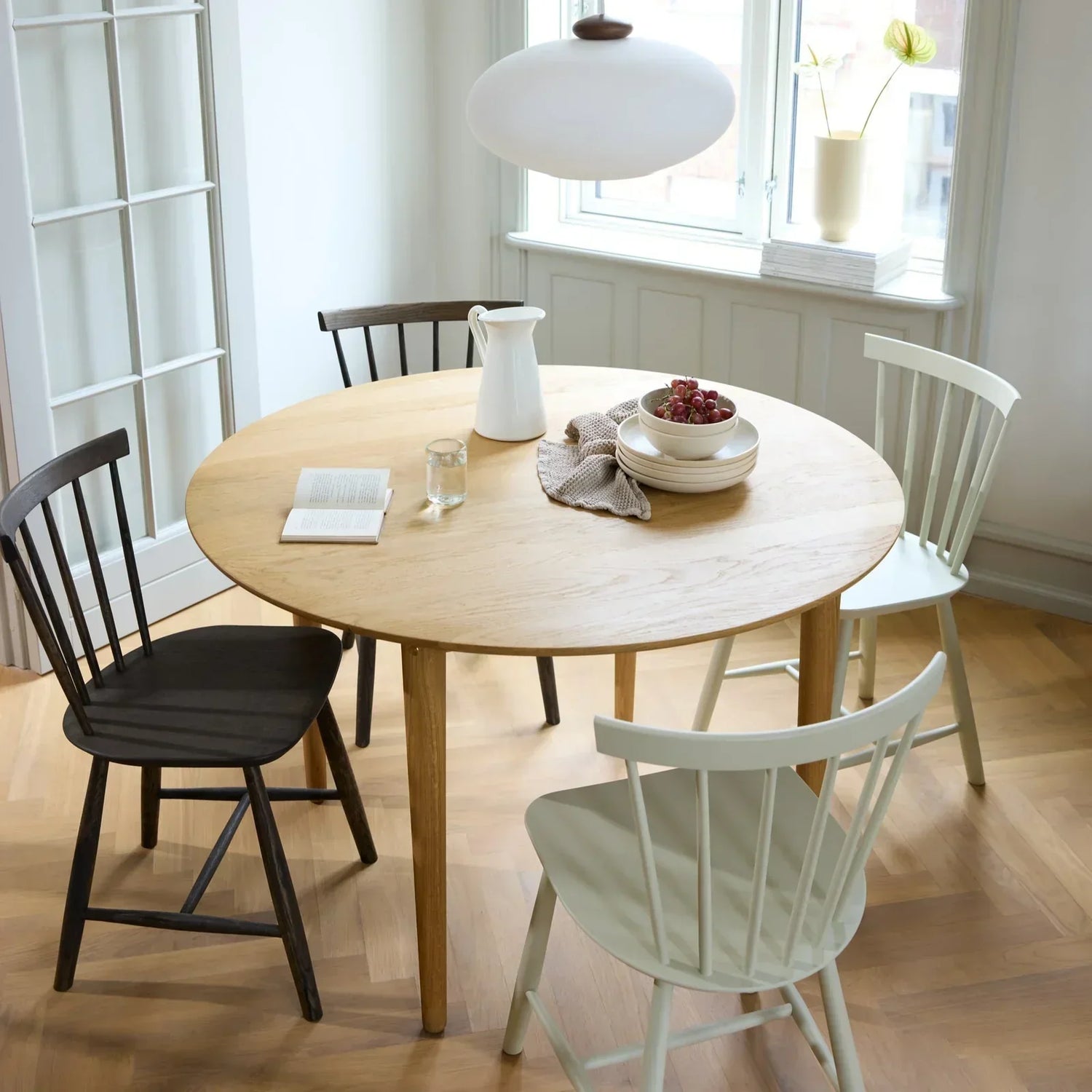
Sustainable mid-century modern furniture is one of the rare categories where the most responsible choice is also the most historically faithful one — an authentic, licensed reissue from a maker that still owns the original tooling. Heller (New York, 1971) molds Bellini and Gehry pieces in recycled plastic. Anglepoise has produced the Original 1227 lamp continuously since 1935, now as a Certified B Corporation with a lifetime guarantee. WOUD and Varier carry the Nordic mid-century lineage forward in FSC-certified wood.
Why Mid-Century Modern Belongs in the Sustainability Conversation
Mid-century modern is usually framed as an aesthetic — clean lines, organic curves, honest materials, the post-war optimism of George Nelson, Charles and Ray Eames, Arne Jacobsen, Hans Wegner, Eero Saarinen. But the movement was also an ethical position about how furniture should be made. The designers of the 1940s, 50s, and 60s drew from Bauhaus discipline and Japanese craft, prioritized form following function, and assumed a chair would be repaired and re-upholstered across generations rather than thrown out after a lease.
That assumption broke down in the 2000s. Unauthorized "mid-century inspired" copies — molded out of low-grade plastics, glued together with formaldehyde-heavy adhesives, shipped flat from anonymous factories — flooded the market. They look like the originals from across a room and survive about two moves. The result: an aesthetic associated with permanence became one of the most landfill-bound categories in furniture.
The brands we carry at Comosum are the counter-argument. Each one either holds the original tooling and licenses for a classic design, or extends the mid-century design language with materials and manufacturing the original designers couldn't have accessed in 1955 — recycled-content plastics, FSC-certified European oak, water-based finishes, and closed-loop take-back programs.
How These Reissues Are Built Sustainably
Materials
Heller manufactures its furniture from recycled and recyclable plastic. The 1998 Bellini Chair by Mario Bellini — the piece that won the Compasso d'Oro and entered MoMA's permanent collection — is produced today in the same single-piece molded form, designed to be ground down and remolded at end-of-life. Frank Gehry's 2004 Left Twist Cube and Gehry Bench follow the same closed-loop logic.
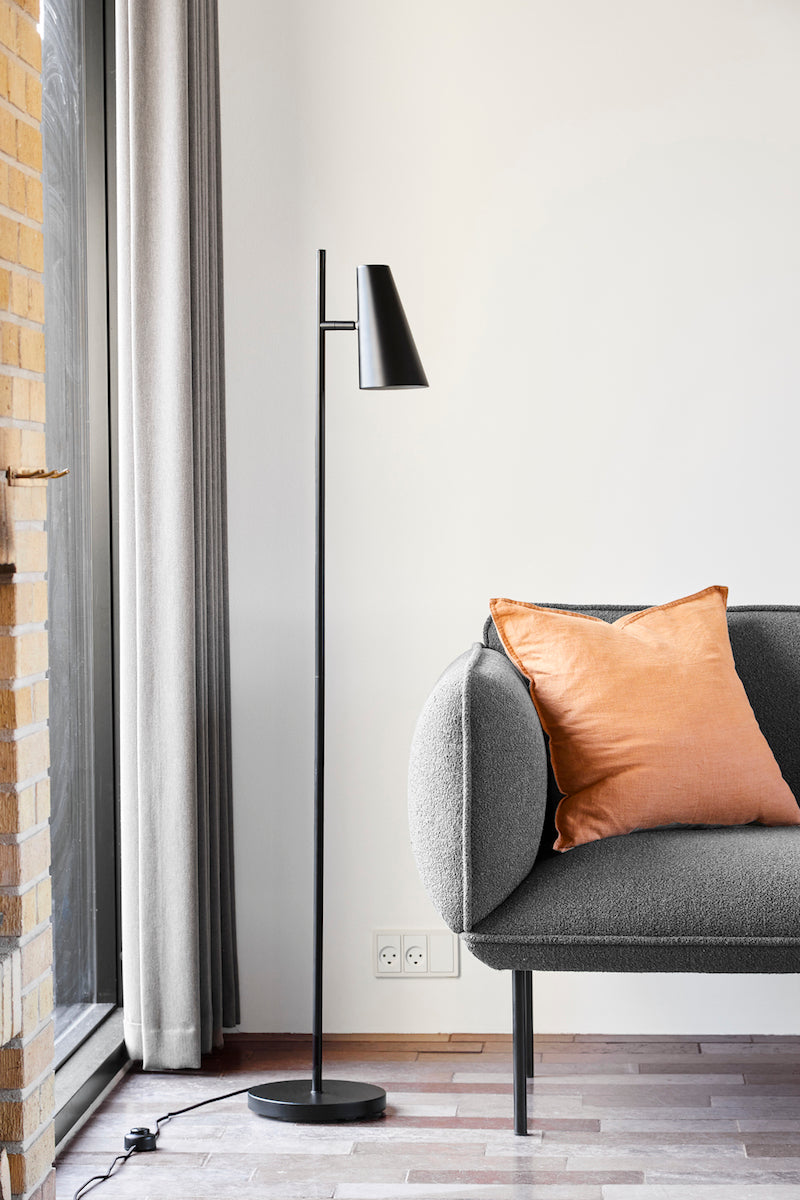
Anglepoise builds the Original 1227 from die-cast aluminum, steel, and pressed-steel shades — all recyclable, all repairable. The lamp's unique constant-spring mechanism, patented in 1932 by automotive engineer George Carwardine, is still serviced from the brand's Redditch workshop in the English Midlands.
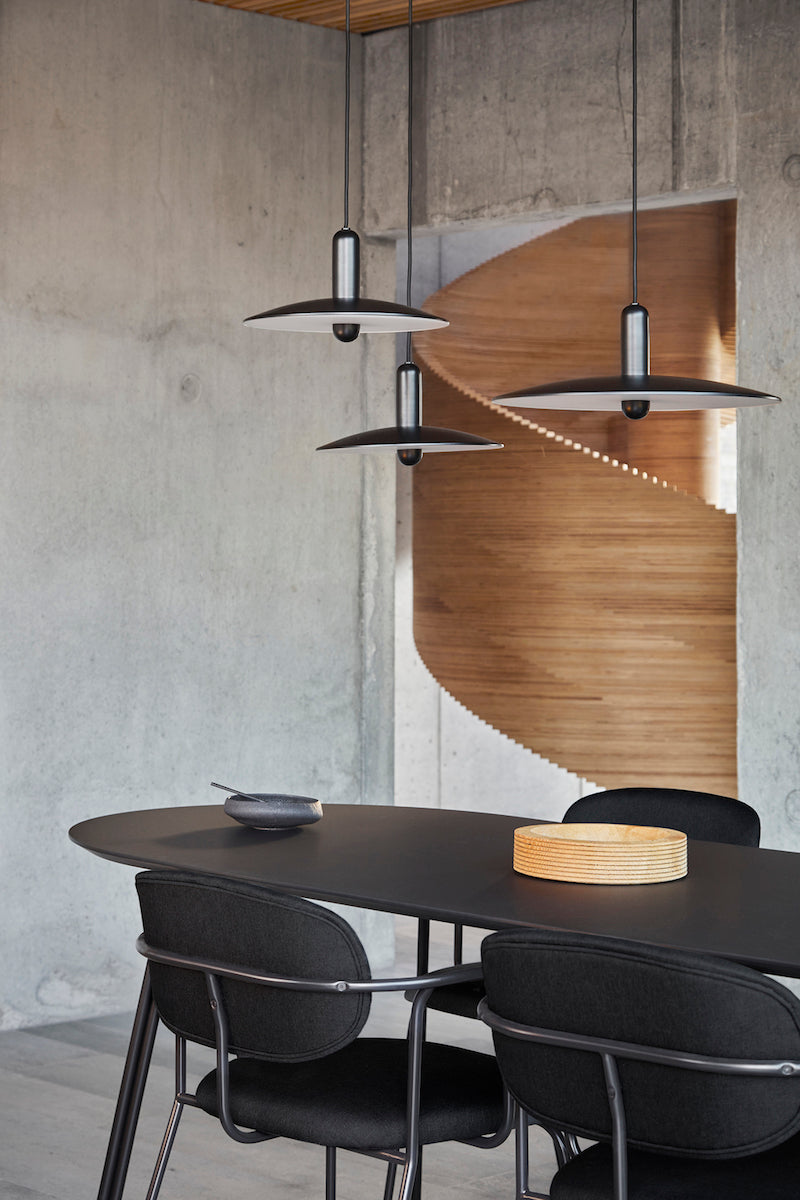
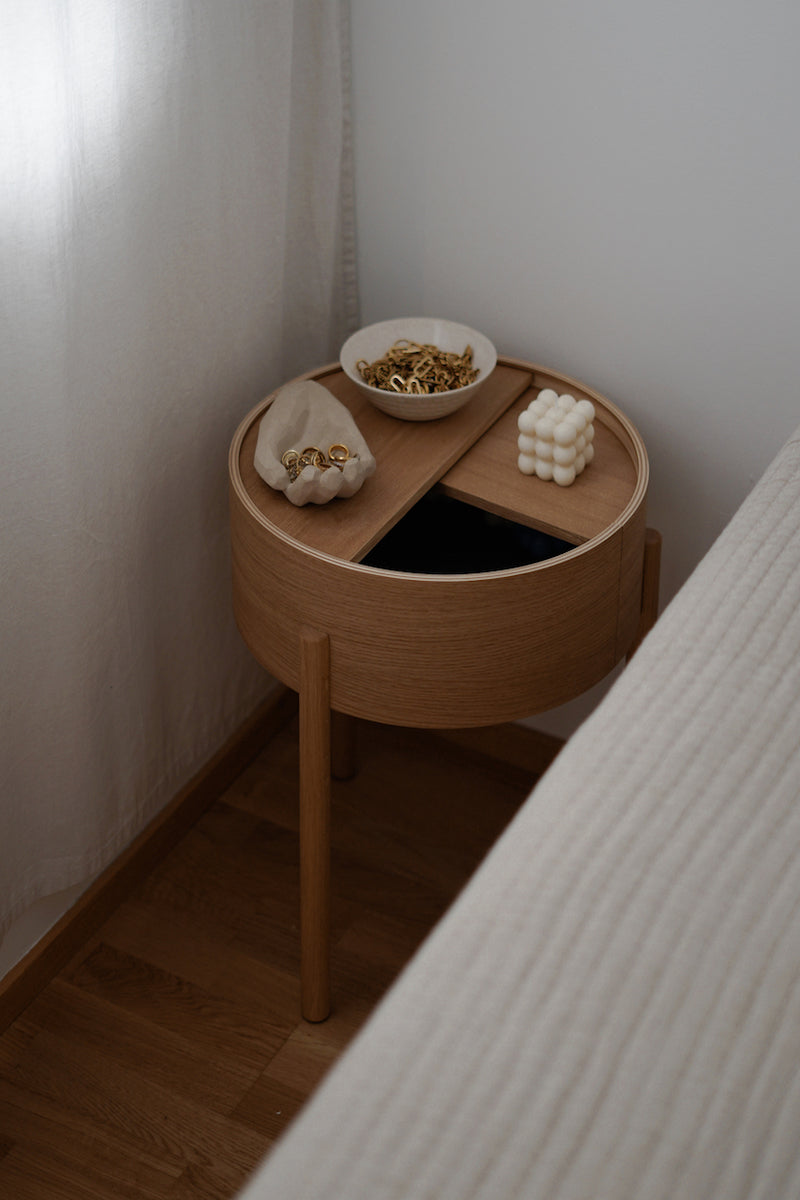
WOUD's Nordic-modern pieces use FSC-certified European oak and ash with water-based finishes, made in small batches with Danish and European workshops. Varier produces its Norwegian ergonomic chairs in birch and beech with low-VOC sealants, continuing a design language Peter Opsvik (1939–2024) refined over four decades.
Manufacturing
Authentic licensed reissues come from a small number of workshops, not a black-box global supply chain. Heller is New York–founded and produced in collaboration with US and European partners. Anglepoise still manufactures in the United Kingdom. WOUD works with small-scale Danish and European craftspeople. Varier is headquartered in Oslo, Norway and produces in Northern Europe.
That geography matters because it puts production inside the EU REACH chemical regulations and CARB Phase 2 formaldehyde limits, which are materially stricter than the US baseline.
Certifications & Recognition
Anglepoise is a Certified B Corporation and offers a lifetime guarantee on every lamp sold since January 2020 — repair coverage explicitly includes general wear and tear, not just manufacturing defects. Heller's pieces sit in the permanent design collections of MoMA, the Centre Pompidou, and the Philadelphia Museum of Art. The next generation of Nordic makers carrying the mid-century lineage forward — including WOUD — has been covered in depth by design press such as Dezeen and Wallpaper. The Bellini Chair carries a Compasso d'Oro — Italy's highest industrial design award.
Why We Carry These Brands
At Comosum we think of mid-century modern not as a style but as a sustainability test case: can the design language that defined the 1950s be carried forward without the carbon cost of fast furniture? The answer is yes — but only if you buy the real thing.
We carry Heller because the brand has been making furniture from recycled and recyclable plastic since 1971; the closed loop is the foundation, not a marketing layer. We carry Anglepoise because a lamp made in 1935 that you can still buy, still service, and still pass down is the cleanest version of "buy it for life" in lighting. We carry WOUD because Mia and Torben Koed — founders, 2014 — chose FSC-certified wood and small Danish workshops over scale from day one. And we carry Varier because Peter Opsvik's ergonomic chairs, starting with the 1979 Variable Balans, are the rare seating that gets healthier the longer you use it.
These four brands sit inside our broader catalog of sustainable furniture brands — vetted for materials, manufacturing, and end-of-life thinking, not just look.
Explore Iconic Reissues at Comosum
A short list of the pieces we'd recommend if you're building a sustainable mid-century home:
- Anglepoise Original 1227 Desk Lamp — The 1935 George Carwardine design, in continuous production for nine decades. Constant-spring articulation, lifetime guarantee, made in England.
- Heller Bellini Chair — Mario Bellini's 1998 Compasso d'Oro winner, single-piece molded from recycled and recyclable plastic. Stackable, weatherproof, indoor or out.
- Heller Gehry Bench — Frank Gehry's 2004 sculptural bench, monolithic in form, made entirely from recycled and recyclable plastic. Available in five colorways.
- Heller Gehry Left Twist Cube — Gehry's multifunctional stool/side table from the same 2004 collection. A genuine museum-quality piece priced for daily use.
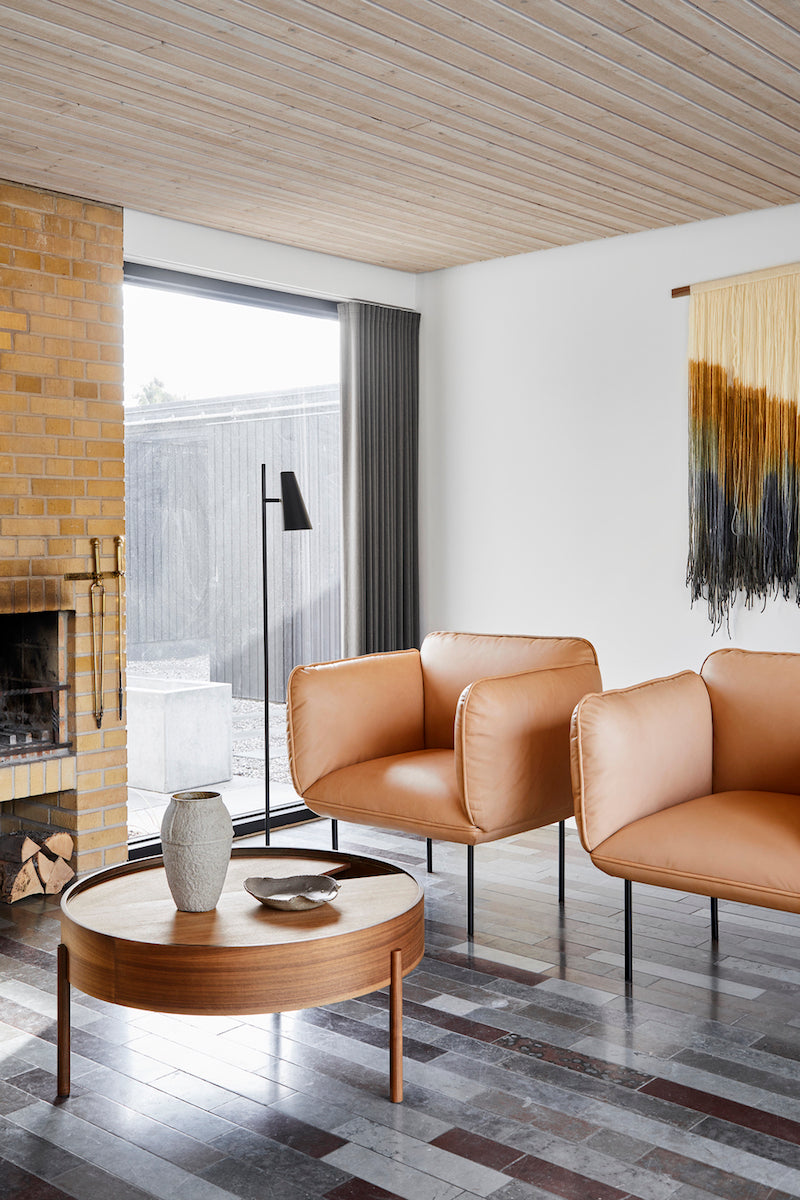
- WOUD Arc Coffee Table — A Nordic-modern coffee table in FSC-certified oak, walnut, or ash. Soft-curve geometry, Danish-workshop production.
Browse the full mid-century-leaning collection at Comosum and our companion guide on Japandi style built on a sustainable foundation for the Nordic-Japanese fusion that shares mid-century's design DNA. For task lighting choices that pair with these pieces, see our sustainable lighting buying guide.
Frequently Asked Questions About Sustainable Mid-Century Modern Furniture
Is buying a mid-century modern reissue more sustainable than buying vintage?
It depends on the piece. An authentic vintage chair in good structural condition, re-upholstered with OEKO-TEX fabric, is generally the lowest-carbon option because no new manufacturing is required. A licensed reissue from a brand like Heller or Anglepoise is the next-best choice — the design is faithful, the materials are recycled or recyclable, and the maker takes responsibility for repair and end-of-life. A knockoff "mid-century inspired" piece from an unlicensed factory is almost always the worst outcome, both ecologically and economically.
What makes the Anglepoise Original 1227 a mid-century design?
The 1227 was first released in 1935, technically pre-war, but its design language — articulated mechanism, honest exposed components, balance of engineering and warmth — set the template for mid-century task lighting. It has been in continuous production since launch, which is unusual: many "mid-century" lamps on the market today are recent reproductions of designs that went out of production decades ago. Anglepoise never stopped making the 1227, and the brand is now a Certified B Corporation with a lifetime guarantee.
Where is Heller furniture made?
Heller is a New York–founded design house, established 1971 by Alan Heller. Its furniture is produced in collaboration with US and European manufacturing partners using recycled and recyclable plastics. The brand's catalog includes work by Massimo and Lella Vignelli, Mario Bellini, Sergio Asti, Frank Gehry, and Studio 65 — all licensed and produced by Heller itself, not third-party copies.
Are Heller's plastic pieces actually sustainable?
Yes — with the caveat that "sustainable plastic" is a phrase that needs definition. Heller's pieces are made from recycled and recyclable polypropylene and polyethylene, designed for closed-loop reprocessing, and the company has been publicly committed to this approach since its 1971 founding. More recently Heller has begun manufacturing with an enzyme additive that accelerates biodegradation if the product ever does end up outside the recycling stream. The pieces are also UV-stable, weatherproof, and built for indoor and outdoor use, which extends useful life.
How do I tell an authentic reissue from a knockoff?
Three checks. First, the brand should explicitly hold the license or own the tooling — for Mario Bellini's 1998 chair that means Heller, for the Original 1227 lamp that means Anglepoise, full stop. Second, the price should reflect skilled European or US manufacturing — if a "Bellini chair" is selling for $80, it is not the Heller version. Third, an authentic reissue carries a meaningful warranty: Anglepoise offers a lifetime guarantee on lamps purchased from 2020 onward; Heller backs its closed-loop take-back commitment. Knockoffs typically offer a 30-day return and nothing else.


Leave a comment
This site is protected by hCaptcha and the hCaptcha Privacy Policy and Terms of Service apply.