
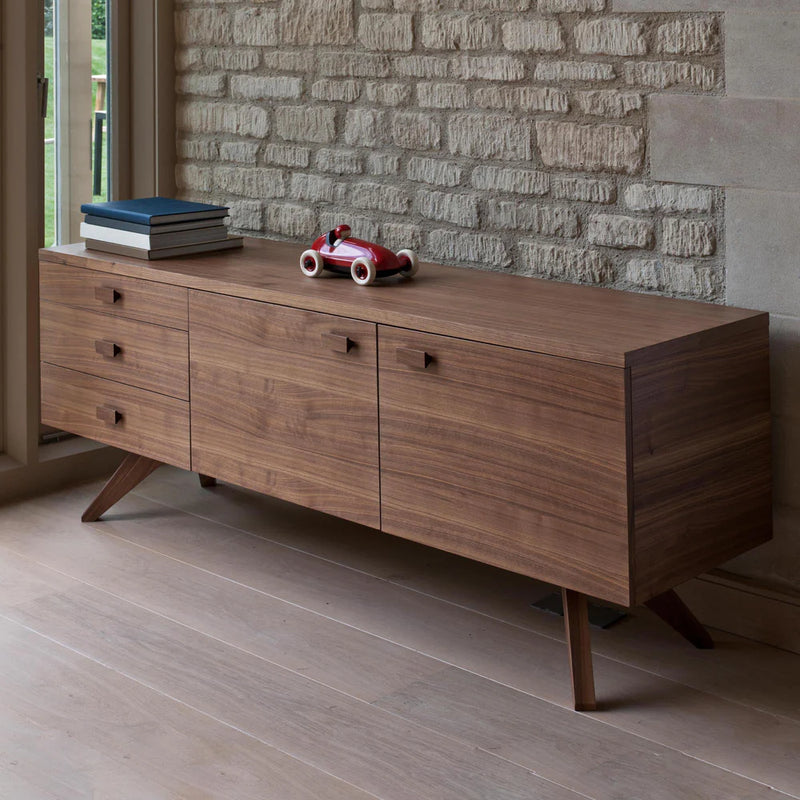
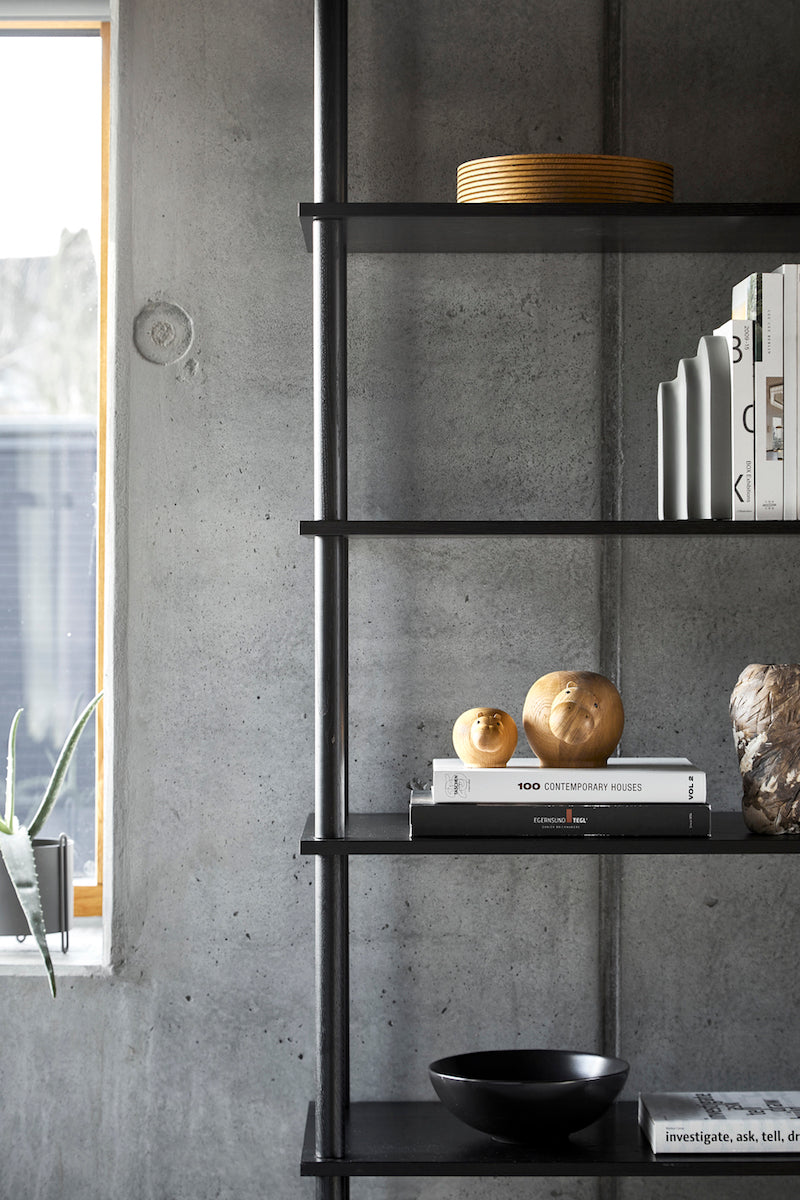

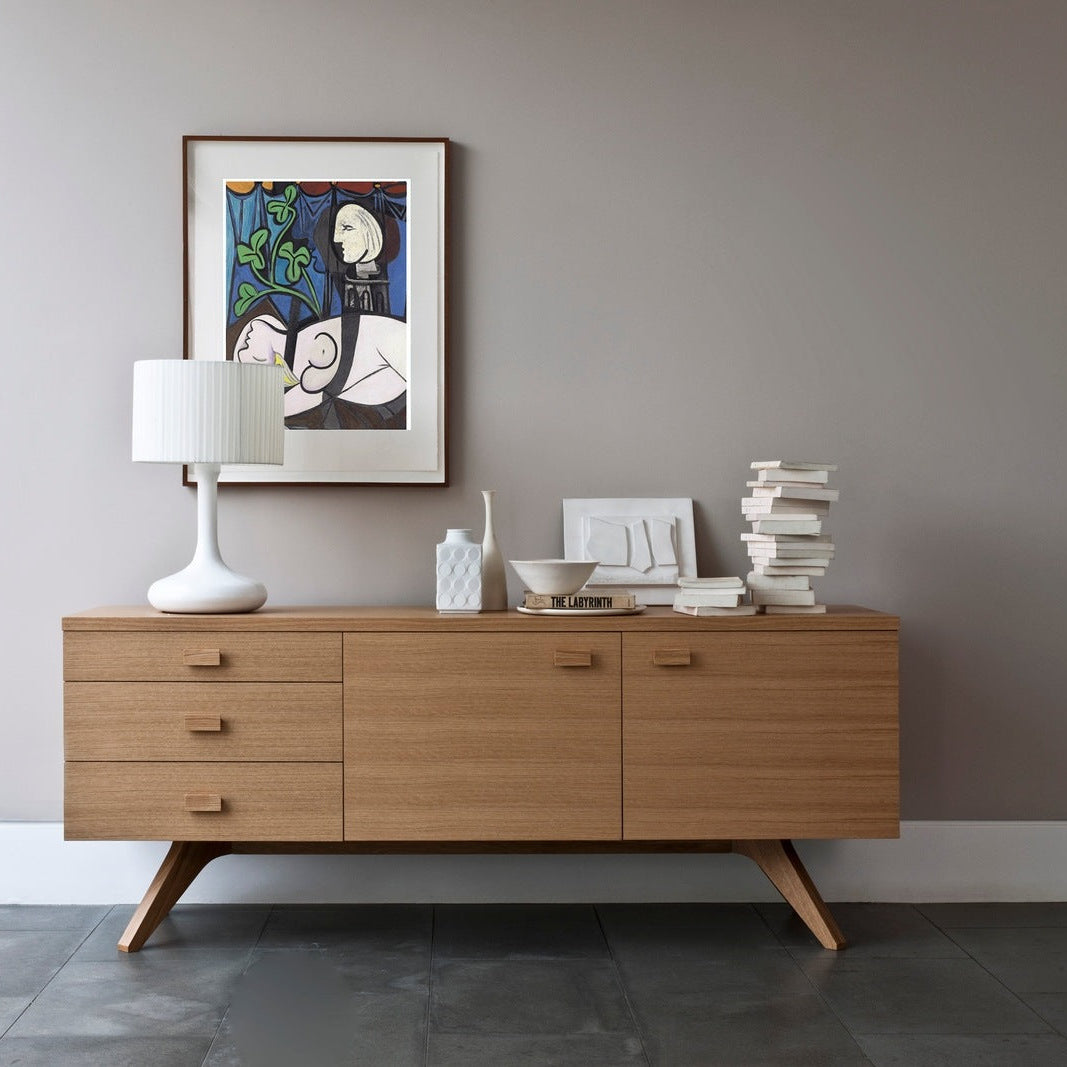
A sustainable sideboard is a long, low storage cabinet — typically 30 to 36 inches tall — built from responsibly sourced solid wood rather than veneered particleboard, designed to hold dishware, media, or linens for decades. The most credible examples use FSC-certified hardwoods like European oak or teak, water-based low-VOC finishes, and repairable hardware. Credenza is the near-identical term, rooted in mid-century Italian and Danish design. At Comosum, we curate sideboards and credenzas built to outlive trends, not landfill them. Browse every piece that passed in our sustainable credenzas and sideboards collection.
What a Sideboard Actually Is (and How It Differs from a Credenza)
The sideboard has been the workhorse of the dining room since the 18th century, when it emerged in British homes as a place to store table linens, serve food, and display silver. The credenza arrived from Renaissance Italy — the name comes from credenza, the act of tasting food to prove it was safe — and was later reinvented by mid-century Danish masters like Hans Wegner and Børge Mogensen, whose low, clean-lined cabinets defined the look we still copy today.
In practice, the two words are used interchangeably. A sideboard tends to sit a little taller and may stand on legs; a credenza is often longer and lower, sometimes on a plinth base. Both do the same job: discreet, generous storage that doubles as a surface. The modern version has expanded into media storage — TV cupboards with cable cutouts and flip-down doors that hide a soundbar — but the brief is unchanged. You want something handsome, hard-wearing, and built to be lived with.
The distinction that matters most isn't the name. It's whether the piece is made from solid, traceable wood that can be repaired and refinished, or from a printed laminate skin over chipboard that delaminates the first time a glass of water sits too long on top.
Shop this guide
In stock, shipping from US warehouses, each from a brand graded on our Sustainability Meter.


What Makes a Sideboard Sustainable
Materials
The single biggest sustainability lever in a sideboard is the carcass. Look for solid hardwood — oak, teak, walnut, or rapidly renewable bamboo — certified by the FSC (Forest Stewardship Council), the independent forest-management standard founded in 1993. FSC certification means the wood is traced from an audited forest through every step of manufacturing. A solid FSC oak sideboard stores carbon for its entire life and can be sanded back and re-oiled instead of replaced. A veneered MDF lookalike cannot.
Manufacturing
Finishes matter as much as the wood. The best makers use water-based lacquers and natural oils with low or zero VOCs (volatile organic compounds), which keeps indoor air cleaner and avoids the off-gassing common in cheaply finished furniture. Soft-close drawer runners and solid-wood joinery are signals of a piece engineered to be serviced rather than discarded — hardware that can be tightened, replaced, and kept working for years.
Certifications and Recognition
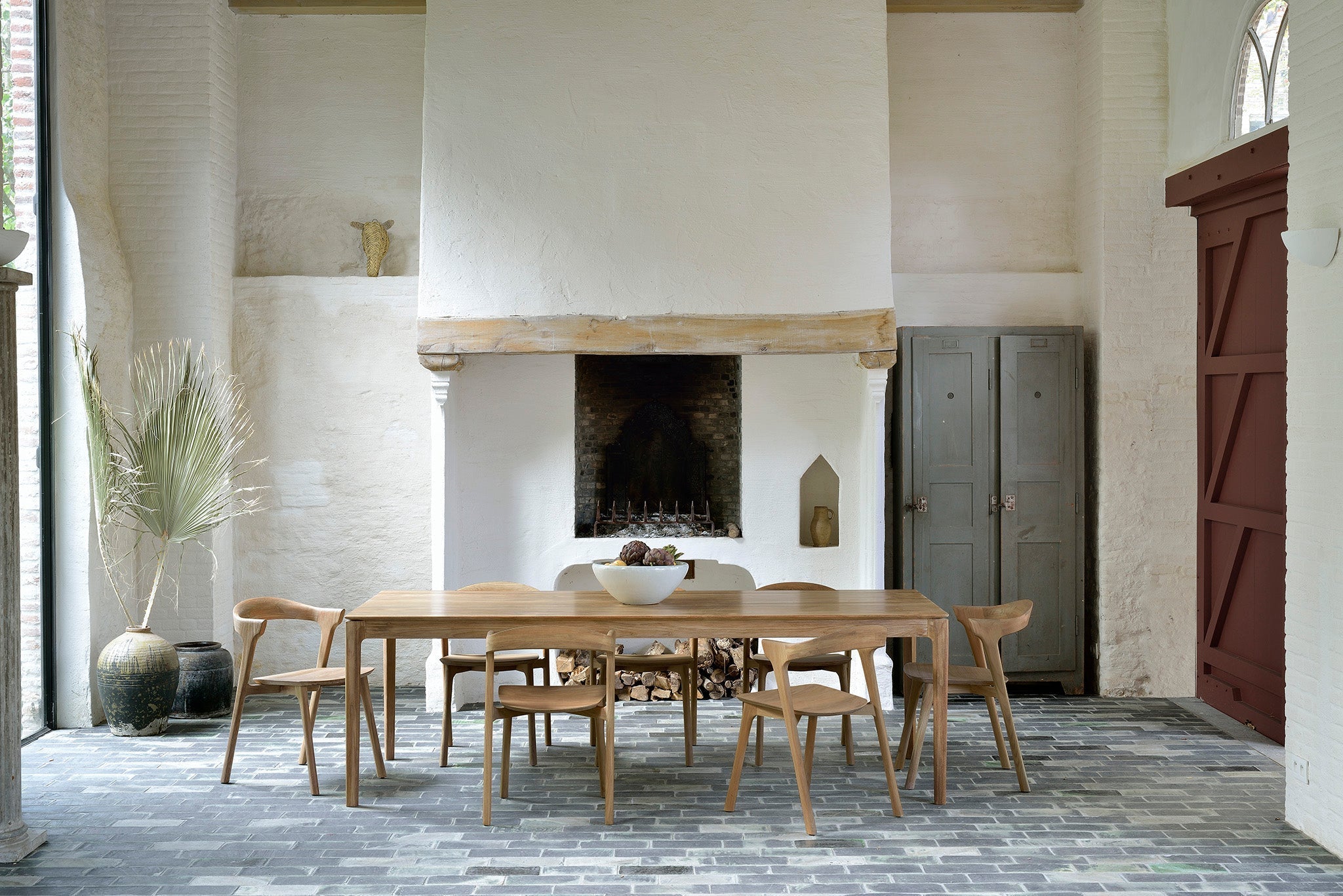
Beyond FSC, look for CARB Phase 2 compliance on any panel components (a formaldehyde-emissions limit) and brand-level commitments such as B Corp status or published reforestation programs. Ethnicraft, for example, works in solid European oak and teak and finishes its solid-wood collections in oil or water-based varnish, depending on the line.
Why Sideboards and Credenzas Belong at Comosum
We pay close attention to storage because it's the category where shortcuts hide best. A sofa announces its quality; a sideboard can disguise particleboard behind a convincing wood-grain print. So we curate the opposite end of the market — pieces from makers who publish where their wood comes from and build cabinets that can be repaired.
Our credenzas collection leans heavily on Ethnicraft's solid oak and teak, while our wider storage range and media consoles extend the same standard to living-room and TV storage. We like a sideboard that works as hard in a small apartment as it does in a formal dining room — which is why modular systems and compact two-door cabinets sit alongside larger statement pieces. You'll find these makers across our directory of sustainable furniture brands, each chosen for material honesty over marketing. For a taller solid-mahogany piece, Tikamoon's Magda Highboard ships fully assembled from New Jersey — see it alongside the brand's solid-wood TV stands in our Tikamoon collection.
What to Shop at Comosum
- Ethnicraft PI Sideboard — solid oak with sculptural detailing, available in three lengths from 47 to 90 inches, so it scales from hallway to dining room.
- Ethnicraft Roller Max Sideboard — defined by oversized rolling-slat doors in oak or teak off-black, a tactile signature that hides clutter behind rhythm.
- Ethnicraft Graphic Sideboard — designed by Alain van Havre in varnished teak, a study in depth and shadow that reads as architecture, not just storage.
- Ethnicraft Nordic Sideboard — a pared-back solid oak cabinet and our most accessible entry point at this scale, also offered in a compact 31.5-inch width for tight spaces.
- WOUD Bricks Modular Storage — minimalist oak cubes from Danish brand WOUD that stack and reconfigure into a credenza, bookshelf, or media unit as your space changes.
Browse the full credenzas and sideboards collection at Comosum →
Frequently Asked Questions About Sustainable Sideboards
What is the difference between a sideboard and a credenza?
Functionally, almost nothing — both are long, low storage cabinets for dining and living spaces. Historically a sideboard descends from 18th-century British dining furniture and often has legs, while a credenza traces to Renaissance Italy and Danish mid-century design and tends to sit lower, sometimes on a plinth. Today the terms are used interchangeably.
What materials make a sideboard sustainable?
Solid, FSC-certified hardwood such as European oak, teak, or walnut is the gold standard, alongside rapidly renewable bamboo. Pair that with water-based, low-VOC finishes and solid-wood joinery, and you have a piece that can be repaired and refinished for decades rather than replaced.
Are solid wood sideboards better than veneered ones?
For longevity, yes. A solid wood sideboard can be sanded and re-oiled to erase scratches and water marks, while a veneer over MDF or particleboard cannot be refinished and tends to chip or delaminate over time. Solid wood also stores carbon for the life of the piece.
How do I care for a solid oak sideboard?
Wipe spills promptly, keep it out of direct sunlight to prevent uneven fading, and re-oil the surface every one to three years depending on use. Aim to keep indoor humidity between 35 and 55 percent to stop the wood from splitting. Our guide to caring for solid oak furniture covers the full routine.
Can a sideboard work as a media console?
Yes — many modern sideboards are designed for it, with cable-management cutouts and flip-down doors that ventilate and hide AV equipment. Look for adjustable shelving and a depth of at least 16 to 18 inches to fit a soundbar and components comfortably.
Furnishing a whole room? See our sustainable living room guide and our sustainable bedroom guide for storage that ties the space together. To understand the certification behind every solid-wood piece we carry, read about FSC certification and the design standards covered by publications like Dezeen.


Leave a comment
This site is protected by hCaptcha and the hCaptcha Privacy Policy and Terms of Service apply.