
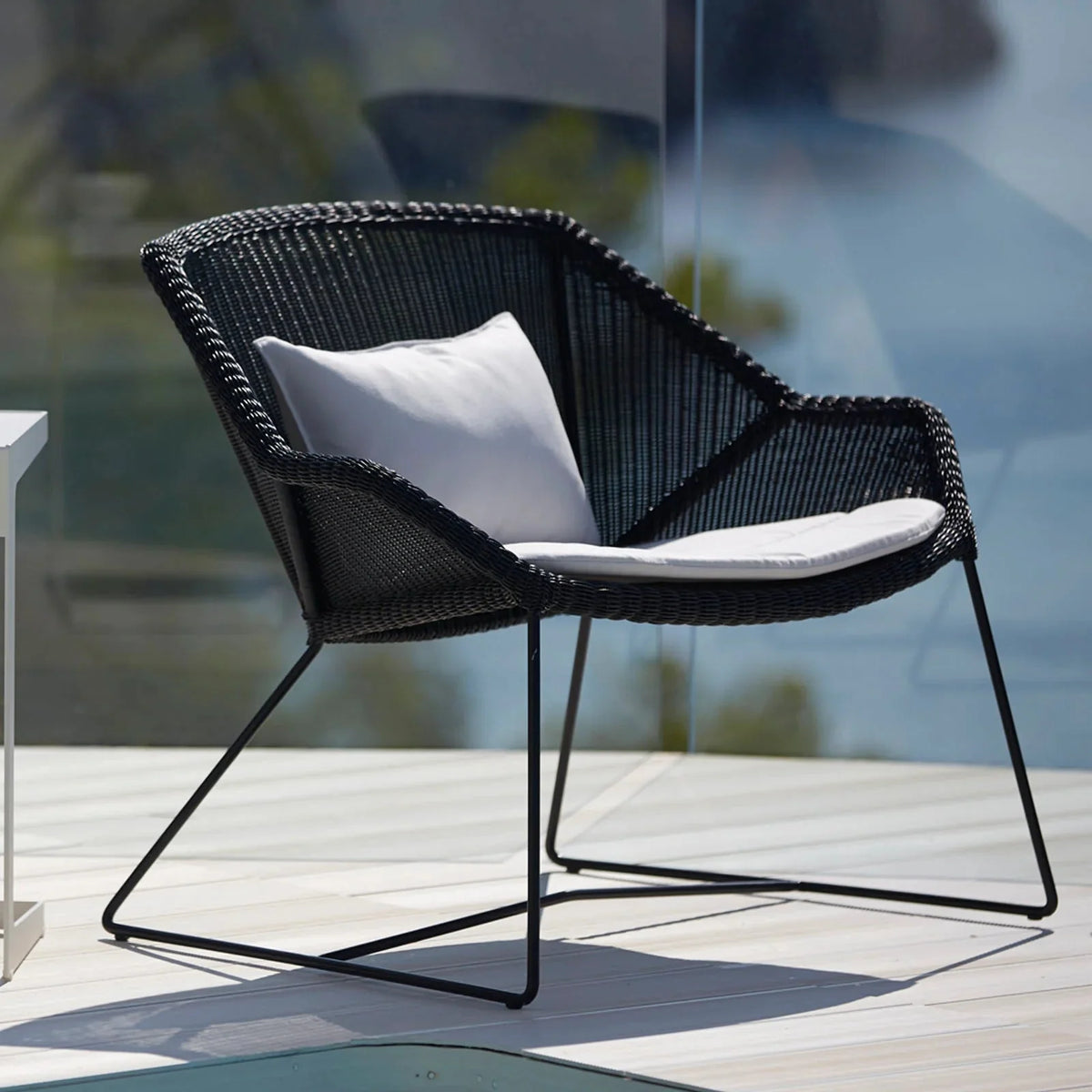
Natural rattan and all-weather woven furniture look almost identical and need opposite care. Natural rattan is the stem of a climbing palm — it absorbs moisture, belongs indoors, and is happiest between 40% and 60% relative humidity. All-weather weave is a polyethylene fibre designed to be hosed down outside. Treating one like the other is the fastest way to ruin it. At Comosum we stock woven pieces from Cane-line and Resol, and we tell you which is which.
Rattan, Cane, Wicker, All-Weather Weave: Four Words, Three Different Things
The vocabulary is genuinely confusing, and retailers rarely help. Here is the honest version.
Rattan is a material — the solid stem of a climbing palm from the genus Calamus, grown mostly in Southeast Asia. Steam it and it bends; let it cool and it holds the curve. That is why bentwood-looking rattan chairs exist at all.
Cane is the glossy outer skin peeled from that same stem, cut into strips and woven into the open hexagonal webbing you see on a bistro chair back. Cane and rattan come from the same plant; cane is just the outside.
Wicker is not a material at all. It is a weaving technique. You can wicker rattan, willow, reed, paper cord, or plastic. When a shop tells you a chair is "wicker," they have told you nothing about what it is made of.
All-weather weave is a synthetic fibre — usually high-density polyethylene, sometimes polypropylene — extruded to imitate the look of natural cane. Cane-line developed its own version, Cane-line Weave, specifically as a UV-resistant fibre that tolerates rain and temperature swings. It is a plastic, and that is precisely the point: it is a plastic that stays outside for a decade instead of a season. We covered the wider family of these materials in our guide to recycled plastics in furniture.
So: two of these words describe a plant, one describes a technique, and one describes a polymer. The care instructions diverge from there.
How to Care for Each Material
Natural Rattan and Cane: Indoors, Dusted, and Humidity-Stable
Plant fibre is hygroscopic — it takes on and gives off moisture with the air around it, swelling and shrinking as it goes. The Canadian Conservation Institute's guidance on the care of basketry recommends a relative humidity of roughly 40% to 60% for woven plant materials, and notes that high humidity swells the fibres and encourages mould while dry air makes them brittle. That range is a museum standard, but it is also just a comfortable house.
The practical regimen is short:
- Dust weekly. A vacuum brush attachment pulls grit out of the weave before it works into the fibre and abrades it from the inside.
- Clean damp, never wet. A barely moist cloth, then dry immediately. Soaking a natural weave swells the strands, and when they shrink back they do not always return to the same tension.
- Keep it out of direct sun. Ultraviolet light bleaches plant fibre and dries it brittle — the same mechanism that fades a book spine on a windowsill.
- Skip bleach, ammonia, and all-purpose sprays. They strip the finish and discolour the fibre unevenly, which is much harder to fix than the stain you were treating.
- Do not leave it outside. Not on a covered porch in a humid summer, not under a patio umbrella. A single wet season is usually enough to start mould in the joints.
If a natural cane seat begins to sag, a light misting of the underside with water and then a slow dry will often re-tension it, because the fibre shrinks slightly as it dries. This is the one case where moisture helps, and it is a repair, not a routine.
All-Weather Weave: Hose It, Brush It, Leave It
Polyethylene weave is the opposite animal. It does not absorb water, does not feed mould, and does not care about relative humidity. What it does accumulate is dirt — pollen, fallen leaves, bird droppings — and Cane-line's own maintenance instructions make the point that the problem is not any single deposit but the compounding of them. Organic debris left in a weave for two seasons becomes a stain; rinsed off in week one it is nothing.
- Rinse two or three times a season with a garden hose. Normal pressure. Never a pressure washer — high-pressure jets can force water into the frame and fray the fibre ends where they are tucked.
- Use a soft brush, mild soap, and warm water for anything the hose leaves behind. Work along the direction of the weave rather than across it.
- Do not use solvents, acetone, or abrasive pads. They dull the surface of the fibre permanently.
- Let it dry in the open air before putting cushions back on. The fibre dries in minutes; the frame cavity takes longer.
- Cushions come in. The weave can overwinter outside in most climates; the foam and fabric should not. Our guide to winterizing outdoor furniture covers what comes in and what stays out.
The Frame Underneath Is a Separate Material
Almost no woven chair is only weave. There is a frame, and it has its own requirements. Most all-weather pieces sit on powder-coated aluminium, which wants a mild wash and prompt attention to any chip that exposes bare metal — the detail is in our guide to caring for powder-coated outdoor furniture. Some Cane-line pieces pair weave with FSC-certified teak, which greys to a silver patina unless you actively oil it; we wrote about when to let teak patina and when not to.
Two materials, two regimens, one chair. Most weave failures we hear about are actually frame failures that started at a chip.
Why We Are Strict About This Distinction
We carry woven furniture because a good weave is one of the few outdoor seating surfaces that is comfortable without a cushion — it flexes, it breathes, and it does not get hot the way solid plastic does. But the category has a real greenwashing problem. "Rattan-look," "PE rattan," and "synthetic rattan" are all marketing terms for polyethylene, and none of them tell you what the fibre density is or whether the frame is worth keeping.
So we do two things. We name the actual material on every product page rather than the look it imitates. And we favour brands that will still sell you a replacement part in year eight — Cane-line publishes spare-part references for its weave collections, which is the practical difference between a repairable chair and a disposable one. That is the same test we apply across our list of sustainable furniture brands.
Honest trade-off: all-weather weave is a petroleum-derived plastic. It is not compostable, and at end of life it is harder to recycle than a steel frame. What it is, is durable — and for outdoor furniture, the sustainability question is usually "how many of these will you buy in twenty years" rather than "what is it made of."
Woven Pieces Worth the Care
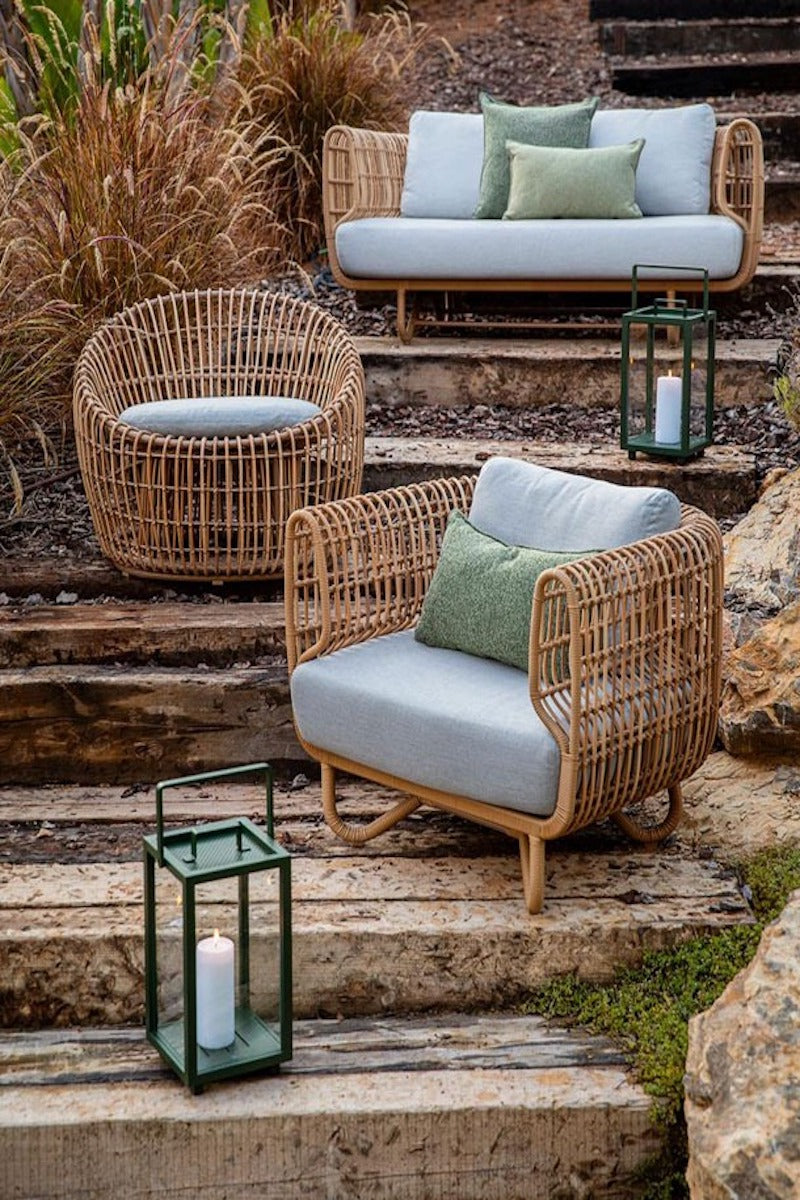
- Breeze Lounge Chair — Cane-line Weave over a powder-coated aluminium frame, and the easiest introduction to how a good synthetic weave actually feels.
- Breeze 2-Seater Sofa — the same weave scaled up, designed to stay outside year-round with the cushions brought in.
- Coast Lounge Chair with Swivel — a deeper, softer weave profile on a swivel base, for terraces where the view is the point.
- Flip Folding Chair — not woven at all, but the honest alternative if you want solid FSC-certified teak and no fibre to maintain.
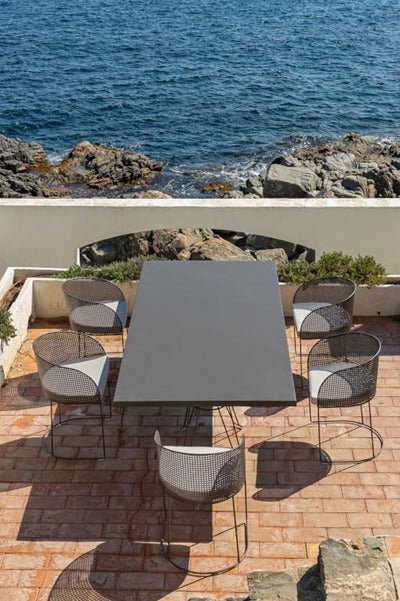
Browse the full outdoor lounge collection at Comosum, or see every lounge chair we carry, indoor and out. For dining, our woven dining chairs are all paper cord, from FDB Møbler's J80 and J81 to Mater's Nestor.
Frequently Asked Questions About Rattan and Woven Furniture Care
Can natural rattan furniture go outside?
No. Natural rattan is a plant fibre that absorbs moisture, swells, and grows mould in damp conditions, and ultraviolet light makes it brittle. Keep it indoors in a space held roughly between 40% and 60% relative humidity, which is the range the Canadian Conservation Institute recommends for woven plant materials.
What is the difference between rattan and all-weather weave?
Rattan is the stem of a climbing palm; all-weather weave is an extruded polyethylene fibre made to imitate it. Rattan is indoor-only and cleaned damp; polyethylene weave is UV-stable, can be rinsed with a garden hose, and is built to stay outdoors through rain and temperature swings.
How do I clean Cane-line Weave furniture?
Rinse it with a garden hose two or three times a season and use a soft brush with mild soap and warm water for anything that remains. Cane-line's maintenance instructions emphasise regular cleaning specifically because leaves, pollen and bird droppings become difficult to remove once they have sat in the weave.
Can I pressure wash woven outdoor furniture?
No. High-pressure water can fray the tucked fibre ends, drive moisture into the frame cavity, and chip the powder coat on an aluminium frame. A normal garden hose and a soft brush remove the same dirt without any of that risk.
How long does all-weather weave last outdoors?
A quality polyethylene weave on a powder-coated aluminium frame is designed for many years of year-round outdoor use, provided the cushions come indoors and the frame's finish stays intact. Chips in the powder coat, not the fibre, are the usual first point of failure.


Leave a comment
This site is protected by hCaptcha and the hCaptcha Privacy Policy and Terms of Service apply.