


A sustainable sun lounger is an outdoor recliner built from materials that survive a decade of weather and can be repaired or recycled at the end of it — FSC-certified teak, recyclable polypropylene, or a welded Textilene sling rather than glued foam over thin steel. Comosum's Outdoor Lounge collection runs to 116 pieces from Ethnicraft, Cane-line, Resol and FDB Møbler, chosen because the frame outlives the trend.
Why the Sun Lounger Is the Hardest Outdoor Piece to Buy Well
A dining chair gets used for an hour at a time. A sun lounger sits outside for months, holds a reclining adult at an angle that stresses every joint in the frame, and gets rained on. It is the piece most likely to fail, and — because it is often bought on end-of-season discount — the piece most likely to be replaced rather than repaired.
That combination is why loungers show up so reliably in bulk-waste collections each autumn. The failure points are predictable: powder coat chipping off untreated steel, welds cracking at the recline hinge, stitched sling seams pulling apart, and foam cushions that hold water and then mildew. None of these are mysterious engineering problems. They are cost decisions, and they are visible in the spec sheet before you buy.
Late summer is the honest moment to shop. Prices soften, the season's actual performance is known, and you are buying with a clear memory of what annoyed you — the lounger too heavy to move into shade, the cushion that stayed damp for two days, the frame that needed two people to fold. A sustainable sun lounger is one that answers those complaints structurally rather than with a longer warranty document.
What Makes a Sun Lounger Sustainable
Materials
Three frame materials dominate the durable end of the market, and each has a different sustainability argument.
Teak is the traditional answer. Its natural oil content resists water, rot and insects without chemical treatment, which is why it can be left outdoors untreated and simply allowed to silver. The question is where it comes from. Look for FSC certification from the Forest Stewardship Council, or Indonesia's SVLK timber-legality system — Cane-line, for example, specifies Grade A teak harvested under SVLK certification for its outdoor seating.
Recyclable polymer is the newer argument. Resol builds the Marina lounger's structure from polypropylene reinforced with fiberglass — a single-polymer approach that keeps the frame light (23.5 lb) and recyclable at end of life. This is the same material logic we covered in our guide to recycled plastic furniture.
Powder-coated aluminium sits between the two: light, rust-proof, infinitely recyclable, and dependent entirely on coating quality for its lifespan.
Construction
The sling is where most loungers quietly fail. A stitched sling concentrates stress along a thread line; a thermally welded one fuses the fabric itself. Resol's Marina uses an 850 g/m² Textilene sling that is thermally welded rather than stitched, with a double thread through warp and weft — it breathes, drains, and does not sag. The lounger is tested to UNE-EN 581-1, the European standard for outdoor furniture strength and durability.
If you prefer a cushion to a sling, the equivalent question is drainage. Quick-dry foam with an open cell structure sheds water in hours rather than days, which is what separates a cushion that lasts five seasons from one that grows mould in its first wet fortnight.
The other construction detail worth checking is whether the piece can be taken apart. A lounger with bolted joints and replaceable slats can be repaired; one with a sealed welded frame cannot.
Certifications
For outdoor furniture, the certifications that actually mean something are narrower than the marketing suggests. FSC covers the timber. ISO 14001 covers the manufacturer's environmental management system — Cane-line and Resol both hold it. Beyond that, the Sustainable Furnishings Council is a useful reference point for how the industry defines its own standards. Anything else on an outdoor-furniture label deserves a second look before you weight it heavily.
How We Choose Loungers at Comosum
We stock a deliberately small number of loungers relative to the size of our outdoor furniture range, because most of what exists in this category is disposable and we would rather not sell it.
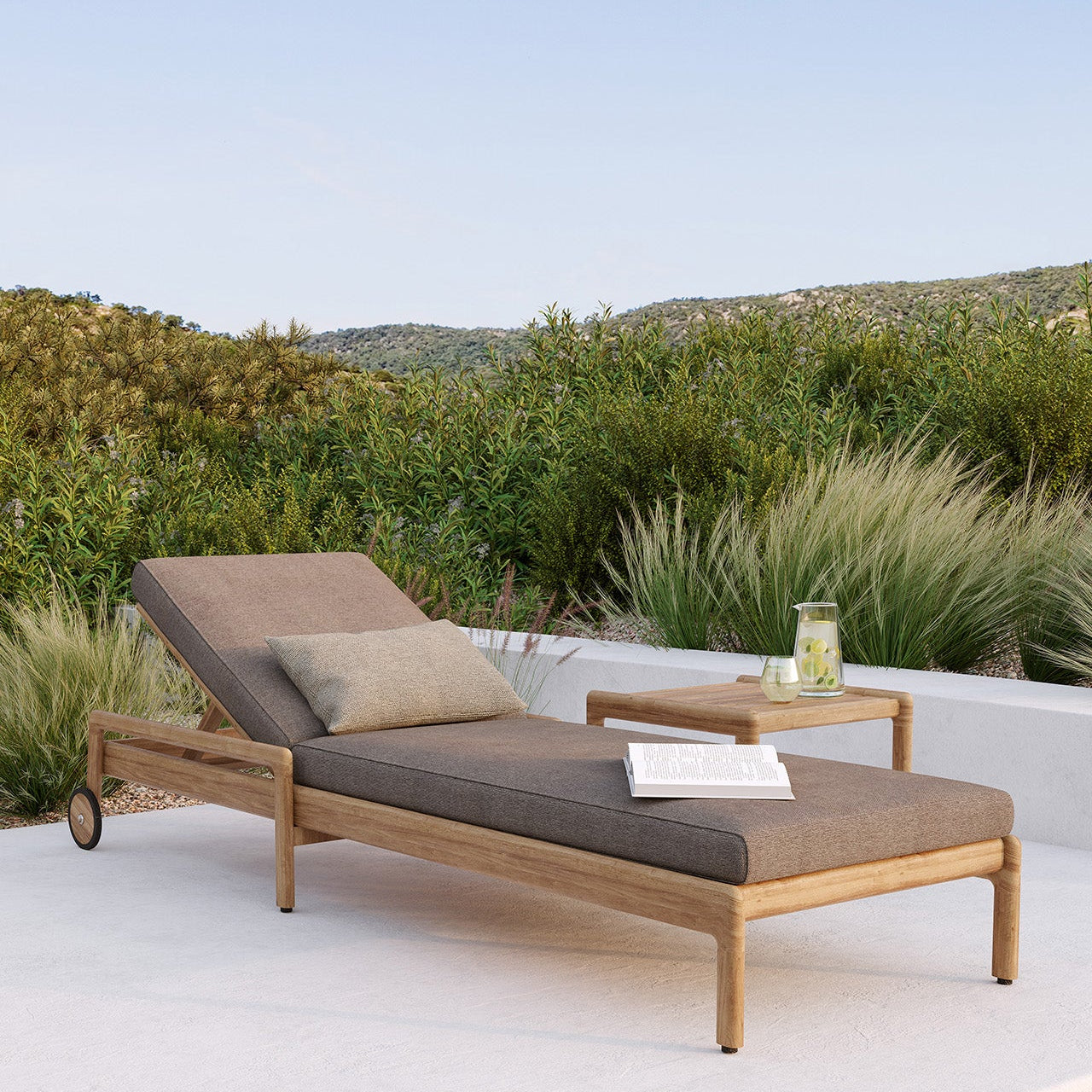
The three we return to solve different problems. Ethnicraft's Jack lounger is the piece for a terrace that doubles as a room — seven feet of teak that reads as furniture rather than pool equipment. Resol's Marina is the practical choice: light enough for one person to move, wheeled, and designed for hospitality use, which is a harder test than domestic use. FDB Møbler's M8 Sammen is the quiet one — a Danish teak lounger that folds into the same visual language as the rest of a garden.
We also stock the unglamorous parts that determine whether any of them last: fitted covers, replacement cushions, and teak care products. A lounger that gets covered in November is a different object from one that does not. If you are weighing teak against metal more generally, our guide to teak, acacia and powder-coated aluminium works through the climate trade-offs.
What to Shop at Comosum
- Ethnicraft Jack Outdoor Adjustable Lounger — 85 inches of solid teak with a multi-position backrest, in natural or black-tinted brushed teak, with optional Belgian-woven quick-dry cushions. Made in Indonesia. From $3,129.
- Resol Marina Sun Lounger — Polypropylene-and-fiberglass frame, 850 g/m² welded Textilene sling, four recline positions, rear wheels, 23.5 lb. Made in Spain, with a three-year structural warranty. $925.
- FDB Møbler M8 Sammen Sun Lounger — Thomas E. Alken's solid nature-oiled teak lounger, 78.7 inches long with an adjustable backrest. $1,359.
- Cane-line Flip Lounge Chair — A low Strand+Hvass design in SVLK-certified Grade A teak, with a reclining backrest and a 15-inch seat height. From $2,495.
- Ethnicraft Jack Outdoor Footstool — Sized level with the Jack lounge seats, in teak or powder-coated aluminium, so a lounge chair becomes a lounger. From $519.
- Raincover for the Jack Adjustable Lounger — Breathable PU-coated textile made in Germany, UV-stabilised and frost-resistant, with metal eyelets for high winds. $219.
Browse the full Outdoor Lounge collection and explore all of our sustainable furniture brands at Comosum →
For related reading, see our guides to caring for powder-coated outdoor furniture and caring for teak outdoor furniture.
Frequently Asked Questions About Sustainable Sun Loungers
What makes a sun lounger sustainable?
A sustainable sun lounger uses a frame material that lasts and can be recovered at end of life — FSC-certified or SVLK-certified teak, recyclable polypropylene, or aluminium — combined with construction that can be repaired rather than replaced. Bolted joints, replaceable slats and available spare cushions matter more than any single material claim.
Is teak or recycled plastic better for a sun lounger?
Neither is universally better. Certified teak lasts decades outdoors without chemical treatment and ages into a silver patina, but it is heavy and costs more. Recyclable polypropylene is lighter, cheaper, easier to move and fully recyclable, but it will never develop the character of wood. Choose teak for a fixed terrace, polymer for a deck where you move furniture often.
Do sun loungers need to be stored indoors over winter?
Not necessarily. Untreated teak and powder-coated frames can stay outside year-round in most climates. Cushions are the exception — store them indoors over winter regardless of frame material, and use a breathable fitted cover on the frame rather than a plastic tarp, which traps humidity and encourages mould.
How do I clean an outdoor sling lounger?
Resol recommends cleaning outdoor textile at least twice a year with water and a colourless, non-abrasive detergent, scrubbing gently, rinsing well and drying fully. Avoid prolonged contact with sunscreen and body oils, which are the most common cause of permanent staining on sling fabric.
What is the difference between a sun lounger and an outdoor daybed?
A sun lounger is a single-person recliner with an adjustable backrest, usually around 75 to 85 inches long and narrow enough to sit alongside others. An outdoor daybed is wider, generally seats two, and often has fixed sides or a canopy. Some pieces bridge both — Ethnicraft's Jack adjustable lounger is 85 inches long and 33 inches wide, wide enough to read as a daybed on a large terrace.


Leave a comment
This site is protected by hCaptcha and the hCaptcha Privacy Policy and Terms of Service apply.