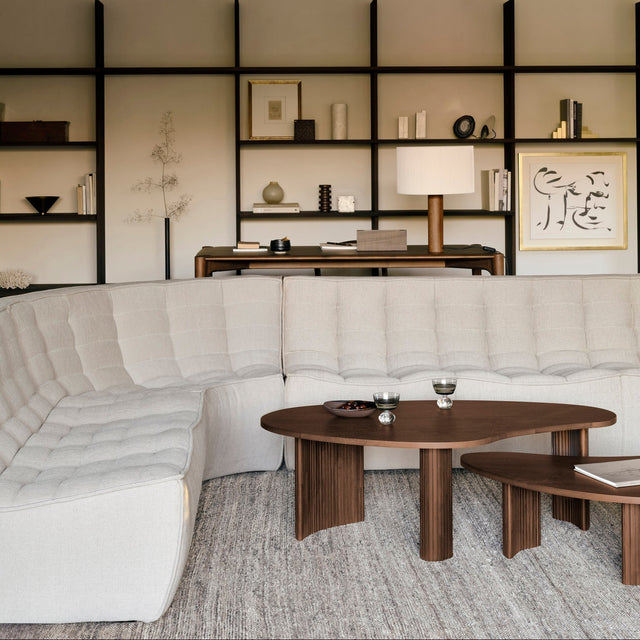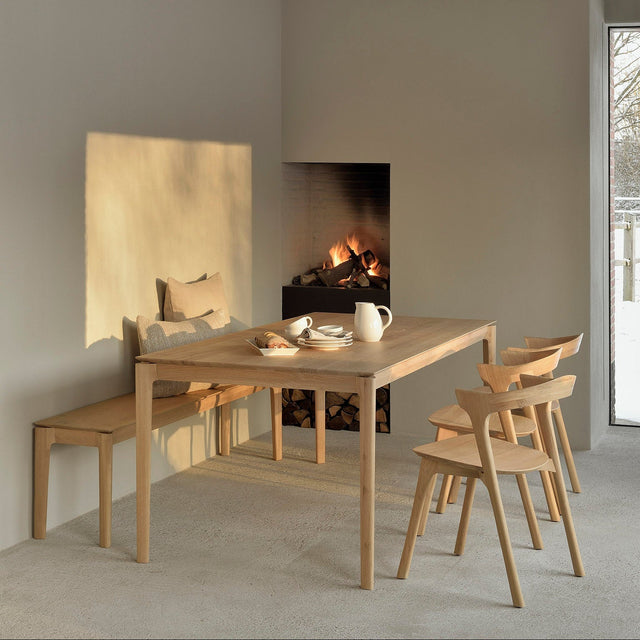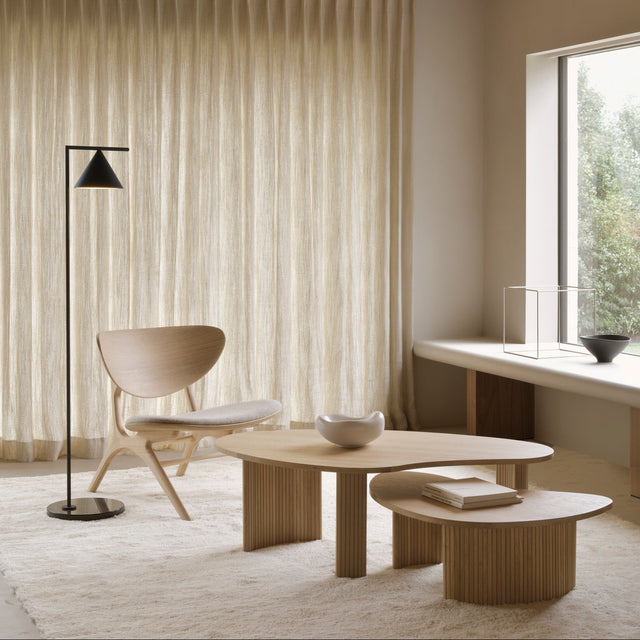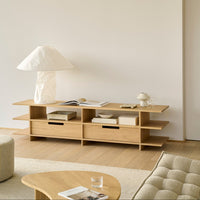





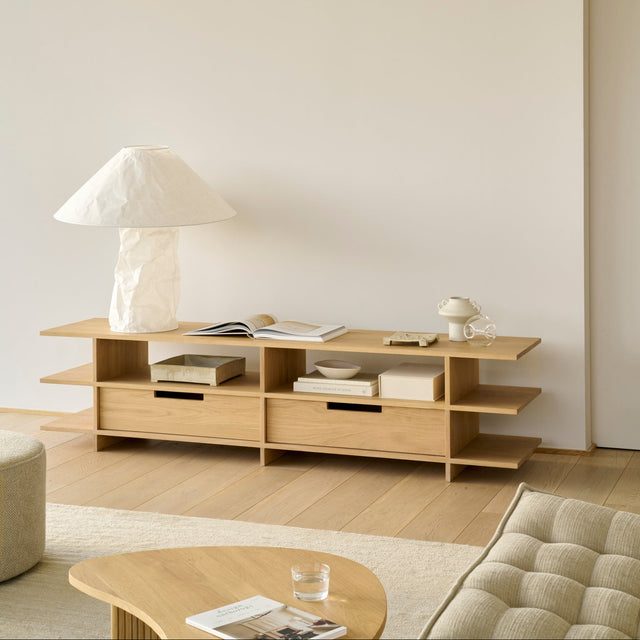
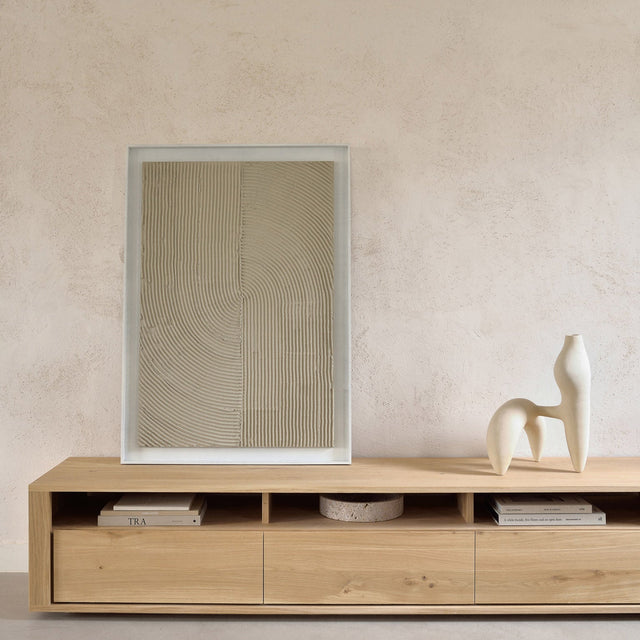
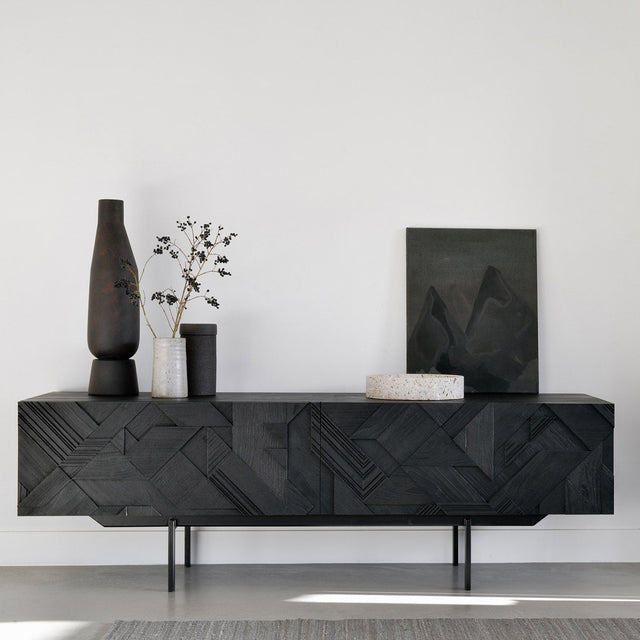
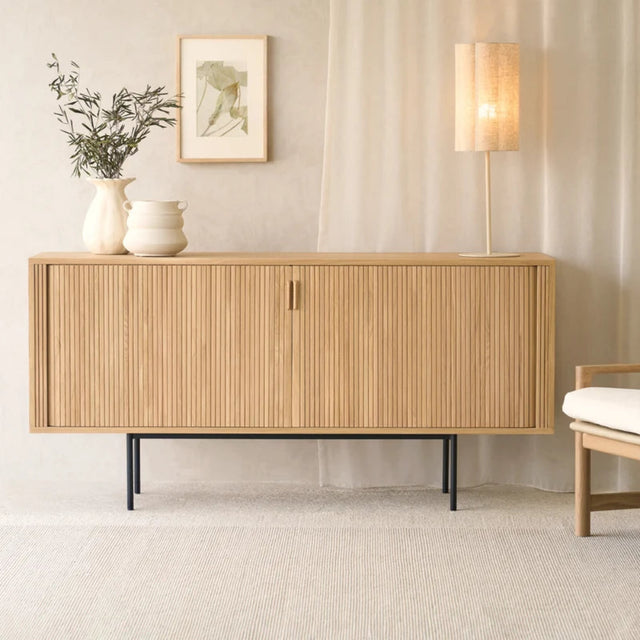
A TV stand is the wrong thing to eyeball. Get the width wrong and a 65-inch screen hangs over the ends; get the height wrong and you watch with your chin up. Below: how to size a stand to your TV, how high it should be, cables, wall-mounted screens, solid wood versus veneer, and where sideboards and credenzas fit in.
What size TV stand do I need for a 55-, 65- or 75-inch TV?
As a rule of thumb, choose a stand at least as wide as the TV and preferably several inches wider on each side. A 16:9 screen is about 87% as wide as its diagonal: a 55-inch TV is roughly 48 inches wide, a 65-inch about 57 and a 75-inch about 65.
| TV size | Stand width | In this guide |
|---|---|---|
| 43 to 50 in (37 to 44 in wide) | 45 to 55 in | Ethnicraft Nordic, 47.5 in |
| 55 in (about 48 in wide) | 55 to 64 in | Tikamoon Anoa, 55.1 in; Ethnicraft Graphic, 63 in |
| 65 in (about 57 in wide) | 64 to 73 in | Tikamoon Metric, 68.9 in; Ethnicraft Nordic, 71 in |
| 75 in (about 65 in wide) | 73 to 85 in | Tikamoon Jeanne and Patio Wide, 78.7 in; Ethnicraft Kabuki, 78.5 in |
| 85 in and up (about 74 in wide) | 82 in and up | Ethnicraft Shadow, 83 in; Ethnicraft Graphic, 94.5 in |
Between two rows? Size up: a slightly wide stand looks intentional, a narrow one looks like a mistake. If your TV stands on two feet near its edges, check both sit on the top with room to spare. The stands below run 15.8 to 19.7 inches deep.
The best eco-friendly TV stands and media consoles, by TV size
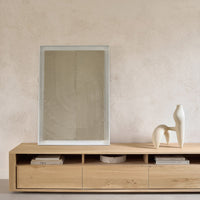
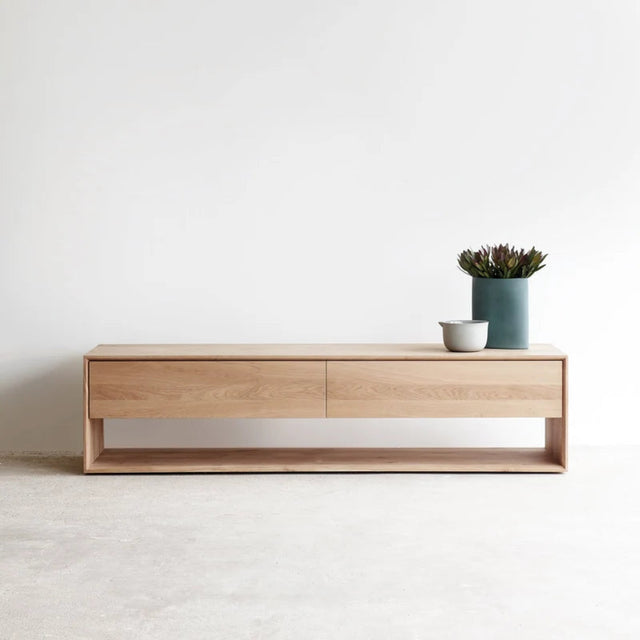
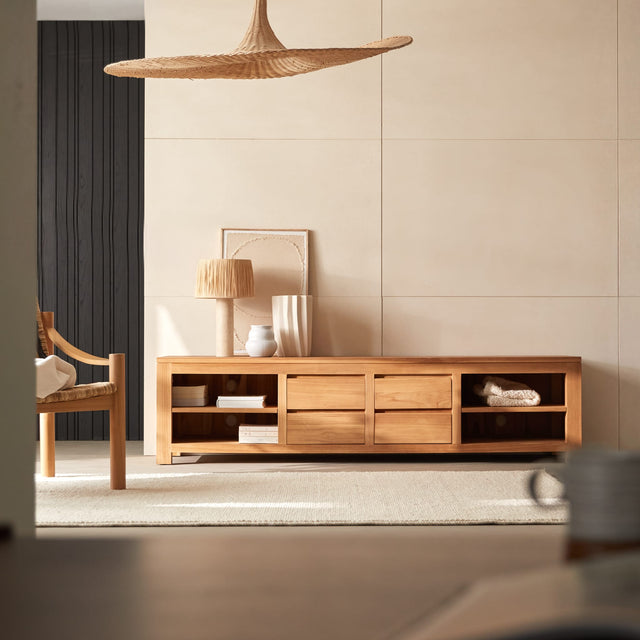
Our picks are solid wood with room for the devices, from makers we grade. Tikamoon's Anoa (solid oak, on casters) suits a 55-inch TV; Tikamoon's Metric (solid walnut on metal legs) and Ethnicraft's Nordic TV Cupboard (solid oak, made in Serbia) suit a 65-inch; Tikamoon's Jeanne (solid oak, dovetailed) and Patio Wide (solid teak) take a 75-inch; and Ethnicraft's Graphic runs to 94.5 inches in brushed, black-tinted solid teak.
 Tikamoon · Meter 4.0Anoa TV Stand in Solid OakFor a 55-in TV: solid oak on casters, 55.1 in wide
$999Shop →
 Tikamoon · Meter 4.0Metric TV Stand in Solid WalnutFor a 65-in TV: solid walnut, 68.9 in wide
$1,274
 Ethnicraft · Meter 3.5Nordic TV CupboardFor a 50- or 65-in TV: solid oak, 47.5 or 71 in wide
From $1,960
 Tikamoon · Meter 4.0Jeanne TV Stand in Solid OakFor a 75-in TV: solid oak, 78.7 in wide
$1,999Shop →
 Tikamoon · Meter 4.0Patio Wide TV Stand in Solid TeakFor a 75-in TV: solid teak, 78.7 in wide, 19.7 in deep
$1,439
 Ethnicraft · Meter 3.5Graphic TV CupboardFor 85 in and up: solid teak, 94.5 in wide (or 63 in)
From $2,545
Shop all TV stands and media consoles →
How high should a TV stand be?
For a TV that sits on the stand, 16 to 24 inches works with most sofas: it puts the middle of the screen near seated eye level once you add the TV's own base. Go lower for a big screen and a low sofa, higher for a smaller TV. Ethnicraft's Shadow TV Cupboard is the lowest here at 16.5 inches, then the Metric at 16.9, the Nordic at 17.5, the Jeanne and Patio Wide at 19.7 and the Anoa at 21.7. If you wall-mount the TV, the stand's height becomes a question of storage and reach, not viewing.

Do I need cable management in a TV stand?
Yes, if you run more than a streaming stick: a cable box, console and soundbar make a tangle fast. Look for cable holes (Tikamoon's Metric has pre-drilled holes at the back of its center bay), a cable channel (Tikamoon's Gabrielle routes cords toward the wall, which also tidies a wall-mounted TV above it) or easy access (the Anoa rolls out on casters). Closed storage needs a plan for the remote: keep anything it must reach on an open shelf or on top, or choose flip-down doors like the Nordic's and Graphic's, which you open while you watch.
 Tikamoon · Meter 4.0Gabrielle 55" TV Stand in Solid Mango WoodCable channel routes cords toward the wall; solid mango
$979Tikamoon · Meter 4.0Metric TV Stand in Solid WalnutPre-drilled cable holes behind the center door
$1,274
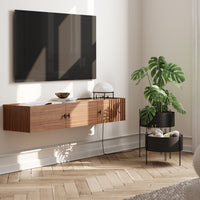
What goes under a wall-mounted TV?
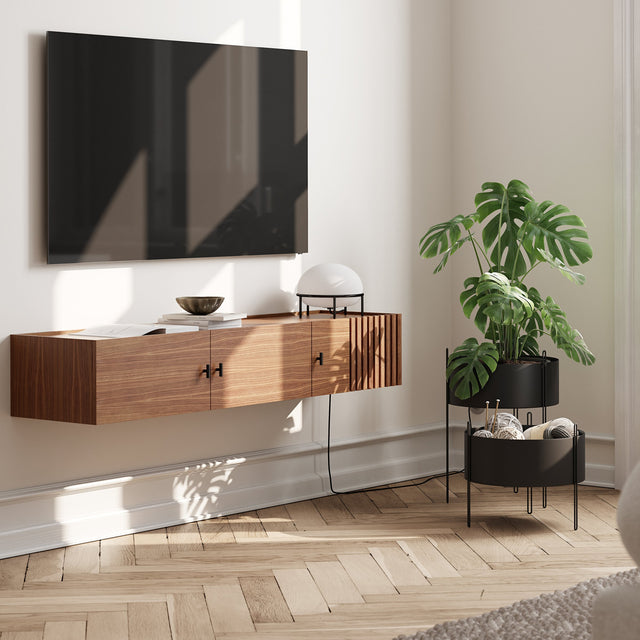
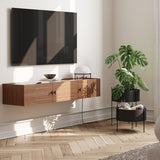
Something shallow that keeps the devices close. WOUD's Array Wall Mounted Cabinet hangs on black metal brackets: 59 inches wide, 14.5 deep and 9.8 high, which suits a TV of about 55 to 65 inches. It weighs 51.8 pounds empty and WOUD recommends no more than 44 pounds inside, so fix it into studs or solid masonry. It's made in Estonia in oak or walnut veneer, and leaves the floor clear. If you'd rather not drill, a low stand such as the Gabrielle works too; its cable channel takes the TV's cords down behind it.

Solid wood or veneer: does it matter for a media console?
Solid wood, used in every TV stand in this guide, is the same timber all the way through, so a scratched or ring-marked top can be sanded and refinished. Veneer is a thin layer of real wood over an engineered core: it stays flat across wide panels, which suits a slim wall cabinet like the Array, but takes only a light sanding. The one to avoid if you want a piece to last is printed laminate over particleboard or MDF. It can't be refinished once it chips or swells, and the boards are bonded with adhesives, which is why US law caps their formaldehyde emissions under TSCA Title VI. Our solid wood vs veneer guide goes deeper.
What's the most sustainable option for a TV stand?
A solid wood stand from a maker you can check, sized to outlast the TV on it. Four things to look for:
- Solid, refinishable wood. A worn top can be sanded and re-oiled instead of replaced.
- A source you can trace. FSC certification tells you where the wood came from; it isn't a chemical test. Ethnicraft's Kabuki in brown-tinted teak is FSC-certified. Tikamoon holds an FSC chain-of-custody licence (FSC-C143349) that covers part of its range, so we don't claim it for individual pieces.
- A maker that shows its working. Tikamoon has been a certified B Corporation since December 2025 and publishes product carbon footprints. Ethnicraft makes in its own factories: oak pieces such as the Nordic and Shadow in Serbia, where the site runs on energy from wood residue, and teak pieces such as the Kabuki and Graphic in Indonesia.
- A warranty and parts. Tikamoon's stands carry a 2-year limited warranty, and Ethnicraft tests its furniture to ANSI/BIFMA-based protocols and supplies spare parts.
Each maker's grade sits in the brands section below; our Sustainability Meter methodology explains the six scores behind it.
Sideboard, credenza or media console: what's the difference?
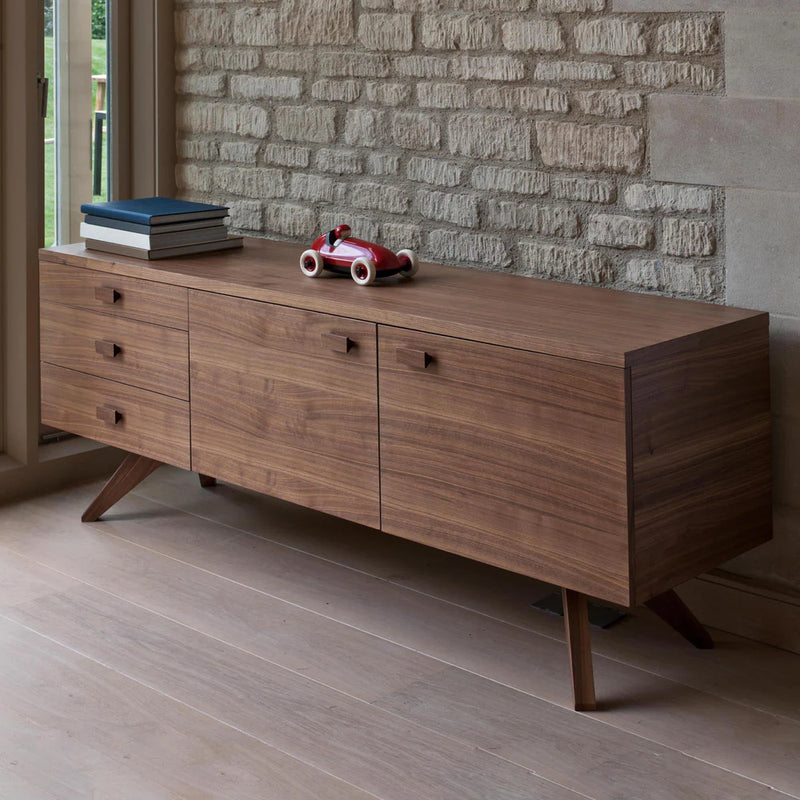
Mostly height and job. All three are long, low cabinets. A TV stand or media console sits at 16 to 24 inches and is built for devices: flip-down doors, cable holes, drawers for remotes. A sideboard stands taller, 27.5 to 31.5 inches in the picks below, a useful height for serving in a dining room, with shelves for dishes and linens. Credenza often means a long, low sideboard; in practice the words are interchangeable.
The best sustainable sideboards and credenzas
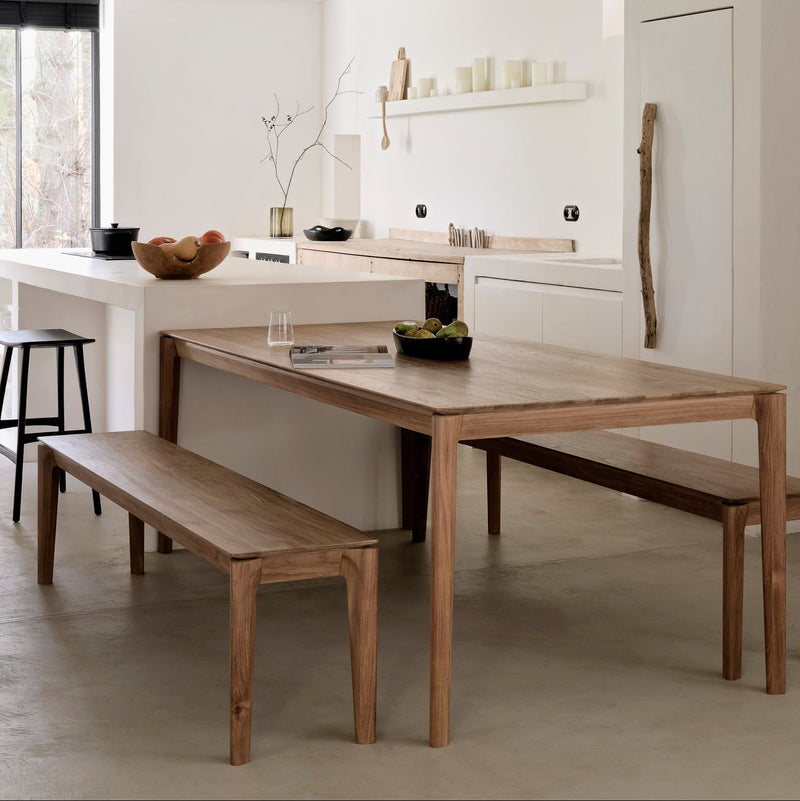
Ethnicraft's Roller Max has two slatted doors that slide fully clear, in off-black teak or solid oak. Its Nordic Sideboard is solid oak with a natural oil finish, made in Serbia, and arrives assembled with anti-tip hardware. The Graphic layers triangles of black-tinted solid teak, and the Pillar's push-open doors keep its teak paneling unbroken. Tikamoon's Niels is solid acacia with two doors and two drawers.
 Ethnicraft · Meter 3.5Roller Max SideboardSlatted doors slide fully clear; off-black teak or solid oak
From $2,845
 Ethnicraft · Meter 3.5Nordic SideboardSolid oak, natural oil; made in Serbia; anti-tip kit
From $1,525
 Ethnicraft · Meter 3.5Graphic SideboardLayered black-tinted solid teak; 66 or 88 in wide
From $3,140
 Ethnicraft · Meter 3.5Pillar SideboardWild brown stained teak; push-open doors; 27.5 in high
From $2,290
 Tikamoon · Meter 4.0Niels Sideboard in Solid AcaciaSolid acacia; two doors, two drawers; 68.9 in wide
$1,999Shop →

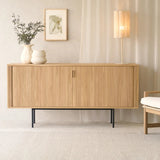
Can a sideboard work as a TV stand?
Yes, if it's at least 16 inches deep and you can run cables out of the back. At about 27.5 inches, the Pillar and Niels are low enough for a smaller screen; a 31.5-inch sideboard suits a wall-mounted TV above it better. It works the other way too: Tikamoon's Jeanne and Gabrielle TV stands double as low sideboards in a dining room.
Shop all sideboards and credenzas →
How do you care for a wood TV stand or sideboard?
Dust with a dry cloth and wipe spills straight away with a damp cloth and natural soap, along the grain; skip detergents and silicone sprays. Use coasters under anything hot or wet, refresh an oiled finish now and then, and keep the cabinet away from a radiator or heating vent. Teak deepens over its first year in the light and walnut lightens a little; both are normal. Our solid oak care guide covers oiling and small repairs.
Furnishing the whole room? Our sustainable living room guide and coffee table guide pick up from here.
TV stands and sideboards: common questions
What size TV stand do I need for a 65-inch TV?
A 65-inch TV is about 57 inches wide, so look for a stand 64 to 73 inches wide. Tikamoon's Metric (68.9 inches) and Ethnicraft's Nordic TV Cupboard in its 71-inch width both fit with a few inches to spare on each side.
Is a TV stand the same thing as a media console?
Functionally, yes: both are low cabinets for a TV and its equipment. TV stand is the more common term; media console or TV cupboard usually means more enclosed storage, like Ethnicraft's cupboards with flip-down doors and drawers.
Do I need cable management in a TV stand?
If you connect more than one device, yes. Pre-drilled cable holes, like those behind the Metric's center door, or a cable channel, like the Gabrielle's, keep cords from trailing down the outside of the cabinet.
Is solid wood or veneer better for a media console?
Solid wood can be sanded and refinished through its whole thickness; veneer stays flat across wide panels but takes only a light sanding. Both are honest construction. Printed laminate over particleboard is the one to skip if you want the piece to last.
How much weight can a wood TV stand hold?
Check each product page. The Jeanne TV stand is rated for up to 132 pounds, enough for a large flat-screen and a soundbar, while WOUD recommends no more than 44 pounds inside its wall-hung Array cabinet.
What's the most sustainable or eco-friendly option for a TV stand?
Solid wood you can refinish, from a maker that shows where and how it's made, sized to outlast your current TV. Ethnicraft's Kabuki in FSC-certified teak and Tikamoon's solid oak, walnut and teak stands are our picks; each maker's Comosum Meter grade is shown on the page.
What are the advantages of a TV stand made from sustainably sourced materials?
It lasts longer, because solid wood can be refinished instead of replaced. You know where the timber came from when it's FSC-certified or the maker names its source. And it skips the adhesive-bonded particleboard used in cheaper units, so it can move on to another room as a low sideboard when the TV changes.
What's the difference between a sideboard and a credenza?
Very little. Both are long, low storage cabinets, and the terms are used interchangeably; credenza often means a longer, lower one. A sideboard usually stands taller than a TV stand, around 27 to 32 inches, for serving and storage in a dining room.
Can a sideboard work as a TV stand?
Yes, if it's at least 16 inches deep and you can run cables out of the back. Lower sideboards such as Ethnicraft's Pillar and Tikamoon's Niels, about 27.5 inches high, suit a smaller screen; a taller one works best under a wall-mounted TV.
Is a solid wood TV stand non-toxic?
No furniture is chemical-free, but solid wood skips the adhesive-bonded boards that US law regulates for formaldehyde, and a named finish such as hardwax oil tells you what's on the surface. Our non-toxic furniture guide explains the labels worth checking.