

Sustainable outdoor lighting means LED fixtures designed to be recharged, repaired, and weatherproofed rather than replaced — portable lamps that move where you need them, solar lamps that draw no grid power, and hardwired fixtures rated to survive years outdoors. The most durable examples, like the Fermob Balad lamp designed by Inga Sempé, pair long-life LEDs with sealed weather ratings and replaceable batteries. At Comosum, we curate outdoor lighting the way we curate furniture: built to last, honestly made, and easy to live with for a decade or more.
Why Sustainable Outdoor Lighting Is a Real Decision
For most of the last century, outdoor lighting meant a hardwired fixture by the door and little else. Lighting a terrace or garden required an electrician, a trench, and a permanent commitment to one spot. Two shifts changed that. First, LED technology cut energy draw by roughly 80% versus incandescent bulbs while extending usable life into the tens of thousands of hours. Second, lithium battery packs got small and affordable enough to put a full evening of light into a lamp you can carry in one hand.
The result is that outdoor lighting is now a genuine choice with sustainability stakes. A cheap solar stake light with a sealed battery and a bonded plastic body is, in practice, disposable — when the cell dies in two seasons, the whole thing goes to landfill. A well-made rechargeable lamp with a replaceable battery and a repairable housing can light your dinners for ten years. The upfront price is higher; the lifetime cost, and the waste, are far lower. This guide covers the three formats worth considering — portable, solar, and hardwired — and the specifications that actually predict longevity.
What Makes Outdoor Lighting Sustainable?
Not every "eco" lamp earns the label. Three things separate lighting built to last from lighting built to be replaced.
Materials
Durable outdoor lamps start with bodies that resist weather rather than degrade in it. Powder-coated steel and aluminum, like the frames Fermob produces in Thoissey, France, hold up to sun and rain for years and are fully recyclable at end of life. Fermob's steel contains up to 70% recycled content, and its powder-coating process is solvent-free with zero VOC emissions. The alternative — bonded plastic housings glued around sealed electronics — cannot be opened, repaired, or separated for recycling.
Longevity and Repairability
The single most important sustainability question for any LED lamp is: what happens when the battery dies? A lamp with a user-replaceable battery and available spare parts can outlive several charge cycles' worth of cells. Quality LED modules are rated to L70 — meaning they still emit at least 70% of original brightness after their rated hours, often 20,000 to 50,000. Look for stated battery cycle counts and whether replacement cells are sold separately.
Weather Resistance
Outdoor ratings are measured by the IP (Ingress Protection) scale. An IP44 rating, like the Fermob Balad lamp, handles splashing water and suits covered terraces and balconies. IP54 — found on the Fermob Aplô and Mooon! — adds dust protection and better resistance to driving rain. For fully exposed gardens, look toward IP65. Matching the rating to the exposure means the lamp survives the conditions you actually have.
Why We Recommend Choosing Outdoor Lighting Carefully
At Comosum, we treat lighting as furniture you happen to switch on. The brands we carry — Fermob, Petite Friture, Rosendahl, and Anglepoise — share a refusal to make disposable products. Several lighting houses in the category, including British names like Anglepoise and Tala, carry B Corp certification, a third-party standard for verified social and environmental performance.
Our bias is toward portable and solar lamps because they ask the least of your home: no wiring, no trenching, no permanent fixture to throw away when you redecorate. A single rechargeable lamp can light a dinner on the balcony tonight and a reading corner indoors tomorrow. That flexibility is itself a form of sustainability — one well-made object doing the work of several. When you do want permanent light, we point toward hardwired and wall-mounted fixtures with serviceable LED modules rather than sealed throwaway units. Explore the full outdoor lighting collection to see the range.
What to Shop at Comosum
These five lamps are in stock and represent the portable, solar, and rechargeable formats we recommend.
- Fermob Balad Lamp — Designed by Inga Sempé, this rechargeable LED lantern is the reference point for the category: IP44-rated, dimmable, and built on a powder-coated steel body. Starting at $125.
- Fermob Aplô Lamp — Tristan Lohner's minimalist rechargeable lamp carries an IP54 rating and ships with a suspension strap, so it can sit on a table or hang from a hook. From $56.
- Fermob Mooon! Lamp H.16 — A sculptural, dimmable wireless table lamp by Tristan Lohner, IP54-rated for indoor and outdoor use. $320.
- Quasar Portable Lamp — Petite Friture's rechargeable LED lamp blends industrial form with soft ambient light, in olive, blue, purple, and light grey. $200.
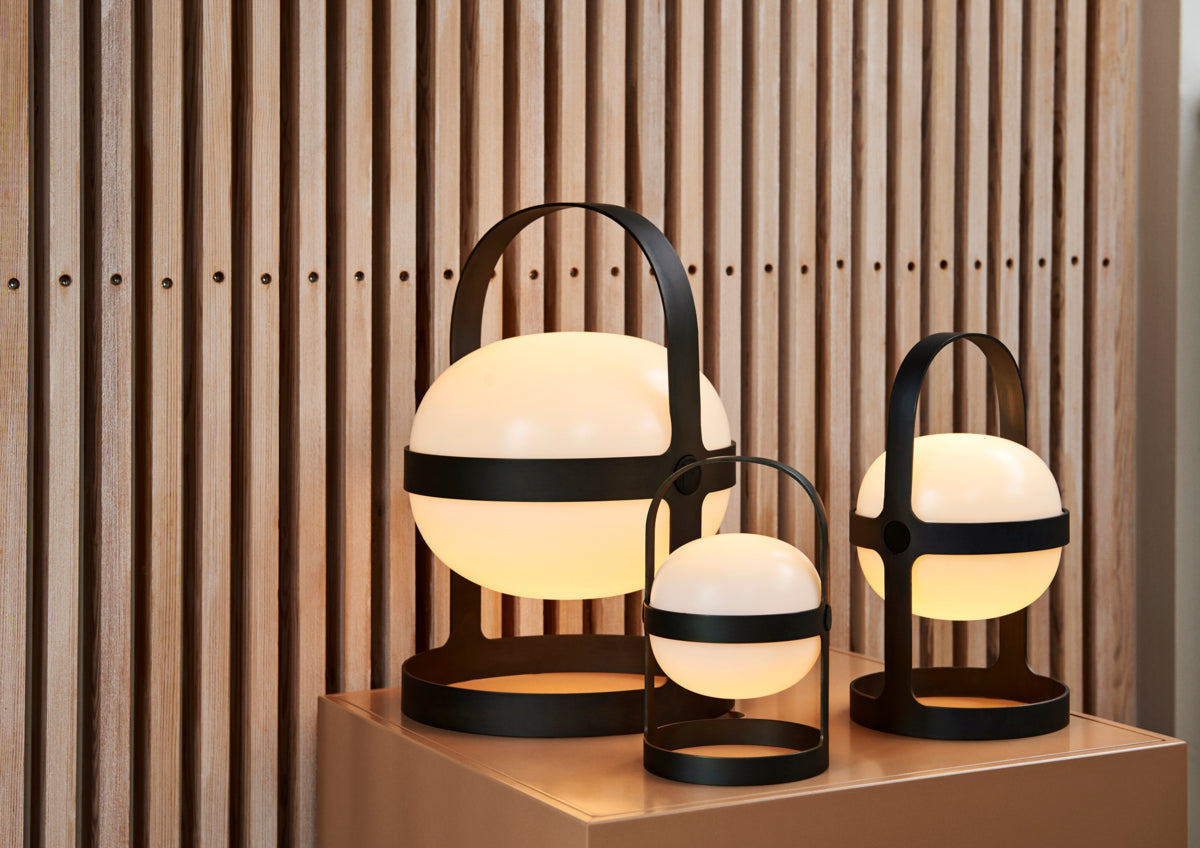
- Soft Spot Solar Circular Lamp — Designed by Maria Berntsen for Rosendahl, this solar-charged lamp needs no cable at all, charging by daylight on its integrated panel. From $84.95.
Browse the full outdoor lighting collection and portable lamp range at Comosum →
For more on choosing lighting that lasts, see our sustainable lighting buying guide, and to weather-proof the rest of your terrace, our guide to caring for teak outdoor furniture. You can also browse all of our sustainable furniture brands.
Frequently Asked Questions About Sustainable Outdoor Lighting
What is the most sustainable type of outdoor lighting?
The most sustainable outdoor lighting is a rechargeable or solar LED lamp with a replaceable battery and a repairable, recyclable body. These avoid both the energy draw of incandescent fixtures and the disposability of sealed units. A solar lamp like the Rosendahl Soft Spot draws no grid power; a rechargeable lamp like the Fermob Balad runs on a battery you can swap rather than discard.
What do IP44 and IP65 ratings mean for outdoor lamps?
IP (Ingress Protection) ratings describe how well a fixture resists dust and water. IP44 protects against splashing water and suits covered terraces and balconies. IP54 adds dust resistance and handles driving rain. IP65 is fully dust-tight and withstands water jets, making it appropriate for fully exposed gardens.
Are portable rechargeable lamps bright enough for a dinner table?
Yes. Modern portable LED lamps such as the Fermob Balad and Petite Friture Quasar are dimmable and designed specifically for dining and ambient use, typically running several hours on a single charge. They are made to set a mood rather than floodlight a space, which is what most outdoor evenings call for.
Where is Fermob lighting made?
Fermob has manufactured its outdoor furniture and lighting in Thoissey, France, near Lyon, since 1953. The company holds ISO 14001 environmental management certification, uses steel with up to 70% recycled content, and finishes its products with a solvent-free, zero-VOC powder-coating process.
How long do LED outdoor lamps last?
Quality LED modules are commonly rated to L70, meaning they retain at least 70% of their original brightness after their rated life — often 20,000 to 50,000 hours. The limiting factor is usually the battery, not the LED, which is why a lamp with a user-replaceable battery will last far longer in practice than one with a sealed cell.
The best outdoor lighting follows the same rule as the best furniture: choose pieces made to be repaired and recharged, not replaced. For the indoor side of the same philosophy, see our sustainable lighting buying guide.


Leave a comment
This site is protected by hCaptcha and the hCaptcha Privacy Policy and Terms of Service apply.