








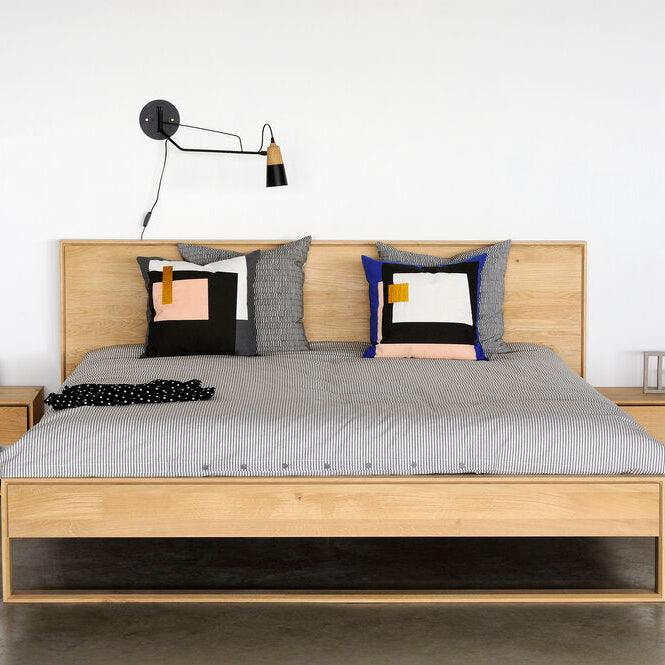
GREENGUARD Gold is an indoor-air-quality certification, administered by UL Solutions, that limits a product's emissions of more than 360 volatile organic compounds (VOCs) and total chemical exposure. Established in 2001 and elevated by UL's stewardship since 2011, the Gold tier sets stricter thresholds calibrated for children's bedrooms, schools, and healthcare interiors. For furniture buyers, GREENGUARD Gold furniture is the most reliable shorthand for a piece tested — not just claimed — to be safe to breathe around every day.
What Is GREENGUARD Gold, in Plain English?
GREENGUARD started in 2001 as a program of the Greenguard Environmental Institute, a non-profit set up to give buyers a credible way to compare what was off-gassing from sofas, desks, mattresses, and cabinetry. In 2011, UL — the global safety-science body behind the familiar UL mark on electronics — acquired the program. Since then, GREENGUARD has lived inside UL Solutions as one of its environmental-claim verifications, with its emissions standards published openly and audited by third-party labs.
There are two tiers. Standard GREENGUARD confirms a product's emissions meet the program's general thresholds. GREENGUARD Gold applies stricter limits — roughly twice as conservative — and is the tier originally designed around the sensitivities of children and people in schools and hospitals. The Gold thresholds are also what's referenced by green-building rating systems like LEED v4, WELL, BREEAM, and the Collaborative for High Performance Schools (CHPS).
In furniture terms, the certification tells you that a finished piece — fabric, foam, adhesive, panel, finish, and all — was tested as a whole inside a sealed chamber, and that the air around it stayed below specified limits for formaldehyde, total VOCs, and a long list of individual compounds. It is one of the few certifications that tests the assembled product, not just the raw materials.
How GREENGUARD Gold Testing Actually Works
The strength of GREENGUARD Gold is that it measures the thing you actually live with: the finished piece of furniture, in conditions modeled on a real room.
What Gets Tested
UL places a representative sample inside a controlled environmental chamber, runs air through it for a defined period, and samples the exhaust. The lab measures more than 360 individual VOCs, plus total VOCs (TVOC), formaldehyde, and other aldehydes. Gold-tier limits are pegged to a child-occupancy scenario, which is why GREENGUARD Gold is the version cited by pediatric, education, and healthcare specifiers.
What the Thresholds Look Like
Formaldehyde is the headline number — GREENGUARD Gold sets the indoor-air target well below California CARB Phase 2 thresholds for composite wood. TVOC limits are also tighter than the standard tier. Each of the 360-plus tracked VOCs has its own ceiling, drawn from the State of California Office of Environmental Health Hazard Assessment (OEHHA) chronic reference exposure levels.
How Long It Lasts
Certification isn't a one-and-done badge. Manufacturers are required to recertify on a defined cycle — annually for most product categories — and UL conducts surveillance testing of marketplace samples between cycles. If a formulation, supplier, or finish changes, the product has to be retested before it can continue to wear the mark.
GREENGUARD Gold vs. OEKO-TEX, FSC, and "Low-VOC"
It helps to know what GREENGUARD Gold is not. OEKO-TEX Standard 100 tests textiles for harmful substances in the fabric itself — a complementary but different question. FSC certification verifies that the wood in a piece comes from responsibly managed forests; it says nothing about what's in the finish or foam. A brand calling a piece "low-VOC" is making an unverified marketing claim unless they can point to an independent test report.
GREENGUARD Gold sits in a specific lane: it's the third-party answer to "what is the assembled product doing to the air in my room?" That is the question that matters most for bedroom, nursery, and home-office pieces where you spend long, continuous hours.
Why GREENGUARD Gold Matters in Comosum's Catalog
At Comosum, we treat certification as evidence, not marketing. Two of our most-stocked sustainability-led brands lean heavily on GREENGUARD Gold across their lines.
Humanscale — the New York–founded ergonomic-seating brand behind the Freedom, Path, and Trea task chairs — was one of the earliest large office-furniture makers to certify its task seating to the Gold tier. For a chair you sit in eight hours a day in a small home office, breath-zone emissions are not a side issue.
Greenington builds beds, dressers, dining tables, and bookshelves from solid Moso bamboo with formaldehyde-free adhesives. The brand publishes GREENGUARD Gold certifications across its bedroom range — exactly where you want low-emission credentials.
Both brands sit alongside the rest of our bedroom collection and home-office range. We pair GREENGUARD Gold with FSC, OEKO-TEX, and Cradle to Cradle elsewhere in the catalog so the story is layered: where the materials came from, how the piece was finished, and what it does to your air. For a deeper room-by-room look, our sustainable bedroom guide and nursery & kids' furniture guide walk through exactly where these credentials matter most.
Featured Products to Shop at Comosum
A few GREENGUARD Gold–anchored pieces we carry:
- Humanscale Path Task Chair — a self-adjusting ergonomic task chair built with recycled materials and certified for indoor-air quality, designed for long home-office days.
- Humanscale Trea Side Chair — a stackable multipurpose chair designed by Todd Bracher, suitable for dining and workspace use, with the same emissions credentials as Humanscale's task seating.
- Humanscale Freedom Headrest Chair (Ocean) — the Niels Diffrient–designed Freedom chair in its Ocean material story, made with reclaimed ocean-bound plastics.
- Greenington Sienna Queen Platform Bed — a solid-Moso-bamboo bed frame finished with low-emission sealants; sleep-space air quality is exactly the use case GREENGUARD Gold was written for.
- Greenington Currant Writing Desk — a compact bamboo writing desk with the brand's signature formaldehyde-free construction.
Browse the full Humanscale and Greenington collections at Comosum →
Frequently Asked Questions About GREENGUARD Gold
Who administers GREENGUARD Gold certification?
GREENGUARD Gold is administered by UL Solutions, the global safety-science organization. UL acquired the program from the original Greenguard Environmental Institute in 2011 and continues to publish the standard, run the lab testing, and conduct surveillance audits between certification cycles.
What's the difference between GREENGUARD and GREENGUARD Gold?
Both certifications verify a product's chemical emissions in a controlled chamber test. GREENGUARD Gold applies stricter thresholds — roughly twice as conservative as standard GREENGUARD — and is calibrated for sensitive environments such as children's bedrooms, schools, and healthcare interiors. Gold is the tier referenced by LEED v4, WELL, BREEAM, and CHPS green-building programs.
Is GREENGUARD Gold furniture worth paying more for?
For pieces you spend hours next to every day — beds, mattresses, nursery furniture, sofas, task chairs, desks — independently tested emissions are one of the few sustainability claims that affect your daily wellbeing directly. We see GREENGUARD Gold as a useful filter for bedroom and home-office shopping in particular; for outdoor or low-occupancy pieces, other certifications matter more.
Does GREENGUARD Gold replace FSC certification?
No. The two answer different questions. FSC certifies the forest the wood came from. GREENGUARD Gold certifies the emissions profile of the finished piece. The strongest sustainability stories in our catalog carry both — for example, FSC-certified European oak finished with low-emission sealants and independently tested as a complete piece.
How often is a GREENGUARD Gold–certified piece retested?
Most product categories are on an annual recertification cycle, supplemented by UL surveillance testing of marketplace samples between cycles. If a manufacturer changes a finish, foam, fabric, or adhesive supplier, the product must be retested before it can continue to use the mark.




Leave a comment
This site is protected by hCaptcha and the hCaptcha Privacy Policy and Terms of Service apply.