
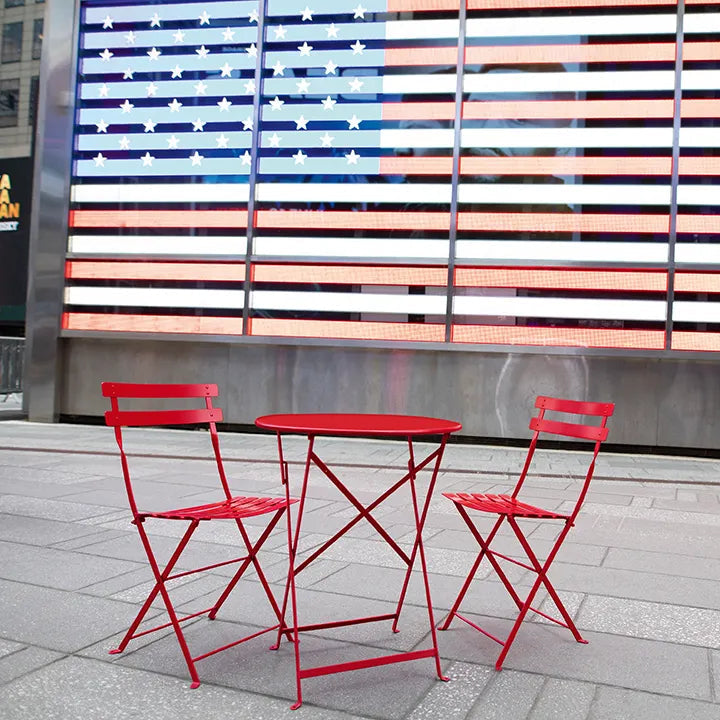
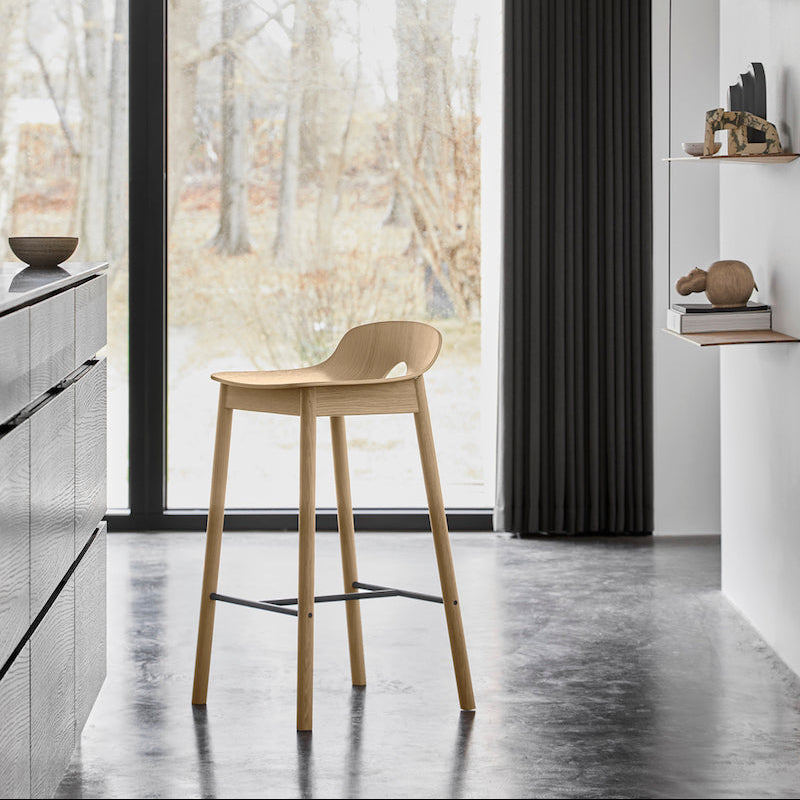
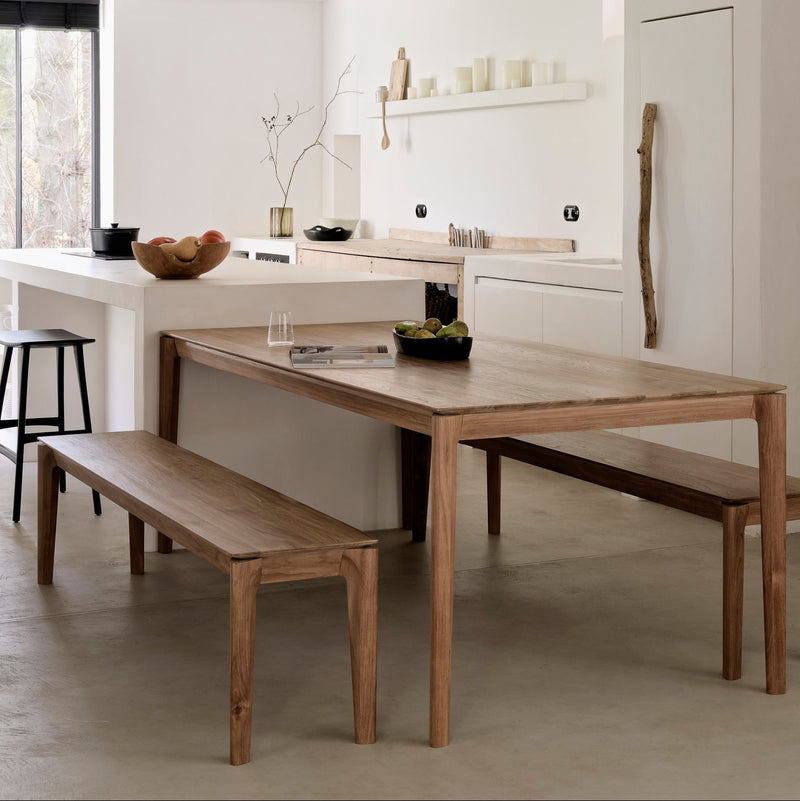
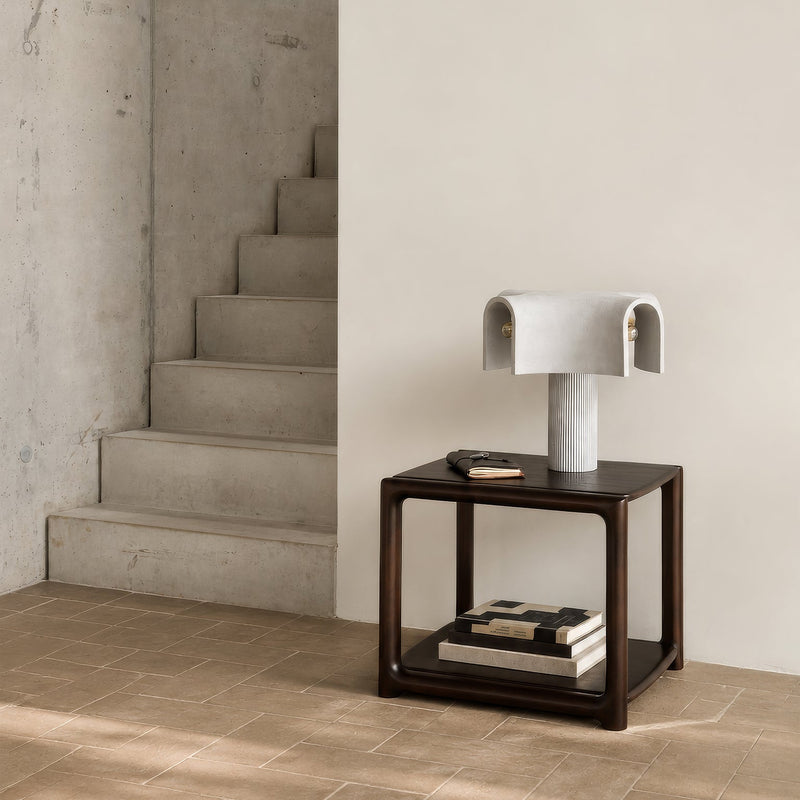
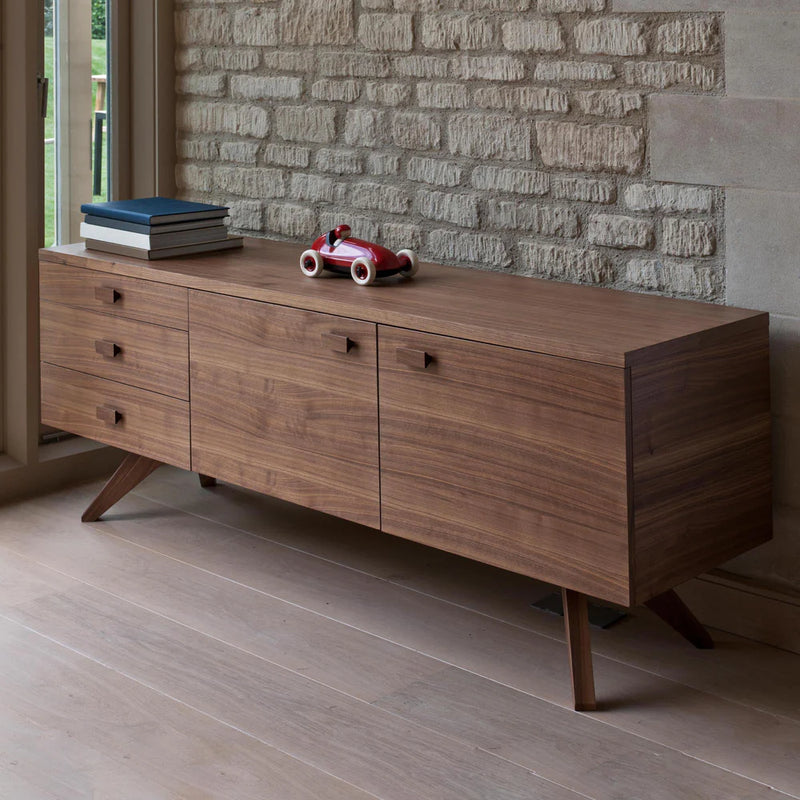
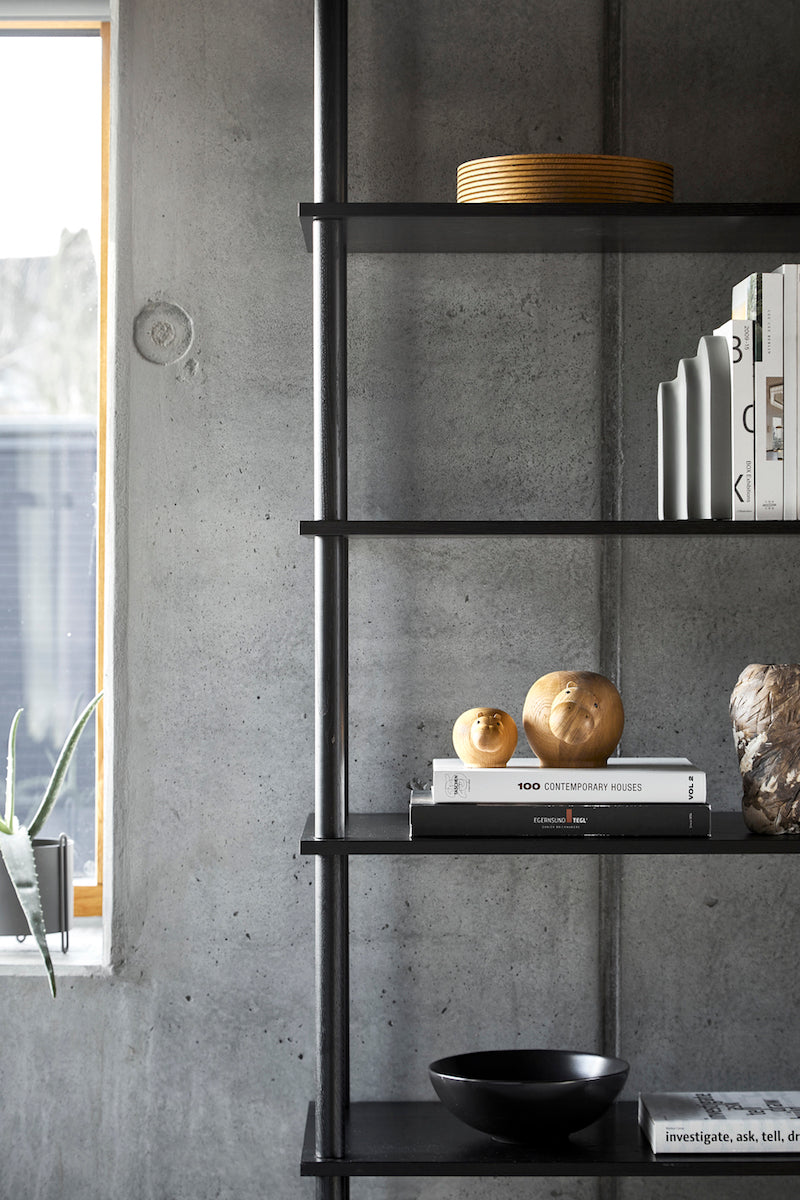
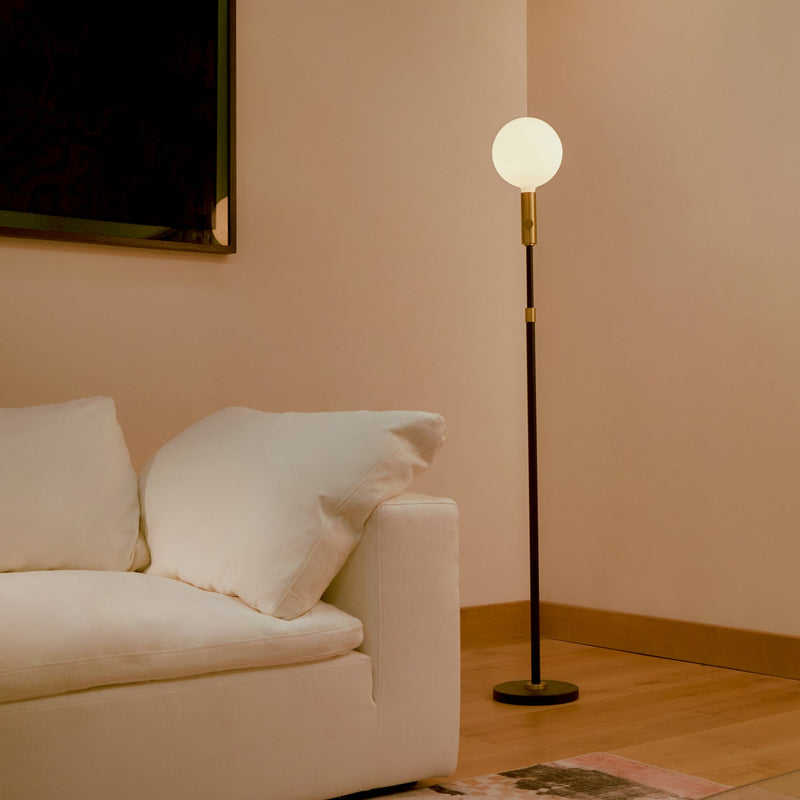

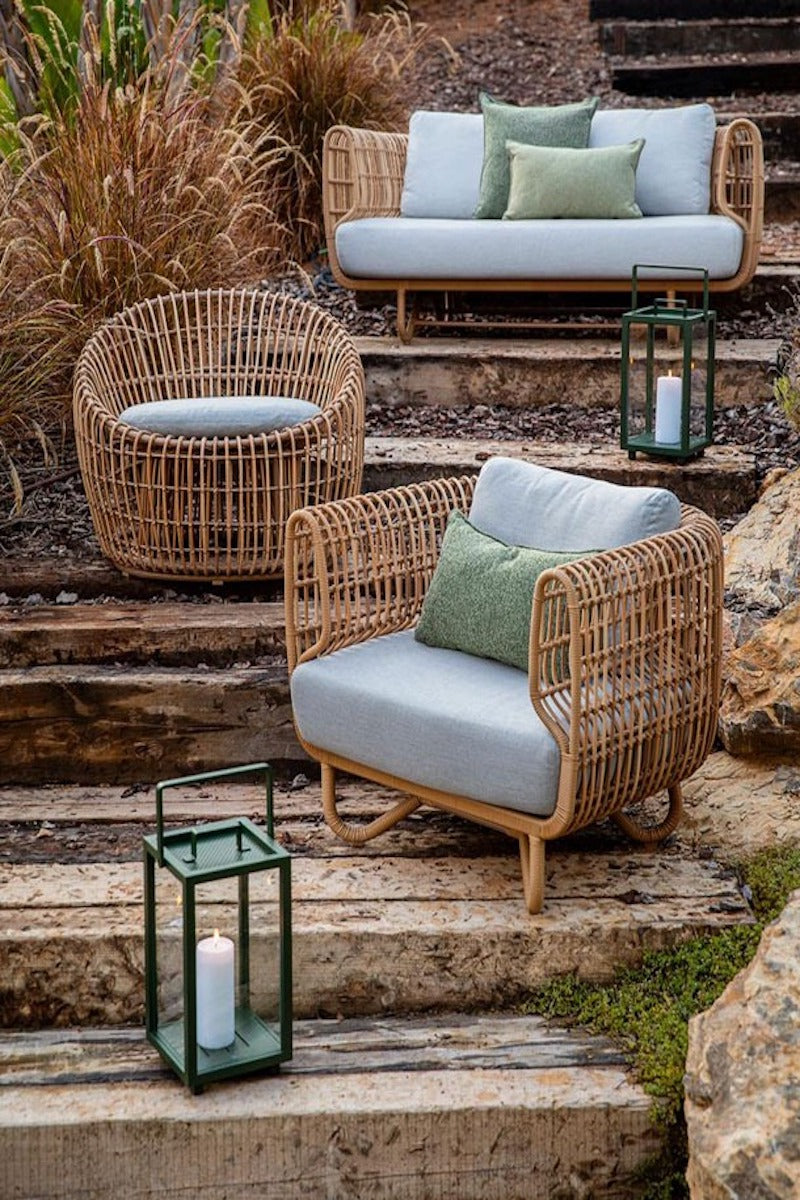
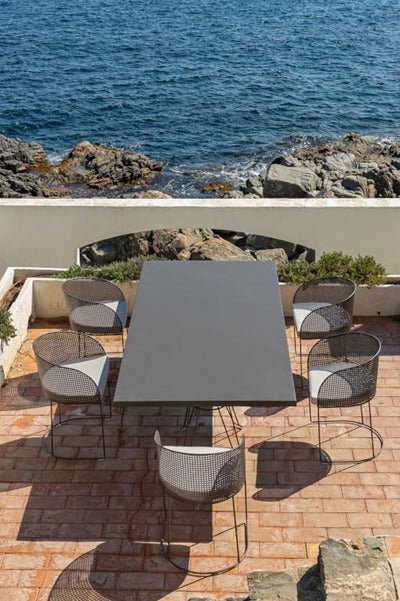
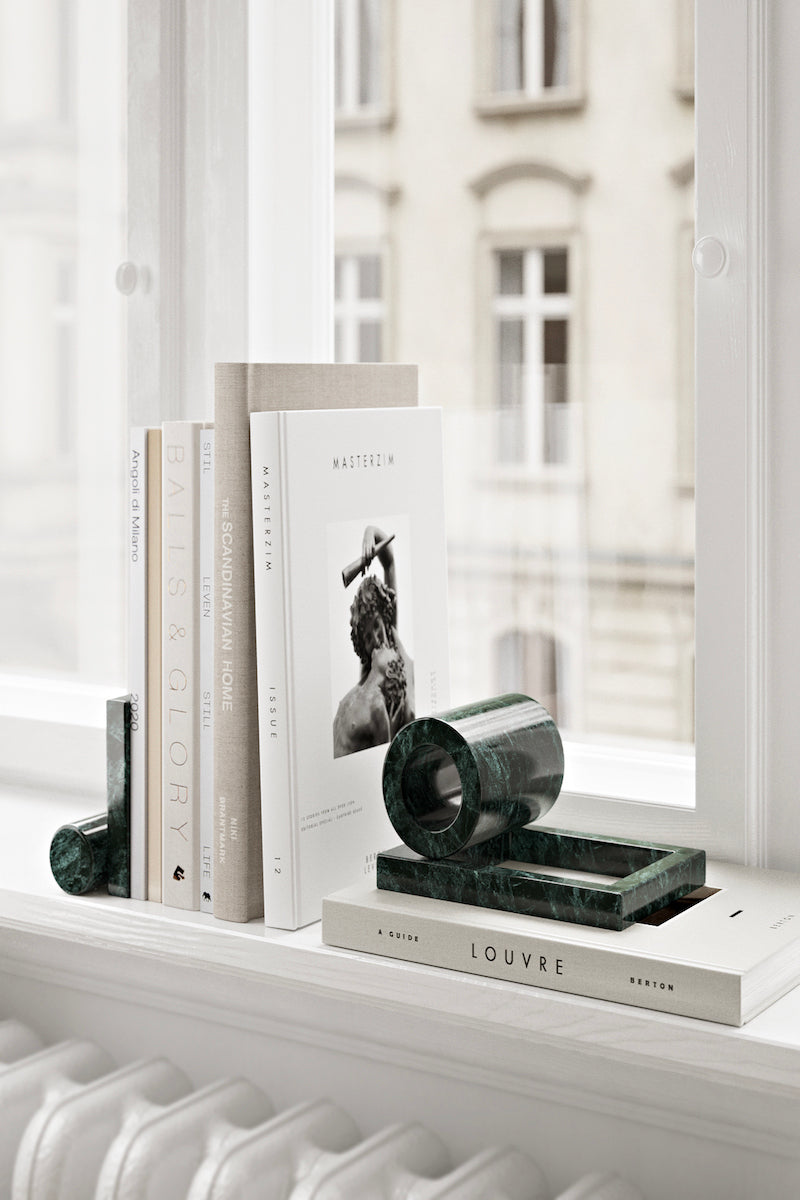
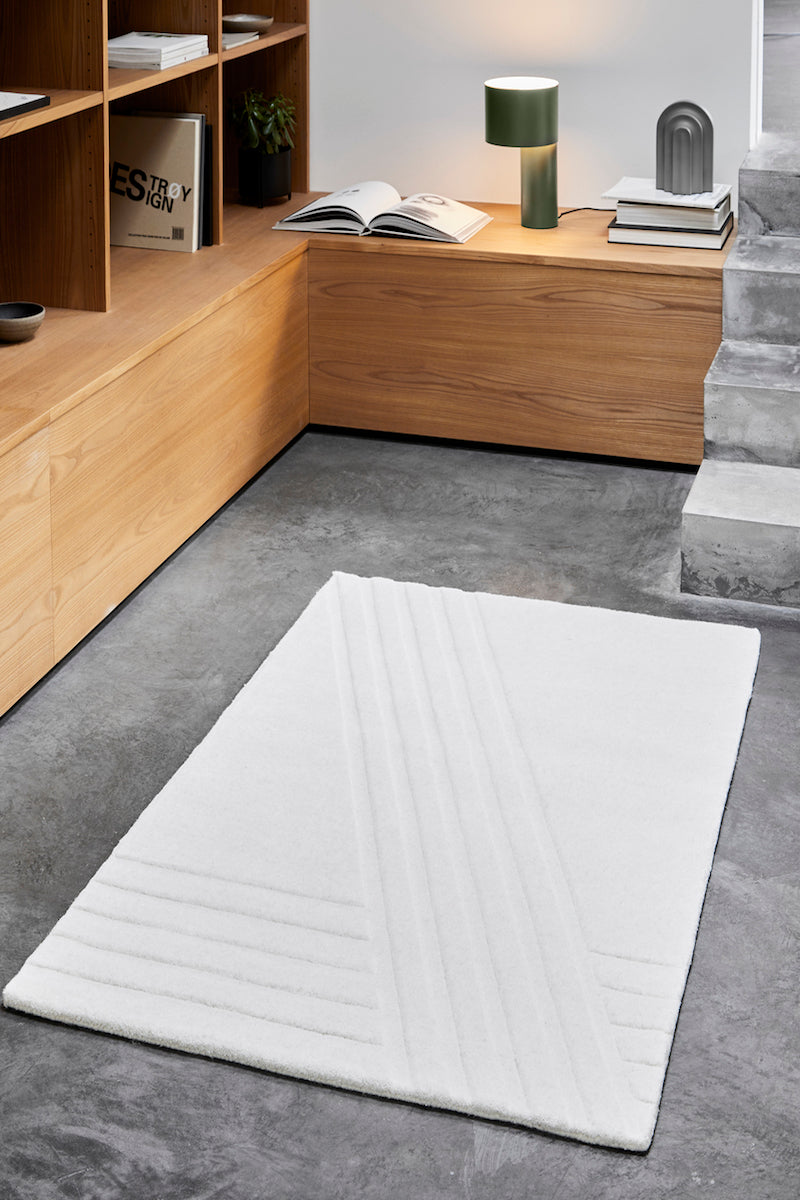
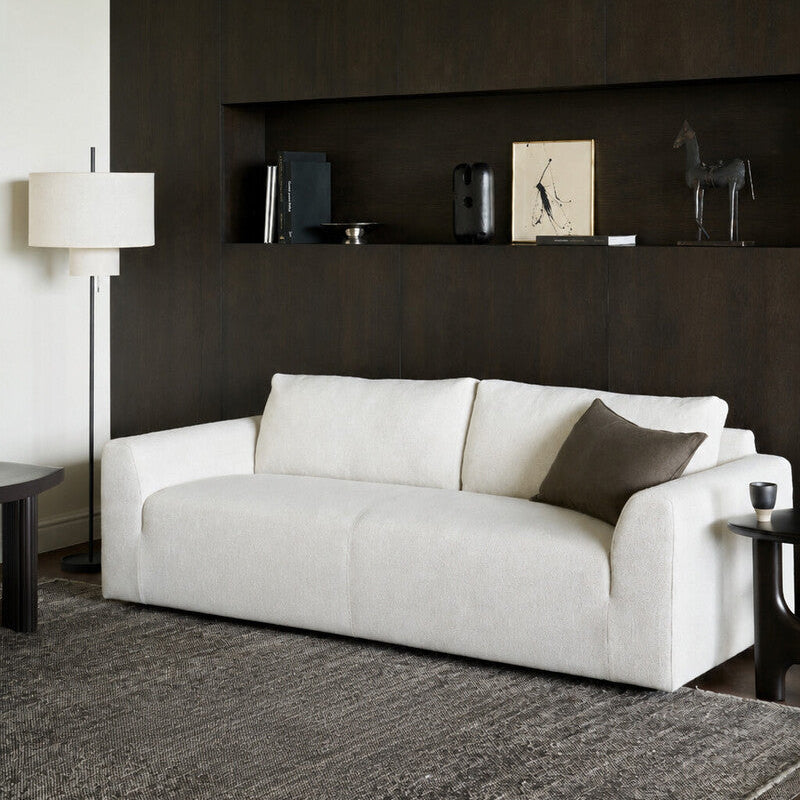
Ethnicraft and FDB Møbler both build furniture from solid wood, but they answer different questions. Ethnicraft, headquartered in Boom, Belgium, has spent more than 25 years making warm, substantial oak and teak pieces with visible grain and generous proportions. FDB Møbler has produced Danish design since 1942, in lighter beech and oak, with published FSC chain-of-custody documentation. At Comosum, we carry both because "solid wood" is a starting point, not an answer.
Two Traditions, One Material
Solid wood is the most common shorthand for sustainable furniture, and the least informative. It tells you nothing about which species, which forest, which finish, or who verified any of it. Ethnicraft and FDB Møbler are a useful pair precisely because they sit at opposite ends of several of those questions while overlapping on the one that matters most: build something once, properly.
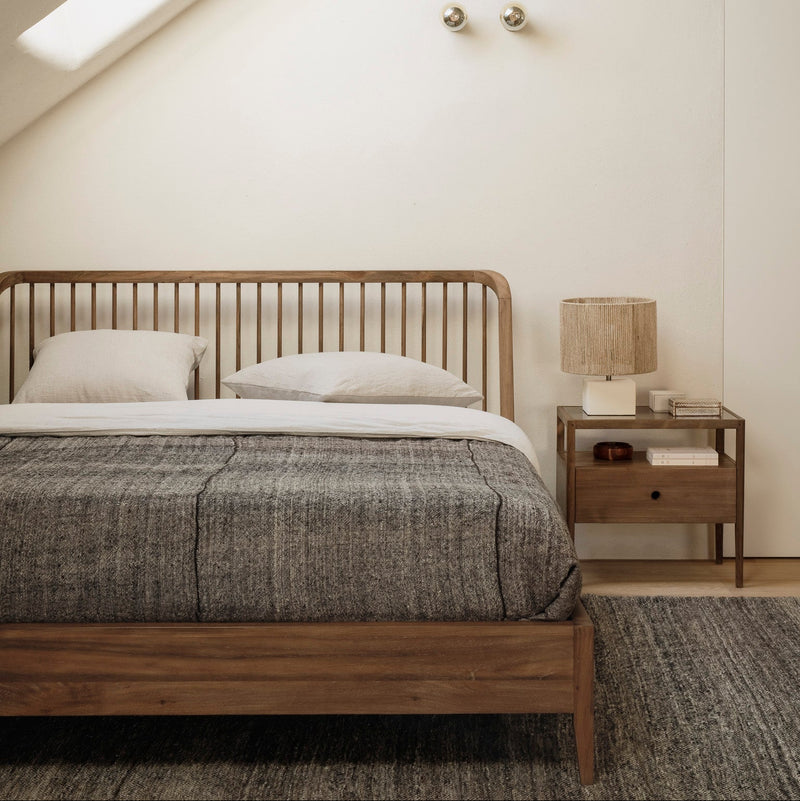
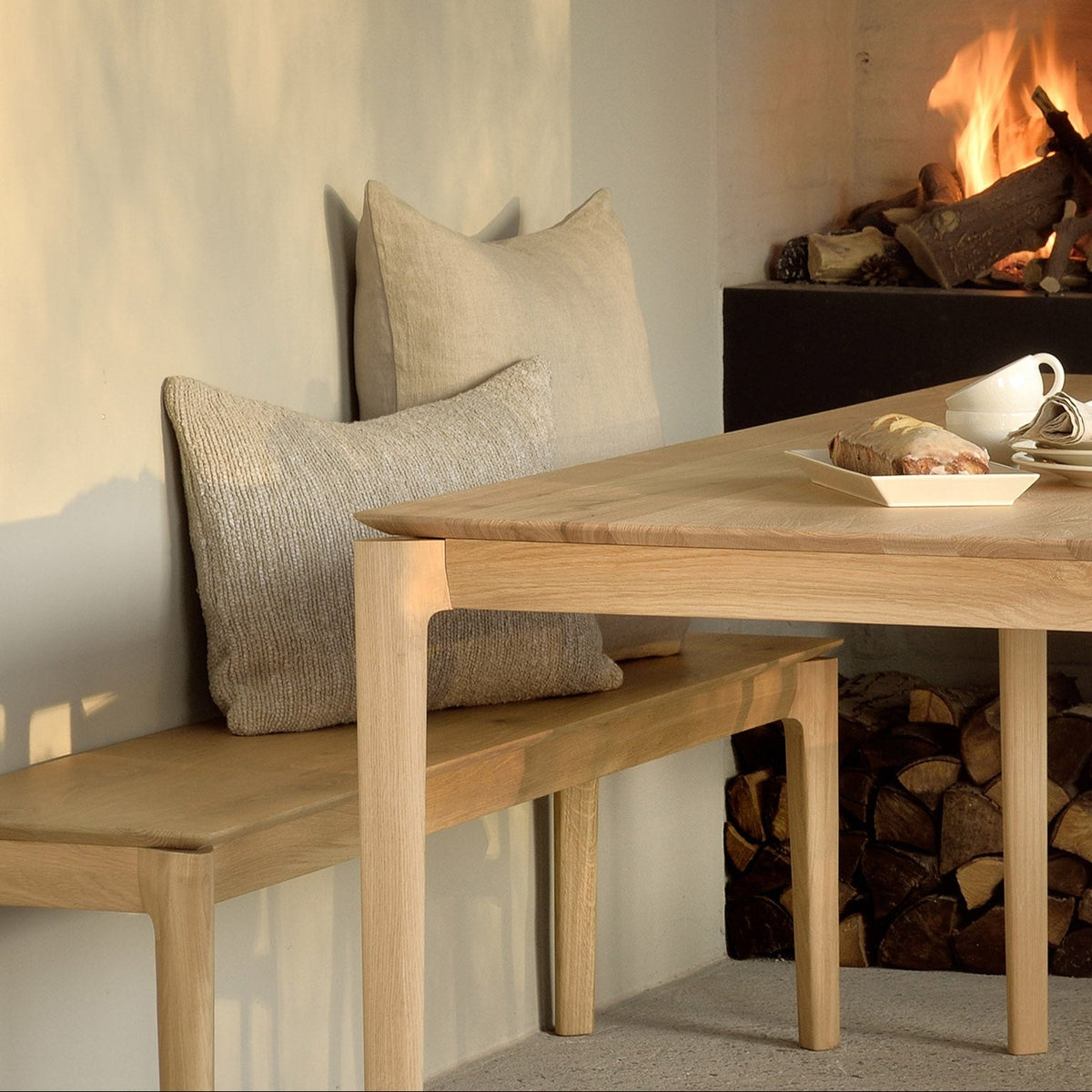
Ethnicraft works primarily in solid oak and teak. Its design language is contemporary and in-house rather than archival — the Bok, Torsion, PI, Geometric, Elements and Roller Max collections are its own, developed over the last two decades. Pieces tend to be thick-edged and sculptural, finished in oiled, varnished or brushed oak, and offered in natural, brown-tainted and black-tainted tones. The company describes oak as "the ultimate noble and renewable material" and designs around celebrating its grain rather than disguising it.
FDB Møbler comes from a different place entirely. FDB Møbler's design studio was founded in 1942 with an explicitly democratic brief: good design for ordinary households, not just wealthy ones. The catalogue is largely an archive. The J46 chair was designed by Poul M. Volther in 1956. Børge Mogensen designed the J27 stool. Jørgen Bækmark is responsible for the J80 and J81 chairs and the J83 bench. These are mid-century Danish designs still in production, not reissued homages.
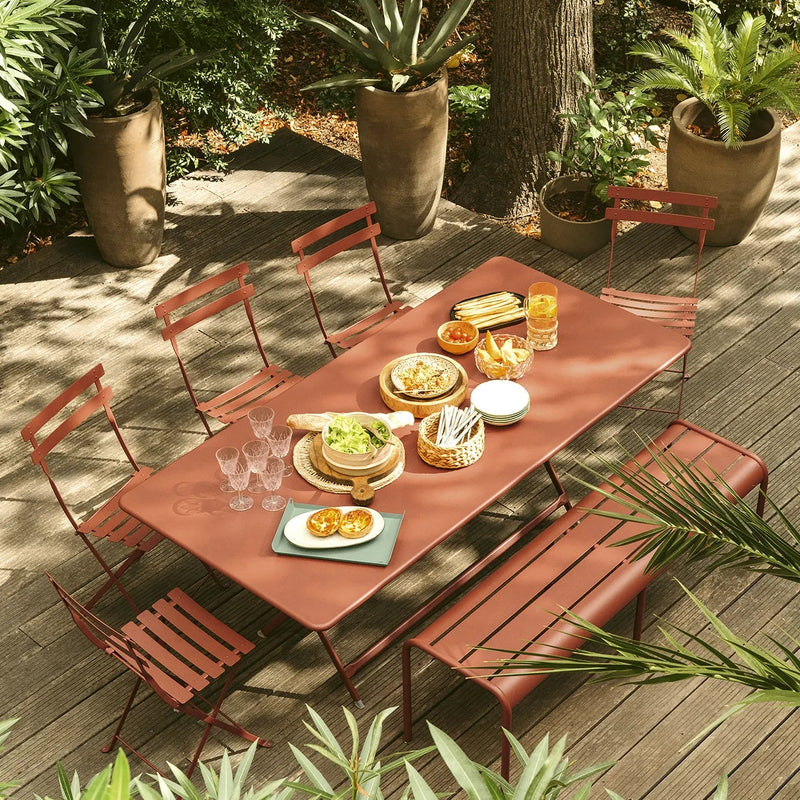
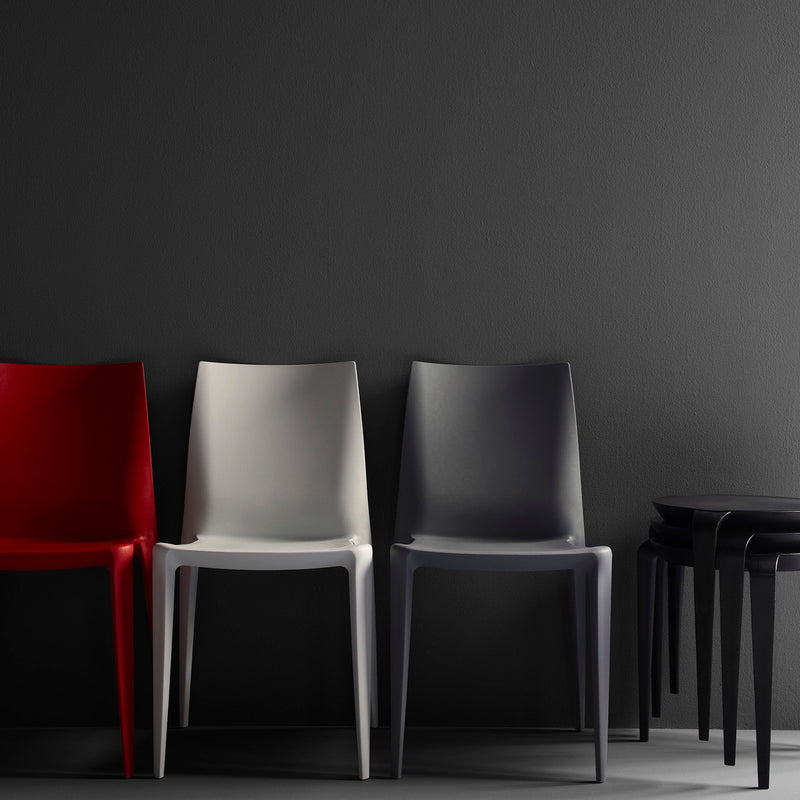
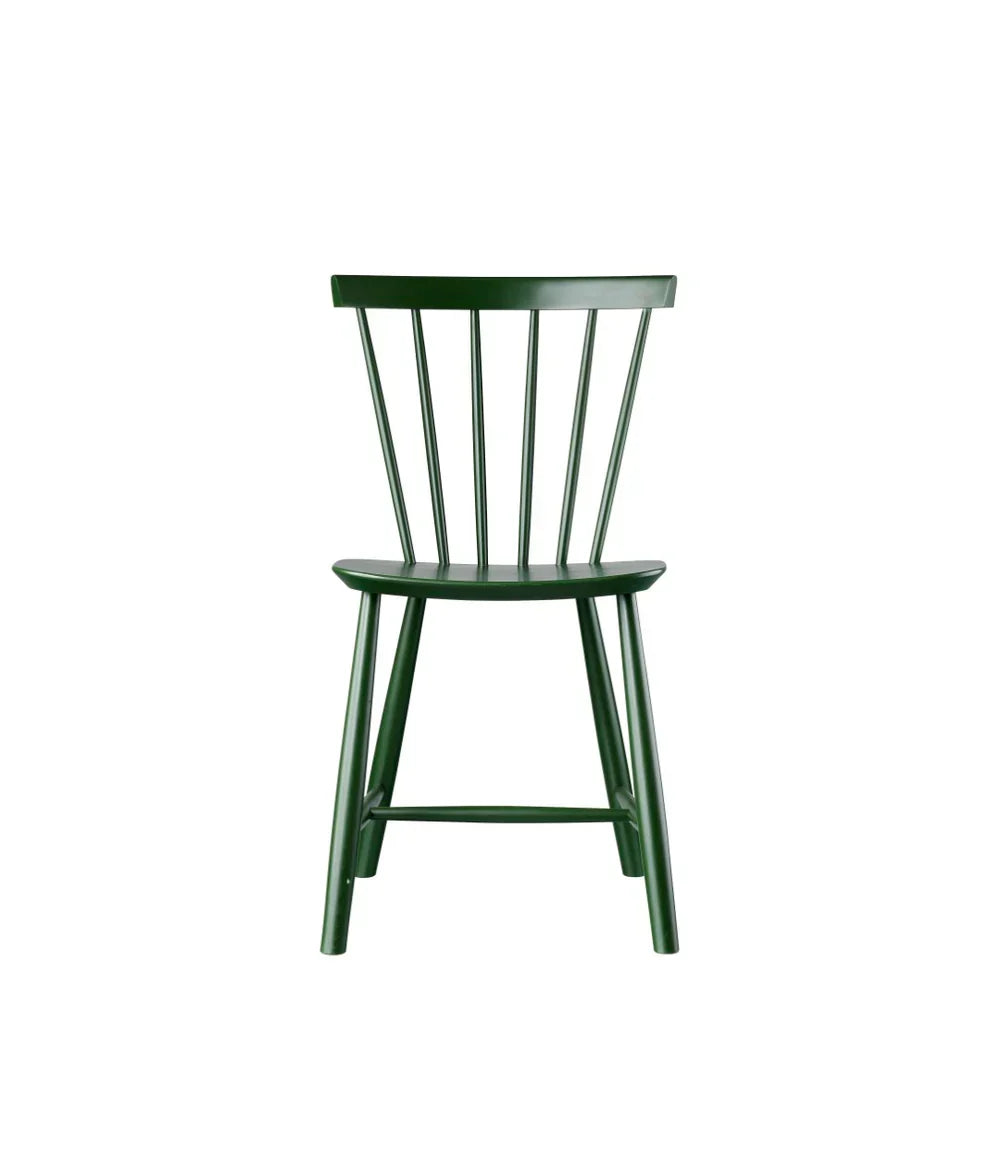
The visual difference follows from the structural one. Ethnicraft reads as warm, weighty and modern. FDB reads as light, slim and restrained — often in beech rather than oak, frequently painted in water-based colour or soap-treated rather than stained.
How Each Brand Handles Sustainability
Materials
FDB Møbler produces its wood furniture in FSC-certified wood and publishes its chain-of-custody code directly: FSC-C164841. That matters more than it sounds. Chain-of-custody certification is the mechanism that tracks certified material from forest through every processing step to the finished product, and a published code can be checked against the Forest Stewardship Council's public certificate database. FDB also states that its textiles carry OEKO-TEX certification.
Ethnicraft's language is softer. On its own material pages, the company says its wood is "sourced from responsibly and carefully managed forests" — a self-declaration rather than a named third-party standard. Ethnicraft's own product pages mark select teak lines as FSC-certified (Ethnicraft NV's chain-of-custody certificate, FSC-C016233, is listed in the FSC database), and Comosum's product records reflect that where it applies; its oak carries no FSC claim. We think that distinction is worth stating plainly rather than smoothing over.
Manufacturing and finishes
Both brands design for low waste. Ethnicraft reuses production offcuts, logs and sawdust, with sawdust going to drying-oven fuel or compressed pellet stock rather than disposal. FDB Møbler's painted pieces use water-based lacquer, and several of its chairs are soap-treated — a traditional Danish finish that leaves the beech pale and matte with no film-forming coating at all.
Certifications and recognition
FDB Møbler is working to bring its collection under the Nordic Swan Ecolabel, the official Nordic environmental label launched by the Nordic Council of Ministers in 1989. A substantial number of FDB pieces already carry it, including the J46, J80, J81, J27, J83 and J164C. Nordic Swan is a lifecycle standard: it requires a minimum of 70% certified wood raw material, bans halogenated flame retardants and fluorinated substances, caps formaldehyde and VOC emissions, and sets requirements for warranty, spare-parts availability and circular design.
Ethnicraft's third-party certification story is thinner. What it does have is design longevity and a spare-parts and care culture — the company maintains a public care-and-maintenance programme and sells its own maintenance products, which is a real, if less legible, form of sustainability. If you want to read more on how we weigh these signals, our certification glossary and FSC guide go deeper.
Why We Carry Both
We carry both brands because they solve different rooms and different budgets.
Ethnicraft is where we send people furnishing a dining room around one substantial table. The oak has real presence, the range of finishes is unusually broad, and stock depth is good — the Bok Dining Table and the Torsion Round Dining Table are both consistently available, which matters when a table is the anchor purchase for a whole room.
FDB Møbler is where we send people who want verified credentials, Danish design provenance and a lower entry price per seat. A J46 chair at $369 is a 1956 Volther design carrying the Nordic Swan Ecolabel. That combination is genuinely hard to find at that price.
The honest trade-off: FDB's table stock is thinner than its seating stock, so if you want a complete FDB dining set in one delivery, check availability before you plan around it. Ethnicraft, conversely, asks you to accept "responsibly managed forests" as a sourcing claim rather than a certificate number. Neither of those is disqualifying. Both are worth knowing before you buy. You can see how we grade every brand we carry on our sustainable furniture brands page.
Which One Should You Buy?
Choose Ethnicraft if the table is the point. When a dining room is built around one anchor piece, Ethnicraft's proportions do the work. The tops are genuinely thick, the edges are mitred rather than banded, and the finish range means you can land on warm brown, pale natural or near-black without changing species. Prices for dining tables currently run from $928 for the Blend to $4,339 for the Geometric Round, with the Bok at $1,999 sitting where most people end up. Stock depth is the quiet advantage — Ethnicraft rarely makes you wait.
Choose FDB Møbler if you are buying seating, or buying on credentials. Six chairs is where furniture budgets actually break, and FDB's price architecture is built for exactly that. The J46 at $369 and the J27 stool at $239 make a full set achievable in a way that $989 Ethnicraft chairs do not. You also get documentation: a published FSC chain-of-custody code and, on many pieces, the Nordic Swan Ecolabel, which is among the harder ecolabels in the world to obtain — a new furniture licence application alone costs €3,401 before annual fees, and the criteria run to well over a hundred individual requirements.
Choose both if you are furnishing a real room. This is what we do most often. An Ethnicraft oak table with FDB beech chairs is not a compromise; it is how most well-composed Danish and Belgian interiors actually look. Mixing brands also spreads your certification exposure — the seating you touch every day carries third-party verification, and the table carries the design longevity.
One caution on colour. FDB's painted finishes are specified to RAL and Pantone references — Jet Black is RAL 9005, Black Red is RAL 3007, Bottle Green is Pantone 553C. Ethnicraft's tainted oaks are wood stains, not paint, so they shift with the grain underneath. Do not assume a black FDB chair and a black-tainted Ethnicraft table will read as the same black. In practice they rarely clash, but they will not match.
What to Shop at Comosum
- Ethnicraft Bok Dining Table — the brand's signature: thick solid-wood top, mitred edge, available in oak and teak. From $1,999.
- Ethnicraft Torsion Round Dining Table — a sculpted pedestal base in solid oak, and the easier choice for smaller or square rooms. From $1,659.
- Ethnicraft Casale Dining Chair — an oak-framed chair that pairs across the whole Ethnicraft table range. From $529.
- FDB Møbler J46 Chair — Poul M. Volther, 1956. Solid beech, water-based paint, Nordic Swan Ecolabel. From $369.
- FDB Møbler J80 Chair — Jørgen Bækmark's spindle-back in jet black beech. From $869.
- FDB Møbler J27 Stool — a Børge Mogensen design and the least expensive way into the collection. From $239.
- Ethnicraft Roller Max Sideboard — slatted tambour fronts in solid oak. From $3,349.
Browse the full Ethnicraft collection and the full FDB Møbler collection at Comosum, or start from our dining tables and dining chairs. To see both brands' oak tables side by side, open our oak dining tables page.
Frequently Asked Questions About Ethnicraft and FDB Møbler
Where is Ethnicraft furniture made?
Ethnicraft is a Belgian company headquartered at Scheldeweg 5 in Boom, Belgium, and has been producing solid-wood furniture for more than 25 years. Its collections are built in solid oak and teak rather than veneer or engineered panel.
Where is FDB Møbler furniture made?
FDB Møbler is a Danish brand based in Albertslund, Denmark, founded in 1942 as a design studio led by Børge Mogensen. Its catalogue consists largely of original mid-century Danish designs still in production.
Which brand has stronger sustainability credentials?
FDB Møbler, on documentation. It publishes an FSC chain-of-custody code (FSC-C164841), states that its textiles are OEKO-TEX certified, and carries the Nordic Swan Ecolabel on a growing share of its collection. Ethnicraft describes its wood as coming from responsibly and carefully managed forests, which is a self-declaration rather than a third-party certificate.
What wood does each brand use?
Ethnicraft works mainly in solid oak and solid teak, with oiled, varnished and brushed finishes in natural, brown-tainted and black-tainted tones. FDB Møbler uses solid beech and solid oak, often with water-based paint or a traditional soap treatment that leaves the wood pale and matte.
Can I mix Ethnicraft and FDB Møbler in the same room?
Yes, and it is a combination we recommend often. A substantial Ethnicraft oak table with slimmer FDB beech chairs balances visual weight well, and keeps the per-seat cost lower than a full Ethnicraft dining set. Match undertones rather than species — natural oak and pale beech sit together comfortably.
For more on how solid wood compares to the alternatives, read our guide to solid wood, veneer and engineered wood.


Leave a comment
This site is protected by hCaptcha and the hCaptcha Privacy Policy and Terms of Service apply.