



Cleaning an upholstered sofa comes down to three things: knowing your fabric's cleaning code, blotting spills instead of rubbing them, and skipping aftermarket stain treatments entirely. A 2023 study in the AATCC Journal of Research found PFAS-based fabric finishes made no measurable difference to water-based stains and wore off under moderate abrasion. At Comosum, we sell sofas built to be cleaned, recovered, and kept — not chemically sealed.
Why Upholstery Care Is a Sustainability Question
A sofa is usually the largest, heaviest, most resource-intensive object in a living room. Replacing one because a red wine stain set badly is a genuine waste of material — frame timber, foam, fabric, and the freight to move it all twice.
Most upholstery does not fail structurally. It fails cosmetically. The frame is fine, the joinery is fine, and the piece goes to landfill because the fabric looks tired. That is a maintenance problem dressed up as a durability problem, and it is almost entirely preventable with a vacuum, a clean cloth, and about ten minutes a month.
This is the last instalment in our care series, after solid oak, teak, and powder-coated metal. Upholstery is the one people get wrong most often — usually by being too aggressive, too late.
How to Clean an Upholstered Sofa, Step by Step
Start with the cleaning code
Every upholstered piece sold in the US carries a cleaning code, printed on a tag under a seat cushion or sewn into the deck. Four letters, and they are not advisory:
- W — water-based cleaners only. Typical of polyester, nylon, acrylic, and most performance weaves.
- S — solvent only. Common on natural fibres like linen, cotton, rayon, and silk, where water can leave rings or shrink the weave.
- WS — either method. Start with water and a mild detergent; move to solvent only if that fails.
- X — vacuum and brush only. No water, no solvent, no sprays. Professional cleaning if it goes badly.
If the tag is missing, treat the piece as S until you have tested a hidden area — the back panel behind a cushion, or the underside of a skirt. Wet a cotton swab, press it into the fabric, wait ten minutes, and check for a ring or colour transfer.
The routine that actually prevents stains
Vacuum weekly with an upholstery attachment. Loose soil is abrasive; ground into a weave, it dulls colour and wears fibres far faster than sunlight does. Rotate and flip reversible seat cushions at the same time so compression and fading spread evenly.
Keep the sofa out of direct afternoon sun where you can. If the room only works one way, a rug and a lined curtain do more for fabric longevity than any spray.
How to treat a fresh spill
Blot, never rub. Rubbing drives liquid deeper into the pile and breaks the fibre surface, which is what turns a spill into a permanent mark. Press a clean, dry white cloth straight down, lift, move to a dry section of cloth, repeat. Work from the outside of the spill inward so you do not spread the edge.
Only once you have lifted everything you can dry should you introduce moisture — and only if the code allows it. Use the smallest amount that will work, blot it out the same way, then let the area air-dry completely before sitting on it. A damp cushion that gets compressed is how you get a water ring.
Solid food, mud, and anything with body should be lifted off with a blunt edge first. Scraping a wet stain sideways is the fastest way to make it three times its original size.
The PFAS Problem: Why We Don't Recommend Stain Treatments
Furniture retailers have sold aftermarket stain protection for decades. Most of those treatments are built on PFAS — per- and polyfluoroalkyl substances, the same chemical family covered in our non-toxic furniture explainer.
The Green Science Policy Institute tested this directly with industry and academic collaborators, publishing the results in the AATCC Journal of Research in 2023. They stained treated and untreated commercial upholstery with coffee and oil-based vinaigrette, under both fresh and abraded conditions. PFAS finishes made no difference to the water-based coffee stains, and only a minimal difference to the oil-based ones — and then only under ideal conditions, where the finish was undamaged and the spill was cleaned quickly. Repellency wore off after moderate abrasion, meaning the treatment needs reapplying to keep working.
Their conclusion was that fabric choice matters more than any finish. That matches what we see: the sofas that stay looking good are the ones with an inherently forgiving weave, cleaned promptly, not the ones that got sprayed at delivery.
Where you do want reassurance about what is in a fabric, look for OEKO-TEX Standard 100, which tests finished textiles for harmful substances, or GREENGUARD Gold for low chemical emissions. Both are explained in our certification glossary.
Fabric by Fabric
Wool is the quiet overachiever. The fibre's outer cuticle is made of overlapping hydrophobic scales that resist liquid penetration, which is why Woolmark describes wool as naturally stain-resistant without any added chemistry. Blot promptly and most spills never reach the core.
Linen and cotton breathe beautifully and take dye honestly, but they absorb. Expect an S or WS code, act fast, and accept that both will soften and mark with age — which is either a flaw or the point, depending on your taste.
Polyester and recycled-polyester performance weaves are the most forgiving for households with children or animals, a subject we covered in our pet-friendly furniture guide. Look for a high abrasion rating and a W code.
Removable, washable covers change the calculation entirely. A sofa you can strip and launder — or eventually recover — is a sofa you keep. It is one of the reasons we favour modular designs.
What to Shop at Comosum
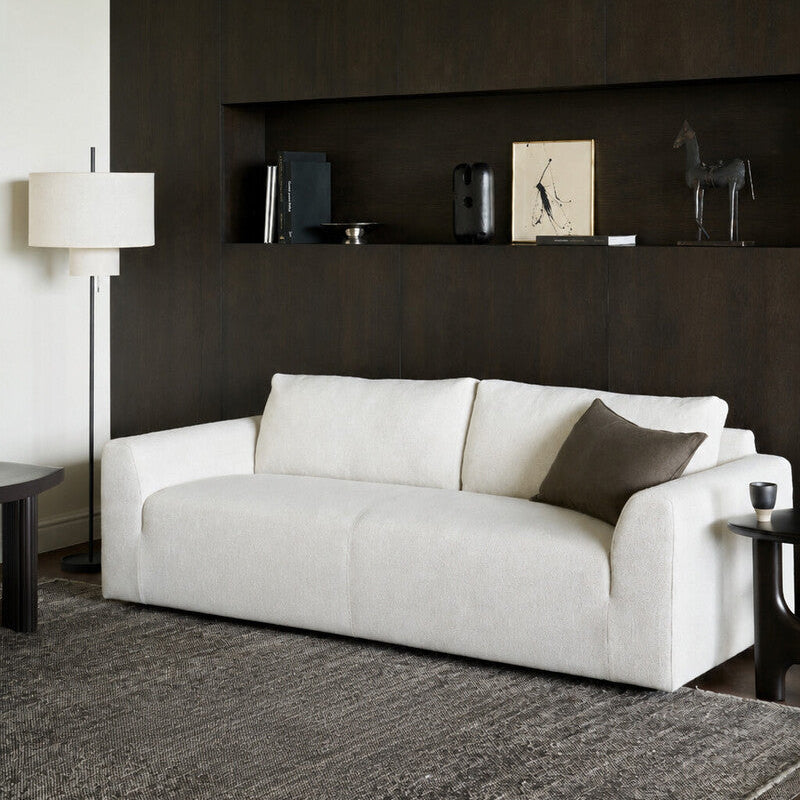
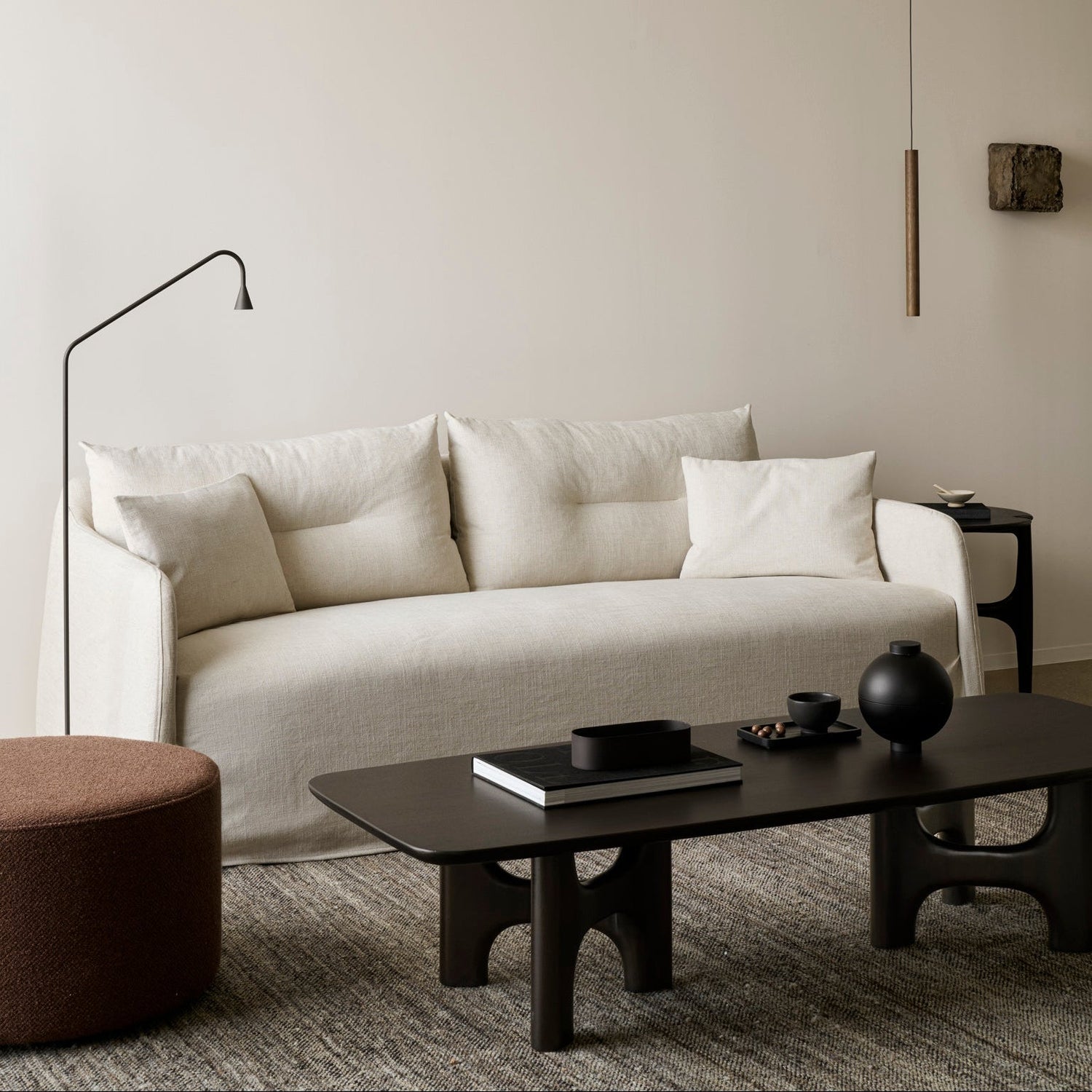
- Ethnicraft N701 Sofa — a fabric sofa on a solid wood frame, with the kind of clean upholstery lines that make recovering straightforward later.
- Ethnicraft Weave Sofa — a textured weave that hides everyday soil well, which per the research above does more real work than any finish.
- UMAGE Lounge Around 3 Seater — a modular Danish system on a dark oak base, designed so components can be reconfigured rather than replaced.
- Ethnicraft Safari Outdoor Lounge Chair — removable, washable covers on a solid teak frame.
Browse all sofas and sectionals and lounge chairs at Comosum, or read more about the sustainable furniture brands we carry.
Frequently Asked Questions About Cleaning Upholstered Sofas
How do I clean an upholstered sofa at home?
Vacuum with an upholstery attachment, then check the cleaning code on the tag under a seat cushion. Blot spills with a dry white cloth before introducing any moisture, and only use water-based cleaners if the code is W or WS.
What do the W, S, WS, and X upholstery cleaning codes mean?
W means water-based cleaners only, S means solvent only, WS means either method is safe, and X means vacuum or brush only with no liquid at all. The code is set by the fabric's fibre content and finish, and ignoring it is the most common way people permanently damage upholstery.
Are stain-resistant fabric treatments safe?
Most aftermarket stain treatments are PFAS-based. A 2023 study published in the AATCC Journal of Research found these finishes made no difference to water-based stains, had only minimal effect on oil-based stains under ideal conditions, and wore off with abrasion. We do not recommend them.
Is wool upholstery hard to clean?
No. Wool's outer cuticle is made of overlapping hydrophobic scales that resist liquid penetration, giving it natural stain resistance without added chemicals. It usually carries an S or WS code, so blot promptly and avoid soaking the fibre.
How often should I vacuum an upholstered sofa?
Weekly is a reasonable target. Loose grit is abrasive and grinds into the weave every time someone sits down, so regular vacuuming does more for the fabric's lifespan than occasional deep cleaning.




Leave a comment
This site is protected by hCaptcha and the hCaptcha Privacy Policy and Terms of Service apply.