

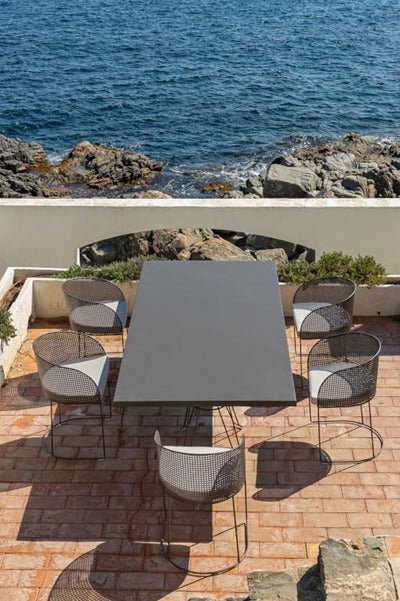
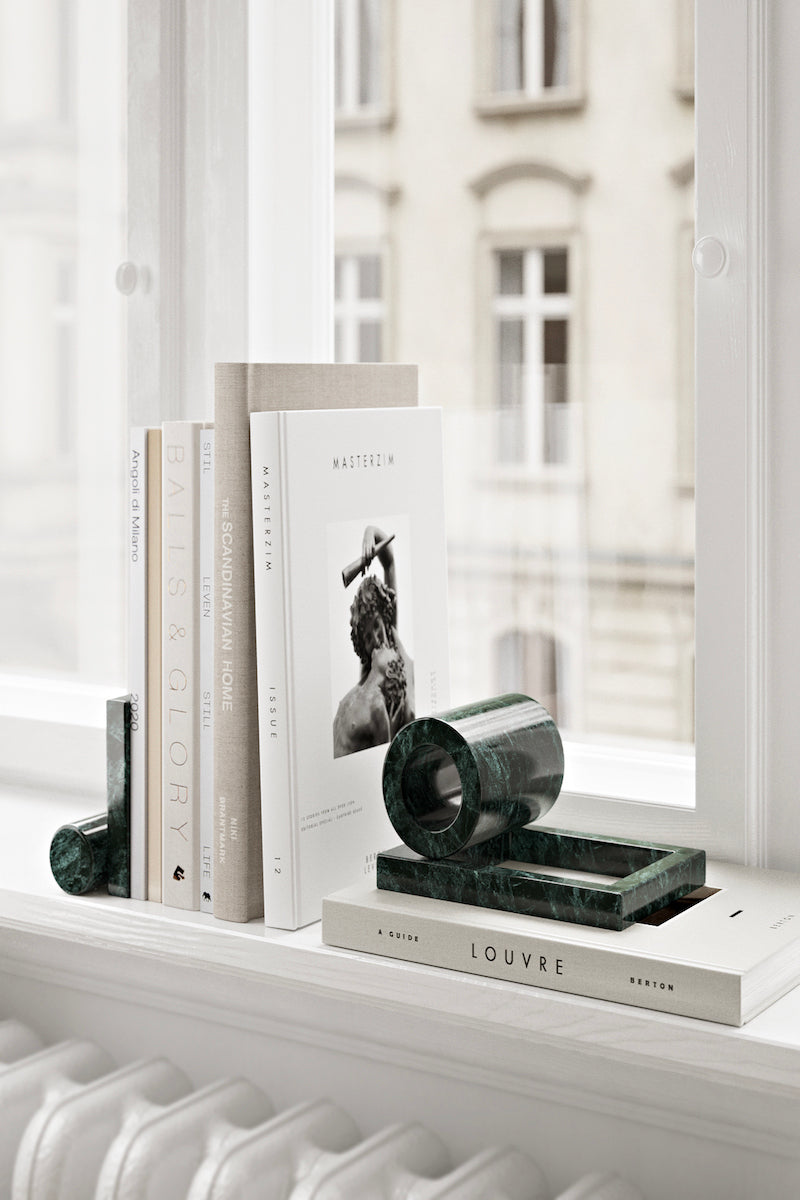
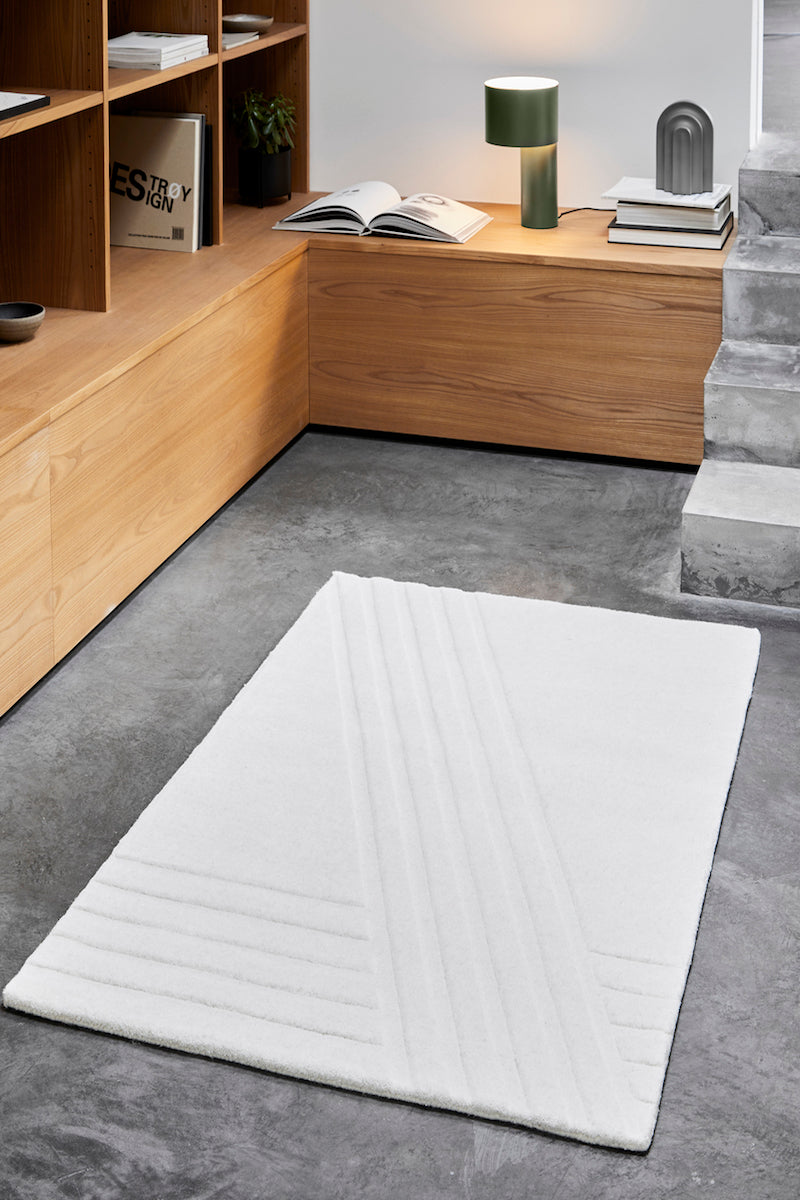
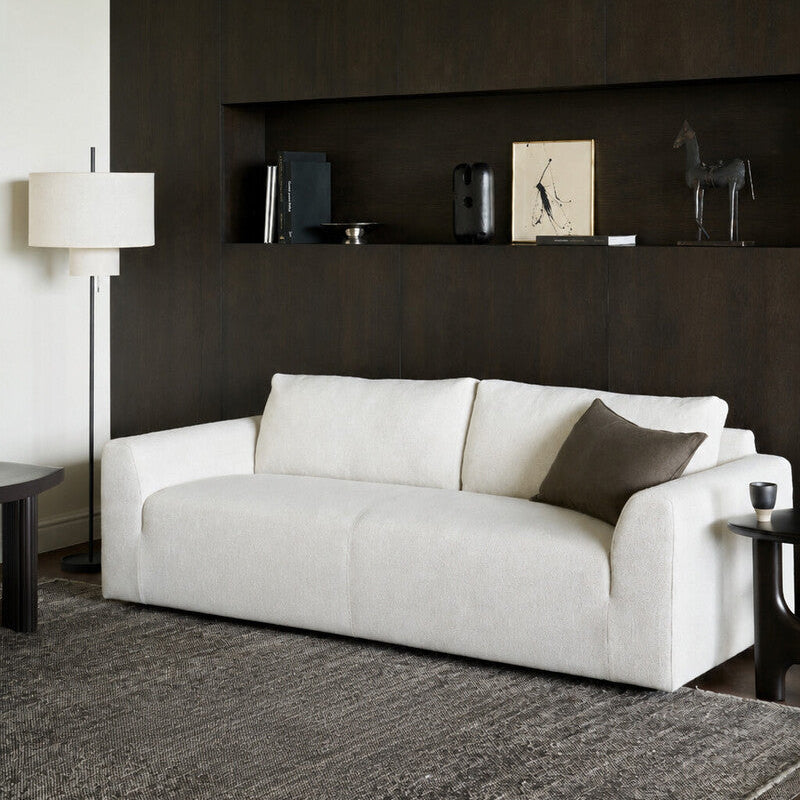
Kähler (founded 1839 in Næstved), Holmegaard (1825), Lyngby Porcelæn (1936) and Arne Jacobsen Clocks are four Danish homeware brands owned by Rosendahl Design Group, a Certified B Corporation since March 2024. At Comosum we carry all four because their designs stay in production for decades rather than seasons. You can shop all four in our sustainable decor collection.
Why Danish Homeware Brands Are Worth Understanding as a Group
Most homeware gets bought one object at a time — a vase here, a carafe there — with no idea who made it or whether the piece will still exist in five years. Danish homeware is the rare corner of the market where the opposite is true, and the reason is structural rather than sentimental.
Rosendahl Design Group is a multi-brand design house that stewards eight Danish design brands: Rosendahl, Kay Bojesen, Kähler, Holmegaard, Lyngby Porcelæn, Bjørn Wiinblad, Arne Jacobsen Clocks and JUNA. In its own words, the group "respects and upholds the heritage" of those brands, "rediscovering the classic design icons by creating new and durable design." Four of the eight are stocked at Comosum.
That ownership structure matters to a buyer for one practical reason: continuity. When a single group holds the archives, the moulds and the original drawings, a vase introduced in 1936 can be reissued in 2012 and still be for sale in 2026. Lyngby Porcelæn's flagship vase did exactly that. Holmegaard's Perfection glasses have been in production since 2006. That is the opposite of the buy-and-replace cycle that sends intact ceramics to landfill — the same argument we make in our guide to the hidden cost of fast furniture.
How These Four Danish Homeware Brands Are Built
Materials
The four brands split cleanly across three material families. Kähler works in stoneware and ceramic — the Hammershøi Unfold and Poppery vases are fired ceramic with hand-applied glazes. Lyngby Porcelæn works in white porcelain, with a glass line alongside it. Holmegaard is a glassworks: mouth-blown and machine-made glass, including the beer, wine and water glasses in the Perfection and Notes ranges. Arne Jacobsen Clocks are steel, glass and quartz movements — a different discipline entirely, and the only one of the four with electronics inside. Vases from Kähler, Lyngby Porcelæn and Holmegaard sit together on our vases page.
Manufacturing
Rosendahl Design Group operates in China, Denmark, Germany, Japan, Norway, Sweden, the United Kingdom and the United States, per its B Lab listing. Production is not exclusively Danish, and we would rather say so than imply otherwise. Where handwork survives, the brands document it: Lyngby Porcelæn states that "many parts of the process are done by hand" and that "a green monogram is hand-applied at the bottom of each Lyngby Porcelæn product." The clocks are, in Rosendahl's phrasing, "recreated in line with Arne Jacobsen's original drawings," with updated functions such as snooze and a light sensor.
Certifications and Recognition
The credential that carries weight here is B Corp. Rosendahl Design Group has been a Certified B Corporation since March 2024. If you want the mechanics of what that audit actually covers, we wrote a plain-English explainer on B Corp certification.
Beyond B Corp, these are design brands rather than certified-materials brands. Kähler and Holmegaard do not publish FSC, GOTS or OEKO-TEX claims for their tableware, and we are not going to invent any. Their environmental case rests on product longevity and on a parent company that has submitted to third-party audit — which, honestly assessed, is a stronger position than most homeware sold in the US can claim.
Why We Carry These Danish Homeware Brands at Comosum
Kähler — ceramics since 1839
The Kähler story began in 1839, when Herman J. Kähler opened a ceramics workshop in Næstved, Denmark. The painter and ceramicist Svend Hammershøi worked with the studio and designed the HAK monogram Kähler still uses; today's Kähler collection carries his name forward in the Hammershøi series, designed by Hans Christian Bauer. The Omaggio Nuovo vases are a revival of the Omaggio series, one of the most recognisable vase families in contemporary Danish interiors. Prices start around $35, which makes Kähler the easiest entry point of the four.
Holmegaard — glass since 1825
Holmegaard was founded in 1825 by Countess Henriette Danneskiold-Samsøe, on peat marshland that gave the glassworks its name. Jacob E. Bang joined in 1928 as its first designer and is described by the brand as Denmark's first industrial designer. Per Lütken then worked at Holmegaard from 1942 until his death in 1998 and created more than 3,000 glass designs — a body of work almost no glasshouse can match. Rosendahl acquired the brand in 2008. The Holmegaard collection we stock leans on the everyday ranges: Perfection (Tom Nybroe, 2006), Minima (Cecilie Manz, 2006), and Design with Light (Maria Berntsen, 2011).
Lyngby Porcelæn — porcelain since 1936
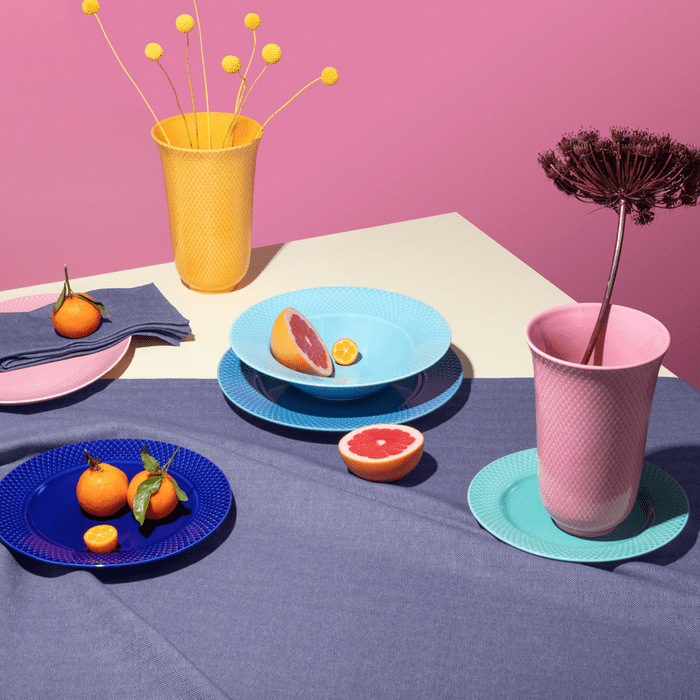
Lyngby Porcelæn was founded in 1936 in Kongens Lyngby by the wholesaler Holst & Knudsen. Its white cylindrical vase with the distinctive grooves became a fixture of Danish modernism, went out of production when the factory closed in 1969, and came back when the brand resumed in 2012. Rosendahl acquired it in 2016. The Lyngby Porcelæn collection spans the vase itself, the faceted Rhombe serveware, and the Tura series designed by Philip Bro Ludvigsen in 2020.
Arne Jacobsen Clocks — reissues from real buildings
Arne Jacobsen (1902–1971) designed his wall and table clocks between 1938 and 1971, almost always as fixtures inside buildings he was architecting. The Bankers wall clock was designed in 1971 for Denmark's National Bank, where Jacobsen was lead architect. The City Hall clock was part of his total concept for Rødovre Town Hall, built in 1956. The Roman clock was created for Aarhus Town Hall, where it still hangs on the marble tower. The Station clock was made for the electrical goods manufacturer Lauritz Knudsen, who wanted a universal clock legible in any building. Browse the Arne Jacobsen Clocks collection and you are essentially shopping mid-century Danish public architecture at desk scale.
Together these four sit alongside the Rosendahl tableware line in our decor and kitchen collections, and most pieces fall inside our sustainable furniture under $500 range. For the wider roster, see our sustainable furniture brands hub, or our spotlight on WOUD, Denmark's quietly confident design house.
What to Shop at Comosum
Six pieces that show what each of these four brands does best:
- Kähler Omaggio Nuovo — Hand-painted striped ceramic vases from $38, a revival of the Omaggio series. The most recognisable silhouette in the catalogue.
- Kähler Hammershøi Unfold Vase — From $60. The Hammershøi language, designed by Hans Christian Bauer, in a sculptural unfolding profile.
- Lyngby Porcelæn Lyngby Vase — From $100. The 1936 grooved cylinder, back in production since 2012, with the green monogram hand-applied to the base.
- Holmegaard Perfection — Glassware from $15, designed by Tom Nybroe in 2006. Water, wine and spirit glasses that have stayed in production for two decades.
- Holmegaard Design with Light — From $75. Maria Berntsen's 2011 candle and light series in mouth-blown glass.
- Arne Jacobsen City Hall Table Clock — $149. A 4.3-inch desk reissue of the clock Jacobsen drew for Rødovre Town Hall in 1956.
Browse the full Kähler collection at Comosum →
Frequently Asked Questions About Danish Homeware Brands
Who owns Kähler, Holmegaard, Lyngby Porcelæn and Arne Jacobsen Clocks?
All four are owned by Rosendahl Design Group, a Danish multi-brand design house that stewards eight heritage brands in total — the other four being Rosendahl, Kay Bojesen, Bjørn Wiinblad and JUNA. Rosendahl acquired Holmegaard in 2008 and Lyngby Porcelæn in 2016. Shared ownership is why these brands keep designs in production for decades instead of retiring them each season.
Is Rosendahl Design Group a B Corp?
Yes. Rosendahl Design Group has been a Certified B Corporation since March 2024. The certification covers the group, and therefore all eight of its brands.
Where are Danish homeware brands like Kähler and Holmegaard made?
Both brands originate in Denmark — Kähler from an 1839 workshop in Næstved, Holmegaard from an 1825 glassworks on Danish peat marshland — but Rosendahl Design Group's operations today span China, Denmark, Germany, Japan, Norway, Sweden, the United Kingdom and the United States. Production location varies by product line, so treat "Danish design" as a statement about design provenance rather than a guarantee of Danish manufacture.
What is the Lyngby Vase and why is it famous?
The Lyngby Vase is a white cylindrical porcelain vase with distinctive vertical grooves, introduced by Lyngby Porcelæn in 1936 and now regarded as a symbol of modern Danish porcelain design. It went out of production when the original factory closed in 1969 and returned in 2012 when the brand was relaunched. Each piece carries a green monogram hand-applied to the base.
Are Arne Jacobsen clocks authentic reissues?
Yes — the Bankers, City Hall, Roman and Station clocks are produced by Rosendahl Design Group from Arne Jacobsen's original drawings, with updated functions such as snooze and a light sensor. Each design was originally made for a specific building or client: Denmark's National Bank in 1971, Rødovre Town Hall, Aarhus Town Hall, and the electrical manufacturer Lauritz Knudsen respectively.
Are Danish homeware brands a good house warming gift?
They are among the easiest design gifts to get right, because the entry prices are low relative to the provenance — Kähler vases start around $35 and Holmegaard glassware around $15 — while the design lineage runs back to 1825. For a house warming gift in particular, a piece that will still be in production in a decade beats a decorative object that will not.


Leave a comment
This site is protected by hCaptcha and the hCaptcha Privacy Policy and Terms of Service apply.