

The best upholstery fabric for durability is the one whose abrasion rating, fibre blend and chemical certification all match how you actually live. The Association for Contract Textiles (ACT) sets its high-traffic guideline at 30,000 double rubs on the Wyzenbeek test — and warns that results above that threshold are not evidence of longer life. At Comosum we read the full spec sheet, not the headline number.
Why the Durability Number on the Tag Is Not the Whole Story
Walk into almost any furniture showroom and someone will tell you a fabric is rated to 100,000 double rubs, as though that settles it. It does not.
Two abrasion tests dominate the industry. The Wyzenbeek method (ASTM D4157) drags a standardised abrasive — ACT-approved #10 cotton duck — back and forth across a stretched fabric sample. One complete back-and-forth stroke is a "double rub." The Martindale method (ASTM D4966) rubs in a figure-eight pattern under 12 kPa of pressure and counts cycles instead.
ACT publishes two voluntary thresholds for indoor woven upholstery. Low traffic and private spaces: 15,000 double rubs Wyzenbeek, or 20,000 cycles Martindale. High traffic and public spaces: 30,000 double rubs Wyzenbeek, or 40,000 cycles Martindale.
Here is the part the showroom leaves out. ACT states plainly that there is no correlation between Wyzenbeek and Martindale results, so the two numbers cannot be converted into each other. ACT also notes that repeat abrasion tests on some woven structures vary by as much as 60 percent or more. And it requires licensees publishing results above the high-traffic guideline to print a disclaimer: abrasion results exceeding the guideline are not an indicator of product lifespan.
So a sofa quoting 100,000 double rubs is not three times better than one quoting 30,000. It is simply above a threshold that both have already cleared. What separates a ten-year sofa from a three-year sofa is fibre choice, construction, finish chemistry and whether you can replace the cover.
What Actually Makes Upholstery Last Ten Years
Fibre: What the Blend Is Doing
Wool is the quiet overachiever. Its crimped fibre structure springs back after compression, which is why a wool-blend seat recovers its shape overnight instead of flattening permanently. It resists soiling because dry dirt sits on the fibre surface rather than bonding to it, and it is naturally flame-resistant, which matters when the alternative is a chemical treatment.
Bouclé is not a fibre at all — it is a weave. The word describes loops of yarn pulled to the surface, and those loops can be spun from wool, cotton, polyester or a blend. This is why "is bouclé durable" has no single answer. A tightly woven wool bouclé on a solid frame will outlast a loose cotton bouclé by years. The failure mode to watch for is snagging: pet claws and zippers catch loops and pull them, and a pulled loop does not go back. If you have cats, a flat weave is the safer specification.
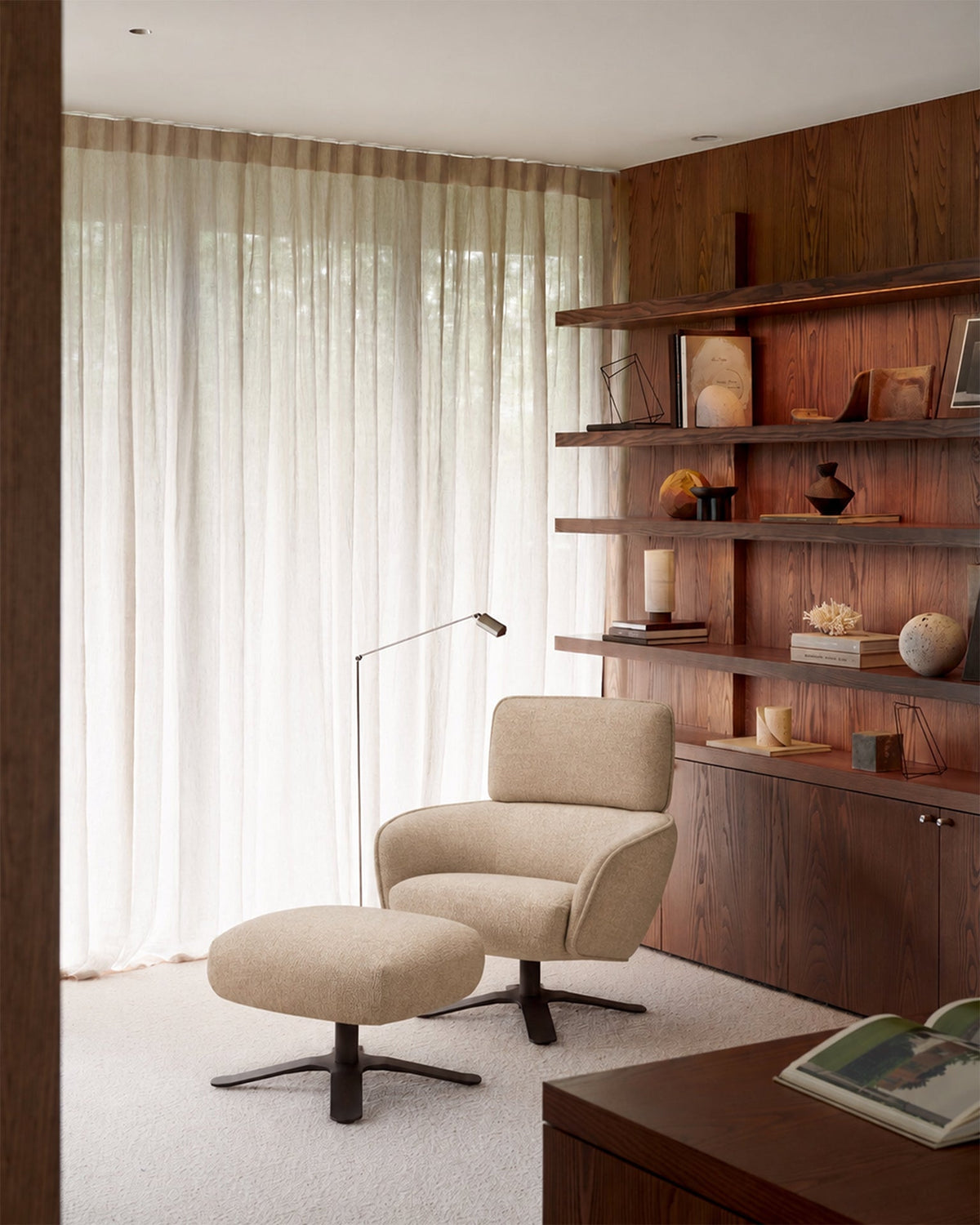
Polyester and recycled polyester dominate the durable end of the market for good reason — the fibre is dimensionally stable, colourfast and cheap to make abrasion-resistant. The trade-off is hand-feel and pilling. Blends solve this. The Merge Lounge Chair from Ethnicraft uses a fabric called Loam that is 39 percent recycled polyester, 24 percent acrylic, 23 percent virgin polyester, 9 percent recycled cotton and 5 percent wool — rated to 60,000 Martindale rubs. The recycled content is 48 percent of the total, and the wool is there for the hand, not the marketing.
Performance Fabric: Ask What the Performance Comes From
"Performance fabric" is not a regulated term. It usually means a fabric has been treated to repel liquids, and historically that treatment was a per- and polyfluoroalkyl substance (PFAS) — the class of compounds that do not break down in the environment or in the body.
The useful question is not "is this performance fabric" but "what chemistry delivers the performance, and is it disclosed?" Solution-dyed acrylics and tightly woven synthetics resist staining structurally, without a topical fluorochemical. Where a finish is used, PFAS-free should be stated explicitly, not implied.
This is where OEKO-TEX Standard 100 earns its place. It is a third-party certification testing every component of a textile — thread, backing, dye, coating — against a list of regulated and non-regulated substances harmful to human health. It does not certify durability or environmental impact. It certifies that what touches your skin has been tested. Both the Loam fabric on the Merge and the Leche fabric on the Ease Sofa carry Standard 100 and are specified PFAS-free. We cover the wider chemistry in our guide to PFAS, formaldehyde and flame retardants in furniture.
Construction and Repairability
The fabric fails last. What usually fails first is the seat cushion, the webbing, or the seam. Feather-chamber back cushions over foam soften but hold shape; webbing suspension flexes for decades; a plywood frame with proper joinery does not rack.
Then there is the question almost nobody asks at the point of sale: can the cover be replaced? The UMAGE The Reader Wing Chair is built around interchangeable upholstery — the cover swaps between 100 percent recycled Horizons textile, OEKO-TEX-certified Hope leather, Teddy Bear textile, Kvadrat fabrics or Nordic Swan-labelled Dunes leather without replacing the chair. That single design decision does more for a ten-year lifespan than any abrasion figure.
How We Specify Upholstery at Comosum
We do not stock a sofa because its fabric quotes a large number. We ask for the full technical sheet: fibre percentages, abrasion method and result, pilling and lightfastness grades, certification, and finish chemistry. If a supplier cannot produce it, that tells us something.
Our working standard for a piece meant to last a decade in a family home is straightforward. Abrasion at or above the ACT high-traffic guideline. OEKO-TEX Standard 100 on the face fabric. PFAS-free stated in writing. Pilling grade 3–4 or better. A frame and suspension that can be re-tensioned rather than thrown away. And, where the design allows it, a cover you can change.
We also say the unglamorous part out loud. A wool blend will pill in the first months of use — that is loose fibre working its way out, not a defect, and a fabric shaver removes it. A bouclé will snag if something sharp catches a loop. Knowing this before you buy is worth more than a reassuring number on a swing tag. You can see how this thinking runs through the rest of the range in our sustainable sofa buyer's guide and across the sustainable furniture brands we carry.
What to Shop at Comosum
- Merge Lounge Chair — Studio Segers, 2026. Loam fabric at 60,000 Martindale rubs, 48 percent recycled fibre, OEKO-TEX Standard 100 and PFAS-free, on a swivel-return base. Made in Romania.
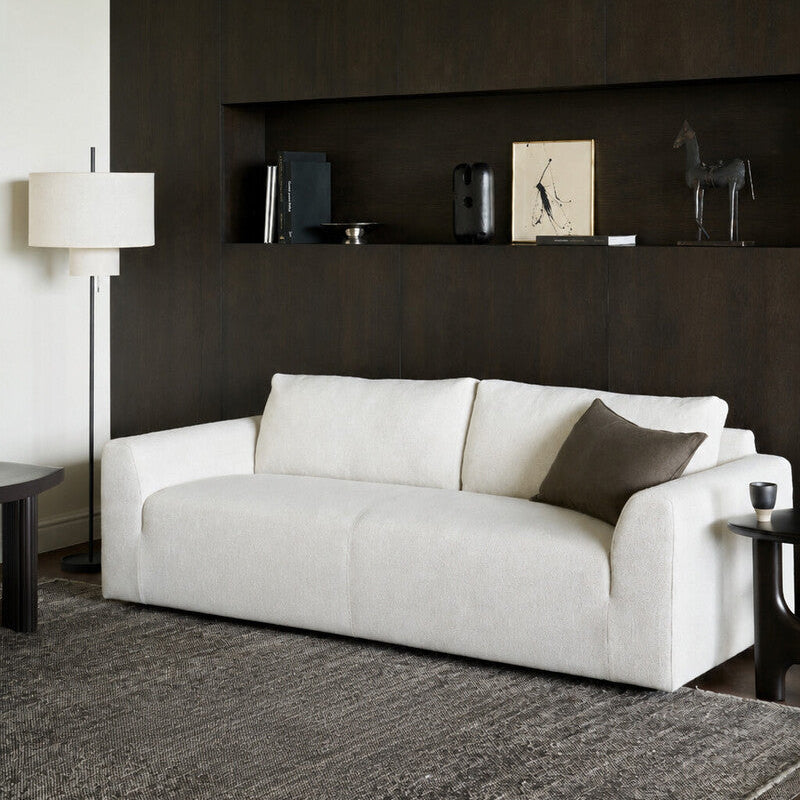
- Ease Sofa — Paul Delaisse for Ethnicraft, upholstered in Italy. Leche weave of polyester, viscose, cotton and linen at 40,000 Martindale, with feather-chamber back cushions over foam and webbing suspension.
- UMAGE The Reader Wing Chair, Black Oak — Tor Hadsund's curved shell on solid oak, with interchangeable upholstery and a 10-year manufacturer warranty.
- Forum Armchair — Case's upholstered lounge chair on an oak frame, built at the scale of a reading chair rather than a statement piece.
- N701 Sofa — Jacques Deneef's deep, rounded cushioning in a fixed two- or three-seat format.
Browse the full Sofas & Sectionals collection and our Lounge Chairs at Comosum →
Frequently Asked Questions About Upholstery Fabric Durability
What is a good double rub rating for a family sofa?
The ACT voluntary guideline for high-traffic and public spaces is 30,000 double rubs on the Wyzenbeek test, or 40,000 cycles on Martindale. For a private home the low-traffic guideline is 15,000 Wyzenbeek or 20,000 Martindale. Anything at or above the high-traffic threshold is sufficient for a family room; higher figures are not proportionally better.
Is bouclé durable enough for everyday use?
It depends entirely on the fibre and the tightness of the weave, because bouclé is a weave structure rather than a material. A tightly woven wool or wool-blend bouclé holds up well to daily sitting. The real risk is snagging — pet claws, zippers and buckles catch the surface loops, and a pulled loop cannot be repaired invisibly.
Are Wyzenbeek and Martindale numbers interchangeable?
No. ACT states there is no correlation between Wyzenbeek and Martindale results, so a fabric's rating under one method cannot be converted to the other. Always compare fabrics using the same test method, and check which method a supplier is quoting.
What does PFAS-free mean on an upholstery spec?
It means the fabric has not been treated with per- and polyfluoroalkyl substances, the fluorochemical class long used for stain and water repellency. Because "performance fabric" is not a regulated term, PFAS-free should be stated explicitly on the specification rather than inferred from marketing language.
Does OEKO-TEX Standard 100 mean a fabric is durable or sustainable?
No. Standard 100 is a human-health certification: every component of the textile is tested against a list of substances harmful to health. It says nothing about abrasion resistance, fibre origin or environmental footprint, so read it alongside the technical specification rather than instead of it.


Leave a comment
This site is protected by hCaptcha and the hCaptcha Privacy Policy and Terms of Service apply.