
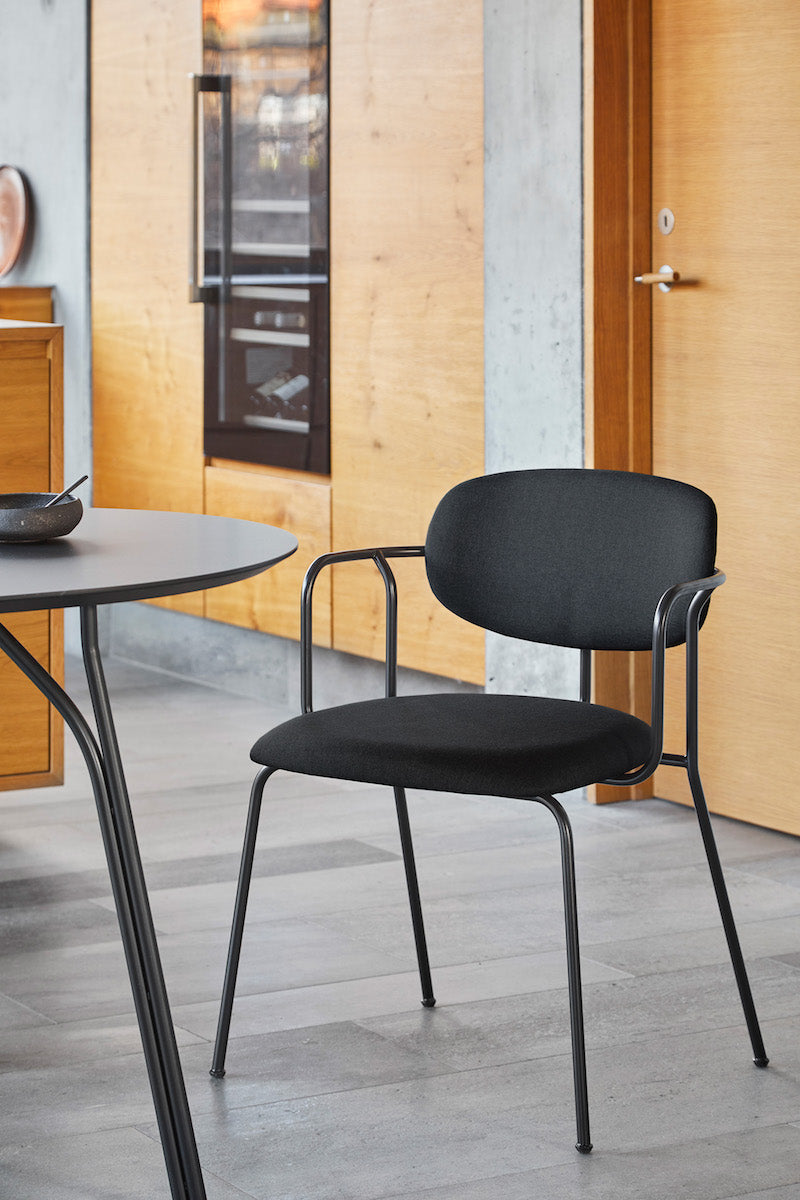
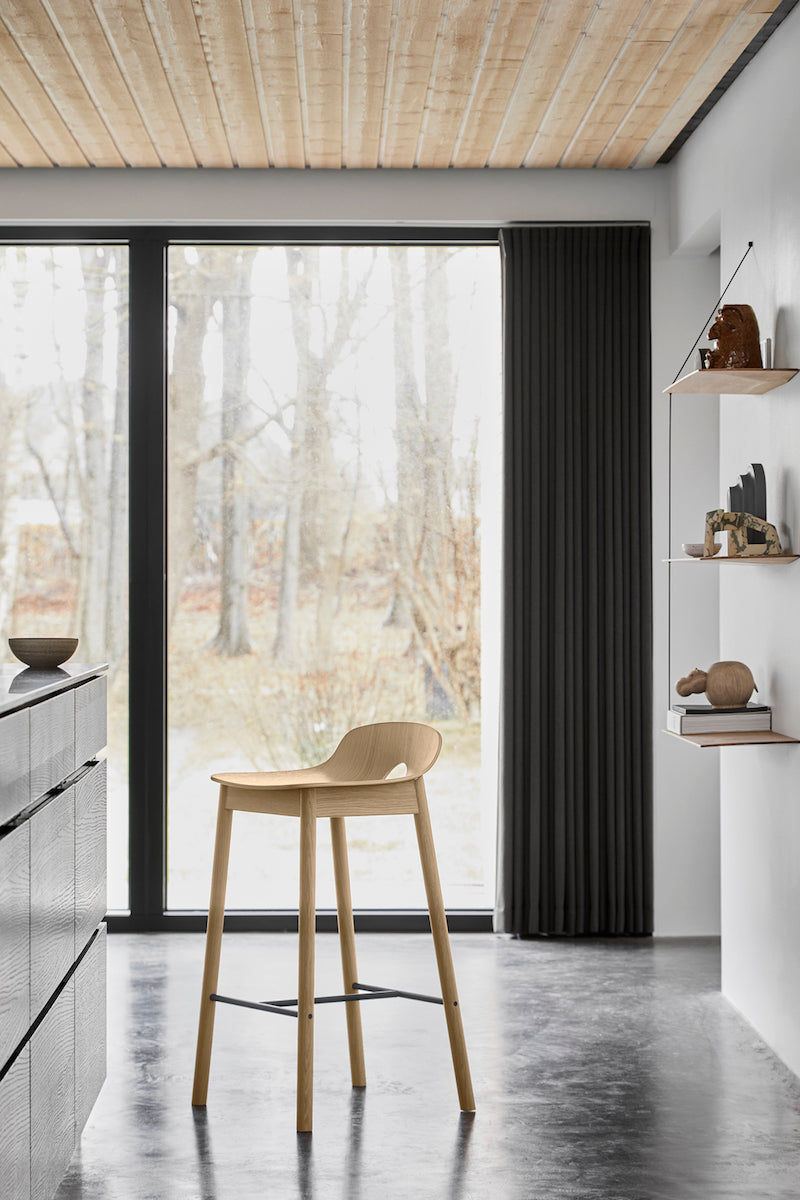
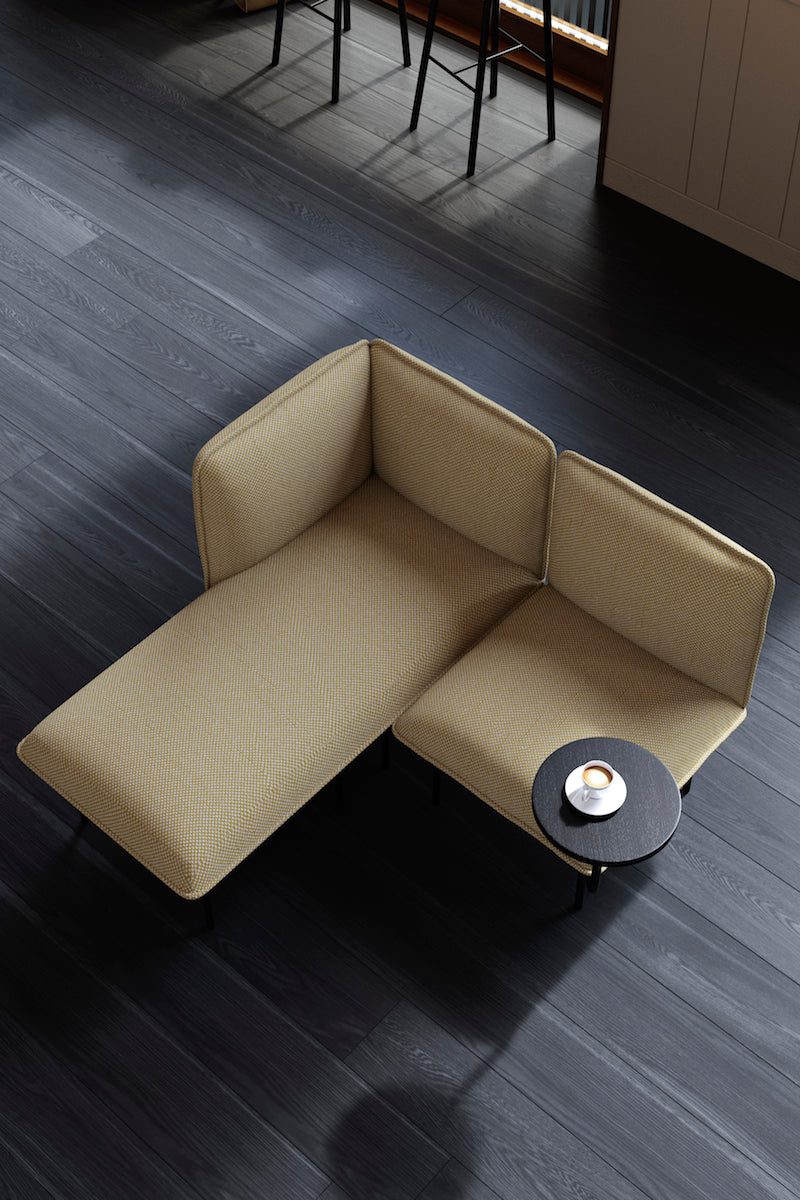
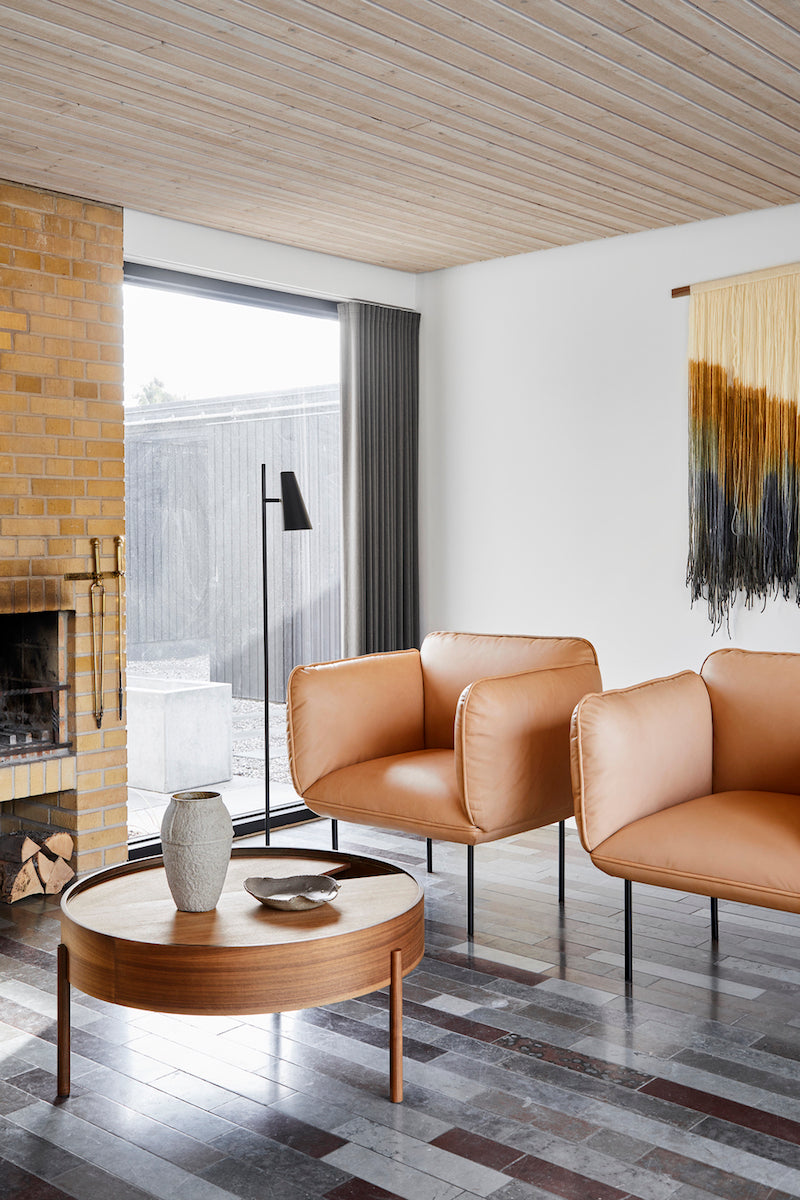
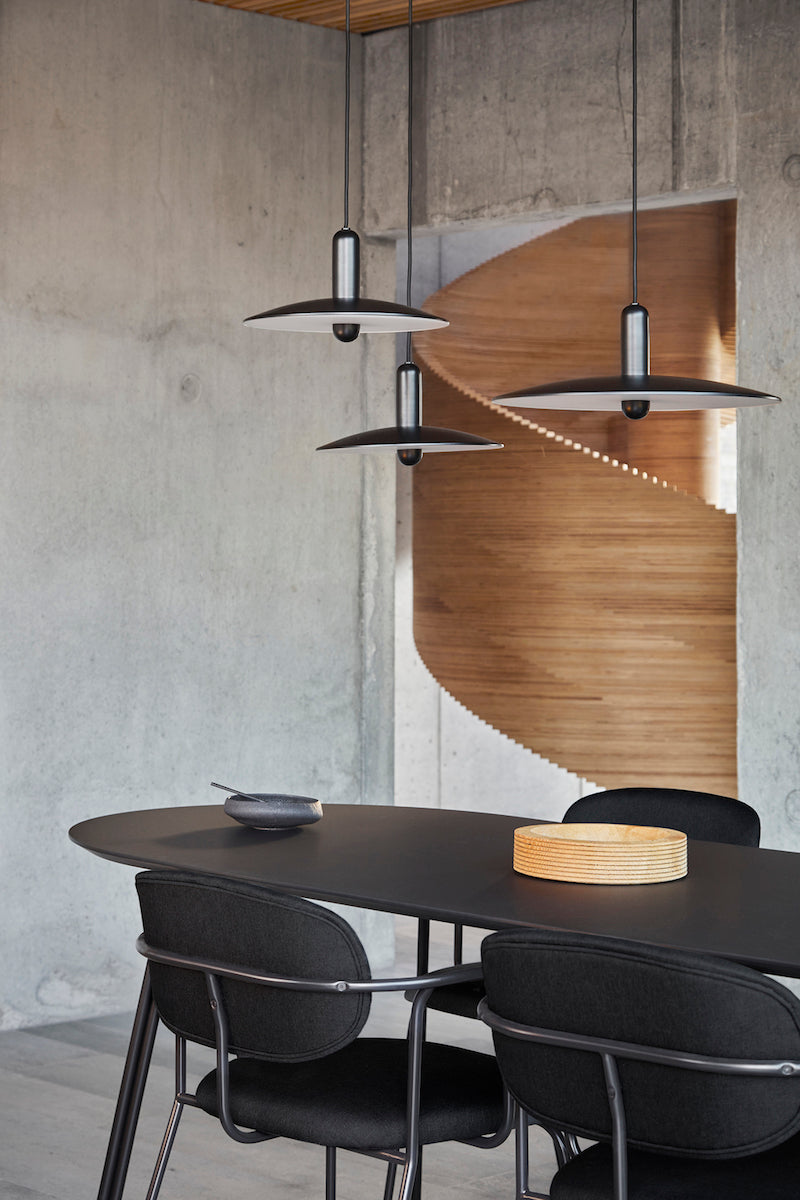
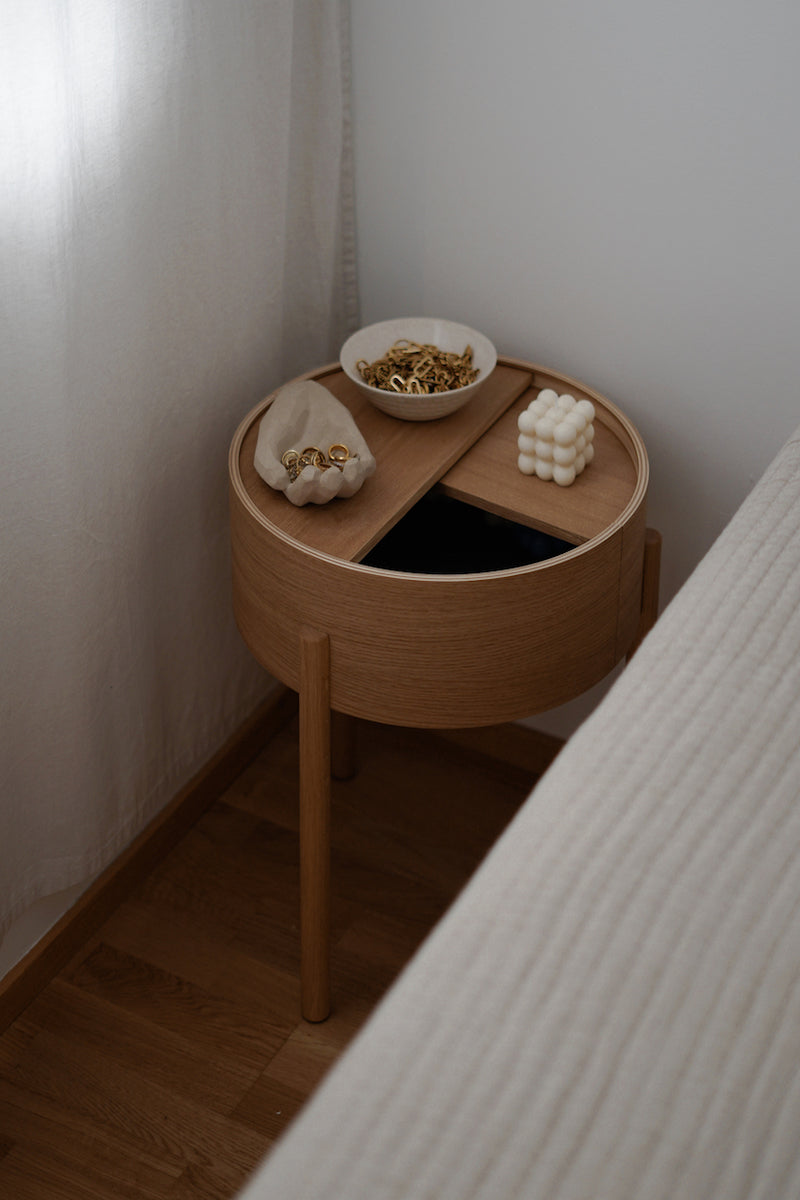
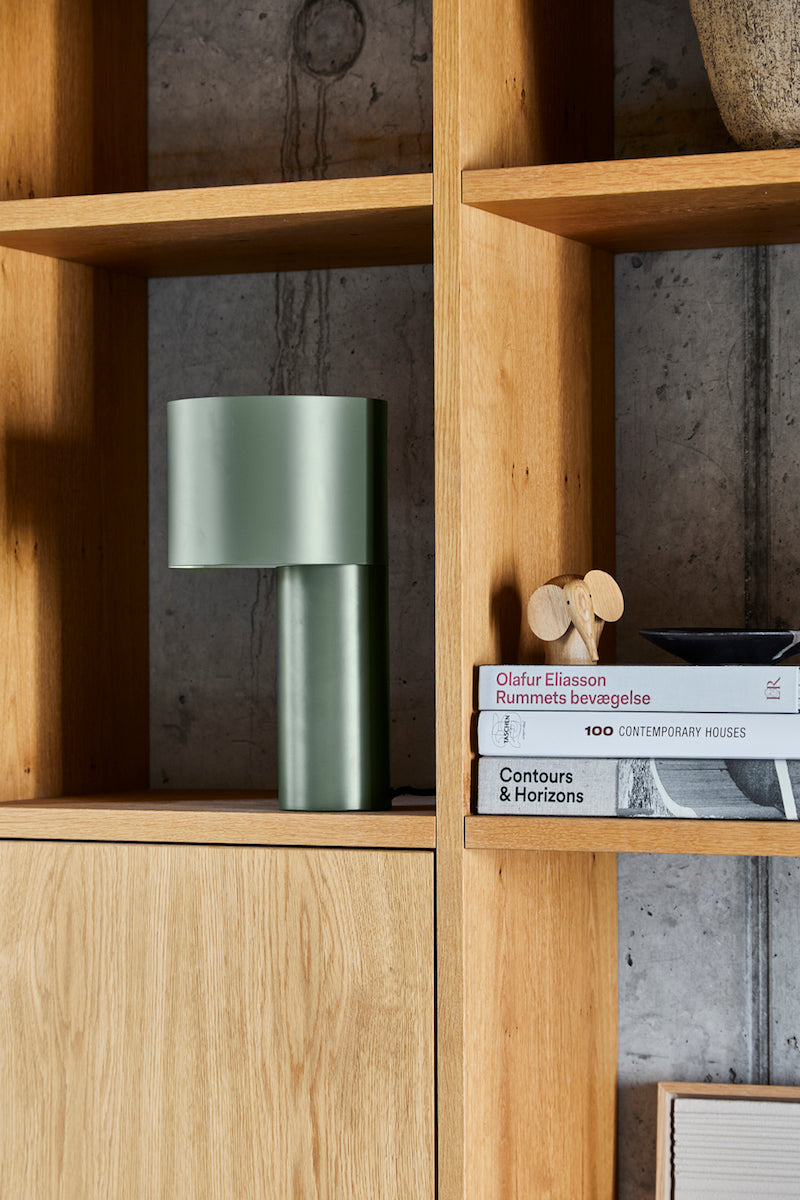
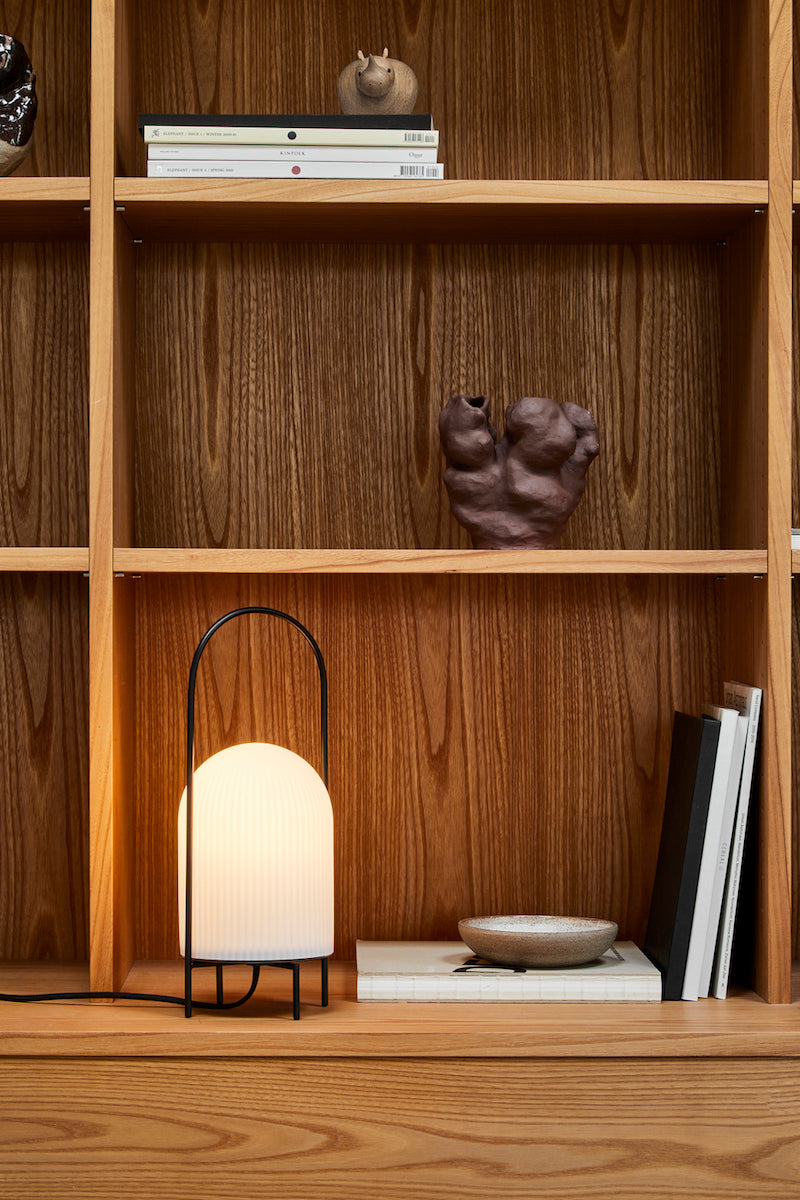
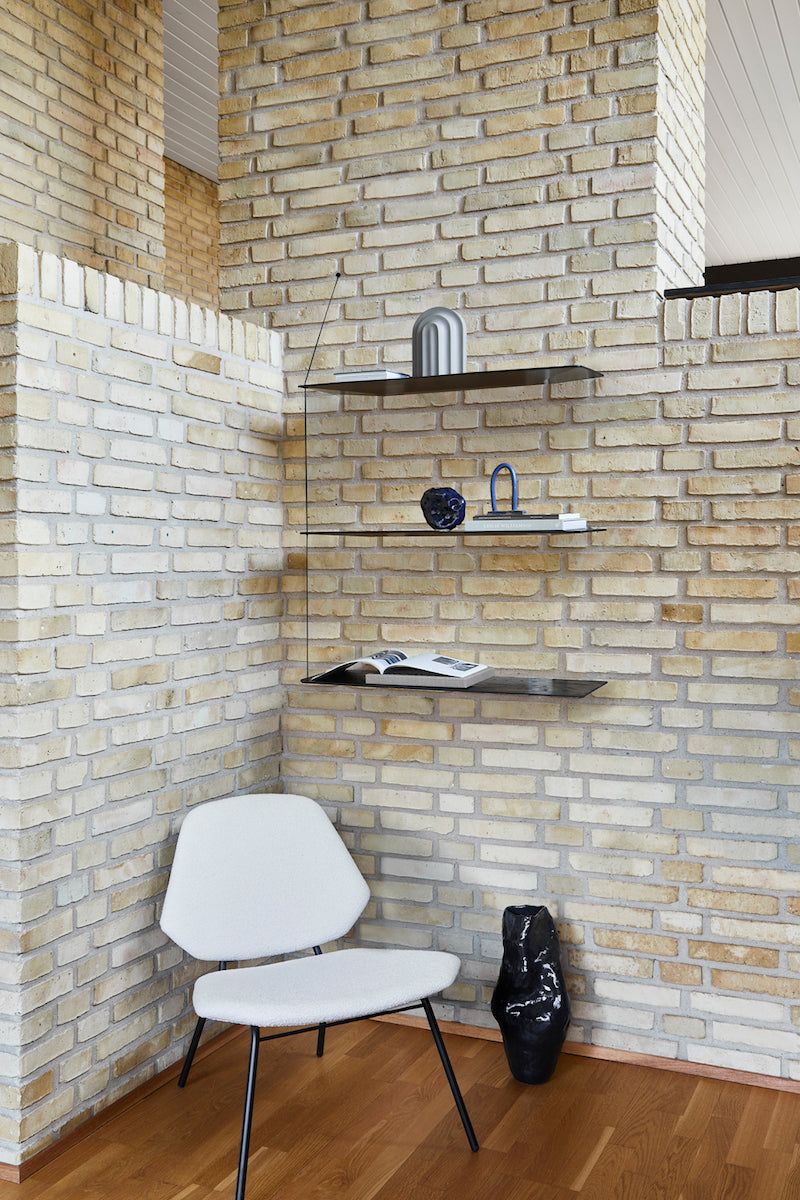
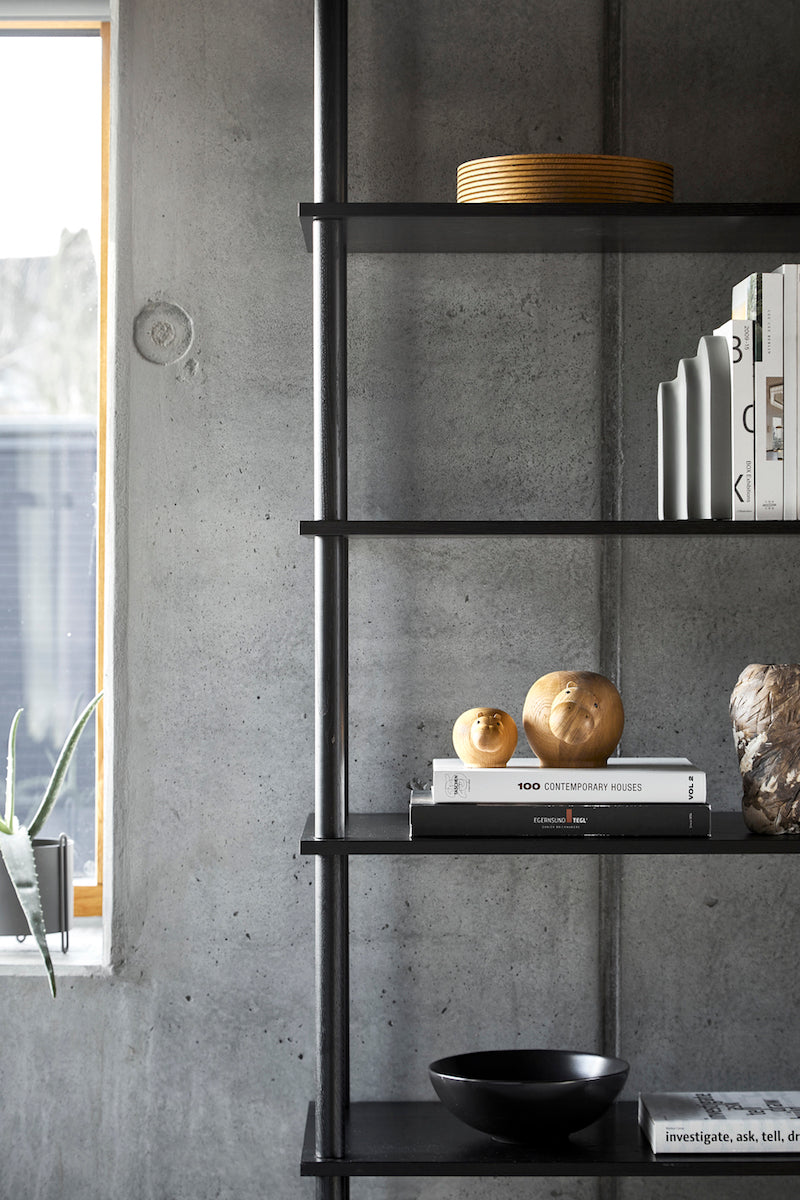
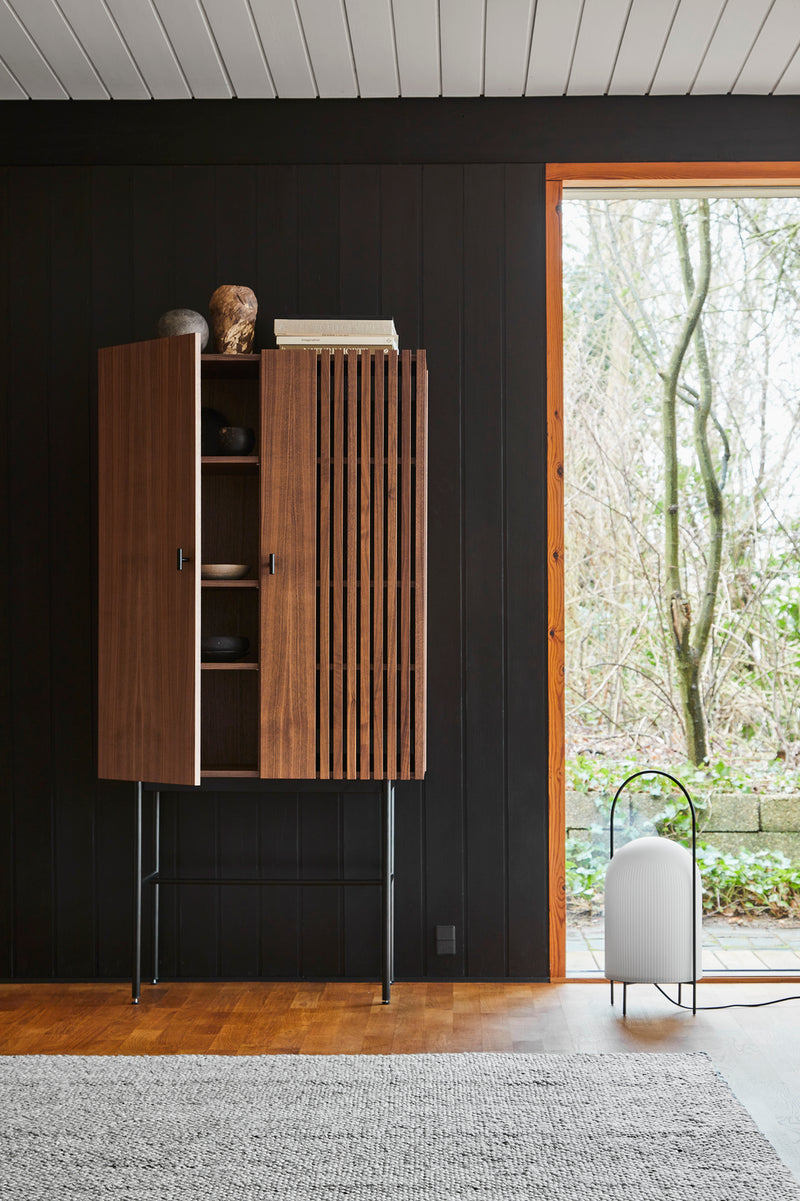
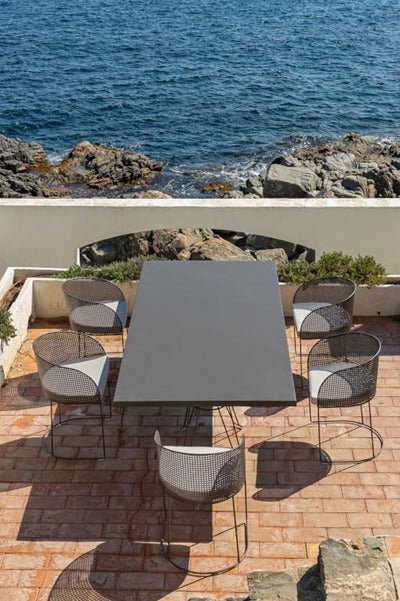
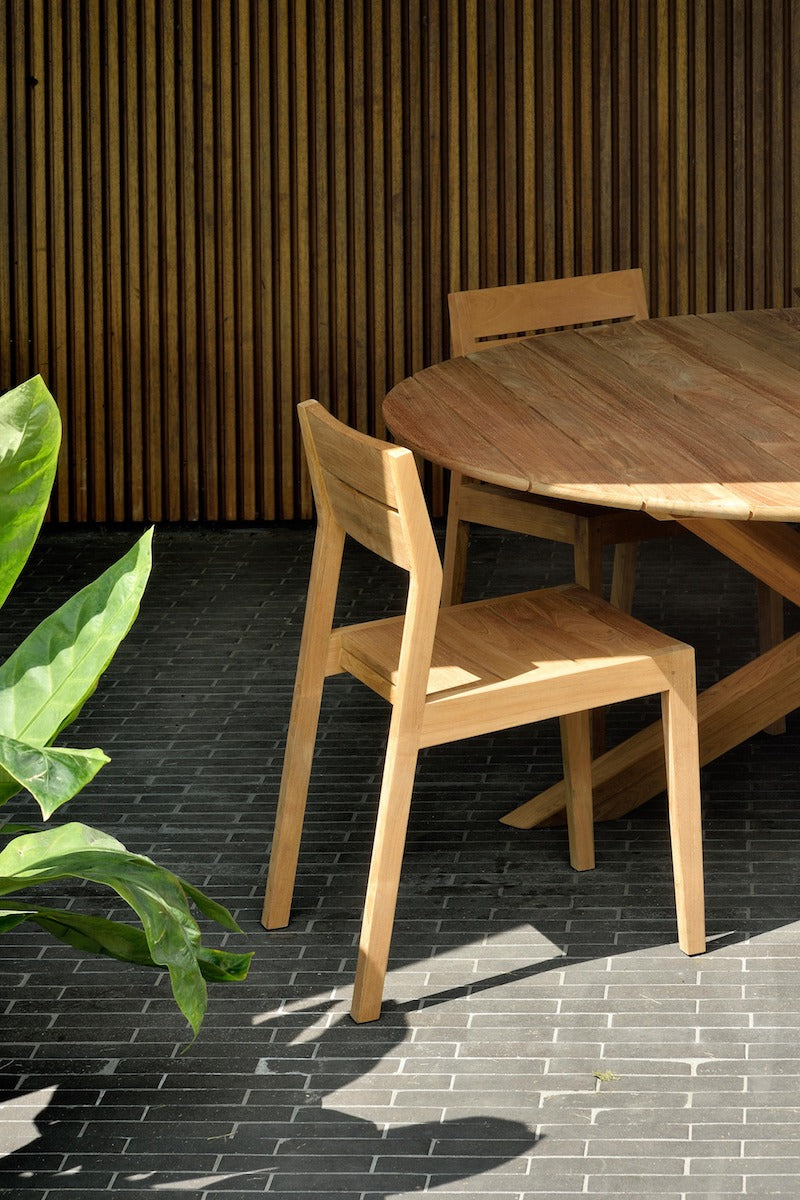
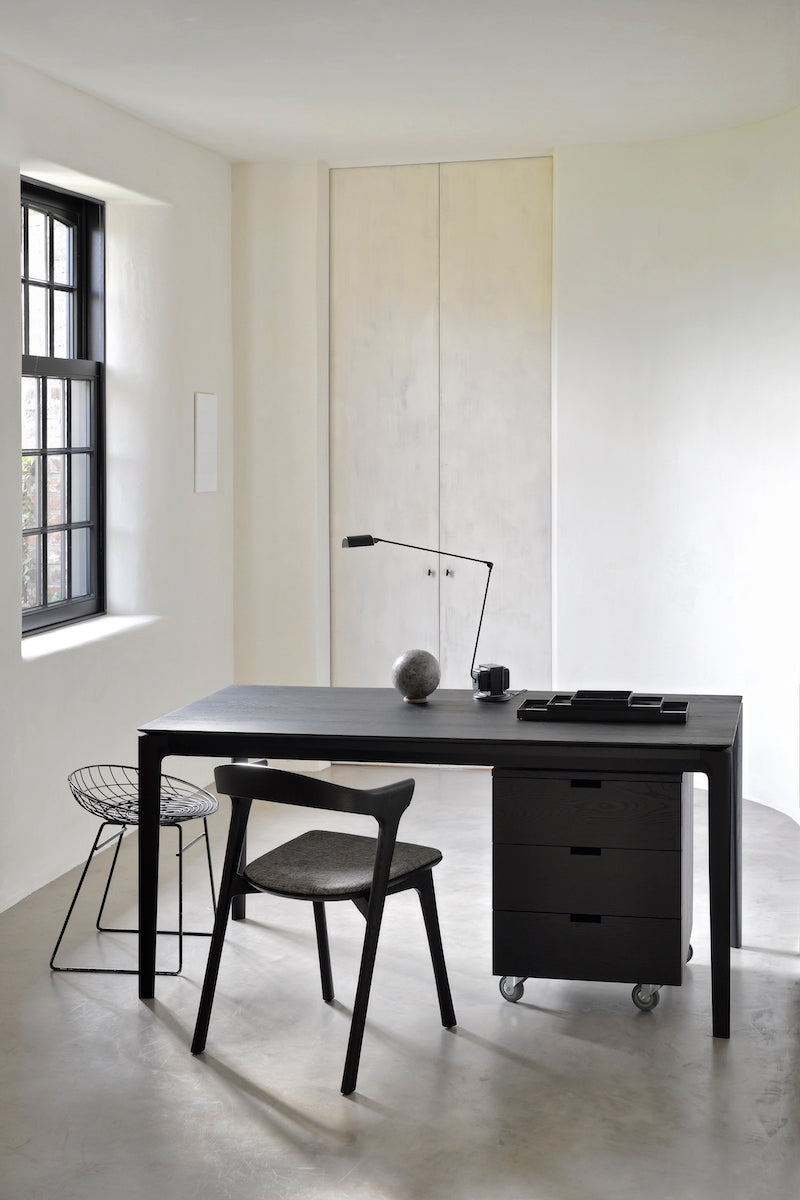
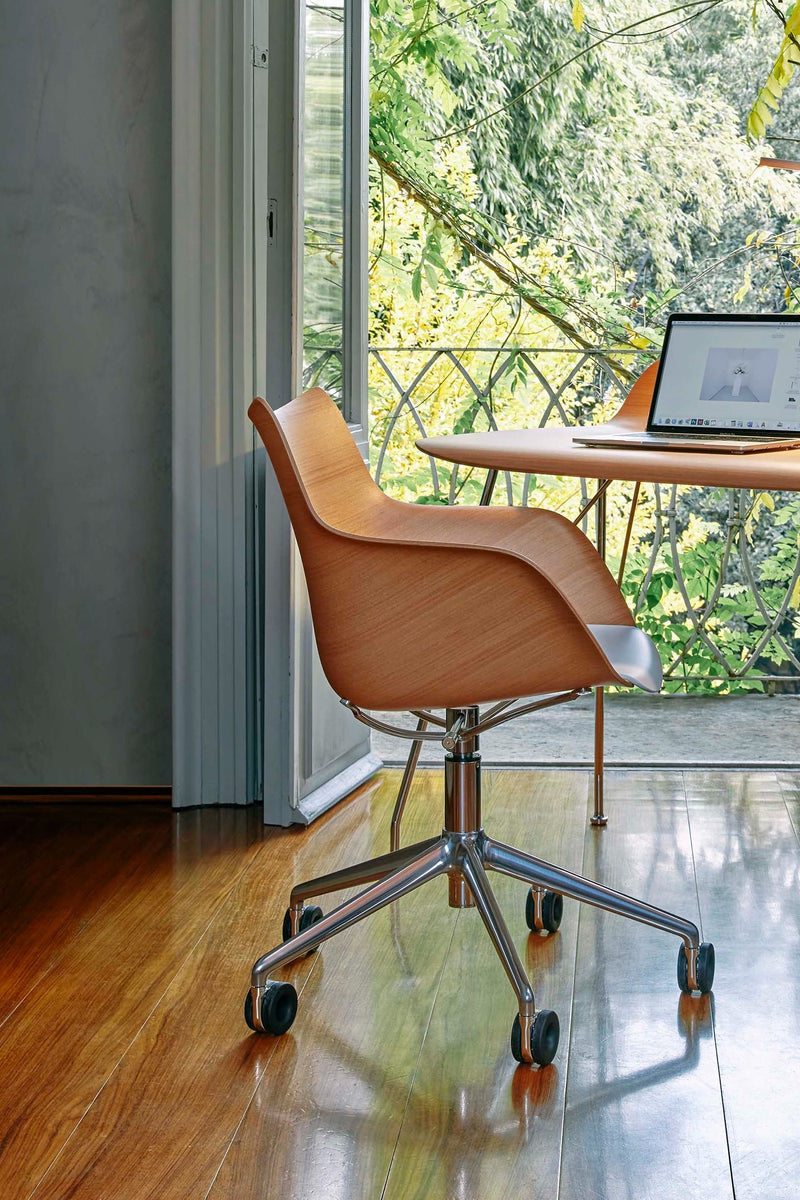
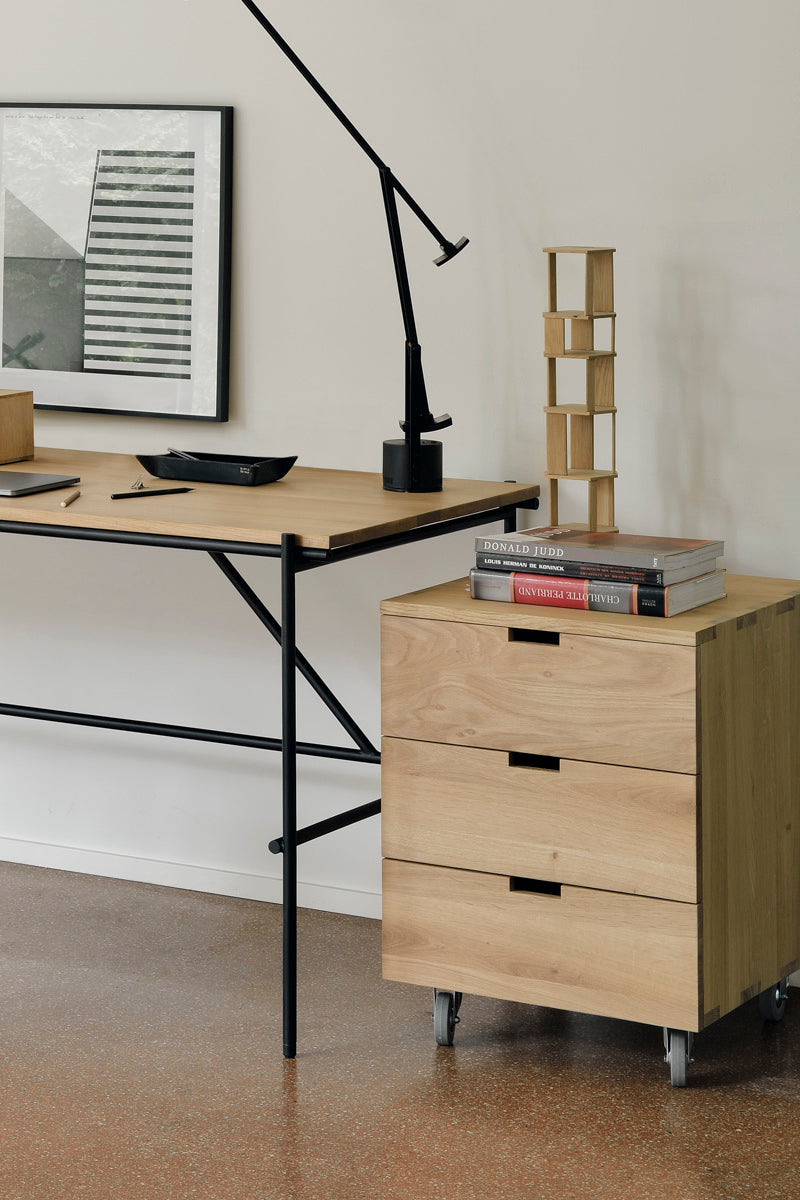
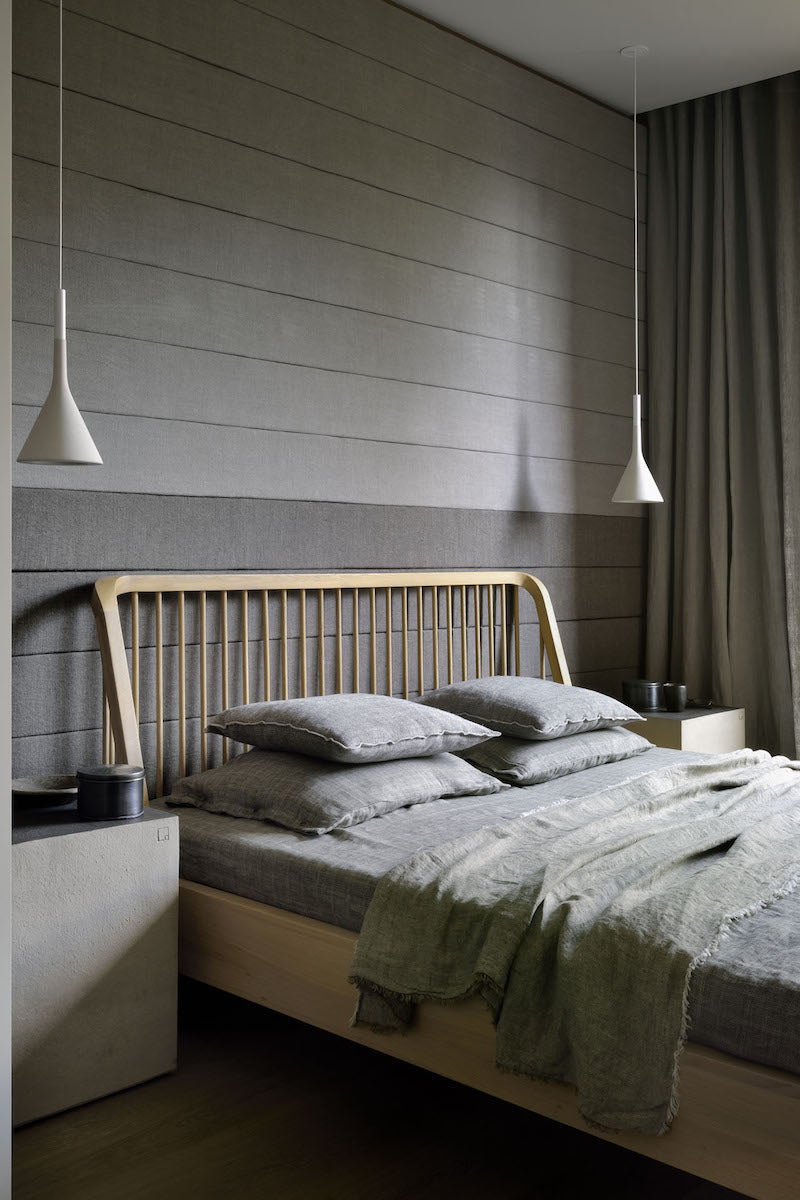
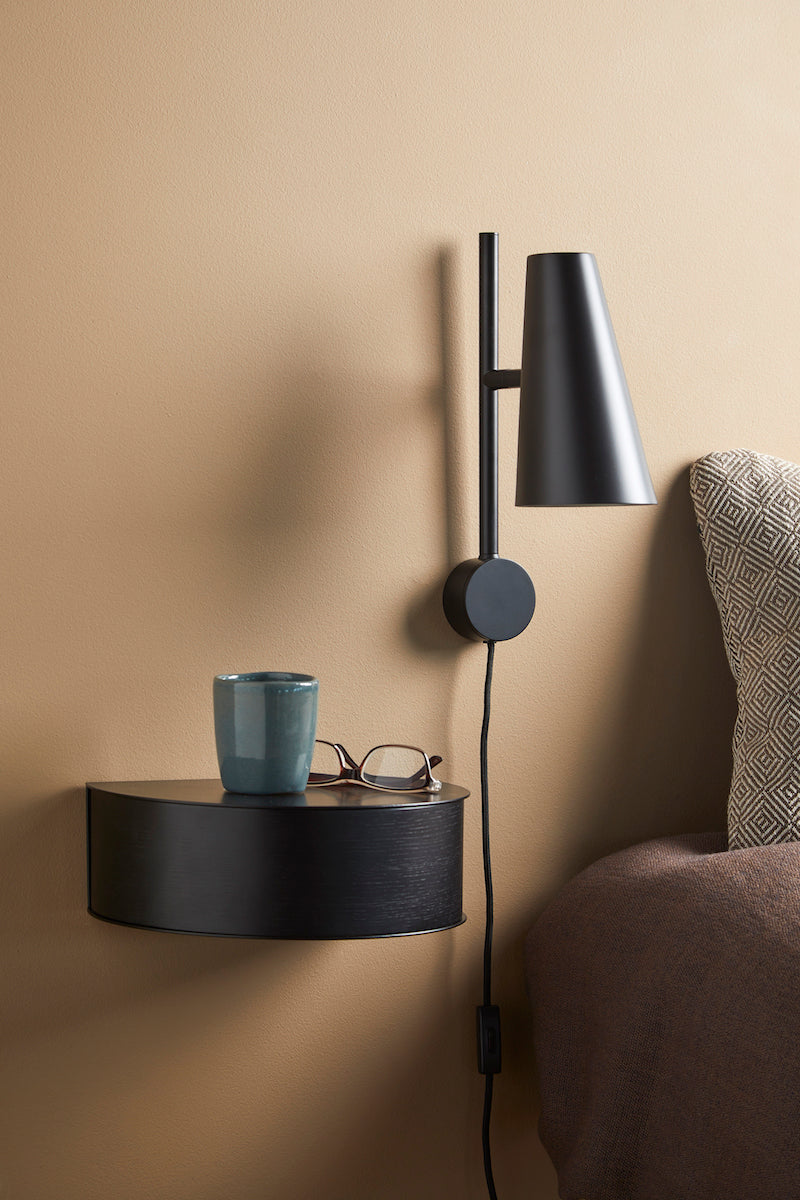
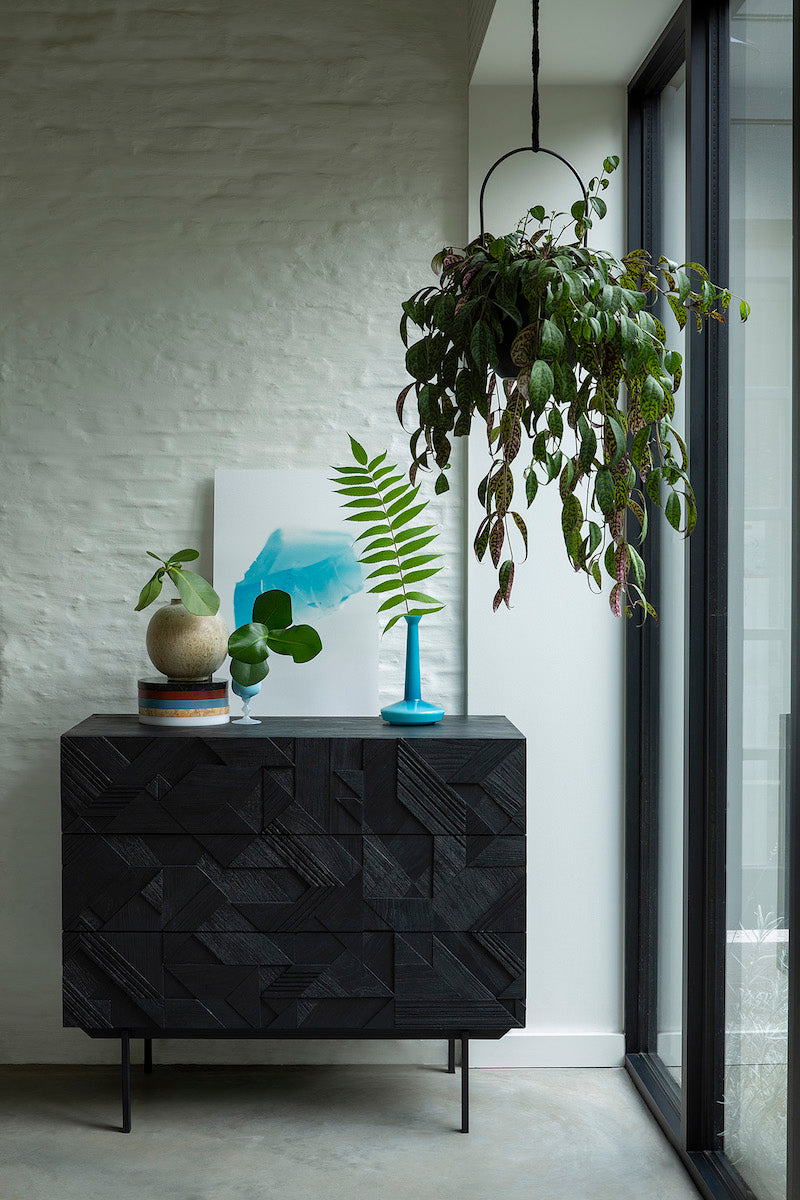
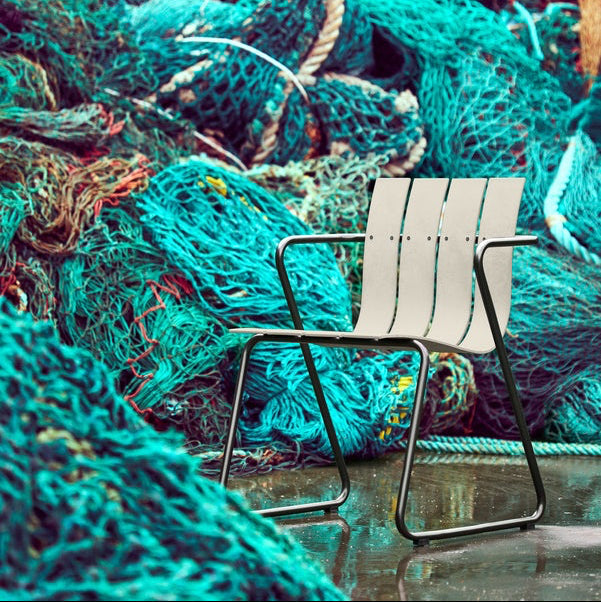
Mater is a Copenhagen design house, founded in 2006, that builds furniture from waste most people never picture as furniture: spent coffee bean shells, discarded ocean plastic, and sawdust. Its patented Matek material binds these waste streams into a hard, recyclable surface, and Mater is a certified B Corporation that will take its pieces back at end of life to grind into new ones. For us, it is one of the clearest answers to the question, “can recycled furniture still be beautiful?” — and the reason we carry Mater at Comosum.
The Story Behind Mater
Mater was started in Copenhagen in 2006 with an unusual premise for a furniture brand: treat sustainability and ethical production not as a marketing layer but as the starting point of the design brief. The name is Latin for “mother,” a nod to the brand’s focus on the planet, and from the beginning Mater paired that mission with serious Danish design credentials rather than treating “eco” and “beautiful” as a trade-off.
That balance shows up in who Mater works with. The brand commissions contemporary studios and also revives mid-century Danish classics. Its catalog includes work by Space Copenhagen (the Earth and Low Stools), OEO Studio (the Compound and Lily collections), Italian designer Patricia Urquiola (the Alder series), and Eva Harlou, whose Earth Stool became one of the brand’s signature pieces. Mater also reissues heritage designs responsibly — the Conscious Chair began as a 1958 design by Børge Mogensen and Esben Klint, and the Ocean series reworks a 1955 Jørgen and Nanna Ditzel design.
The through-line is that Mater does not ask buyers to lower their design expectations in exchange for a smaller footprint. The pieces earn their place on form first, and the material story is what you discover second. That is exactly the kind of brand we want on our floor.
How Mater Is Built Sustainably
Materials
Mater’s signature material is Matek®, a patented composite the brand makes by binding a waste fibre — most famously coffee bean shells extracted during roasting, but also sawdust from wood production — with a binder made from recycled or plastic-based material. The result is a dense, durable surface used in pieces like the Compound Dining Chair and the Bowl Table. A related composite, Pond, appears in Urquiola’s Alder collection, while the Ocean series uses recycled ocean and consumer plastic — the Ocean Bench is composed of roughly 68% recycled material. For its wood pieces, Mater uses FSC (Forest Stewardship Council)-certified beech and oak.
Manufacturing
The point of Matek is circularity, not just recycled content. Because the composite can be reground and processed again, Mater designs its waste-based pieces to be recyclable into new furniture rather than landfilled — and the brand offers to take products back at end of life to do exactly that. That closed loop is the difference between “made from recycled material once” and “designed to keep cycling.”
Certifications & Recognition
Mater is a Certified B Corporation, the third-party standard that audits a company’s social and environmental performance, not just a single product. Its commitment to circular, take-back design aligns with the principles behind Cradle to Cradle thinking — designing products so their materials can be recovered and reused. Mater’s waste-driven work has also been exhibited and covered widely in the design press, including at Copenhagen’s 3 Days of Design.
Why Mater Belongs at Comosum
We carry a lot of solid-wood furniture, so why add a brand built on coffee shells and recycled plastic? Because Mater fills a gap the wood brands can’t. It proves that recycled and waste-based materials can be specified for the living room and dining room, not just relegated to outdoor or utility pieces — and it does so without the brittle, obviously-recycled look that has held the category back.
Mater also matches all three of our pillars at once. The sustainability is structural: audited at the company level through B Corp, and engineered into the material through Matek’s recyclability. The design is genuinely good, drawing on both contemporary studios and the Danish canon. And the quality holds up — FSC hardwood frames, leather seats, and a composite hard enough for daily dining use. When someone asks us for a sustainable dining chair, a low stool, or a coffee table that tells a story, Mater is one of the first brands we reach for, alongside our other sustainable furniture brands.
Explore Mater at Comosum
A few Mater pieces we’d point you to first, all currently in stock:
- Earth Stool — Eva Harlou’s signature stool, with a seat cast from recycled coffee-shell Matek. The clearest, most affordable way to own the material story.
- Conscious Chair — a 1958 Børge Mogensen and Esben Klint design reissued with recycled coffee or wood waste, pairing heritage form with circular material.
- Compound Dining Chair — OEO Studio’s chair in Matek made from coffee bean shells bound with bioplastic.
- Bowl Table Recycled Edition — a sculptural coffee and side table with a Matek surface in upcycled coffee waste, designed by Ayush Kasliwal.
- Ocean Bench — a 1955 Jørgen and Nanna Ditzel design rebuilt in roughly 68% recycled ocean plastic for indoor or outdoor use.
You can also browse Mater seating across our stools and benches, lounge chairs, and coffee tables collections. For more on circular and recycled design, see our guides to sustainable lounge and accent chairs and sustainable coffee tables, or read our spotlight on why we carry Ethnicraft.
Browse the full Mater collection at Comosum →
Frequently Asked Questions About Mater
Where is Mater furniture made?
Mater is a Danish design brand founded in Copenhagen in 2006. It commissions Danish and international designers and produces through audited supply partners, with end-of-life take-back built into its model. You can read more on Mater’s own about page.
Is Mater sustainable?
Mater is a Certified B Corporation, a standard that audits a company’s overall social and environmental performance. Its signature Matek material is made from recycled waste, designed to be reground and recycled again, and the brand offers to take products back at the end of their life. See Mater’s sustainability page for details.
What materials does Mater use?
Mater uses its patented Matek composite (waste fibre such as coffee bean shells or sawdust, bound with recycled or plastic-based binder), the related Pond composite, recycled ocean plastic in its Ocean series, and FSC-certified beech and oak in its wood pieces.
What is Matek made from?
Matek is a patented material that combines a waste fibre — coffee bean shells from roasting, or sawdust from wood production — with a binder. It can be processed repeatedly, which lets Mater recycle worn pieces into new furniture rather than sending them to landfill.
How do I care for Mater furniture?
Wipe Matek and recycled-plastic surfaces with a damp cloth and mild soap; avoid abrasives that can scratch the composite. For FSC oak and beech pieces, dust regularly and treat the wood according to its finish, keeping the piece out of prolonged direct sun and away from heat sources.


Leave a comment
This site is protected by hCaptcha and the hCaptcha Privacy Policy and Terms of Service apply.