



A furniture certification is worth what it covers and whether you can check it. To shop sustainable furniture, match each claim to the label that proves it: FSC, PEFC or SVLK for the wood, an emissions label or the Nordic Swan Ecolabel for what you breathe, a test standard and a written warranty for how long it lasts, and B Corp for the company behind it. Then look the code up. Here is what each label proves, what it doesn't, and how to spot claims that prove nothing.
Which certifications and labels indicate sustainable furniture?
No single label covers a whole piece of furniture. Each one answers one question, so a well-documented piece usually carries two or three. These are the ones you will meet most often:
| Label | What it proves, and what it doesn't |
|---|---|
| FSC (Forest Stewardship Council) | The wood came from a responsibly managed forest and was tracked through every company that handled it. It says nothing about the glue, finish or emissions. |
| PEFC | A second forest certification system, which endorses national schemes. Same scope as FSC: the forest, not the finish. |
| SVLK | Indonesia's timber legality system: the teak or hardwood was harvested legally and can be traced. It proves legality, not a forest-management standard. |
| Nordic Swan Ecolabel | The official Nordic ecolabel. Its furniture criteria cover materials and chemicals, including limits on formaldehyde and VOC emissions. |
| GREENGUARD Gold and SCS Indoor Advantage Gold | Low chemical emissions, measured in a test chamber by UL or by SCS Global Services. They cover indoor air, not where the materials came from. |
| OEKO-TEX STANDARD 100 and GOTS | Textiles only. OEKO-TEX tests fabric for harmful substances; GOTS certifies organic fibers and how the fabric is processed. |
| GRS (Global Recycled Standard) | Recycled content, verified and traced through the supply chain. |
| Cradle to Cradle Certified | A whole product, scored on material health, circularity, climate, water and social fairness. |
| EPD (Environmental Product Declaration) | Third-party-verified life-cycle data for one product. A disclosure you can compare, not a pass mark. |
| Declare | An ingredient label from the International Living Future Institute. “Red List Free” means none of its listed chemicals of concern. |
| B Corp | The whole company's social and environmental performance, assessed by B Lab. It doesn't certify any one product. |
| ANSI/BIFMA, EN 581, EN 16139 | Safety and durability tests for office, outdoor and public seating. Tests, not eco labels; BIFMA's LEVEL certification adds a sustainability rating on top. |
Here is how three of them look on real products. FDB Møbler's J46 chair carries the Nordic Swan Ecolabel and is made by a company with FSC chain-of-custody certification (FSC-C164841). Varier publishes an EPD for the Social Tilt, which puts its recycled content at 65.6%. Anglepoise, maker of the Original 1227 lamp, is a Certified B Corp. More labels are explained in our certification glossary.
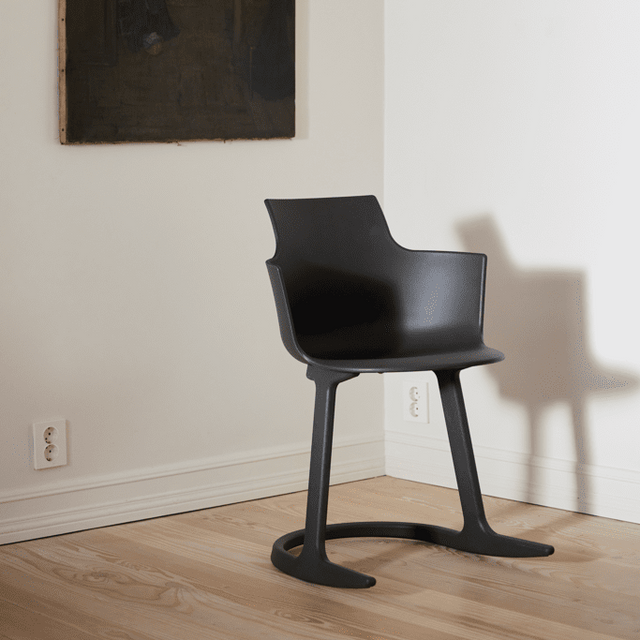
 FDB Møbler · Meter 3.7J46 Chair - Natural Oiled OakNordic Swan Ecolabel; FDB Møbler holds FSC-C164841
$569Shop →
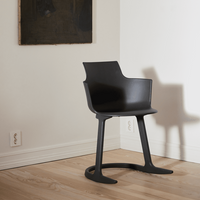 Varier · Meter 4.2Social Tilt Chair (Set of 2)65.6% post-consumer recycled, per Varier's own EPD
From $1,198Shop →
 Anglepoise · Meter 4.2Original 1227 Brass Desk LampGeorge Carwardine's 1935 design; Anglepoise is a B Corp
$390Shop →
How do you verify that the wood in your furniture is ethically sourced?
Ask for the certificate code, then look it up. An FSC chain-of-custody code reads like FDB Møbler's, FSC-C164841, and FSC's public certificate search shows who holds it and whether it is valid. A company with a code can sell FSC-certified wood; the product listing or invoice tells you whether the piece you are buying is one. “FSC wood” with no code is a claim, not proof.
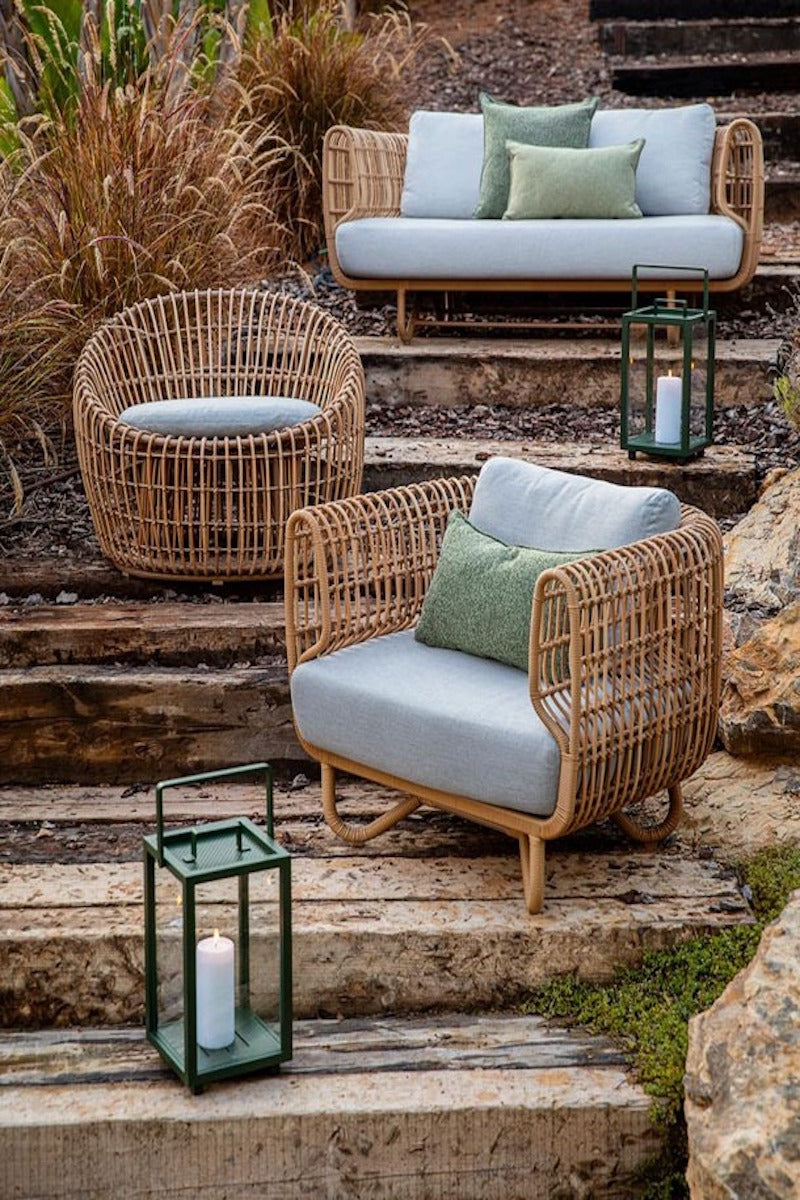
For tropical hardwoods, check legality as well. Cane-line's teak is SVLK-verified, and Cane-line makes its furniture in its own facilities in Indonesia, which it describes as SMETA-audited, a widely used audit of working conditions. Some makers name the forest region: about three-quarters of the wood CondeHouse uses is grown in Hokkaido, where it builds its furniture in Asahikawa. “Ethically sourced” covers people too, so ask where a piece is made and whether the maker publishes a supplier code of conduct, as WOUD does.

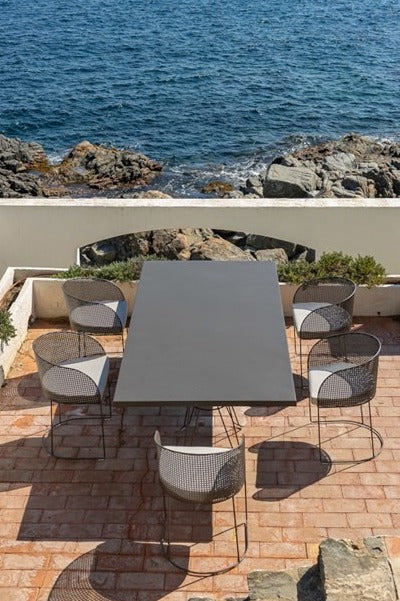
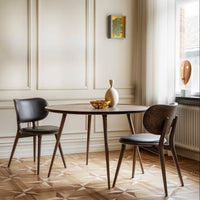 Mater · Meter 3.8Accent Dining TableSolid FSC-certified oak by Space Copenhagen; made in Slovenia
From $2,667Shop →
 Mater · Meter 3.8Conscious ChairFSC-certified frame; seat and back pressed from waste
From $697Shop →
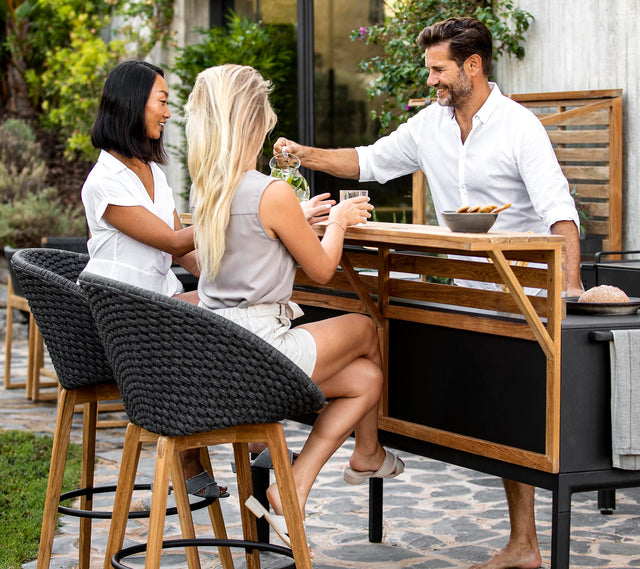
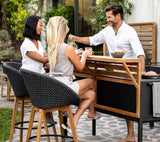
 Cane-Line · Meter 3.3Peacock Bar Chair with Teak LegsTeak legs SVLK-verified, per Cane-line; made in Indonesia
$1,960Shop →
What certifications show furniture is safe and non-toxic?
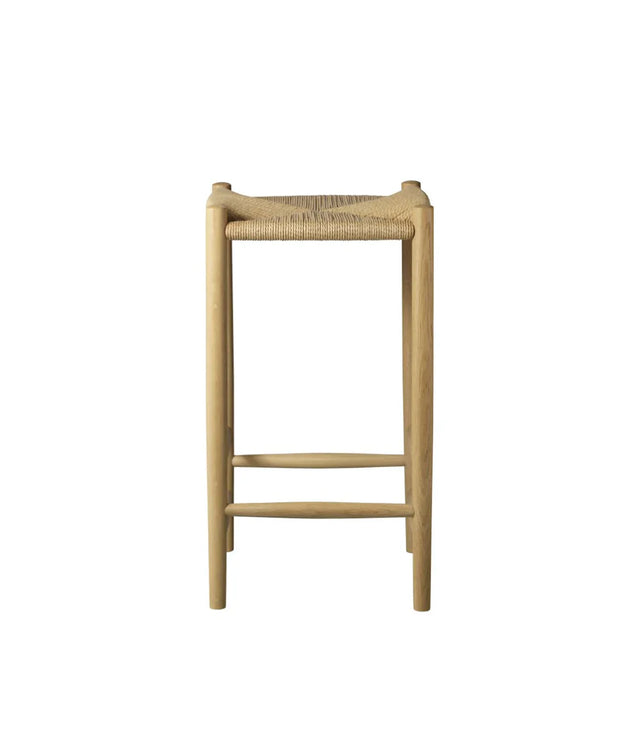
Look for an emissions test, not the word “non-toxic”. GREENGUARD Gold and SCS Indoor Advantage Gold measure the chemicals a product releases into a room against set limits. The Nordic Swan Ecolabel limits formaldehyde and VOCs in adhesives, padding, textiles and wood-based panels; FDB Møbler's J164C counter stool, solid oak under a water-based lacquer with a paper cord seat, carries it. Humanscale's Path chair lists SCS Indoor Advantage Gold and a Declare Red List Free label, which discloses what the chair is made of. For fabric, look for OEKO-TEX.
Two things on a spec sheet are legal floors rather than labels. In the US, composite wood such as MDF, particleboard and plywood must meet the EPA's formaldehyde limits under TSCA Title VI, and in Europe the REACH regulation restricts hazardous chemicals. “PFAS-free” has no single certificate behind it, so ask how it was tested. For a room-by-room approach, see our non-toxic furniture guide.
 FDB Møbler · Meter 3.7J164C Counter Stool, SquaredNordic Swan Ecolabel; oak under water-based lacquer, paper cord
$789Shop →
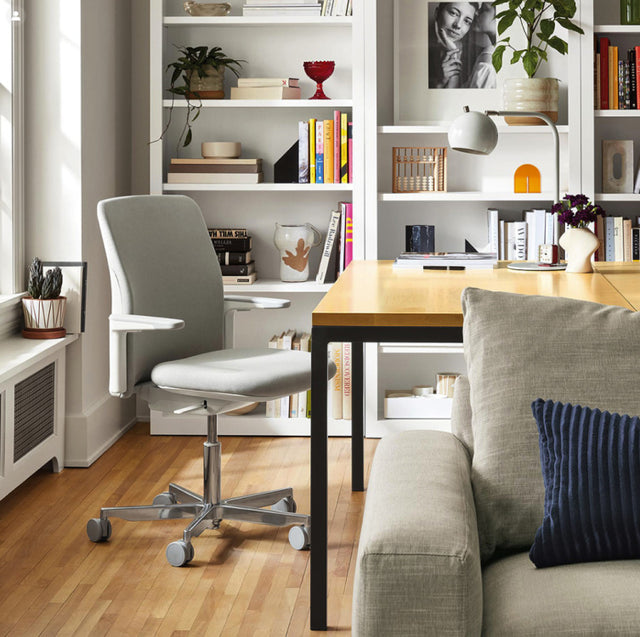
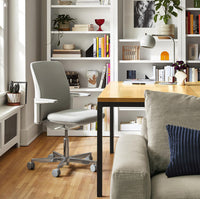 Humanscale · Meter 5.0Path Task ChairBIFMA LEVEL 3, SCS Indoor Advantage Gold, Declare Red List Free
From $1,277
Is durability part of sustainability? Test standards and warranties
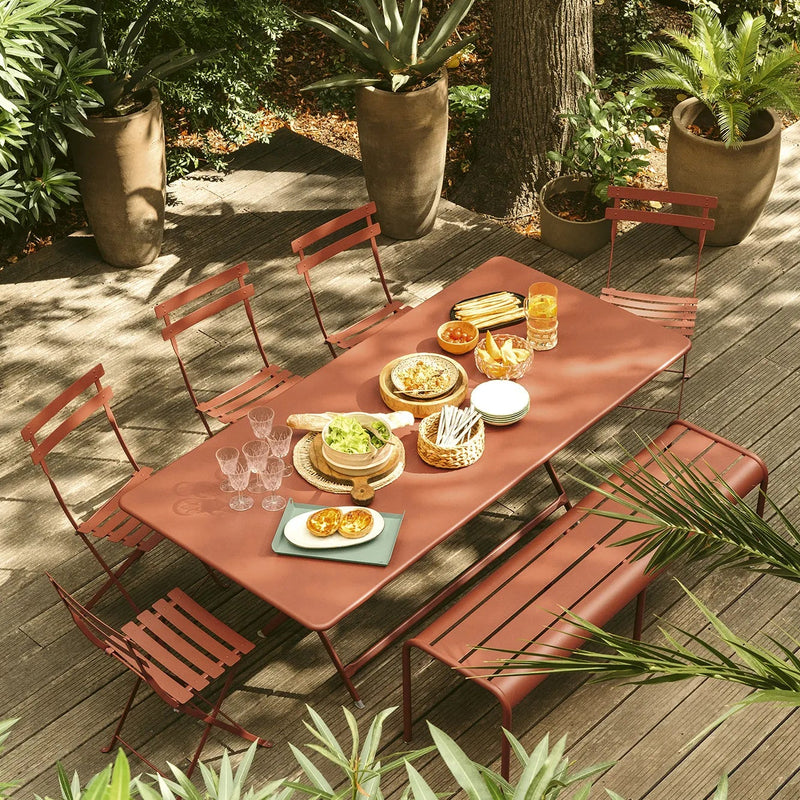
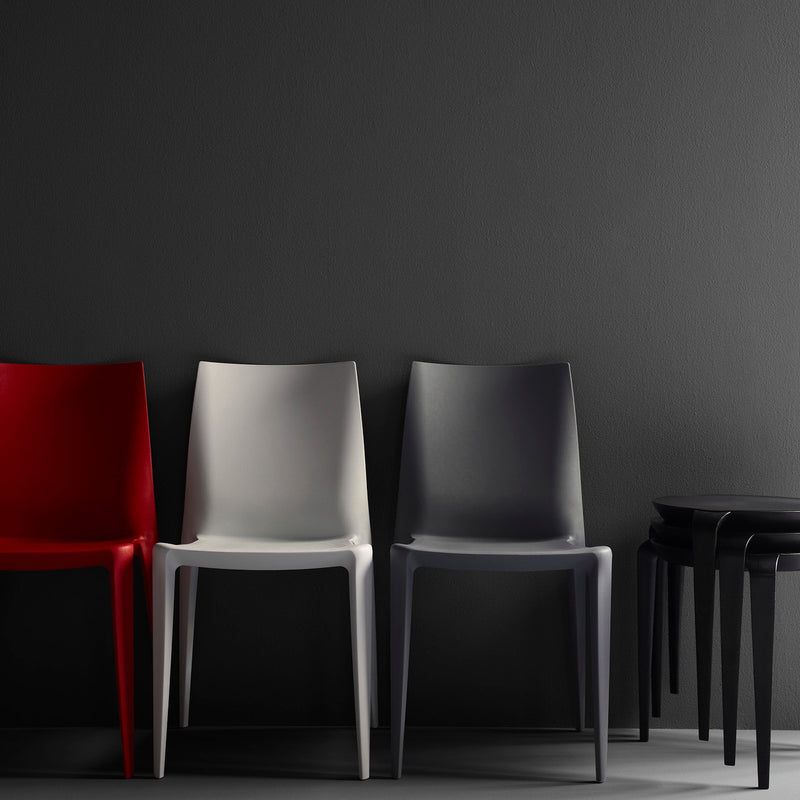
Yes. The most sustainable chair is the one you never replace, and durability is the one claim a lab can test. In the US the standard for commercial furniture is ANSI/BIFMA X5 (X5.1 for office chairs); in Europe there are EN standards such as EN 581 for outdoor furniture and EN 16139 for public seating. Heller's Bellini chair, made in the USA, is tested to ANSI/BIFMA X5.1, and Fermob tests its outdoor furniture to EN 581. Ask for the standard by number; “commercial grade” on its own means nothing.
Then read the warranty: how long, what it covers, and whether you have to register. UMAGE gives 10 years on the Time Flies chair when you register it within three months, Varier gives 10 years on the Social chairs' structural parts when registered, and FDB Møbler gives 10 years on its indoor furniture. A maker that sells spare parts, or a chair whose cover can be changed, as on the Time Flies, can outlast its warranty; our repairable furniture guide lists who sells parts.
Buying for a campus, an office or acoustic pods? Ask for three documents: the ANSI/BIFMA test report, an emissions certificate, and a warranty that covers commercial use. BIFMA's LEVEL certification rates a product's materials, energy, health effects and social impact in three tiers; Humanscale's Path carries LEVEL 3, the highest.
 Heller · Meter 3.7The Bellini Chair (Set of 2)Tested to ANSI/BIFMA X5.1; made in the USA
$500
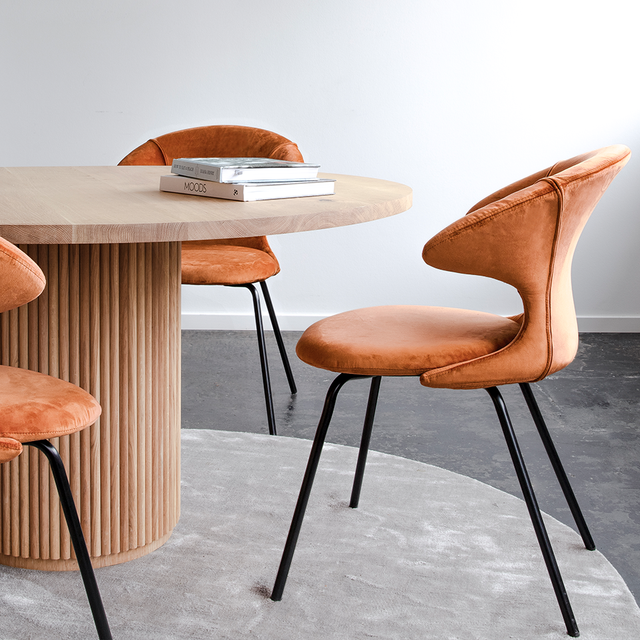
 UMAGE · Meter 3.8UMAGE Time Flies Chair, VelourFrom a Certified B Corp; 10-year warranty when registered
From $749Shop →
What should you look for in a sustainable furniture company?
A company tells you less with its own logo than with what it publishes. Use this checklist on any brand, ours included.
Signs you can check
- It names the country of make for each product.
- It gives certificate codes and test standards by number.
- It publishes a supplier code of conduct or names its factories.
- It states the warranty in years and sells spare parts.
- It sells original designs, not copies of someone else's.
- It says what happens at the end: repair, resale or take-back.
Red flags
- “Eco”, “green” or “natural” with nothing behind them.
- A badge the company designed for itself.
- “FSC wood” with no code, or “non-toxic” with no test.
- A company certification sold as a product claim.
- A percentage with no source.
We grade the makers we carry on the Comosum Sustainability Meter: six scores for materials, transportation, manufacturing, labor, energy and durability, built from what each brand can show, with the method published. Comosum is a member of Be Original Americas and sells original designs, not copies; see our authenticity promise.


Behind the labels · Humanscale · Est. 1983 · New York
Humanscale: a chair you can check label by label
Robert King founded Humanscale in New York in 1983, and it makes its chairs in its own plants in the US and Mexico. Humanscale is a Certified B Corp, and it lists the labels on each product: the Path carries BIFMA LEVEL 3, SCS Indoor Advantage Gold and a Declare Red List Free label, and Humanscale states that recycled material makes up more than half its weight.
- Living Product Certified designs
- 70+ patents
grade
How do you spot greenwashing in furniture?
Greenwashing is a claim that sounds checkable but isn't. A credible claim has four parts: a number, a scope, a source, and someone independent who checked it. Compare:
| What it says | What a checkable version says |
|---|---|
| “Made with recycled plastic” | 65.6% post-consumer recycled polypropylene, per Varier's EPD for the Social Tilt |
| “Sustainably sourced wood” | Solid FSC-certified oak, made in Slovenia: Mater's Accent Dining Table |
| “Non-toxic” | Nordic Swan Ecolabel, with limits on formaldehyde and VOCs: FDB Møbler's J164C stool |
| “Built to last” | Tested to ANSI/BIFMA X5.1: Heller's Bellini chair |
| “An eco-friendly company” | Certified B Corp, assessed by B Lab: UMAGE |
Watch the small words too. “Recyclable” means a material could be recycled; “recycled” means it was, so ask for the share. Upcycled and waste-based materials count when the maker says what they were: Mater presses coffee shells or wood waste with recycled plastic into the seat and back of the Conscious Chair, and Humanscale states that each Path chair contains 10 pounds of reclaimed ocean fishing net.
Where can you buy ethically sourced, sustainable luxury furniture?
From a store that shows its evidence piece by piece: the maker, where it is made, the certificate codes and the warranty. Comosum sells original designs from European, Scandinavian and American makers and grades each one on the same six scores, so you can compare them. Secondhand is the other honest answer: a sound vintage piece needs no new materials. To compare makers side by side, start with our sustainable furniture brands guide.
Furniture certifications: common questions
What are the common certifications that show furniture is sustainable?
For the wood, FSC, PEFC or SVLK; for what a piece releases into the air, GREENGUARD Gold, SCS Indoor Advantage Gold or the Nordic Swan Ecolabel; for fabric, OEKO-TEX or GOTS; for durability, an ANSI/BIFMA or EN test standard; and for the company, B Corp. Each label answers one question, so a well-documented piece usually carries more than one.
What certifications should I look for to make sure furniture is safe and non-toxic?
An emissions certificate such as GREENGUARD Gold or SCS Indoor Advantage Gold, or an ecolabel with chemical limits such as the Nordic Swan, plus OEKO-TEX on any fabric. FSC is not a safety label: it covers where the wood came from, not the glue or finish.
How do I verify that the wood in my furniture is ethically sourced?
Ask for the FSC or PEFC certificate code and look it up in the certifier's public database; for Indonesian teak, ask for SVLK verification. Then check that the piece itself is sold as certified, because a company's certificate doesn't cover everything it makes.
What certifications and warranties should I look for in furniture for a college campus, office or acoustic pods?
The ANSI/BIFMA test results for that type of product, an emissions certificate, BIFMA LEVEL or an EPD if the project tracks sustainability, and a warranty that covers commercial use, stated in years, with spare parts available.
What certifications should I look for in sustainable custom furniture?
Custom pieces rarely carry product labels, so ask the maker for its FSC or PEFC chain-of-custody code for the wood, emissions data or an ecolabel for the finish and any boards, and a written warranty.
Which furniture stores publish their environmental certifications?
Furniture certifications belong to makers and products, not stores, so ask any store, in your city or online, to show the maker's certificate codes and test standards for the piece. A store can be a B Corp itself, which covers how the store runs. Comosum grades the makers it sells on six scores and publishes the method.
How do I know if a luxury furniture brand genuinely uses sustainable materials?
Look for names and numbers: the wood species with an FSC code, the recycled share with its source, such as an EPD, and the country where the piece is made. A high price and a natural look prove nothing on their own.
What sustainability claims are credible, and what is greenwashing?
A credible claim has a number, a scope, a source and an independent check, such as “65.6% post-consumer recycled, per Varier's EPD.” Greenwashing leans on words with nothing behind them: “eco”, “green”, “natural”, “non-toxic” without a test, or a company badge presented as a product label.
Is B Corp a product certification?
No. B Lab certifies a whole company's social and environmental performance. UMAGE, Anglepoise and Humanscale are Certified B Corps; that tells you how each company operates, not what a particular chair is made of.