


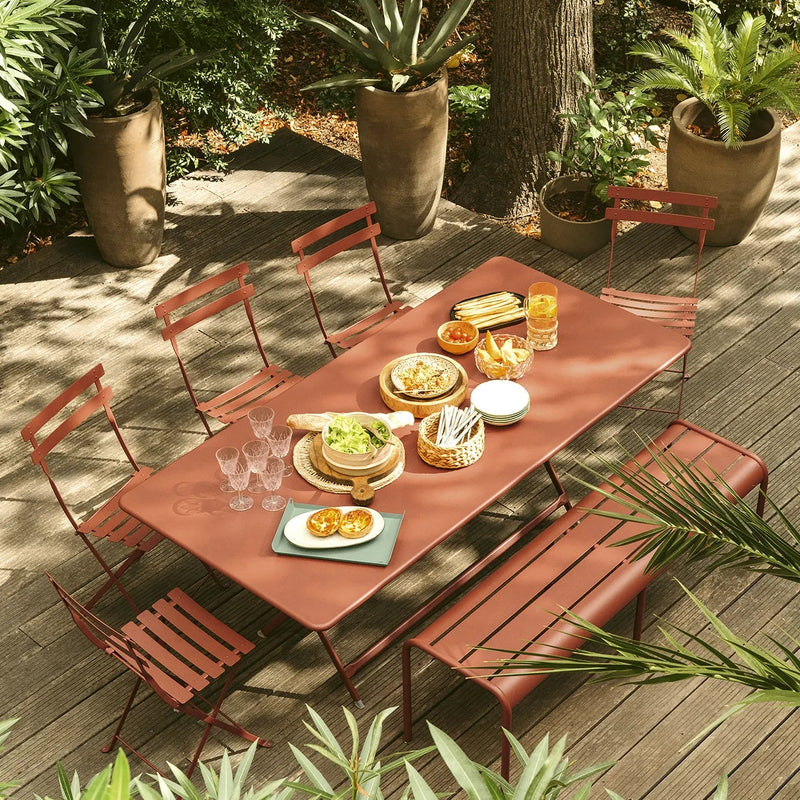
Sustainable furniture for renters is furniture designed to be taken apart, carried by one person, mounted without permanent damage, and reassembled in the next apartment without losing value. The US EPA counted 12.1 million tons of furniture entering municipal waste in 2018, 80 percent of it landfilled. Comosum curates renter-friendly furniture from B Corp and design-led brands like Tiptoe, Heller and WOUD because a piece that survives three moves is the most sustainable piece you can buy.
Many of the pieces here are also in our small-space furniture collection, which groups pieces that fold, stack, extend or hang on the wall.
Why Renters Are the Front Line of Fast Furniture
The furniture industry's waste problem has a specific shape. According to the US Environmental Protection Agency, furniture and furnishings generated 12.1 million tons of municipal solid waste in 2018, up from 2.2 million tons in 1960. Only 19.5 percent was combusted for energy recovery; 80.1 percent went to landfill. Wood was the largest material category, ferrous metal the second.
Renters sit at the sharp end of that curve for a reason that has nothing to do with taste. If you expect to move in two years, a $900 bookcase that needs two people and a van feels like a liability, and a $90 one that falls apart on the stairs feels like a reasonable bet. Cheap flat-pack was built for exactly this calculation. It is light because it is hollow, cheap because it is particleboard, and disposable because the cam-lock joints do not survive a second assembly.
The alternative is not heavier furniture. It is furniture that was engineered for disassembly from the start — bolted rather than glued, mounted through a bracket rather than through the piece, and made of materials that can be separated and recycled when the object finally does reach the end of its life. That is a design brief a handful of brands have taken seriously, and it is the brief behind every pick in this guide. It also overlaps almost entirely with what makes furniture genuinely sustainable, which is why we have covered it from other angles before: our guide to sustainable furniture for small spaces handles the square-footage problem, and our piece on take-back, repair and resale covers what happens at the other end. This one is about mobility.
What Makes Furniture Renter-Friendly and Sustainable
Materials
Two materials do most of the work here: steel and solid wood, used honestly. Steel is the most recycled material on earth — Tiptoe notes that 80 to 90 percent of the steel used in Europe has been recycled at least once — and a powder-coated steel leg or bracket will outlast a dozen tabletops. Solid oak, when it is FSC-certified or PEFC-certified, can be sanded, re-oiled and sold on after a decade of use. Particleboard cannot do any of that, and a veneer chip on a moving day is permanent.
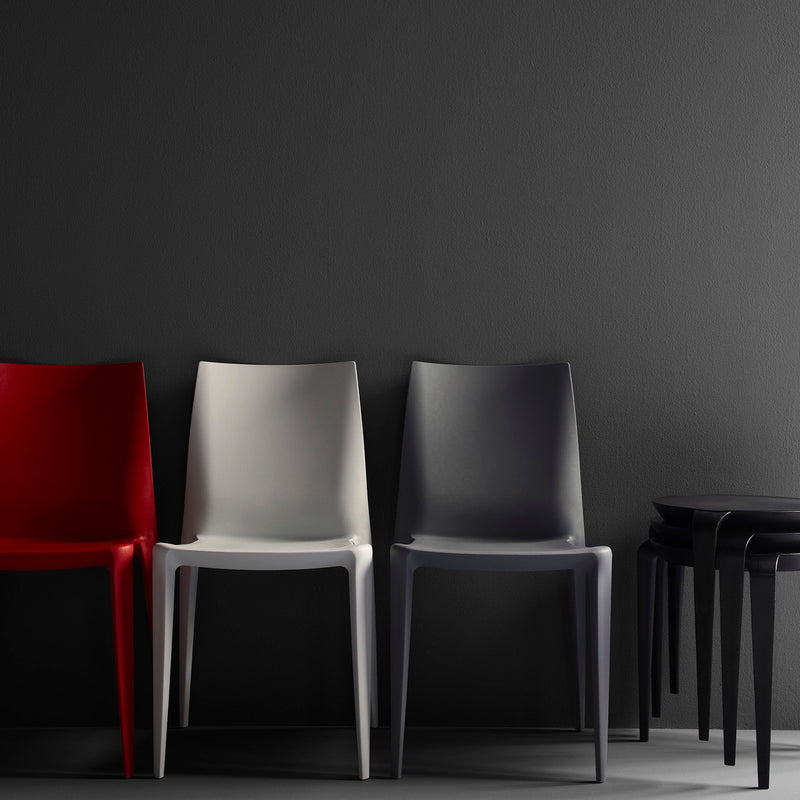
Recycled polymers earn a place too. Heller moulds its Vignelli and Bellini pieces in the USA from recycled-content polyethylene and fibreglass-reinforced polypropylene, both recyclable at end of life. A 7.5-pound stackable chair that shrugs off a rainy balcony and a cross-country move is a different proposition from a foam-and-veneer dining chair.
Construction
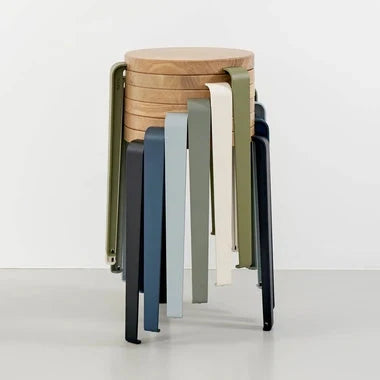
The test is simple: can you take it apart with one tool, and will it go back together the same way a third time? Tiptoe's entire catalogue is built around this. The company's 2015 launch product was a set of four steel legs that screw into any board; its LOU stool is a single oak seat with four legs that unscrew for transport and again for recycling, so the oak and steel leave as separate streams. Nothing is glued. The same logic runs through the modular sofas we recommend — pieces you can split into one-person loads and recombine to fit a differently shaped room.
Weight matters as much as joinery. A Tiptoe LOU stool weighs 9.9 pounds; a set of four table legs about 22. A Heller Vignelli Bench weighs 40 to 53 pounds depending on length and is hollow, so it can be carried by one person and sand-filled later for an exposed site. Ask, for every piece, whether you could get it down a flight of stairs alone.
Mounting without damage
Shelving is where renters lose their deposit. The renter-friendly answer is not "no shelves" but shelves whose mounting is minimal and standardised. Tiptoe's PLI shelf is a single folded sheet of steel that fixes through two holes with supplied plugs — two small holes per shelf, easily filled. Heller's Swell Catchall mounts with two included screws. WOUD's O&O clothing rack does not touch the wall at all: two interlocking painted-metal rings that stand on the floor and swivel to change their silhouette. Where a wall fix is unavoidable, match the plug to the wall type (plasterboard, brick, concrete) and keep the screws in a labelled bag for the next place.
Certifications worth checking
For this category, two matter. B Corp certification from B Lab verifies the company, not just the product — Tiptoe has held it since 2022. FSC or PEFC chain-of-custody verifies the wood. Beyond those, the Sustainable Furnishings Council is the reference point for how the industry defines its own standards. Treat "eco" or "green" on a flat-pack label as decoration until it names a scheme.
Why We Recommend This Approach at Comosum
We carry a lot of furniture that is not renter-friendly — a solid teak dining table is a wonderful object and a terrible thing to move every eighteen months. So this guide is deliberately narrow. Everything in it comes from brands we have already written about for other reasons, and we chose these particular pieces because they share three properties: one person can carry them, one tool takes them apart, and the resale market for them exists.
That last point is the one renters underrate. A Tiptoe leg set or a Heller Bellini chair has a name, a designer and a listing on every secondhand platform. Design furniture holds value in a way anonymous flat-pack does not, which turns a purchase into something closer to a deposit. If the budget is tight, our guide to sustainable furniture under $500 covers the same logic at a lower price point, and most of what follows is in that range.
What to Shop at Comosum
- Tiptoe Set of 4 Table Legs (29.5 in) — The 2015 original: four powder-coated steel legs, made in France and Lithuania, that screw into any solid or engineered wood board up to 70.9 × 39.4 in. Same set moves from dining table to desk to the next apartment. Lifetime functional warranty in the EU. $520.
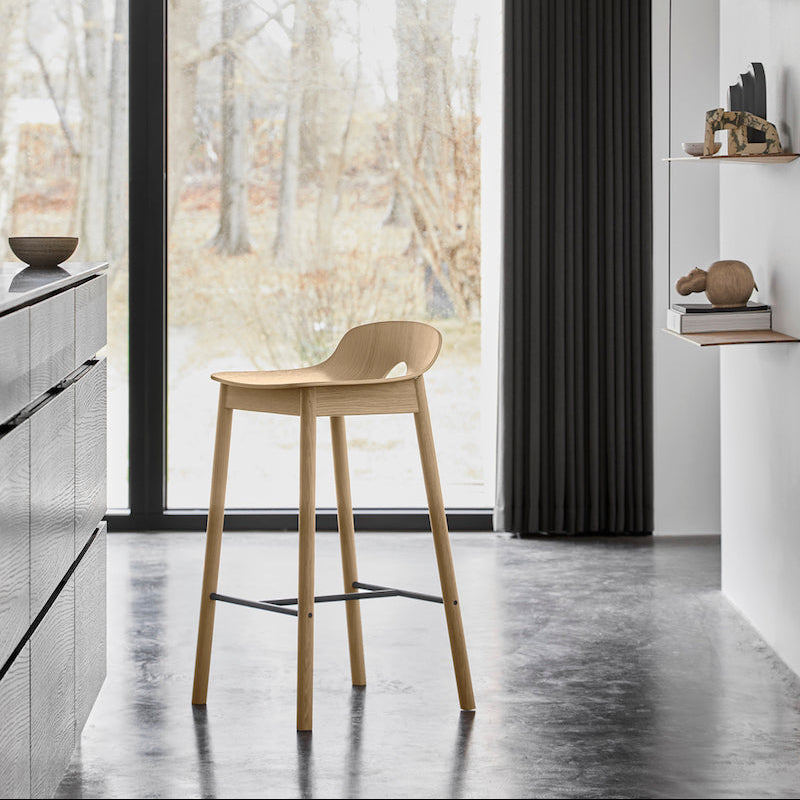
- Tiptoe LOU Stool — Armand Serafini's low stool: a PEFC/FSC-certified solid oak seat with four steel legs that unscrew in minutes. 9.9 lb, 17.7 in high; works as a bedside, plant stand or extra seat. $290.
- Tiptoe PLI Steel Wall Shelf — One folded sheet of powder-coated steel, made in Lithuania, mounting through two holes with supplied plugs. Rated to 33 lb per shelf; 4 to 6.6 lb each. From $110.
- Heller Bellini Chair (Set of 2) — Mario Bellini's 1998 monobloc, moulded in the USA from recyclable fibreglass-reinforced polypropylene. 7.5 lb per chair, stacks six high, indoor or balcony. In the Met's permanent collection. $625 for two.
- Heller Vignelli Bench — Lella and Massimo Vignelli's 2005 hollow polyethylene bench in three lengths and sixteen colours. Entryway seat, dining bench or balcony piece; 40 to 53 lb, made in the USA. From $800.
- WOUD O&O Clothing Rack — Christine Rathmann's two interlocking metal rings: an open wardrobe that needs no wall fixing and reshapes itself to the room. From $479.
Browse stools and benches, wall-mounted shelving, and the full range of sustainable furniture brands at Comosum →
For more on the brand behind most of these picks, read why we carry Tiptoe.
Frequently Asked Questions About Sustainable Furniture for Renters
What is the most sustainable furniture for renters?
Furniture that can be disassembled with one tool, carried by one person, and resold when you no longer need it. Bolted steel-and-solid-wood pieces from brands like Tiptoe, and recyclable moulded-polymer pieces from Heller, meet all three tests. Glued particleboard flat-pack meets none of them and is the category most likely to be abandoned at move-out.
Is flat-pack furniture sustainable?
It depends entirely on what is inside the flat pack. Flat shipping itself is efficient. The problem is particleboard and cam-lock joints that fail on the second assembly. Flat-pack built from powder-coated steel and certified solid wood, with screw-in joints designed for repeated assembly, is among the most sustainable furniture you can buy because it ships light and lasts.
How do I put up shelves in a rental without losing my deposit?
Choose shelving with the fewest, smallest fixings — Tiptoe's PLI shelf uses two holes per shelf, and Heller's Swell Catchall mounts with two screws. Match the wall plug to the wall material, keep the original hardware bagged for the next home, and fill holes with a matching filler before you leave. For hanging storage, a freestanding rack like WOUD's O&O avoids the wall completely.
Does design furniture hold its resale value?
Named design pieces generally do far better on secondhand platforms than anonymous flat-pack, because buyers can search for them by designer and model. A Heller Bellini chair or a Tiptoe leg set has a listing history and a known retail price, which makes it easy to sell when you move. That resale value is part of what makes the higher purchase price reasonable for a renter.
How much does furniture waste contribute to landfill?
The US EPA reports that furniture and furnishings generated 12.1 million tons of municipal solid waste in 2018, about 4.1 percent of the total. Of that, 80.1 percent was landfilled and 19.5 percent was combusted for energy recovery; measurable recycling was limited to mattresses. Buying pieces designed to be moved and resold is one of the most direct ways to keep furniture out of that stream.


Leave a comment
This site is protected by hCaptcha and the hCaptcha Privacy Policy and Terms of Service apply.