
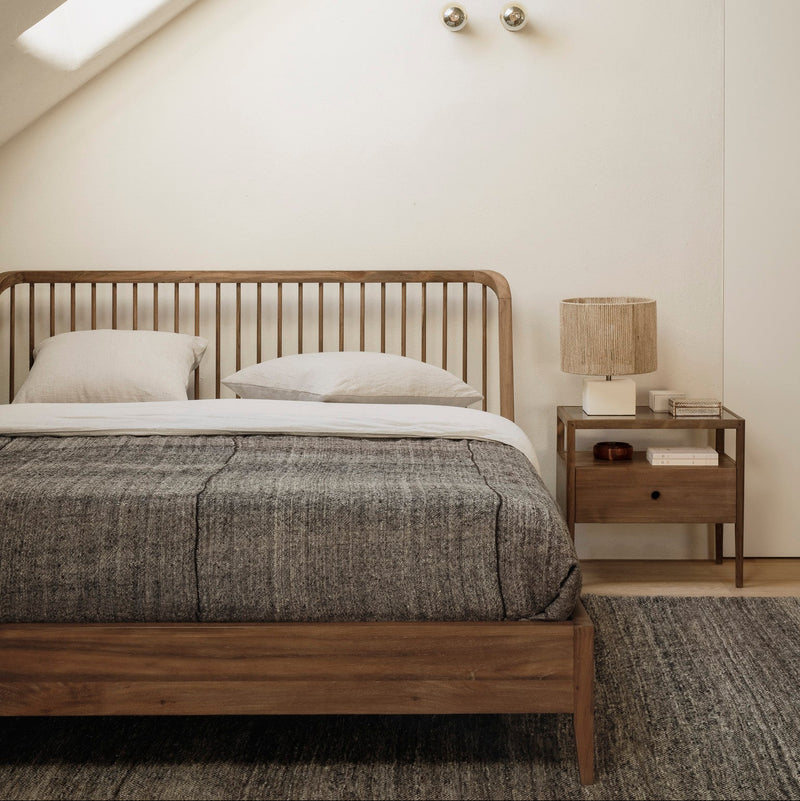
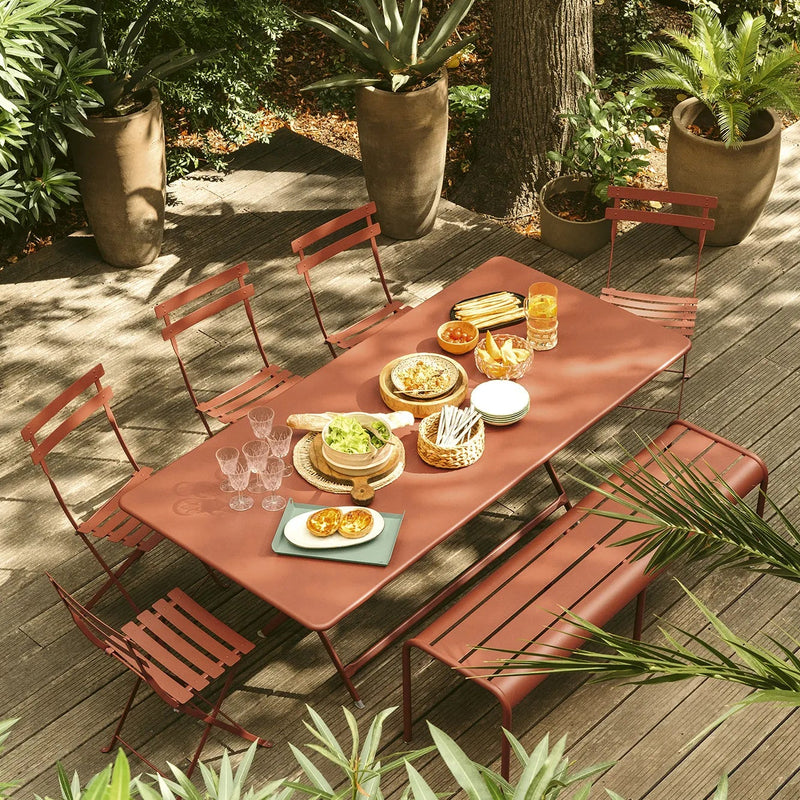
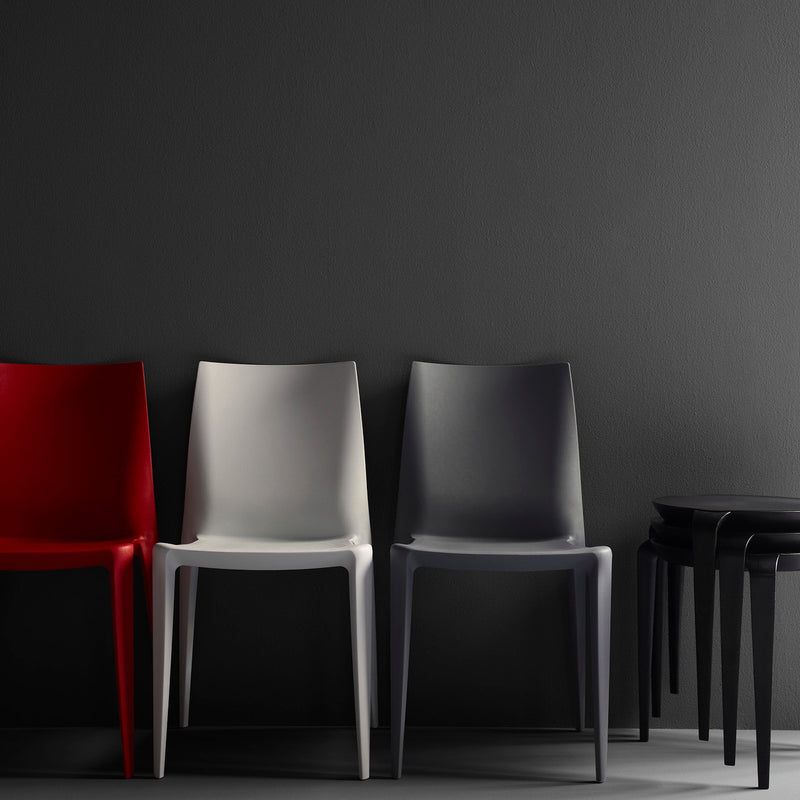

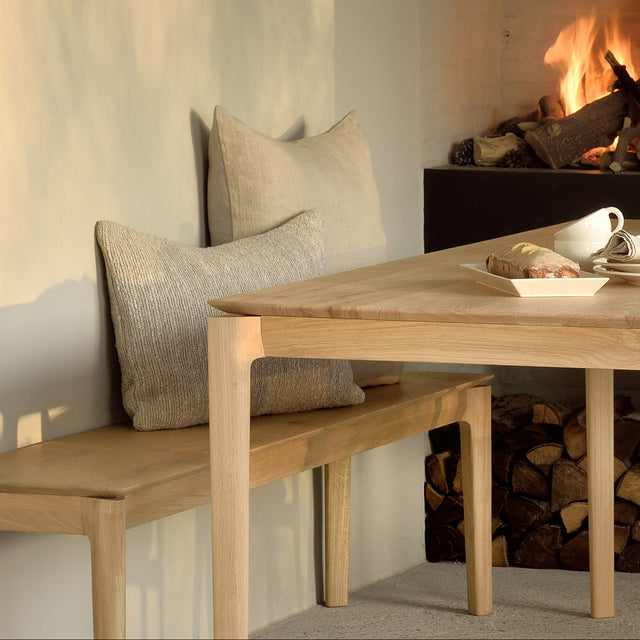
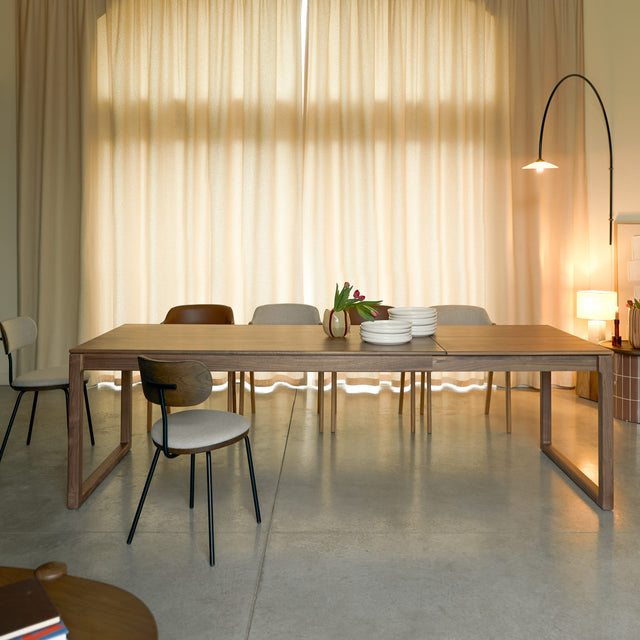
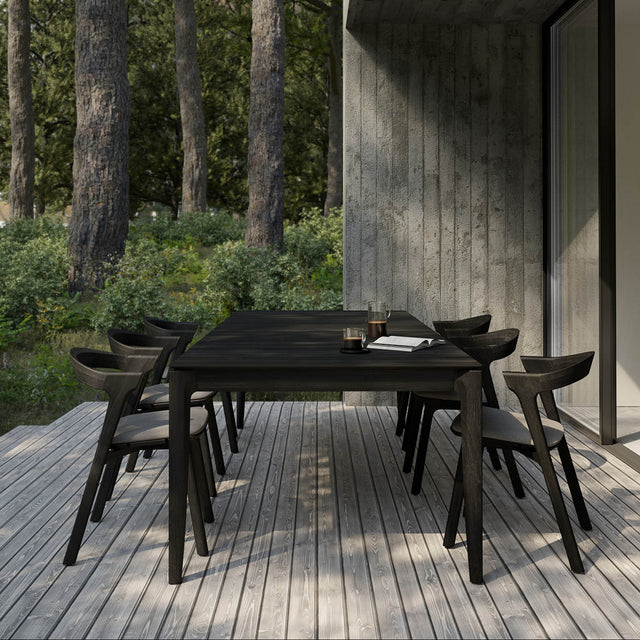
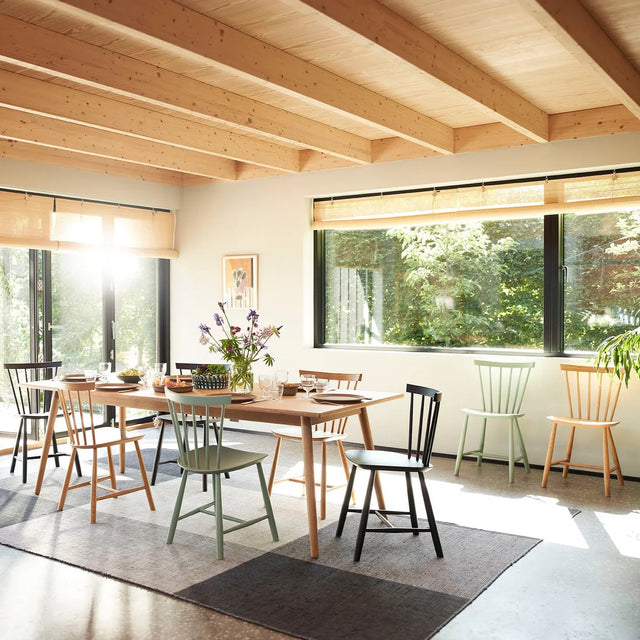
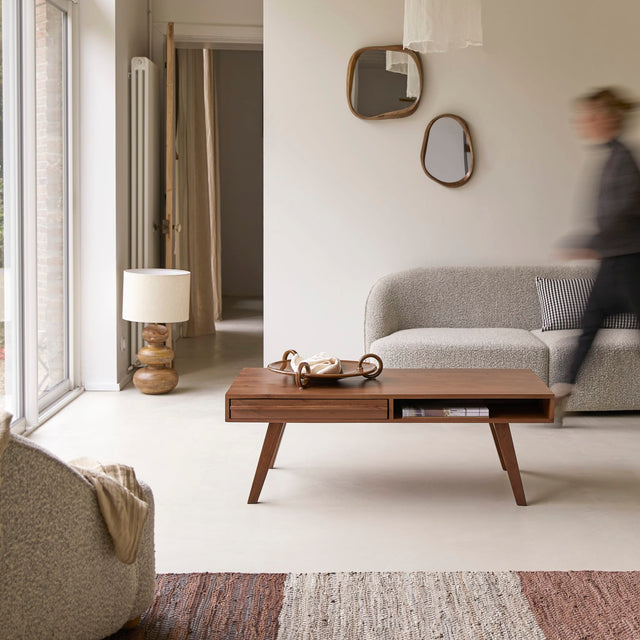
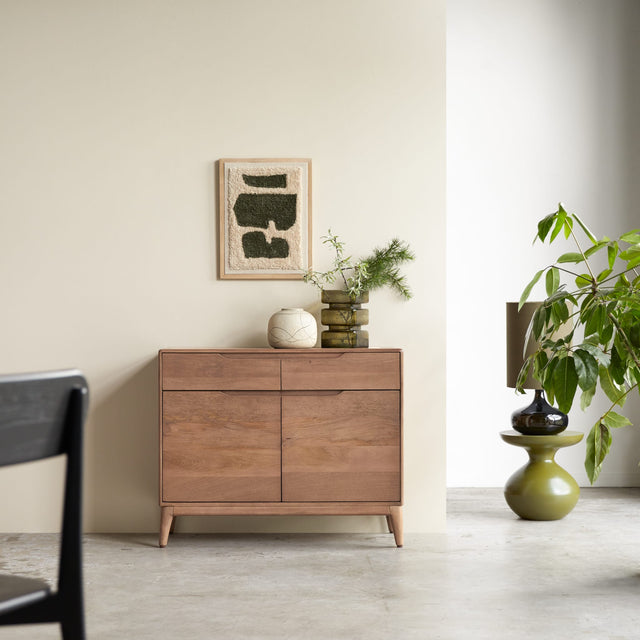
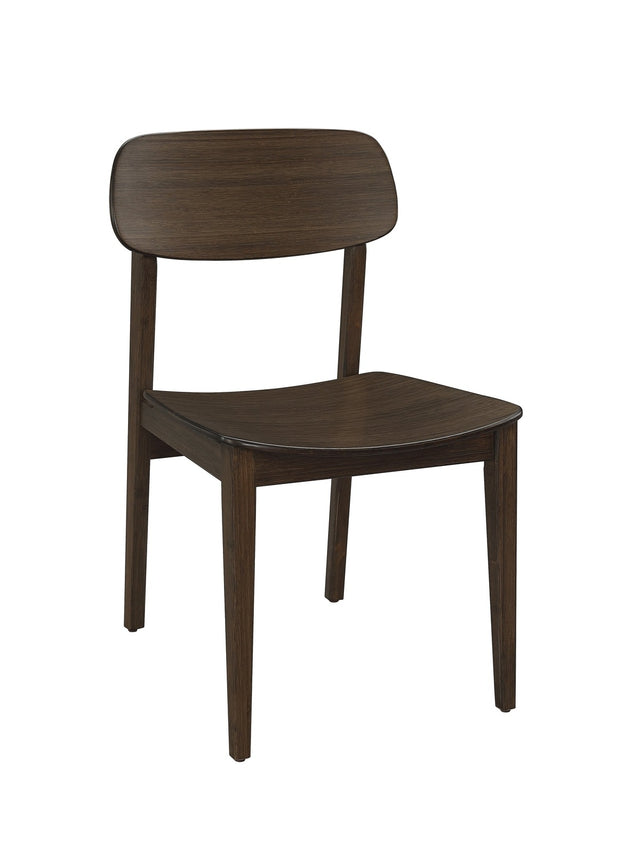
Most furniture wood falls into four groups: temperate hardwoods such as oak, walnut, ash and beech; tropical and plantation hardwoods such as teak, acacia and mango; softwoods such as pine; and bamboo, which is a grass. This guide compares each one on looks, hardness, upkeep and sustainability, says which suits which piece, and points you to the pieces we carry in each.
What are the main types of wood used for furniture?
These six make up most of our range. Here is what each looks like up close.

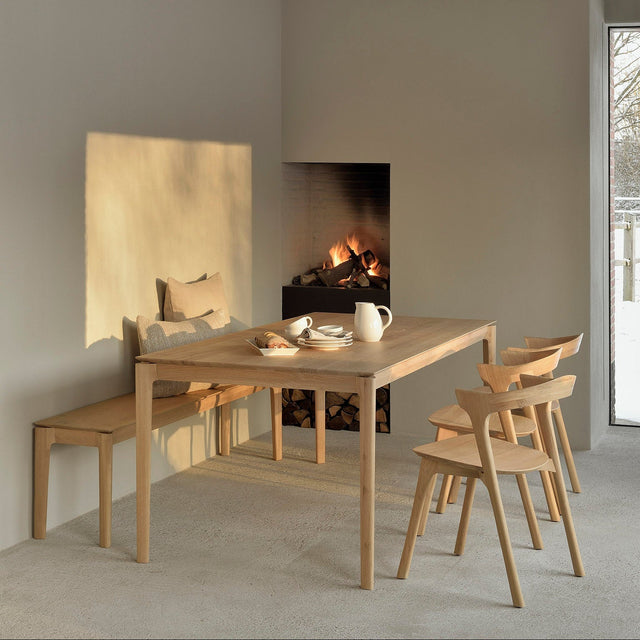
Oak
Light to golden brown with a bold grain. Hard, stable and easy to refinish: the all-rounder.

Walnut
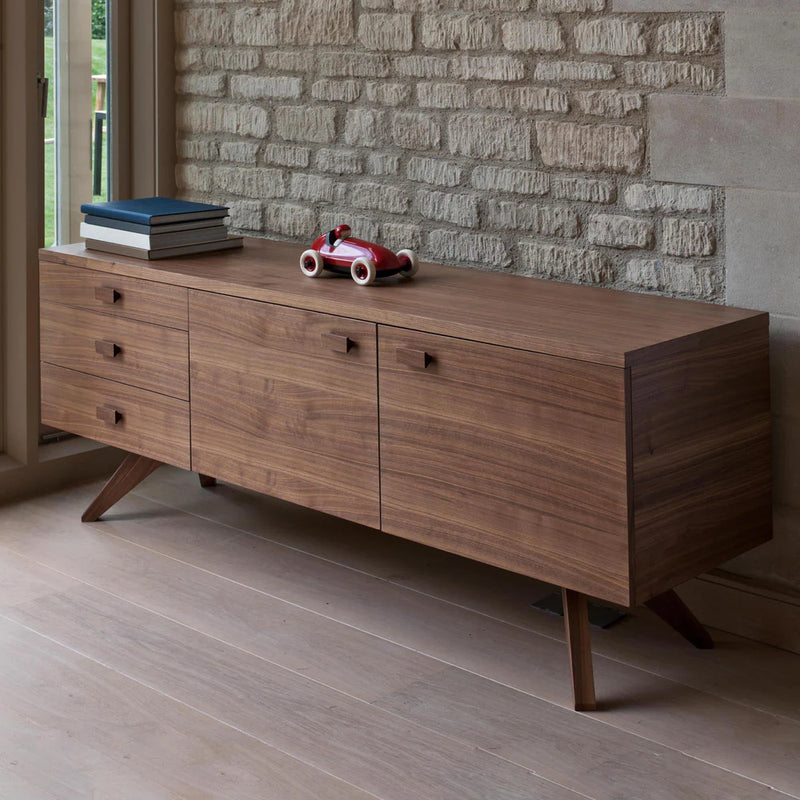
Light to dark chocolate brown. Softer than oak, so it marks more easily, and it lightens in strong sun.

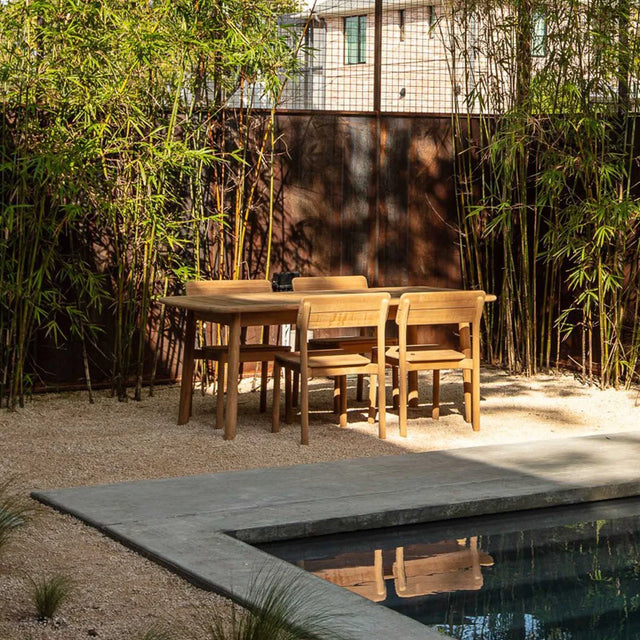
Teak
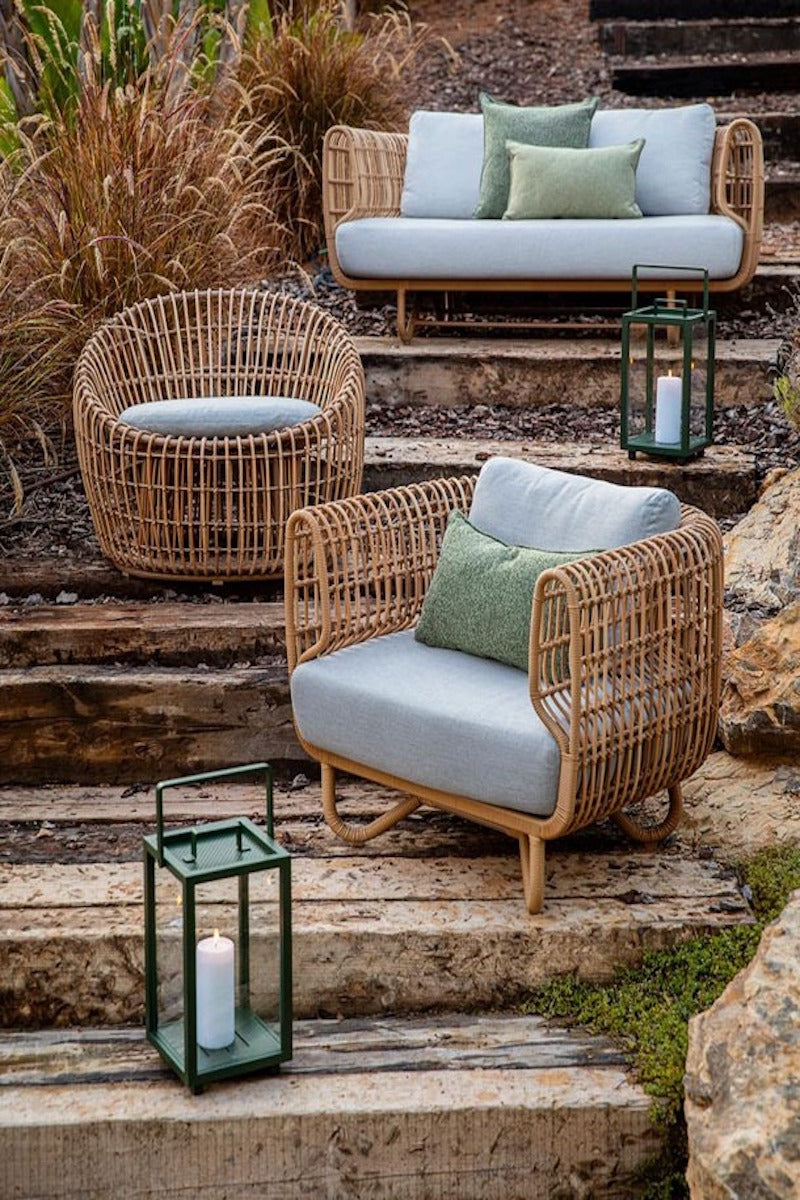
Golden brown and oily to the touch. Its natural durability makes it the classic outdoor wood.

Acacia
Warm brown with lively grain. Hard and affordable; often plantation-grown in Southeast Asia.

Mango
Light to mid brown with varied, sometimes streaky grain. A good-value wood for indoor storage.

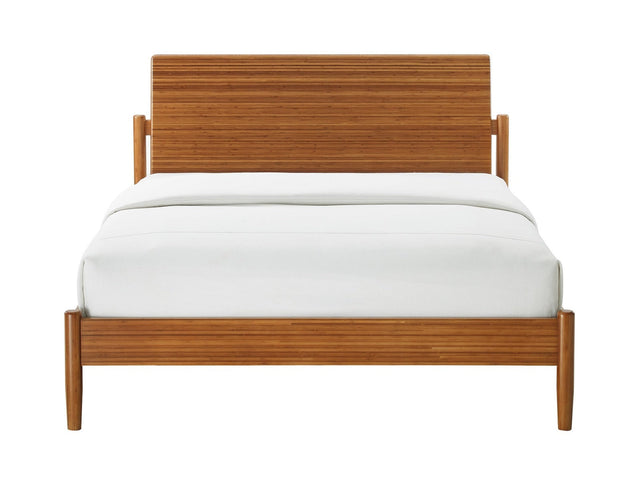
Bamboo
Fine, striped grain, pale or caramelized. A fast-growing grass made into solid panels.
Beyond these six you will meet ash, beech, maple, birch and cherry (pale or reddish hardwoods, mostly from North America and Europe), rubberwood (a by-product of rubber plantations) and softwoods such as pine and fir.
Which wood is hardest? A hardness chart for furniture woods
The usual measure is the Janka test: the force needed to press a steel ball 0.444 in wide halfway into the wood. A higher number means the surface resists dents better (USDA Wood Handbook).
| Wood | Janka (lbf) | Looks, and where it works best |
|---|---|---|
| European ash | 1,480 | Pale cream, straight grain. Chairs, frames |
| Hard maple | 1,450 | Creamy white. Butcher blocks, hard-wearing tops |
| European beech | 1,450 | Pale cream to pinkish. Chairs and bentwood |
| Acacia (mangium) | 1,430 | Light to dark brown. Indoor tables, covered outdoor use |
| White oak | 1,360 | Grayish to light brown. Tables, chairs, almost anything |
| White ash | 1,320 | Pale, straight grain. Chairs, tool handles |
| Red oak | 1,290 | Brown with a red tinge. Indoor furniture, floors |
| Yellow birch | 1,260 | Pale to light reddish brown. Chairs, plywood |
| European oak | 1,120 | Light to medium brown. Tables, chairs, storage |
| Mango | 1,070 | Light to medium brown, variable grain. Indoor storage and tables |
| Black walnut | 1,010 | Light to dark brown. Statement tables, storage |
| Teak | 1,000 | Golden brown, oily feel. Outdoor furniture |
| Rubberwood | 960 | Pale cream. Budget indoor furniture |
| Black cherry | 950 | Pinkish brown, darkens with age. Cabinets |
| Douglas-fir | 710 | Reddish to yellowish brown. Rustic pieces |
| Eastern white pine | 380 | Pale, knotty. Painted and budget pieces |
Figures at 12% moisture from the USDA Wood Handbook; European oak, ash and beech, acacia and mango from The Wood Database. Single samples vary. Bamboo has no standard hardness test, so we leave it off.
Hardness is not the whole story. A softer wood with an oil finish can be sanded and re-oiled at home, while a hard wood under a cracked lacquer needs a full refinish. Our guide to solid wood, veneer and engineered wood covers that side.
Hardwood vs. softwood: what's the difference?
It is botany, not hardness. Hardwoods come from broadleaf trees (angiosperms) and softwoods from conifers (gymnosperms). The USDA notes that some softwoods, such as Douglas-fir, produce harder wood than some hardwoods, such as basswood. Balsa, at about 67 lbf, is a hardwood; European yew, at about 1,520 lbf, is a softwood. For furniture, look at the hardness number and the species, not the label.
Oak: the all-rounder
Oak is hard, stable and takes oil well, which is why it shows up in every room. Its grain is bold; quartersawn boards show broad flecks called rays. European oak (Quercus robur) measures about 1,120 lbf, a little softer than American white oak.
White oak vs. red oak
White oak's pores are blocked by growths called tyloses, so liquids struggle to pass through: that is why it is used for barrels and boat parts, and why its heartwood resists decay. Red oak's pores are open, its heartwood has a reddish tinge, and it is less resistant to decay. For a tabletop that sees spills, white oak is the better pick (USDA Wood Handbook, chapter 2).

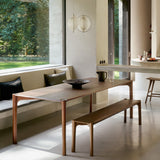
 Ethnicraft · Meter 3.5PI Dining TableSolid oak with hardwax oil; each top finished by hand
From $2,349Shop →
 Tikamoon · Meter 4.0Jonàk Coffee Table in Solid OakSolid oak; ships fully assembled from New Jersey
$999Shop →
 FDB Møbler · Meter 3.7J46 Chair - Natural Oiled OakSolid oiled oak; a Poul M. Volther design
$569Shop →
 FDB Møbler · Meter 3.7J83B Bench - Natural OakOak frame with a woven paper cord seat
$1,209Shop →
Caring for it: our solid oak care guide covers cleaning, oiling and repairs, and Ethnicraft vs. FDB Møbler compares two makers who work in oak.
Walnut: rich color, softer than oak
Black walnut's heartwood runs from light to dark brown, and it is the wood people choose for its color. At about 1,010 lbf it is softer than white oak, so a walnut table will take dents a little more readily. Dark woods tend to lighten in light, and in one study black walnut was the most sensitive of the woods tested to bleaching by visible light (Holzforschung, 2022). Keep walnut out of direct sun, or expect a gentle fade.
 Tikamoon · Meter 4.0Arto Extendable Dining Table in Solid WalnutSolid walnut with an oiled finish; extendable
$3,999Shop →
 Tikamoon · Meter 4.0Metric TV Stand in Solid WalnutSolid walnut on metal legs
$1,699Shop →
 Tikamoon · Meter 4.0Metric Sideboard in Solid WalnutSolid walnut case and fronts on a metal base
$2,699Shop →
Teak: the one for outdoors
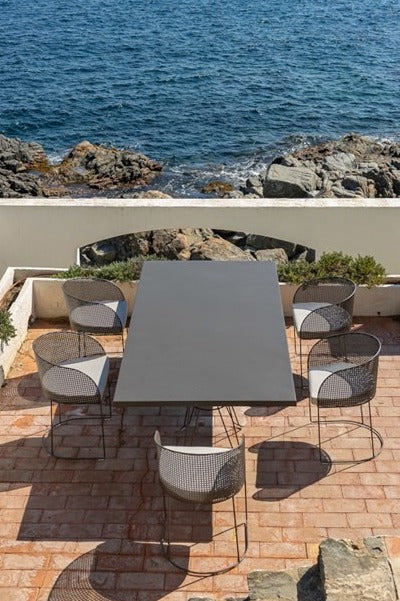
Teak has a distinctly oily feel, a high natural durability, and enough silica to dull tools. The USDA rates old-growth teak very resistant to decay but young, fast-grown teak only moderately resistant, so the age and density of the timber matter. Wild teak is now listed as Endangered by the IUCN, which notes that natural harvesting continues only in Myanmar. Teak is now widely grown in plantations instead. Ask where yours was grown: Cane-line, for example, uses SVLK-verified teak, checked under Indonesia's timber legality system.
For outdoor use, compare it with acacia and aluminum in our teak vs. acacia vs. aluminum guide.
 Shop the terrace · 2 pieces
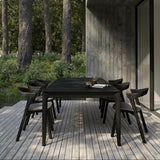
 Ethnicraft · Meter 3.5Bok Outdoor Dining tableSolid teak, natural or black-tinted; made in Indonesia
From $1,449Shop →
 Ethnicraft · Meter 3.5Jack Outdoor Dining TableSolid teak, shipped untreated to weather silver
From $3,249Shop →
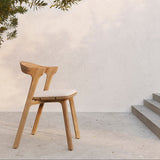
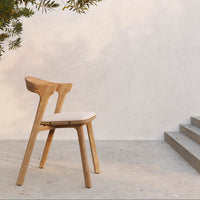 Ethnicraft · Meter 3.5Bok Outdoor Dining ChairSolid teak, untreated or black-tinted
From $989Shop →
Ash, beech, maple and birch: pale, hard and tough
- Ash is strong, stiff and shock resistant, which is why it is used for tool handles and baseball bats. In North America the emerald ash borer has killed or weakened tens of millions of ash trees since it was found in 2002, and it is now in 38 states (USDA APHIS). CondeHouse works in Japanese ash grown in Hokkaido.
- Beech is hard, strong and well suited to steam bending, the technique behind bentwood chairs such as Thonet's.
- Hard maple is among the hardest common furniture woods, with creamy sapwood. It is used for butcher blocks, cutting boards and even bowling alleys. We don't currently carry maple furniture.
- Birch is a pale hardwood; yellow birch measures about 1,260 lbf. CondeHouse makes its YON table in Japanese birch.
 WOUD · Meter 3.2Arc Coffee TablePainted ash veneer top on solid ash legs
$1,779Shop →
 FDB Møbler · Meter 3.7J46 Chair - Natural BeechBeech with a water-based lacquer
$379Shop →
 CondeHouse · Meter 3.7YON Round TableJapanese birch; made in Asahikawa, Japan
$2,250Shop →
Acacia, mango and rubberwood: affordable plantation woods
Acacia used in furniture is often Acacia mangium or A. auriculiformis, grown in plantations across Southeast Asia, mostly for pulp. At about 1,430 lbf it is harder than teak, and it holds up to weather under cover, but it is not durable in contact with the ground (PROSEA). Indoors it makes a hard-wearing, good-value table.
Mango is medium-hard (about 1,070 lbf) and not durable outdoors, so keep it inside. Some comes from old orchard trees that are past their best fruiting years, and its grain varies a lot from board to board.
Rubberwood comes from rubber plantations that are cleared and replanted after 25 to 30 years as latex yields fall. It needs preservative treatment against fungi and insects (FAO). We don't carry it, but it is common in budget furniture.

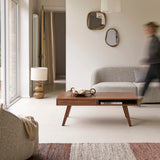
 Tikamoon · Meter 4.0Niels Rectangular Coffee Table in Solid AcaciaSolid acacia, varnished; drawer and open shelf
$999Shop →
 Tikamoon · Meter 4.0Capri Oval Outdoor Dining Set in Solid AcaciaPre-oiled solid acacia outdoor set
$2,099Shop →
 Tikamoon · Meter 4.0Gabrielle 39" Sideboard in Solid Mango WoodSolid mango wood; ships assembled from New Jersey
$1,199Shop →
 Tikamoon · Meter 4.0Hedda Desk in Solid Mango and MetalSolid mango top on a metal frame
$749Shop →
Is bamboo wood?
No, bamboo is a grass, but it can be pressed into solid panels that work like wood. Moso bamboo shoots can grow up to about 1 m a day, and culms are typically harvested at around five years old. FSC can certify bamboo as well as wood. Greenington makes its furniture from 100% solid Moso bamboo. Our bamboo vs. hardwood guide compares it with oak and other hardwoods in detail.
 Greenington · Meter 3.5Currant Chair (Set of 2)100% solid Moso bamboo; sold in pairs
From $938Shop →
 Greenington · Meter 3.5Monterey Platform Bed100% solid Moso bamboo platform bed
From $2,089Shop →
 Greenington · Meter 3.5Studio Plus DeskSolid Moso bamboo; no MDF or particleboard
$779Shop →
Is pine good for furniture?
For some pieces. Eastern white pine is the softest wood in our chart (about 380 lbf), so a pine tabletop will show dents sooner than a hardwood one. It is also lightweight and inexpensive, which suits shelves, cabinets and painted pieces. Scots pine (about 540 lbf) and Douglas-fir (about 710 lbf) are firmer softwoods.
Which wood is the most sustainable?
No species is sustainable on its own. What matters is where the tree grew, whether the forest is managed and checked, and how long the piece lasts. What to look for:
- A certification label. FSC 100% means all the wood comes from FSC-certified forests; FSC Mix combines certified, recycled and controlled wood; FSC Recycled is all recycled. PEFC is the other large forest certification system. Our FSC guide explains more.
- A known origin. US hardwood forests grew about 2.6 times more wood than was harvested in 2022 (USDA Forest Service). For tropical woods, ask for the country and the legality system, as with SVLK teak.
- Restricted woods. Brazilian rosewood is on CITES Appendix I and ipe on Appendix II, so international trade in their timber needs permits. We don't sell either.
- A long life. Solid wood that can be sanded, re-oiled and repaired outlasts several cheaper replacements. Our repairable furniture guide lists which brands sell spare parts.
US law backs this up: the Lacey Act makes it illegal to import illegally harvested wood, and importers must declare the species and the country of harvest. Wooden furniture has needed that declaration since December 2024.
What is the best wood for furniture? Our picks by piece
| If you need | Choose |
|---|---|
| A dining table for daily family use | Oak with an oil finish, or acacia on a budget. See our dining table guide |
| Furniture that lives outside | Teak, or acacia under cover |
| Chairs that take daily knocks | Beech, ash or oak |
| A warm, dark statement piece | Walnut, kept out of direct sun |
| Bedroom and storage on a budget | Mango, acacia or bamboo; pine if painted |
| The most dent-resistant top | Maple, beech, ash or white oak |
How to read a wood label
- "Solid oak" vs. "oak veneer". Solid means boards all the way through; veneer is a thin layer over a core. Both are real wood.
- Finish names aren't species. "Walnut" or "teak" can be a color: Greenington's Black Walnut and Caramelized are finishes on bamboo.
- "Hardwood solids" or "wood finish". Ask which parts are solid and which wood it is.
- Ask for species and origin. Our product pages list the material, and many say where the piece is made. If something is missing, email hello@comosum.co and we'll ask the maker.


Behind the wood · Ethnicraft · Antwerp · 30+ years of solid wood
Oak and teak, made in Ethnicraft's own factories
Ethnicraft was founded in Antwerp more than 30 years ago and makes its solid oak and teak furniture in its own factories, mostly in Indonesia, with oak pieces made in Serbia. Sawdust from production fuels its drying ovens, and its Re-Loved program refurbishes used pieces for a second life.
- Solid wood, oiled or water-based varnished
- Serbian factory runs on wood-residue energy
- Re-Loved: refurbished for a second life
grade
Wood for furniture: common questions
What are the main types of wood used for furniture?
Temperate hardwoods (oak, walnut, ash, beech, maple, birch and cherry), tropical and plantation hardwoods (teak, acacia, mango and rubberwood), softwoods (pine and fir), and bamboo, which is a grass.
What is the best wood for furniture?
For most indoor furniture, oak: it is hard, stable and easy to refinish. Choose teak for outdoor pieces, walnut for color, and beech or ash for chairs.
What is the most durable wood for furniture?
For dent resistance, the hardest common furniture woods are European ash, hard maple and European beech (about 1,450 to 1,480 lbf on the Janka scale), followed by acacia and white oak. For outdoor durability, teak. A solid wood that can be sanded and refinished will outlast a harder wood that can't.
Is walnut harder than oak?
No. Black walnut measures about 1,010 lbf on the Janka scale and white oak about 1,360, so walnut dents more easily. It is chosen for its color, not its hardness.
What is the difference between white oak and red oak?
White oak's pores are blocked by tyloses, so it resists liquids and decay and is used for barrels and boats. Red oak has open pores, a reddish tinge and less decay resistance. White oak is also slightly harder.
Is acacia wood good for furniture?
Yes. It is harder than teak and oak (about 1,430 lbf), affordable and plantation-grown. Indoors it makes a durable table. Outdoors it lasts best under cover, and it should not sit in contact with wet ground.
Is mango wood good for furniture?
For indoor furniture, yes. It is medium-hard (about 1,070 lbf) and good value, with lively grain. It is not durable outdoors, so keep it inside.
Is pine good for furniture?
For shelves, cabinets and painted pieces, yes. Pine is soft (about 380 lbf for eastern white pine), so a pine tabletop shows dents sooner than a hardwood one. Choose a hardwood for surfaces that take daily knocks.
Is rubberwood good for furniture?
It is a reasonable budget wood. It comes from rubber trees cleared after 25 to 30 years of latex production, but it is not naturally durable and must be treated against fungi and insects.
Which wood is the most sustainable for furniture?
No species is sustainable on its own. Look for FSC or PEFC certification, a named country of origin, and solid construction you can repair. Avoid restricted tropical woods such as Brazilian rosewood unless they come with CITES permits.